
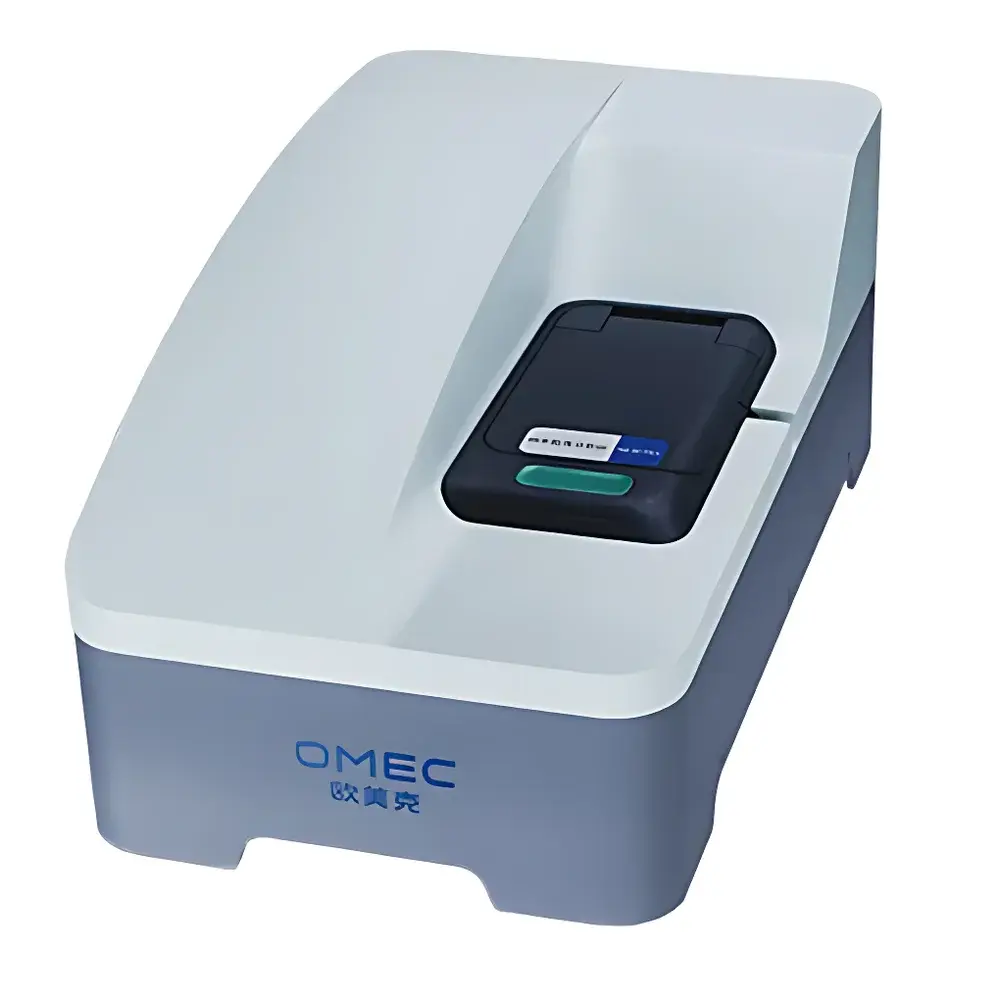
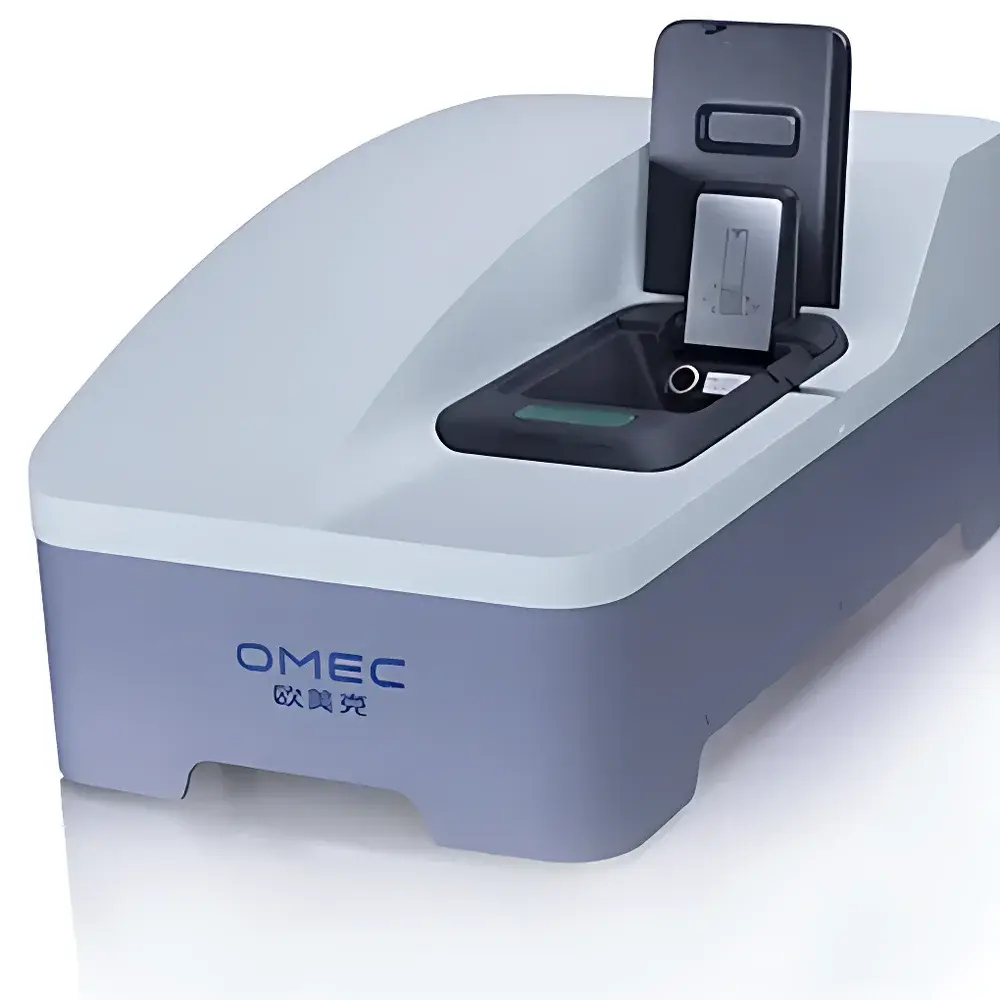
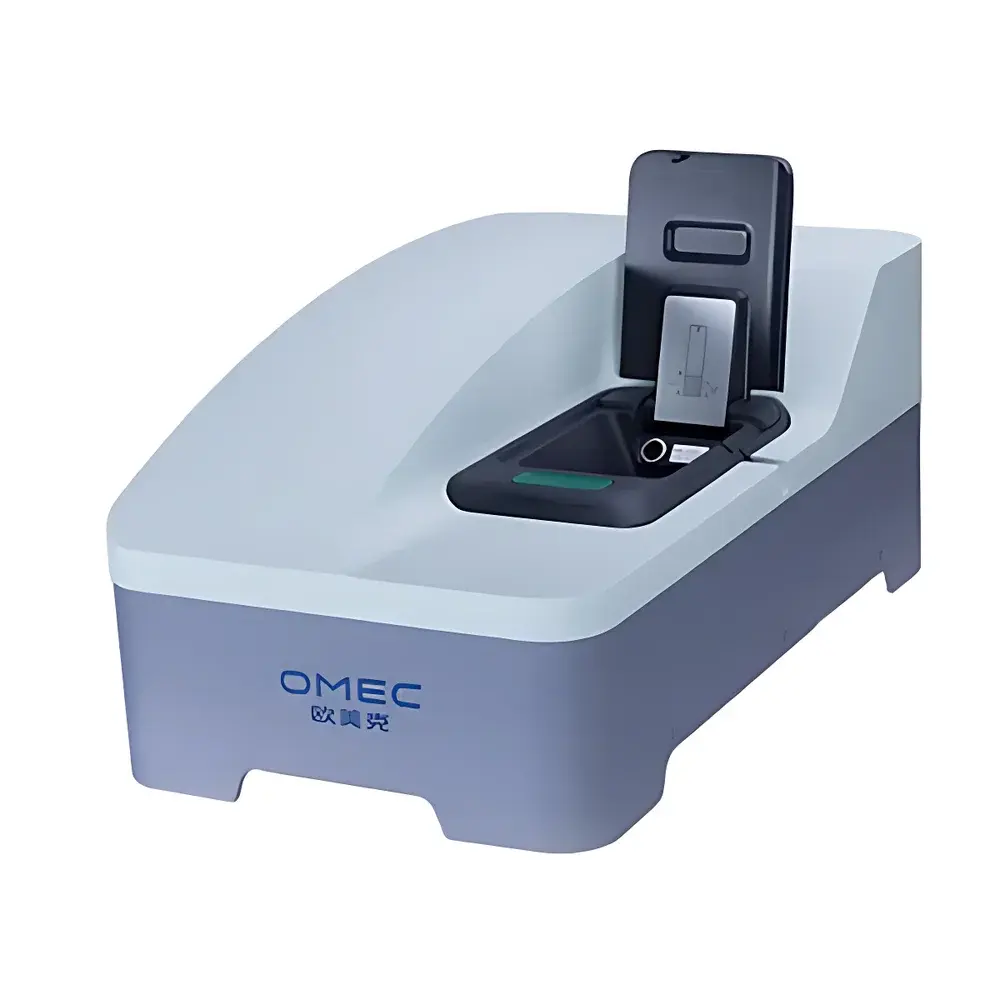
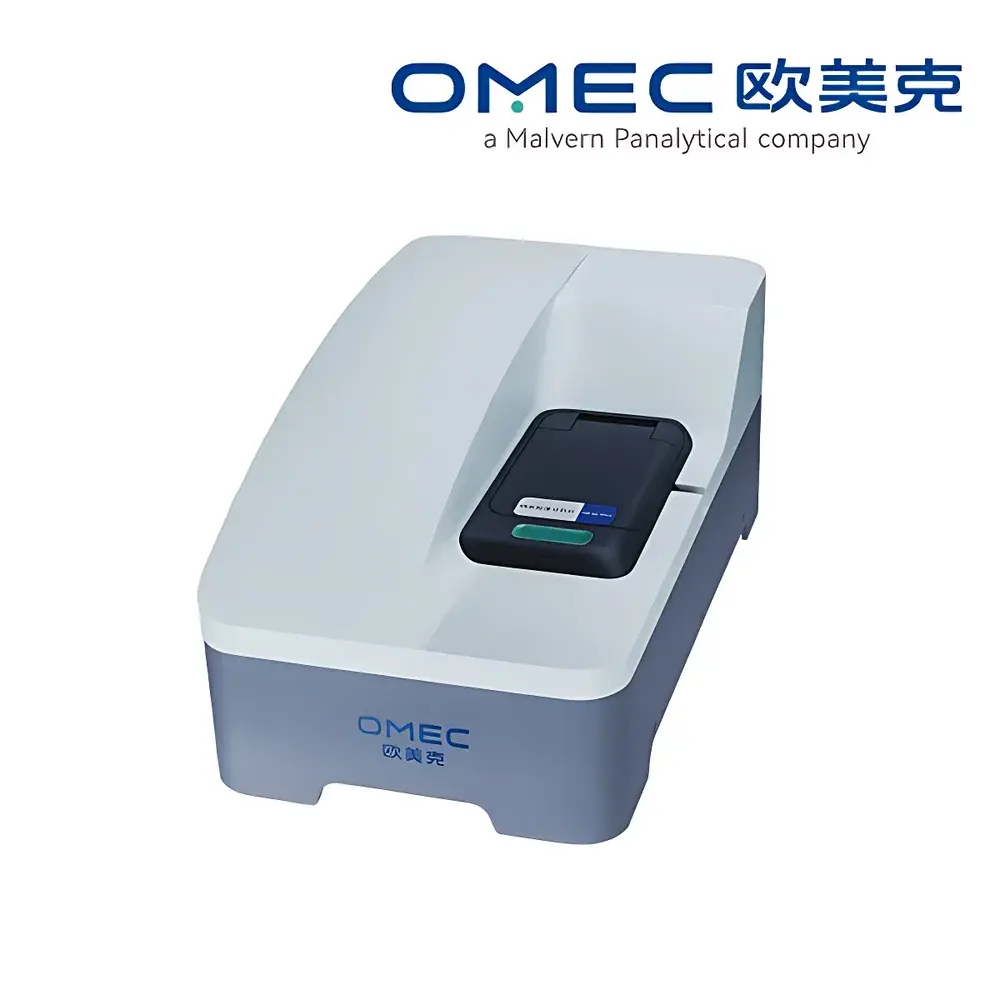
OMECK NS-90Z Plus Nanoparticle Size and Zeta Potential Analyzer
| Brand | OMECK |
|---|---|
| Origin | Guangdong, China |
| Manufacturer Type | OEM/ODM Manufacturer |
| Country of Origin | China |
| Model | NS-90Z Plus |
| Quotation | Upon Request |
| Zeta Potential Range | No Practical Limit |
| Operating Temperature Range | 0–120 °C |
| Repeatability | ≤1% (NIST-traceable latex standard) |
Overview
The OMECK NS-90Z Plus Nanoparticle Size and Zeta Potential Analyzer is a research-grade, tri-modal light-scattering instrument engineered for comprehensive colloidal and macromolecular characterization. It integrates three orthogonal optical techniques—Dynamic Light Scattering (DLS), Electrophoretic Light Scattering (ELS), and Static Light Scattering (SLS)—within a single compact platform. DLS measures hydrodynamic diameter (0.3 nm to 10 µm, extendable to 15 µm with microcapillary cells) via analysis of intensity fluctuations in 90° scattered light, applying the Stokes–Einstein equation to derive diffusion coefficients. ELS employs M3-PALS (Mixed-Mode Phase Analysis Light Scattering) under constant-current electrophoresis to determine zeta potential and its distribution, effectively suppressing electro-osmotic flow artifacts and enabling robust measurements on samples up to 260 mS/cm conductivity. SLS implements Debye plot methodology to determine absolute molar mass (980 Da to 2×10⁷ Da) of proteins, polymers, and aggregates without calibration standards. The system is built upon a heritage of Malvern Panalytical technology transfer and refined optical architecture—including a stabilized He-Ne laser (632.8 nm, 4 mW), high-quantum-efficiency APD detector (QE ≥80%), and a 4000+ channel digital correlator with 10¹¹ dynamic range—ensuring high signal-to-noise ratio, long-term stability, and NIST-traceable repeatability (≤1% CV).
Key Features
- Tri-modal optical platform: Simultaneous or sequential DLS, ELS, and SLS measurement in one instrument
- M3-PALS zeta potential analysis with constant-current mode: Enables high-conductivity sample testing while minimizing electrode polarization and electro-osmosis
- High-fidelity optical train: Sealed fiber-optic path, low-stray-light design, and temperature-stabilized He-Ne laser (10+ year lifetime, no recalibration required)
- Advanced detection: Avalanche photodiode (APD) with >80% quantum efficiency at 632.8 nm—superior sensitivity and lower noise vs. PMT
- Precise thermal control: Peltier-based system with ±0.1 °C accuracy across 0–120 °C, supporting kinetic and temperature-dependent studies
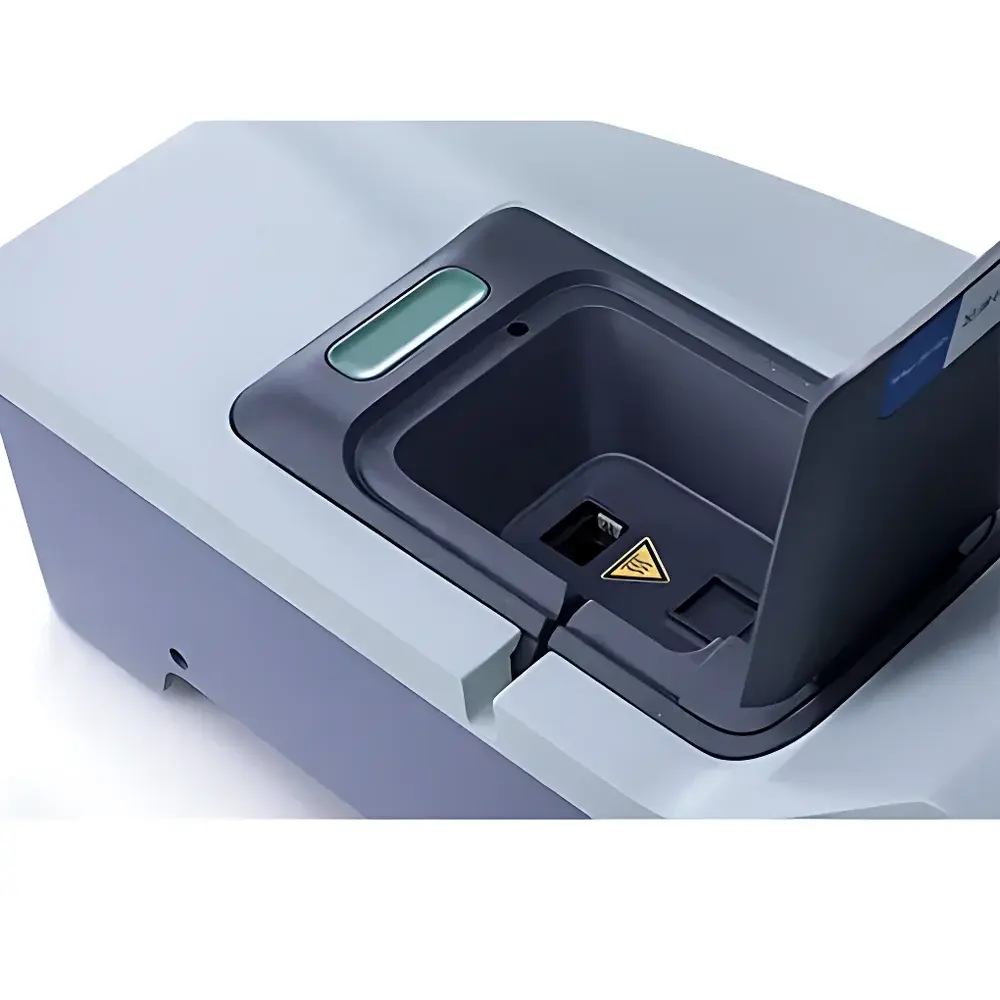
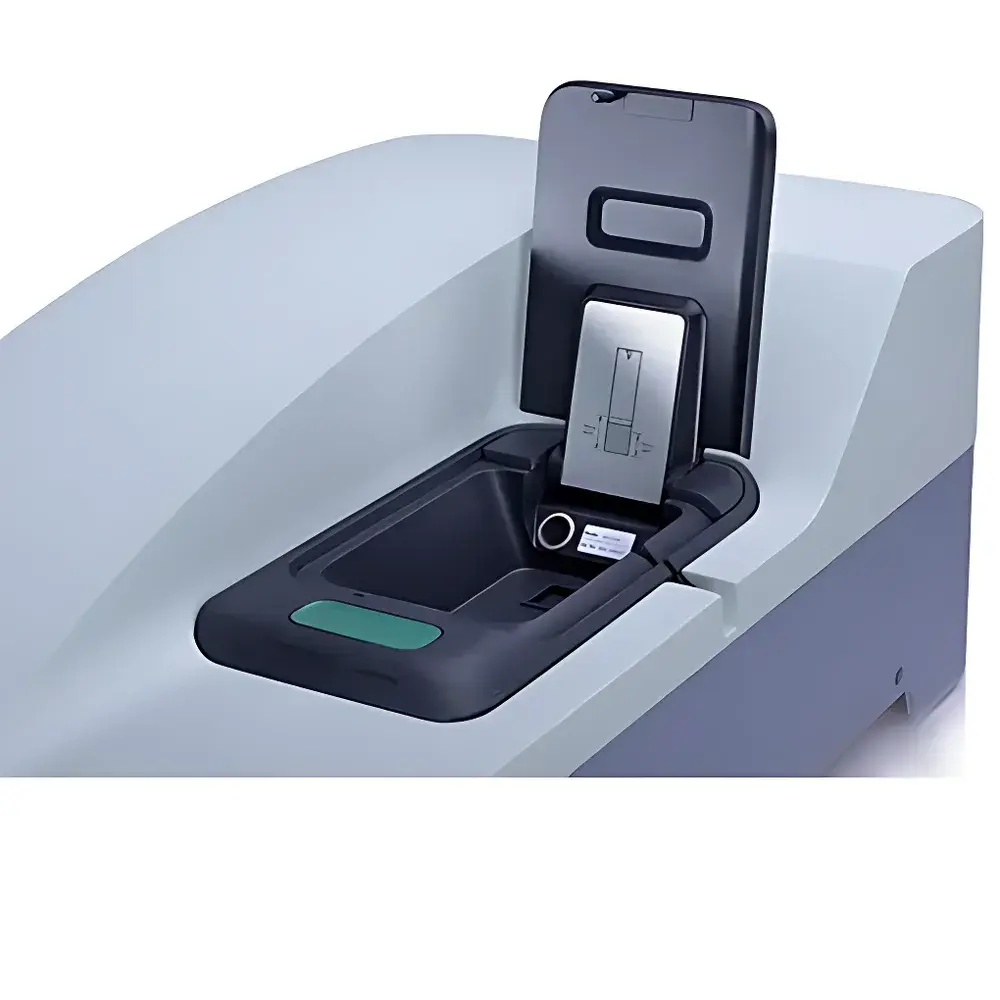
- Modular sample handling: Interchangeable cuvettes—including disposable polystyrene (1 mL), folded capillary (20 µL), glass (1 mL), and microcapillary (3 µL)—for broad matrix compatibility
- Automated hardware optimization: Real-time laser attenuation (330,000:1 dynamic range), auto-alignment-free operation, and SOP-driven workflows
Sample Compatibility & Compliance
The NS-90Z Plus accommodates aqueous and non-aqueous dispersions—including proteins, liposomes, polymeric nanoparticles, vaccine adjuvants, electrode slurries, pigments, and industrial emulsions—across concentration ranges from <1 mg/mL to 40% w/v. Its M3-PALS implementation complies with ISO 13099-2 (colloidal zeta potential by ELS) and supports method validation per ICH Q5A(R2) and USP . Software architecture conforms to CFDA GMP Annex 11 (Computerized Systems) and FDA 21 CFR Part 11 requirements, featuring role-based user permissions, full audit trail with timestamped event logging, electronic signatures, and immutable data archiving. All firmware and software updates follow a Scrum-based development lifecycle, ensuring regulatory readiness for GLP/GMP environments.
Software & Data Management
The proprietary analysis software delivers intuitive, workflow-driven operation with zero optical alignment or manual calibration. Key capabilities include: automated selection of optimal correlation algorithms (e.g., CONTIN, NNLS, or cumulants); real-time quality feedback with actionable optimization guidance; customizable reporting with drag-and-drop report designer; export of raw correlation data, intensity distributions, and Debye plots in CSV, PDF, or XML formats; integrated viscosity database for automatic solvent property lookup; and statistical trend analysis across batches or timepoints. SOP templates enforce consistent measurement conditions, while metadata tagging enables traceability across instruments, users, and validation states.
Applications
- Biopharmaceutical development: Protein aggregation profiling, liposome sizing, and vaccine formulation stability assessment
- Materials science: Carbon black dispersion analysis, battery electrode slurry rheology prediction, and pigment flocculation kinetics
- Academic research: Nanoparticle synthesis optimization, polymer conformation studies, and colloidal self-assembly monitoring
- Quality control: Batch release testing of nanomedicines, compliance verification against ISO 22412 (DLS) and ISO 13099-3 (ELS)
- Environmental science: Flocculant efficacy evaluation in water treatment and nanoparticle fate modeling
FAQ
What is the smallest detectable particle size?
The theoretical lower limit is 0.3 nm under optimal conditions (low-noise environment, high-concentration monodisperse samples). Practical resolution depends on sample turbidity, solvent viscosity, and signal-to-noise ratio.
Can the instrument measure zeta potential of highly conductive samples?
Yes—constant-current M3-PALS mode supports conductivity up to 260 mS/cm, making it suitable for saline buffers, biological media, and industrial electrolytes.
Is molecular weight determination truly absolute?
Yes—SLS-based Debye analysis provides absolute molar mass without reference standards, assuming proper concentration series and angular scattering correction.
Does the system support 21 CFR Part 11 compliance?
Yes—full electronic signature, audit trail, and permission management are embedded and validated per GAMP 5 guidelines.
What sample volume is required for routine zeta potential measurement?
As low as 20 µL using the folded capillary cell; 3 µL with optional microcapillary cell.



