
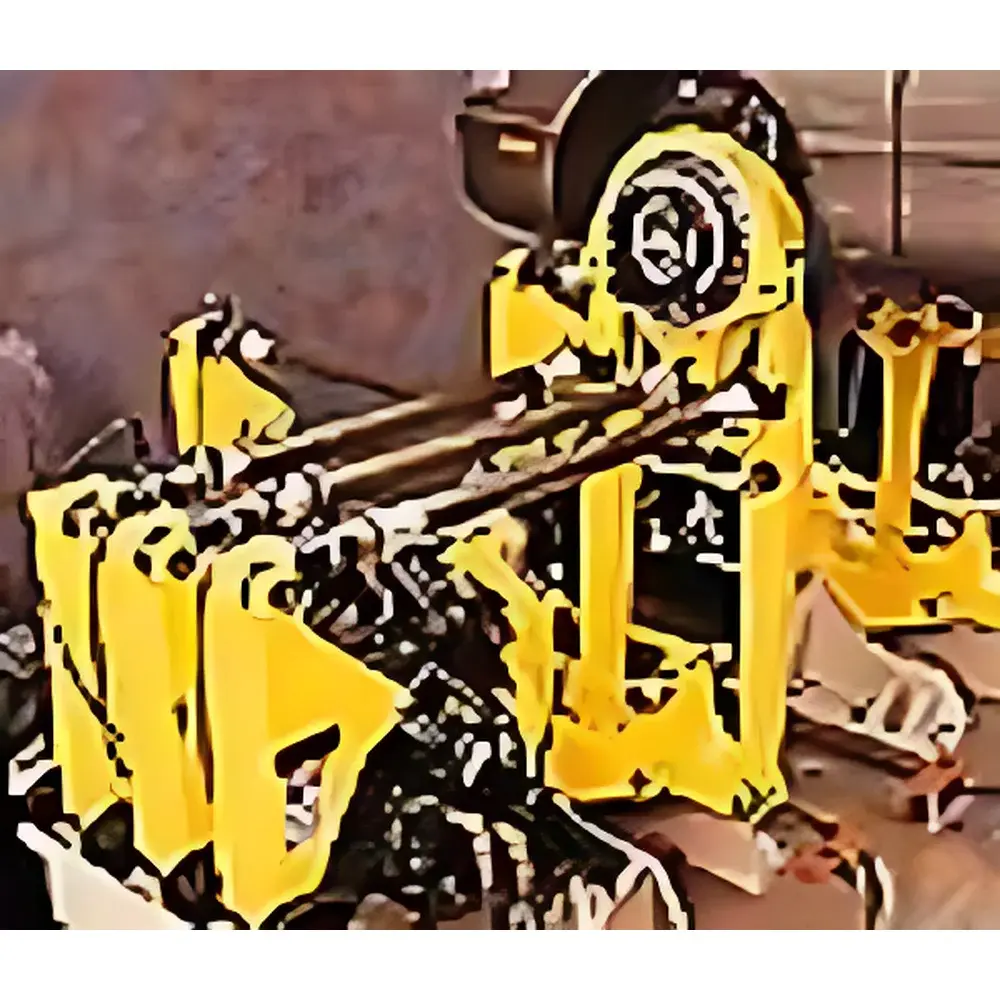
MTS 329 Axle-Coupled Road Simulation System
| Origin | USA |
|---|---|
| Manufacturer Type | Authorized Distributor |
| Origin Category | Imported |
| Model | 329 |
| Pricing | Upon Request |
Overview
The MTS 329 Axle-Coupled Road Simulation System is a high-fidelity, multi-axis electro-hydraulic test platform engineered for structural durability, ride comfort, and subsystem validation of automotive and commercial vehicles. Unlike conventional shaker-table or single-axis road simulators, the 329 system implements true axle-coupled force and motion control—leveraging Couette-type kinematic coupling at the wheel hubs to replicate six degrees of freedom (6-DOF) boundary conditions consistent with real-world road excitation. This architecture preserves dynamic interaction between suspension, chassis, powertrain, and tires, enabling physically accurate load path transmission during fatigue, NVH, and functional testing. Designed in accordance with ISO 4138, SAE J2206, and ASTM E1823 standards for structural testing, the system supports both component-level and full-vehicle test configurations under controlled laboratory conditions.
Key Features
- 6-DOF axle-coupled simulation: First-generation system delivering synchronized translational and rotational forces directly at wheel centers, eliminating artificial decoupling inherent in traditional hub-mount or spindle-mount approaches.
- Modular channel architecture: Configurable as an 8-channel suspension test rig (dual-corner or quad-corner), 12-channel floating-body system, 16-channel full-vehicle simulator, or 20+ channel heavy-truck configuration with integrated fifth-wheel coupling.
- Active pitch/twist fixture: Enables independent control of vehicle pitch and body torsion while maintaining static ground reference—critical for evaluating structural integrity under combined braking and cornering loads.
- Interactive braking software suite: Dynamically engages brake actuation only when required by the road profile, preserving fidelity of brake-suspension interaction without introducing artificial damping or phase lag.
- Long-stroke longitudinal constraint system: Provides up to 1 m of controlled axial displacement for simulating sustained braking events and transient corner entry/exit maneuvers while minimizing mean load accumulation on actuators.
- Steering-integrated test mode: Each corner mounted on a rotating turntable; dual lateral actuators per corner plus dedicated steering-column actuator reproduce realistic kingpin torque, slip angle, and lateral force distribution across steering components.
Sample Compatibility & Compliance
The MTS 329 accommodates passenger cars, light-duty trucks (329LT), and heavy-duty Class 8 vehicles (329HT) via scalable frame geometries and hydraulic power unit sizing. Test specimens include complete rolling chassis, front/rear subframes, suspension modules (MacPherson, multi-link, air-ride), steering gear assemblies, and cab structures. All configurations comply with GLP documentation requirements and support FDA 21 CFR Part 11–compliant audit trails when integrated with MTS TestSuite™ software. Calibration traceability follows ISO/IEC 17025 procedures, and load cell accuracy meets ASTM E4 Class 1 specifications. Environmental operation range: 10–40 °C, <80% RH non-condensing.
Software & Data Management
Control and data acquisition are managed through MTS TestSuite™, a real-time deterministic platform supporting RPC (Road Profile Control) iteration, time-domain waveform replication, and closed-loop hybrid simulation. The system natively imports ASAM MCD-2 MC (ASAM ASAP2) signal definitions and exports MAT-file-compatible datasets for post-processing in MATLAB, nCode DesignLife, and FE-SAFE. All test sequences include embedded metadata tags for test ID, operator, calibration date, and environmental logs. Secure user-role management enforces separation of duties (e.g., operator vs. administrator), and electronic signatures are enabled for GxP-regulated environments.
Applications
- Durability validation of suspension bushings, control arms, and knuckles under correlated multi-axial loading
- Ride quality assessment using ISO 2631-1 weighted acceleration metrics derived from triaxial accelerometer arrays
- Brake judder and squeal analysis via synchronized thermal imaging and high-bandwidth force feedback
- Body-in-white torsional stiffness and fatigue life prediction using measured strain fields from DIC or rosette gauges
- Steering system hysteresis and returnability characterization under combined lateral load and yaw rate inputs
- Trailer dynamics simulation via fifth-wheel coupled input, including articulation-induced twist and vertical compliance transfer
FAQ
What distinguishes axle-coupled simulation from traditional hub-mount systems?
Axle-coupled architecture maintains mechanical continuity between tire contact patch and suspension hardpoints, preserving inertial coupling and load-path fidelity absent in hub-mounted designs that isolate wheel rotation from chassis motion.
Can the 329 system perform simultaneous front/rear suspension testing?
Yes—its dual-corner 8-channel configuration allows independent actuation of front and rear axles, enabling coordinated bump-steer, roll-under-braking, and anti-dive/anti-squat evaluation.
Is RPC-based road profile replication supported out-of-the-box?
Yes—the system ships with MTS RoadSim™ RPC software, supporting iterative convergence to target damage spectra (e.g., VDA 320, Ford DVP&R) with automatic cycle counting and rainflow analysis.
How is thermal management handled during extended durability tests?
Hydraulic power units incorporate closed-loop cooling circuits with temperature-controlled reservoirs and flow-balanced manifolds to maintain ±1 °C oil temperature stability over 100+ hour test cycles.
Does the system support third-party controller integration?
Yes—via EtherCAT or IEEE 1588 PTP synchronization, allowing co-simulation with dSPACE SCALEXIO, NI VeriStand, or Simulink Real-Time targets for hardware-in-the-loop applications.



