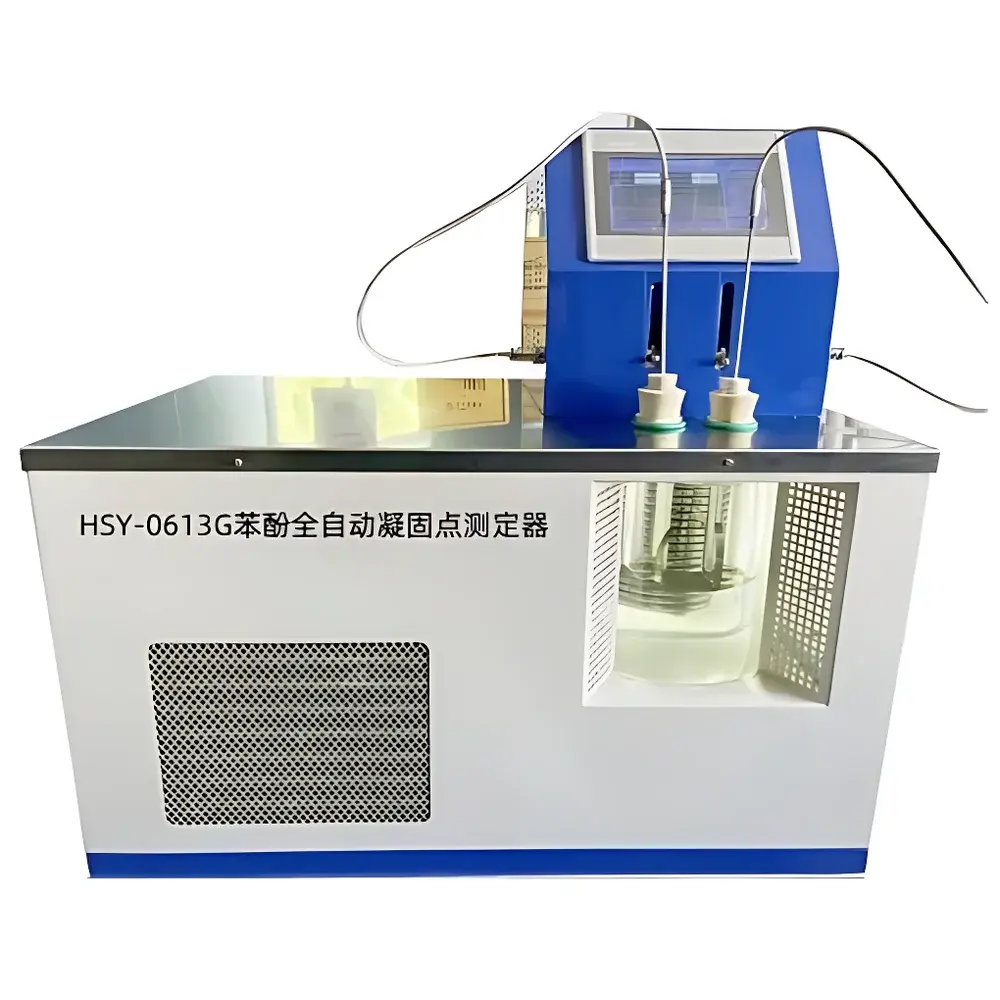
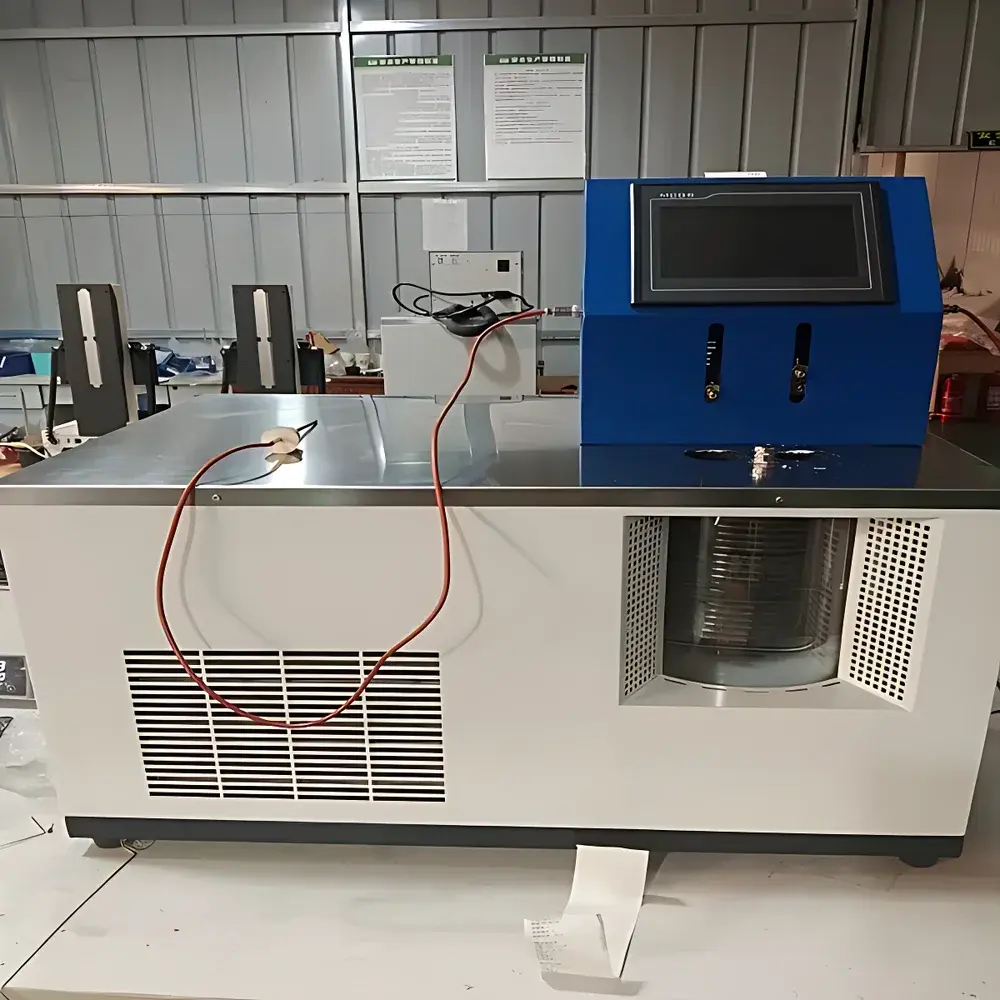
Qigao HSY-0613G Fully Automated Phenol Freezing Point Analyzer
| Brand | Qigao Instruments |
|---|---|
| Origin | Shanghai, China |
| Manufacturer Type | Direct Manufacturer |
| Country of Origin | China |
| Model | HSY-0613G |
| Temperature Range | Ambient to 90 °C |
| Compliant Standard | Chinese Pharmacopoeia 2025 (ChP 2025) |
| Test Method | ChP Method 0613 for Freezing Point Determination |
| Control Accuracy | ±0.1 °C |
| Measurement Accuracy | ±0.1 °C |
| Temperature Sensor | Pt100 (1/3 DIN Class B) |
| Heating Element | Stainless Steel Immersion Heater |
| Display | 5.7″ TFT LCD, 65K-color, Full-touch Industrial Panel |
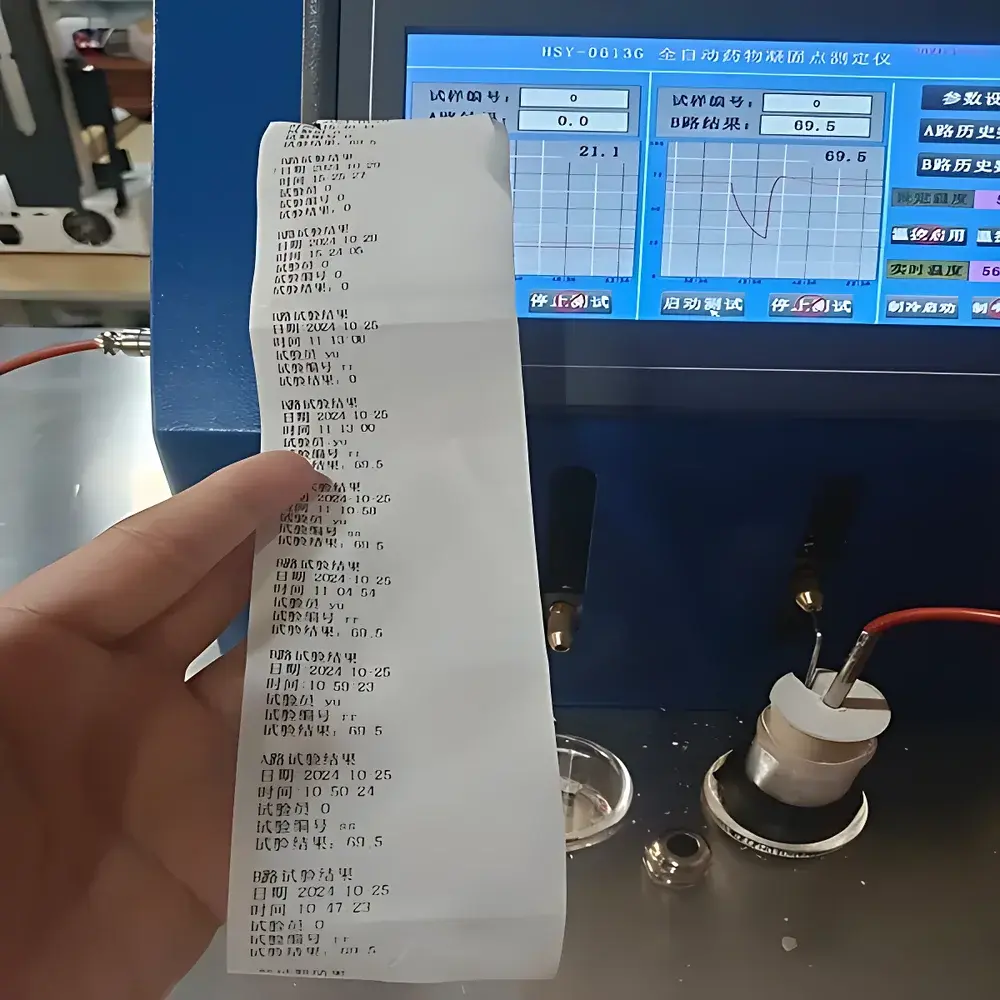
| Printing | 20-character Thermal Dot-Matrix Printer |
| Sample Handling | Dual-sample Mechanical Stirring |
| Power Supply | AC 220 V ±10%, 50 Hz |
| Max Power Consumption | ≤1000 W |
| Dimensions (W×H×D) | 320 × 500 × 460 mm |
| Operating Environment | 0–45 °C, RH < 80% |
| Enclosure Material | Powder-Coated Aluminum Chassis |
| Bath Vessel | Double-Walled Vacuum Insulated Transparent Dewar |
| Illumination | Integrated LED Sample Chamber Lighting |
| Self-Diagnostic Routine | Built-in System Health Check |
Overview
The Qigao HSY-0613G Fully Automated Phenol Freezing Point Analyzer is a precision laboratory instrument engineered for the quantitative determination of the freezing point of phenol and other high-purity organic pharmaceutical intermediates in accordance with Chapter 0613 of the Chinese Pharmacopoeia (ChP) 2025 edition. It operates on the principle of dynamic thermal arrest detection: as a liquid sample cools under controlled conditions, the onset of solid phase formation induces a transient thermal plateau—the highest temperature at which the sample remains in equilibrium between liquid and solid phases for a defined duration. For phenol, this value is nominally 40.8–41.2 °C under standard atmospheric pressure and specified purity conditions. The analyzer implements a dual-sample, thermally isolated measurement architecture, combining high-stability Pt100 resistance thermometry with real-time curve monitoring and algorithmic plateau recognition to deliver repeatable, traceable results aligned with pharmacopeial validation requirements.
Key Features
- Dual independent test channels enable parallel analysis of two samples—reducing throughput time while maintaining method integrity and inter-channel comparability.
- Double-walled vacuum-insulated transparent Dewar bath ensures superior thermal stability and visual observation of crystallization events without condensation or external interference.
- High-fidelity Pt100 sensor (1/3 DIN Class B) provides long-term drift stability and resolution better than 0.05 °C over the full operating range (ambient to 90 °C).
- Stainless steel immersion heating element delivers rapid, uniform temperature ramping and precise isothermal hold capability during calibration and recovery cycles.
- 5.7-inch full-color industrial touchscreen interface supports intuitive workflow navigation, real-time cooling curve visualization, and on-screen parameter configuration—all in English-language UI mode.
- Mechanical stirring mechanism eliminates electromagnetic interference and thermal degradation issues common in coil-based systems, ensuring consistent nucleation kinetics across repeated assays.
- Built-in self-diagnostic firmware validates sensor continuity, heater response, stir motor function, and thermal isolation integrity prior to each assay cycle.
- Integrated LED illumination enhances optical clarity within the sample chamber, facilitating manual verification of crystal formation when required by SOP or audit protocol.
Sample Compatibility & Compliance
The HSY-0613G is validated for use with USP-grade and ChP-compliant phenol reference standards, as well as purified pharmaceutical-grade phenolic derivatives where freezing point serves as a critical quality attribute (CQA). Its design adheres to the physical and procedural constraints outlined in ChP 2025 Method 0613—including sample volume (typically 10–15 mL), cooling rate specifications (≤1.0 °C/min near expected freezing point), and plateau duration criteria (≥30 seconds at stable temperature). While primarily intended for phenol, the instrument may be adapted for other low-viscosity, non-corrosive organic liquids with freezing points between 0 °C and 85 °C—subject to method verification per ICH Q2(R2) guidelines. All hardware and firmware components meet CE marking essential requirements for electrical safety and electromagnetic compatibility (EMC Directive 2014/30/EU).
Software & Data Management
Firmware implements dual-layer system protection: a hardware watchdog timer prevents lockup during extended operation, while software trap routines isolate exception states without data loss. Temperature acquisition employs cascaded digital filtering—second-order IIR smoothing followed by outlier-rejected moving average—to suppress noise from ambient fluctuations and power-line harmonics. Raw and processed data (time-temperature curves, plateau start/end timestamps, final reported freezing point) are stored in non-volatile memory with ISO/IEC 17025-aligned metadata: operator ID, sample ID, date/time stamp, instrument serial number, and calibration status. Thermal printer output conforms to GLP documentation standards, generating permanent 20-character-wide reports with embedded unit symbols (°C), uncertainty notation (±0.1 °C), and method reference (ChP 0613). Export via USB port supports CSV-formatted datasets compatible with LIMS integration and statistical process control (SPC) platforms.
Applications
- Pharmaceutical QC laboratories performing identity and purity testing of phenol raw materials per ChP 2025 monographs.
- Contract manufacturing organizations (CMOs) validating incoming excipient specifications against regulatory filing commitments.
- Research & development units studying polymorphic behavior and thermal history effects on solid-phase transition kinetics.
- Regulatory compliance departments preparing for FDA pre-approval inspections or NMPA GMP audits requiring documented freezing point methodology.
- Reference standard laboratories conducting inter-laboratory comparison studies under ISO/IEC 17043 proficiency testing schemes.
FAQ
What pharmacopeial standards does the HSY-0613G support?
It is explicitly designed and verified for compliance with Chinese Pharmacopoeia 2025 Chapter 0613. Method adaptation for USP <741> or EP 2.2.17 requires user validation per ICH Q2(R2).
Is the instrument suitable for routine GLP-compliant testing?
Yes—its audit-trail-capable firmware, electronic signature-ready reporting, and built-in calibration verification align with OECD GLP Principles and FDA 21 CFR Part 11 expectations for electronic records.
Can the system store historical test data internally?
Yes—non-volatile flash memory retains ≥1000 complete assay records with full metadata, accessible via on-screen review or USB export.
Does the analyzer require external cooling sources?
No—it operates exclusively with ambient air cooling and internal Peltier-assisted thermal management; no chiller or dry ice is needed.
How is temperature uniformity ensured across both sample positions?
Independent PID-controlled heating zones and matched Pt100 sensors per channel maintain inter-channel deviation ≤0.08 °C under steady-state conditions, verified per ASTM E74-22 Annex A3.