
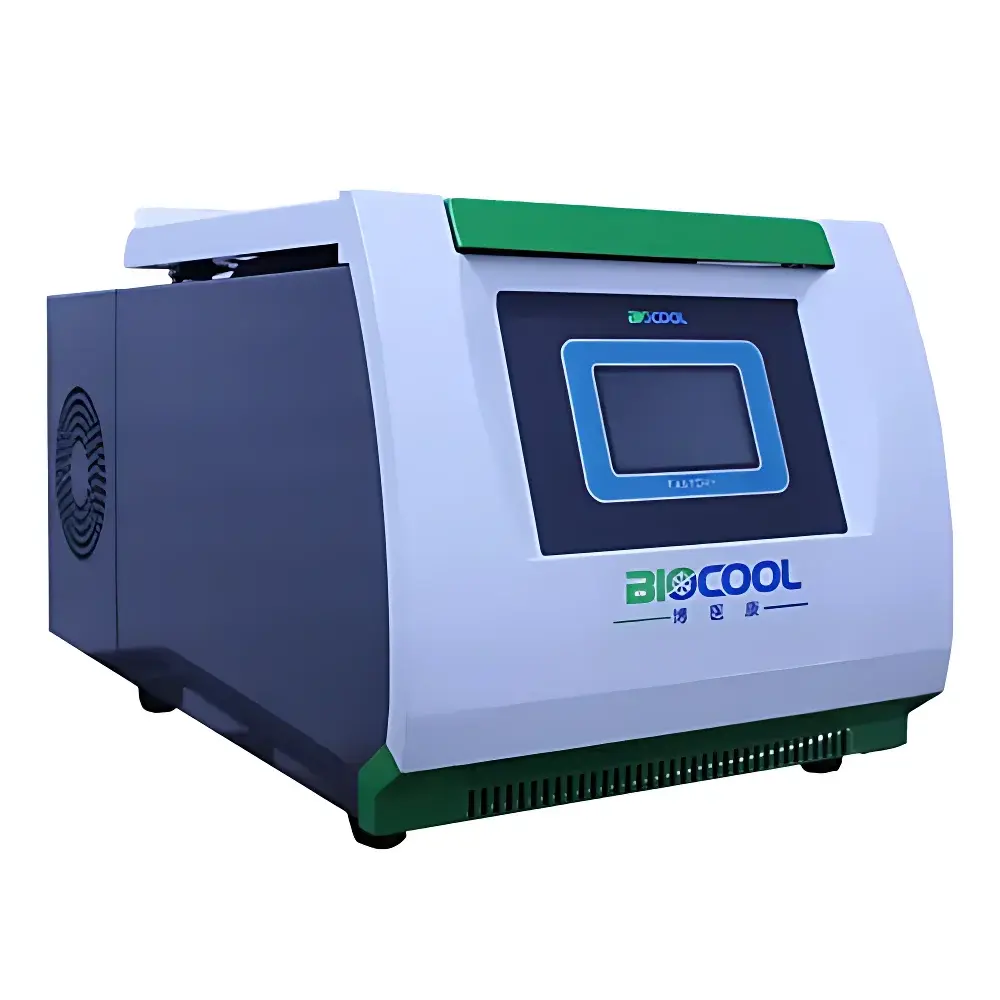
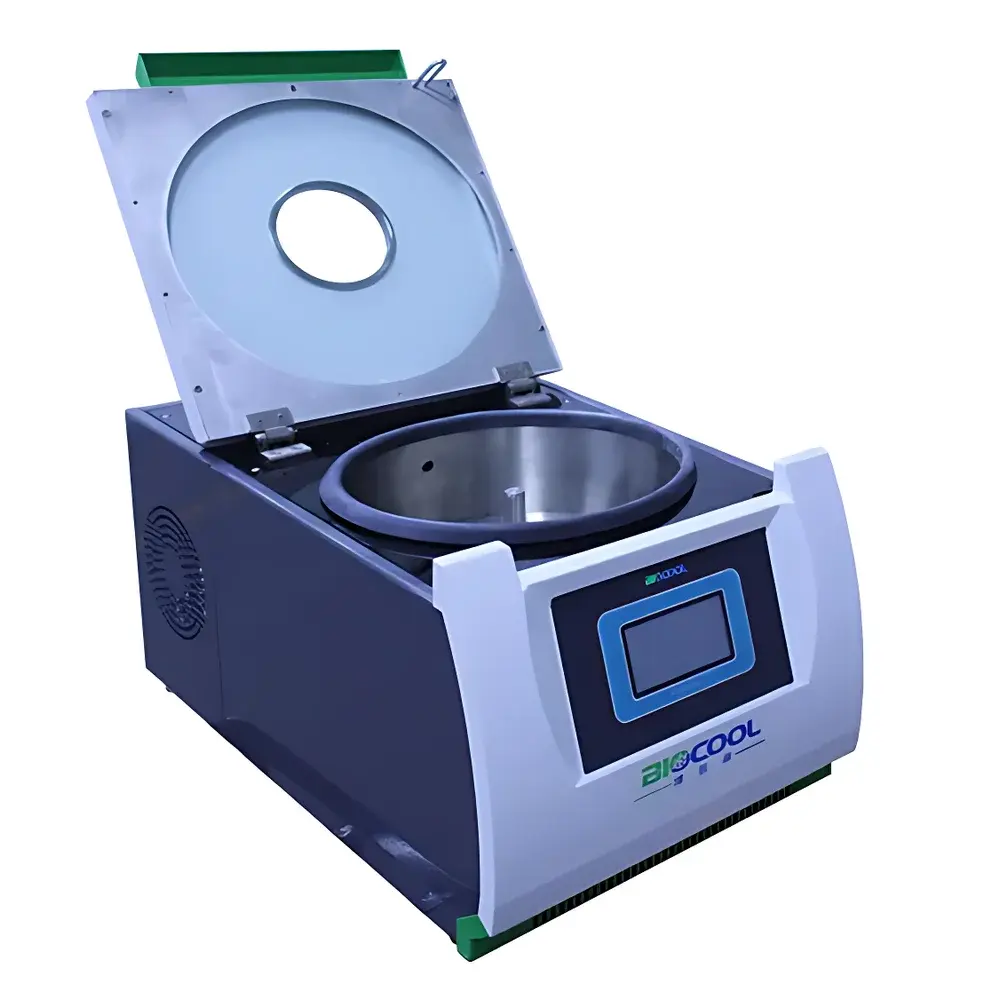
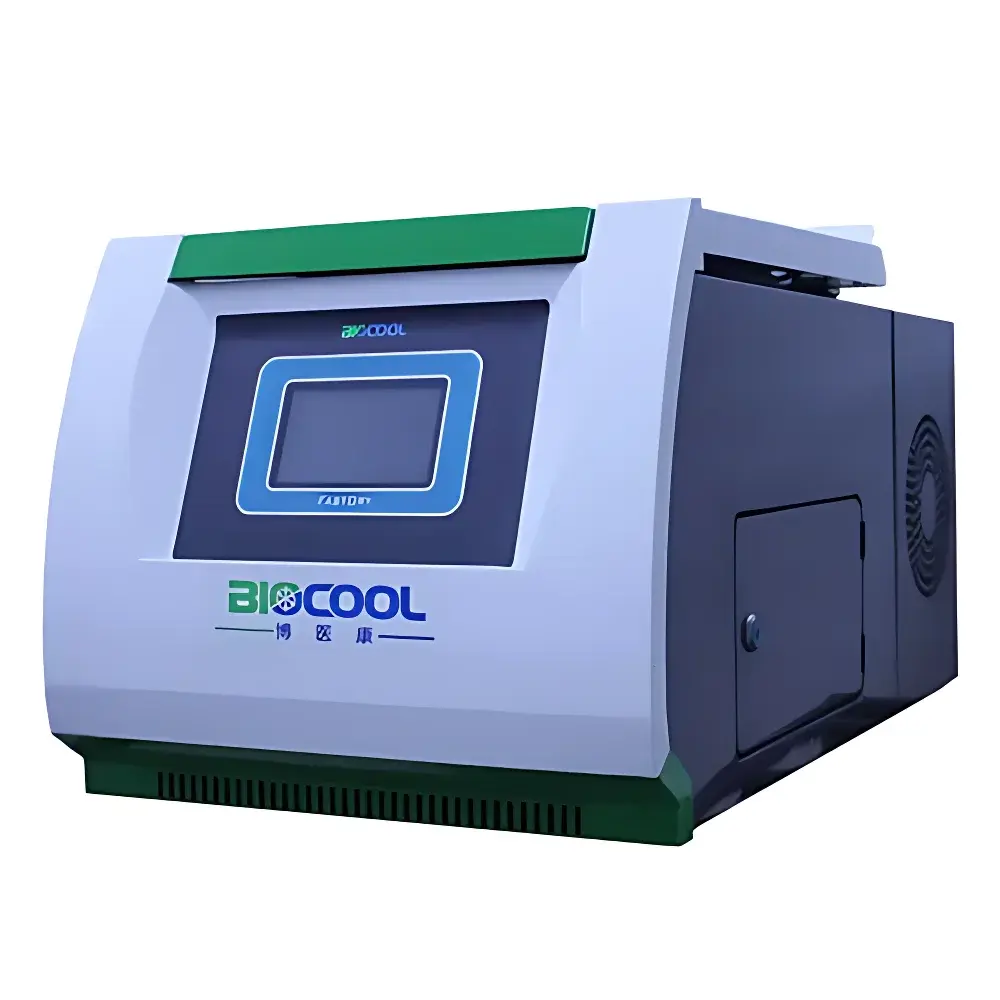
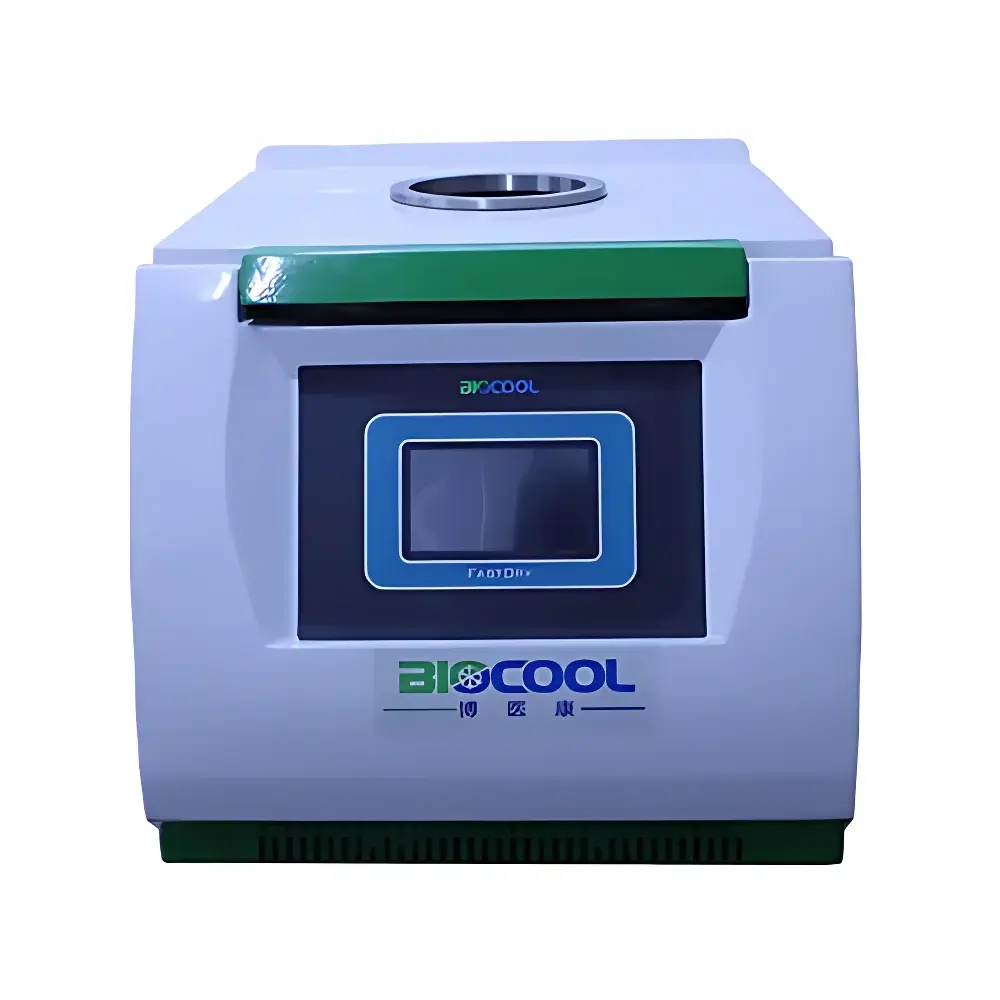
BIOCOOL FastDry-4E Vacuum Centrifugal Concentrator
| Brand | BIOCOOL |
|---|---|
| Origin | Tianjin, China |
| Model | FastDry-4E |
| Instrument Type | Vacuum Centrifugal Concentrator |
| Temperature Range | 4°C to 80°C |
| Temperature Control | Gradient PID Control |
| Sample Capacity | 132 × 1.5 mL tubes |
| Vacuum Pump Options | Diaphragm or Direct-Coupled Rotary Vane Pump |
| Control Interface | Industrial Touchscreen + PLC |
| Programmability | 12-Stage Customizable Protocol |
| Safety Features | Vacuum Delay Start, Auto Venting, Over-Temp & Over-Pressure Protection |
| Cold Trap Compatibility | Optional –55°C, –80°C, or <–110°C Ultra-Low-Temperature Condenser |
| Rotor Recognition | Up to 50 Rotor Types Auto-Detected |
| Chamber & Rotor Coating | PTFE (Teflon®) Anti-Corrosion Finish |
| Rotational Speed Range | 400–1800 rpm (Variable Frequency Drive) |
| Ultimate Vacuum | <10 Pa |
| Compliance | Designed for GLP/GMP environments |
Overview
The BIOCOOL FastDry-4E Vacuum Centrifugal Concentrator is an engineered platform for the gentle, efficient, and reproducible concentration of biological and chemical samples under reduced pressure and controlled thermal conditions. It operates on the principle of simultaneous centrifugation, vacuum-induced solvent evaporation, and precisely regulated heat transfer—enabling rapid removal of volatile solvents (e.g., ethanol, acetone, acetonitrile, ethyl acetate) while minimizing sample degradation, foaming, or oxidation. Unlike conventional speed vac systems relying solely on radiant heating, the FastDry-4E integrates convection-based heat exchange across the rotor surface—ensuring uniform thermal delivery to all tube positions regardless of fill volume or tube geometry. This architecture significantly reduces processing time while preserving labile biomolecules including nucleic acids, proteins, antibodies, viral particles, and synthetic peptides. The system is designed for integration into regulated laboratory workflows, supporting traceable operation, audit-ready data logging, and compatibility with quality management frameworks such as ISO/IEC 17025, FDA 21 CFR Part 11 (when paired with validated software), and EU GMP Annex 11.
Key Features
- Convection-enhanced heating system delivering uniform temperature distribution across all 132 positions—eliminating edge-to-center thermal gradients common in radiant-heated concentrators.
- Ultra-low cold trap capability: optional cryo-condensers achieve ≤–110°C, enabling high-efficiency capture of aggressive solvents including HCl, TFA, and concentrated organic bases without condenser icing or breakthrough.
- Intelligent gradient PID temperature control (4°C–80°C) with ±0.5°C accuracy—programmable per stage to match solvent volatility profiles and sample thermal sensitivity.
- 12-stage programmable protocol engine: each segment independently defines rotational speed (400–1800 rpm), vacuum setpoint (10–1000 Pa), temperature, and duration—supporting complex multi-phase drying strategies (e.g., pre-chill → gentle evaporation → final desiccation).
- PTFE-coated aluminum chamber and rotor: chemically inert surface resists corrosion from halogenated solvents, strong acids/bases, and chaotropic agents—validated for repeated autoclaving at 121°C per ISO 17665-1.
- Magnetic drive coupling ensures hermetic vacuum integrity—no rotating shaft seals to leak, wear, or contaminate the chamber—critical for long-duration runs and solvent compatibility.
- Integrated safety logic: vacuum initiation delayed until target speed is achieved; automatic pressure equalization via nitrogen or filtered air; real-time monitoring of chamber temperature, vacuum level, and motor current.
Sample Compatibility & Compliance
The FastDry-4E accommodates standard 1.5 mL microcentrifuge tubes (including low-retention, skirted, and PCR-grade variants) across all 132 positions. Its rotor recognition system automatically identifies up to 50 distinct rotor configurations—including fixed-angle, swing-out, and deep-well variants—enabling seamless switching between nucleic acid cleanup, peptide synthesis workup, and small-molecule purification protocols. All wetted materials comply with USP Class VI biocompatibility standards. The PTFE-coated chamber meets ASTM F2476 for solvent resistance and passes ISO 10993-5 cytotoxicity testing. When equipped with a diaphragm vacuum pump and appropriate cold trap, the system achieves ISO 8573-1 Class 2 compressed air purity for venting—ensuring no hydrocarbon contamination during auto-venting cycles. Documentation packages support IQ/OQ validation per GAMP 5 guidelines.
Software & Data Management
Control is executed via an industrial-grade 7-inch resistive touchscreen running embedded Linux with deterministic real-time PLC firmware. All operational parameters—including setpoints, actual values, alarms, and timestamps—are logged to internal flash memory (≥10,000 cycle retention) and exportable via USB 2.0 as CSV or XML. Optional Ethernet/Wi-Fi connectivity enables remote status monitoring and alarm notification via SMTP or MQTT. Audit trail functionality records user login, parameter changes, and run start/stop events with immutable timestamps—fully compliant with FDA 21 CFR Part 11 requirements when deployed with electronic signature validation. No cloud dependency: all data remains on-device unless explicitly exported.
Applications
- Nucleic acid concentration post-extraction or enzymatic reaction cleanup (DNA, RNA, gDNA, cfDNA)
- Proteomic sample preparation: digest cleanup, buffer exchange, and lyophilization pre-concentration
- Small-molecule drug discovery: parallel evaporation of combinatorial library fractions in 96-well plate adapters
- Viral vector purification: concentration of lentiviral/AAV supernatants without aggregation or titer loss
- Clinical diagnostics: high-throughput serum metabolite extraction and derivatization workflow integration
- Environmental analysis: EPA Method 525.3-compatible concentration of water extracts prior to LC-MS/MS
FAQ
What vacuum level can the FastDry-4E achieve?
The system reaches an ultimate vacuum of <10 Pa when paired with a direct-coupled rotary vane pump; with the diaphragm pump option, typical operating range is 10–50 Pa—sufficient for most aqueous and polar organic solvent removal.
Is rotor calibration required before use?
No—rotor identification is fully automatic via embedded RFID tags; mass and moment-of-inertia values are loaded dynamically upon insertion, eliminating manual calibration steps.
Can the system be validated for GMP production use?
Yes—the hardware design, material certifications, and optional software package support full IQ/OQ/PQ execution per GAMP 5. A complete validation template set (DQ, IQ, OQ protocols and reports) is available upon request.
Does the unit support unattended overnight operation?
Yes—integrated safety interlocks, auto-venting on power loss, and battery-backed clock ensure stable, monitored operation over extended periods without operator presence.
What cold trap options are available for acidic solvent applications?
For HCl, TFA, or formic acid work, we recommend the ultra-low-temperature condenser (≤–110°C) with stainless-steel cold finger and PTFE-lined collection vessel—validated for >99.8% capture efficiency at 10 mL/hr solvent load.



