
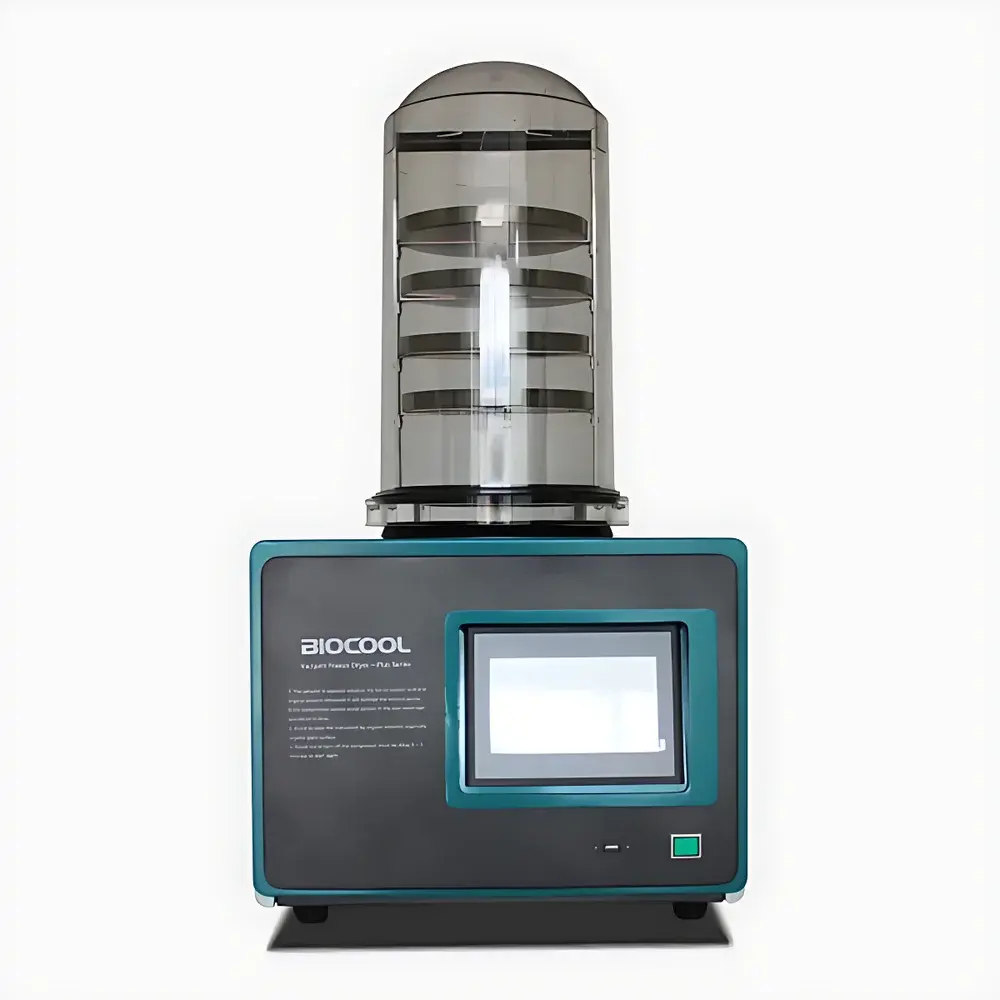
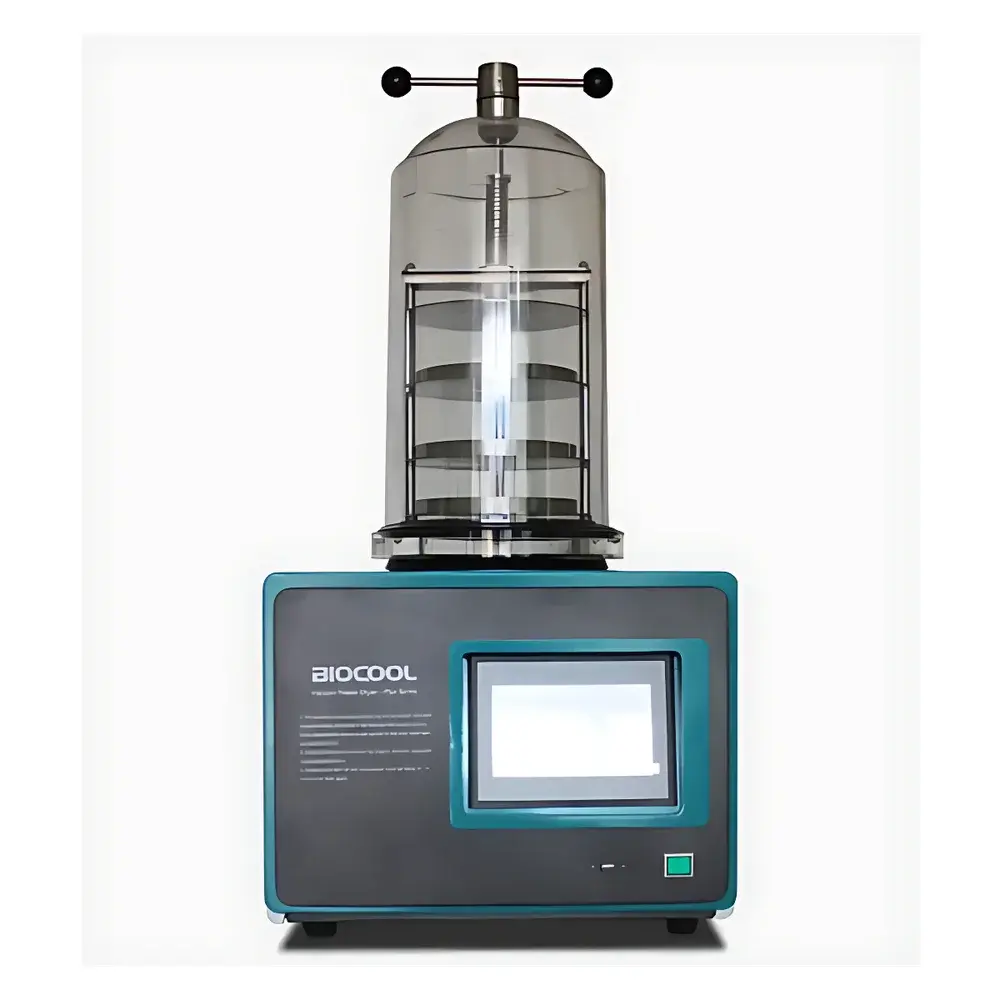
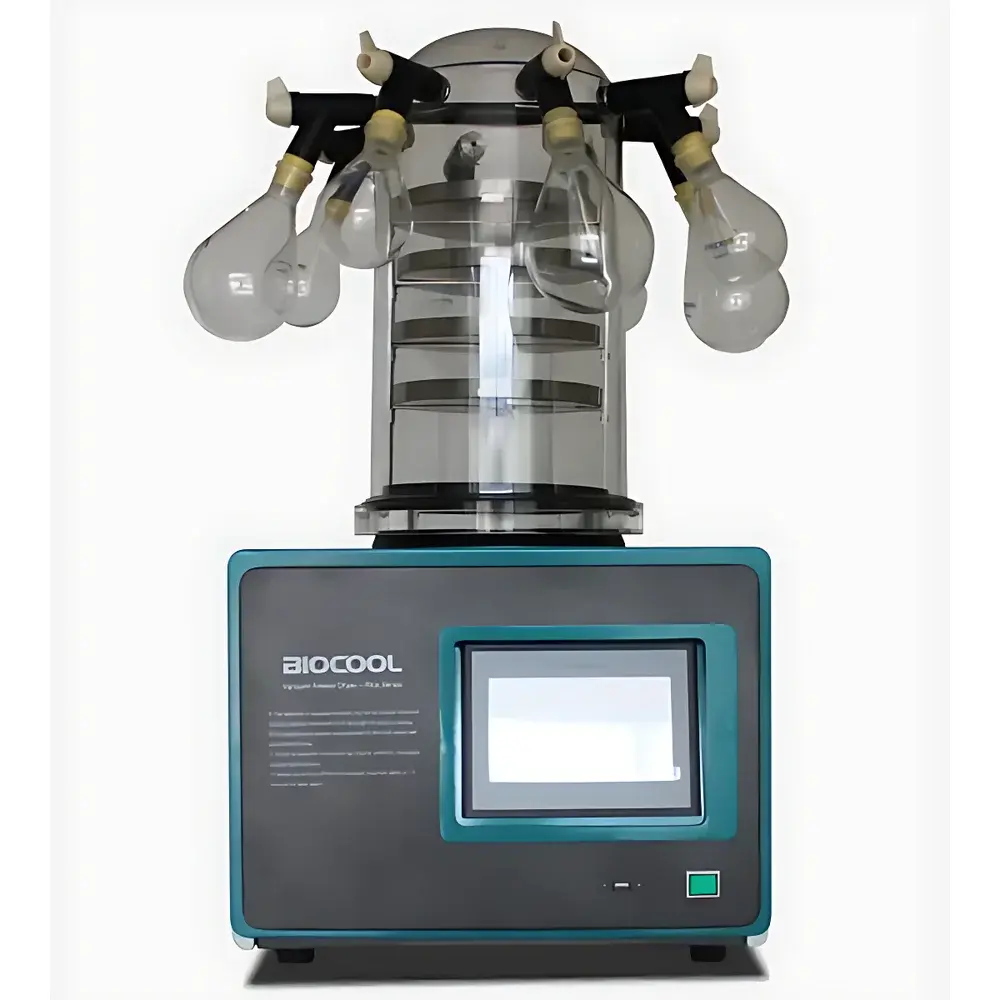
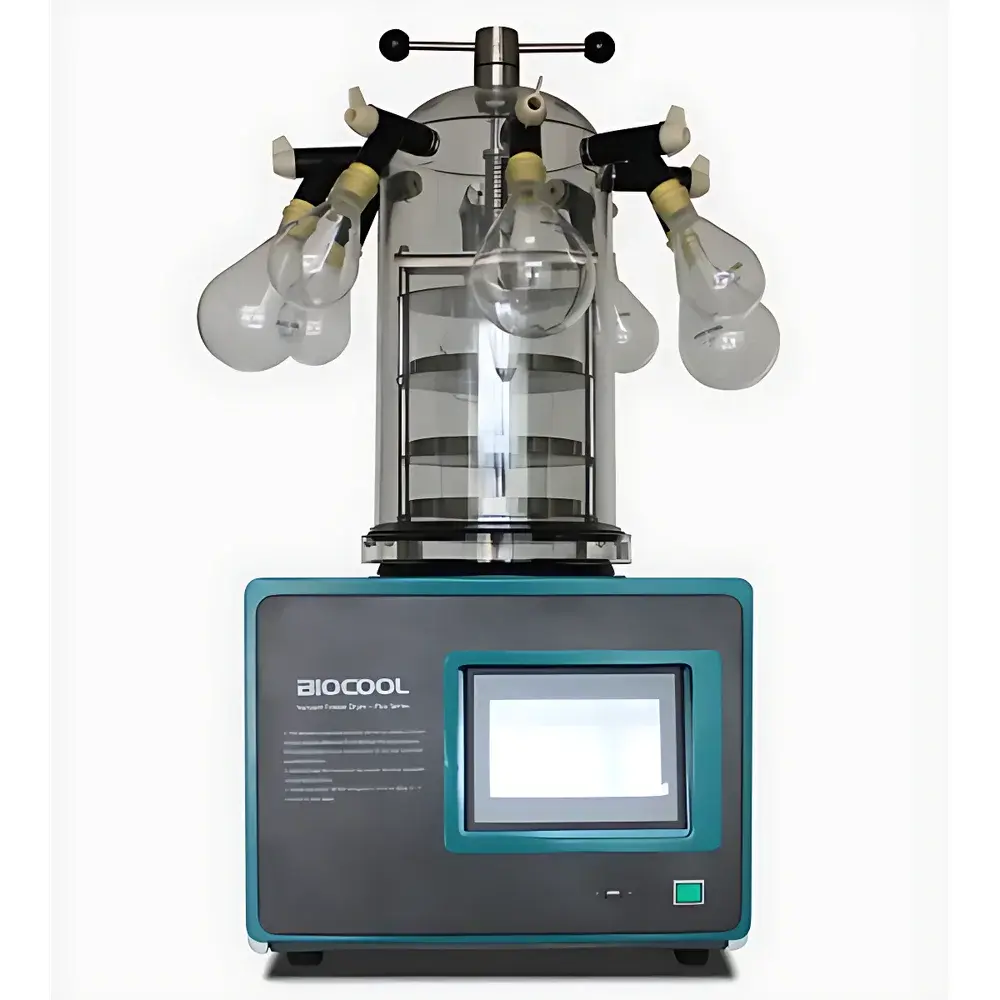
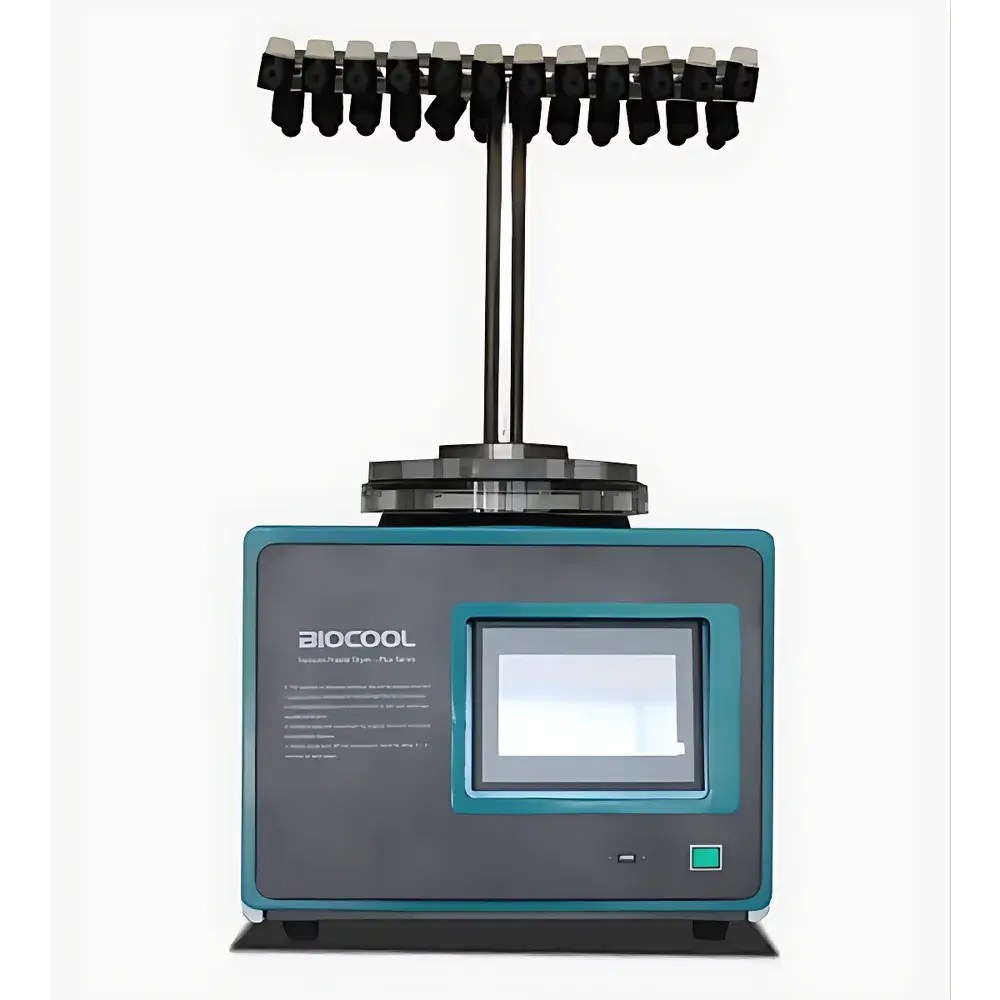
BIOCOOL TFD-95 Series Organic-Solvent-Compatible Laboratory Freeze Dryer
| Brand | BIOCOOL |
|---|---|
| Origin | Beijing, China |
| Model | TFD-95 Series |
| Freeze-Drying Area | 0.12 m² |
| Ultimate Vacuum | ≤1 Pa |
| Condenser Temperature (No Load) | –95 °C |
| Water Capture Capacity | 4 kg/24 h |
| Condenser Dimensions | Ø220 × 250 mm |
| Overall Dimensions | W640 × D640 × H1000 mm |
| Power Supply | 220 V / 50 Hz |
| Total Power Consumption | 1800 W |
| Vacuum Pump Flow Rate | 2 L/s (Korean-made) |
| Compressor Rating | 1 HP |
Overview
The BIOCOOL TFD-95 Series is a purpose-engineered laboratory freeze dryer designed specifically for the safe and efficient lyophilization of samples containing volatile organic solvents—such as ethanol, acetone, acetonitrile, methanol, and ethyl acetate—commonly encountered in pharmaceutical formulation development, natural product isolation, and analytical reference standard preparation. Unlike conventional freeze dryers optimized for aqueous systems, the TFD-95 integrates a deep-cold condenser operating at –95 °C to ensure near-complete capture of low-boiling-point solvents, thereby preventing solvent backstreaming, vacuum pump contamination, and system corrosion. Its operation adheres to fundamental lyophilization thermodynamics: primary drying occurs under controlled sublimation conditions below the eutectic temperature (Teu) of the solvent–solute matrix, while secondary drying removes residual bound solvent via desorption at elevated shelf temperatures and reduced pressure. The unit’s all-welded, seamless drying chamber eliminates potential leak paths and complies with structural integrity requirements for vacuum-rated vessels per ISO 13485-aligned manufacturing practices.
Key Features
- –95 °C ultra-low-temperature condenser engineered for high-efficiency trapping of volatile organic solvents (up to 99% v/v concentration), minimizing risk of pump oil degradation and vacuum instability
- Integrated cold trap pre-freezing capability, enabling simultaneous sample freezing and condenser cooldown prior to primary drying
- Hot-gas defrost system using refrigerant vapor—eliminates electrical heating elements and ensures uniform, repeatable defrost cycles without thermal shock to condenser surfaces
- Intelligent compressor delay-start logic protects against voltage surge-induced mechanical stress and extends service life
- Optimized internal airflow guidance design enhances heat transfer uniformity across the shelf or manifold interface, reducing cycle time by up to 18% compared to non-guided configurations (empirical data from BIOCOOL validation reports)
- Real-time sample temperature monitoring via dual Pt100 sensors (optional or standard depending on configuration), supporting accurate determination of collapse temperature (Tc) and optimal primary drying endpoint
- Graphical freeze-drying curve logging with timestamped pressure, shelf temperature, condenser temperature, and sample temperature channels; data exportable via USB flash drive in CSV format
- Gas backfilling port fitted with imported stainless-steel solenoid valve compatible with nitrogen, argon, or other inert gases per USP General Chapter <1211> requirements for oxygen-sensitive products
- Hermetically sealed drying chamber fabricated from 304 stainless steel with full orbital welding—no adhesives or gasket-dependent joints, certified leak-tight to ≤5×10⁻⁷ mbar·L/s He
- Industrial-grade hermetic scroll compressor (international brand) delivering stable cooling performance, low acoustic emission ( 30,000 h)
Sample Compatibility & Compliance
The TFD-95 series accommodates a broad range of solvent-based matrices including but not limited to: alcoholic extracts (e.g., ethanol-based botanical tinctures), acetonitrile-containing HPLC fractions, methanol-suspended nanoparticle dispersions, and acetone-dissolved polymer solutions. It supports freeze-drying of suspensions, pastes, and low-viscosity solutions with eutectic points above –20 °C. All configurations comply with IEC 61010-1:2010 for laboratory electrical equipment safety and meet CE marking requirements for electromagnetic compatibility (EMC Directive 2014/30/EU). Optional accessories—including co-located eutectic point analyzers (DSC-based), calibrated shelf temperature mapping probes, and GLP-compliant audit trail modules—enable alignment with FDA 21 CFR Part 11 electronic records provisions when paired with validated software packages.
Software & Data Management
Base models feature LED + keypad control with programmable ramp-hold profiles (up to 32 steps); upgraded PLC + touchscreen variants support advanced process scripting, real-time deviation alerts, and password-protected parameter locking. All units record time-stamped operational logs—including vacuum decay rates, condenser load accumulation, and compressor duty cycles—for retrospective analysis and quality review. Raw data files are stored internally and exportable via USB 2.0 interface in comma-separated values (CSV) format, compatible with MATLAB®, Python pandas, and industry-standard statistical process control (SPC) platforms. Optional firmware upgrades include automated batch reporting templates compliant with Annex 11 (EU GMP) metadata retention standards.
Applications
- Lyophilization of small-molecule APIs dissolved in organic co-solvents prior to crystallinity assessment and solid-state characterization
- Stabilization of enzyme formulations in glycerol–ethanol mixtures for long-term storage and activity preservation
- Drying of lipid nanoparticles (LNPs) formulated in tert-butanol for mRNA delivery platform development
- Preparation of reference standards from chromatographic fractions collected in acetonitrile/water gradients
- Processing of forensic toxicology specimens where methanol or isopropanol extraction precedes residue analysis
- Routine dehydration of plant metabolite libraries for mass spectrometry-based metabolomics workflows
FAQ
Can the TFD-95 handle 100% pure organic solvents?
No—it is validated for solutions containing up to 99% (v/v) organic solvent. Pure solvent freezing poses uncontrolled phase separation risks and exceeds condenser thermal load specifications.
Is the condenser temperature verified under load conditions?
Yes. Factory calibration includes load testing at 4 kg/24 h water equivalent using standardized glycerol–water mixtures; temperature stability is maintained within ±1.5 °C across the full capture cycle.
Does the system support IQ/OQ documentation packages?
Yes. BIOCOOL provides optional qualification protocols aligned with ASTM F2699-19 and ISO 20375:2021, including sensor traceability certificates (NIST-traceable Pt100 and capacitance manometers), vacuum leak test reports, and temperature mapping summaries.
What vacuum pump oil compatibility is recommended for organic solvent applications?
Perfluoropolyether (PFPE)-based synthetic oils (e.g., Fomblin® Y LVAC) are strongly recommended; mineral oils are incompatible due to rapid swelling and viscosity loss in presence of polar solvents.
Is remote monitoring supported?
Not natively—but RS485 Modbus RTU output is available on PLC-equipped models, enabling integration into centralized SCADA or LabVantage LIMS environments via third-party gateways.
Related Products



