
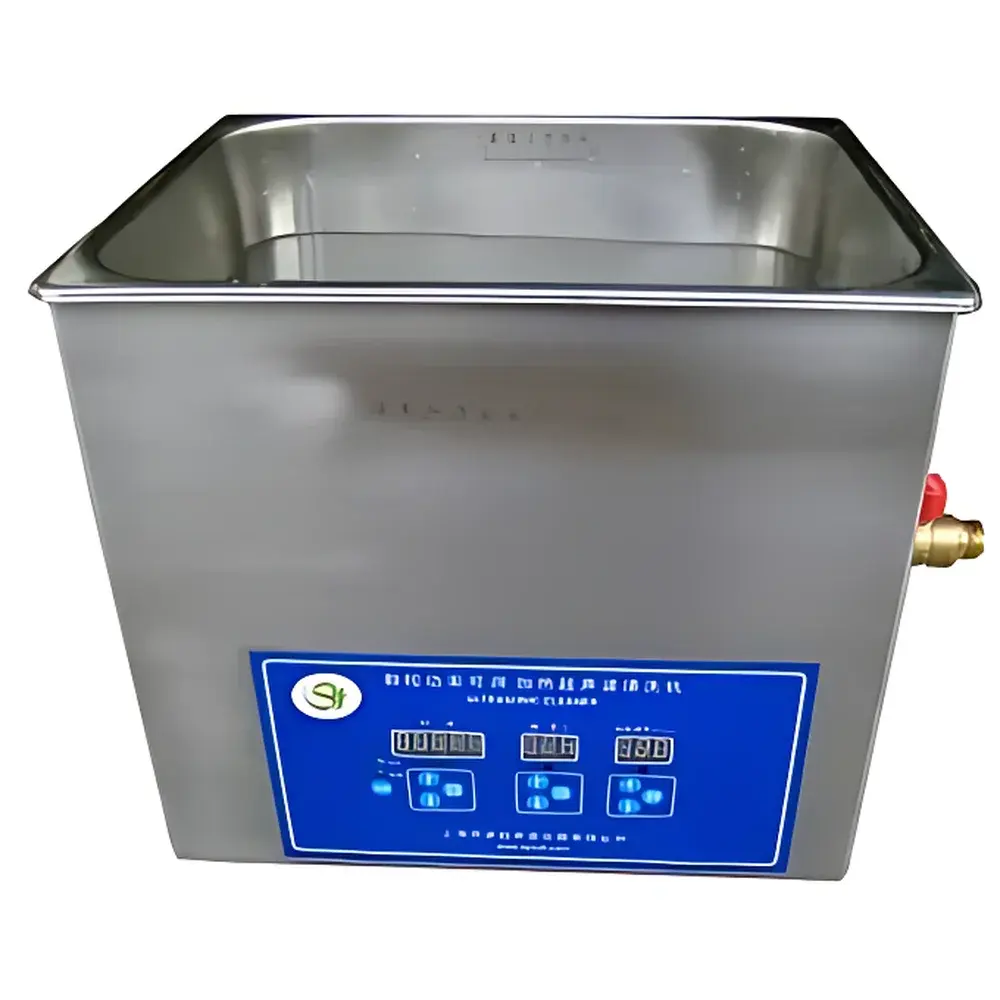
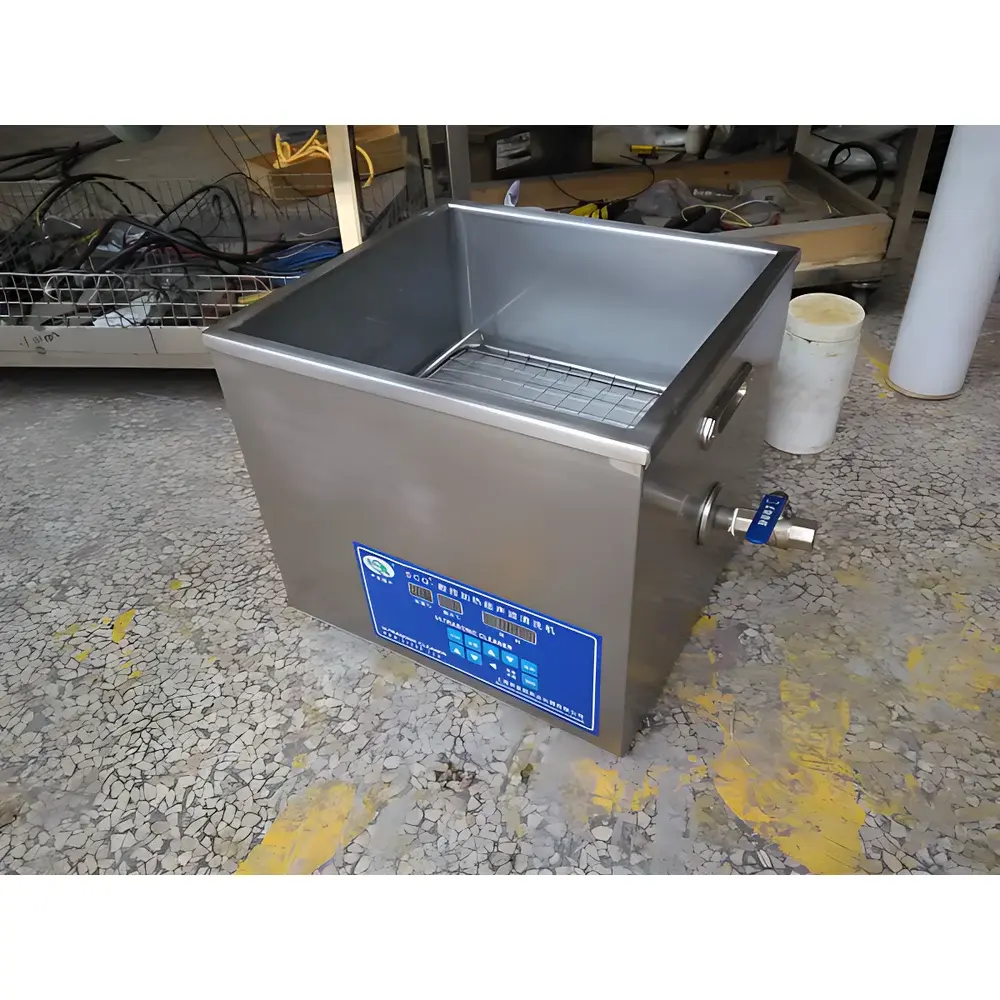
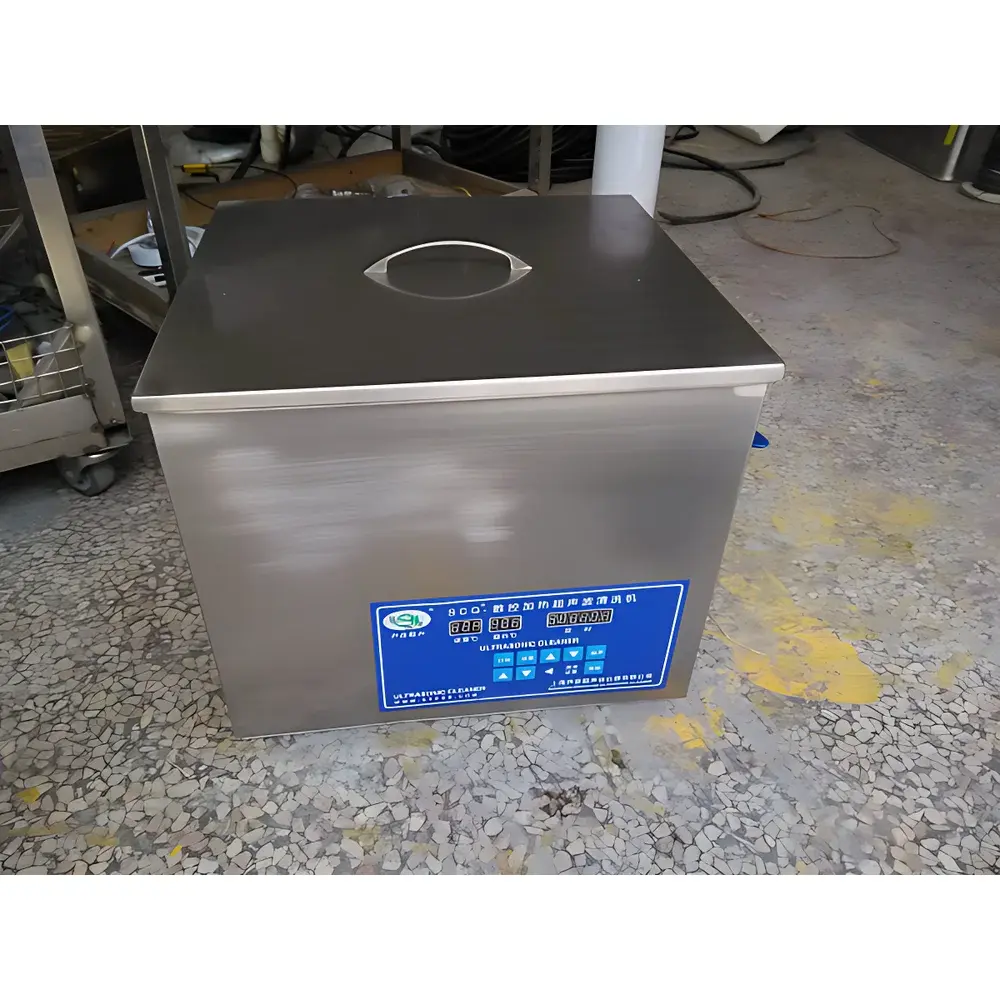
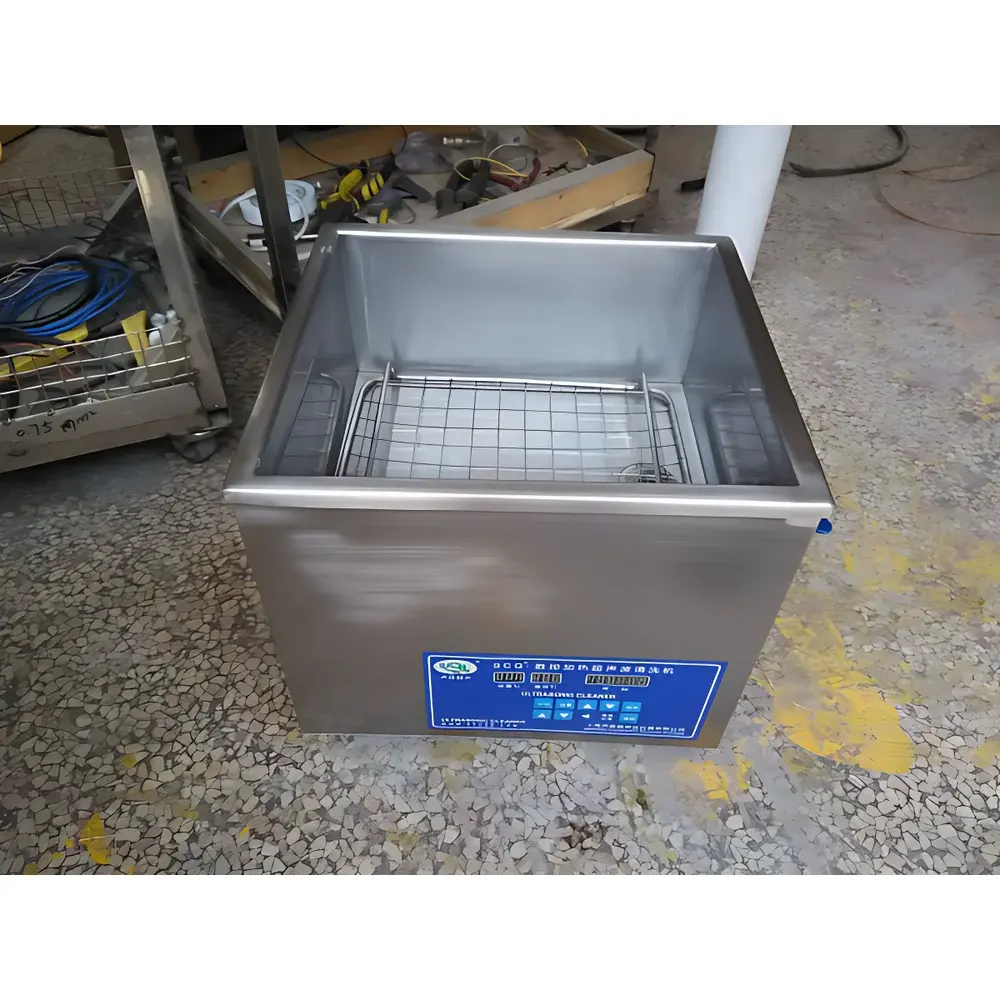
SYC Sycs SCQ-6201 Ultrasonic Cleaner
| Brand | SYC Sycs |
|---|---|
| Origin | Shanghai, China |
| Model | SCQ-6201 |
| Capacity | 15 L |
| Ultrasonic Frequency | 40 kHz |
| Ultrasonic Power | 350 W |
| Timer Range | 1–60 min |
| Lid | Sound-dampening cover included |
| Drain | Manual valve |
| Tank Dimensions | 330 × 300 × 150 mm |
| Construction | SUS304 stainless steel tank and basket |
| Safety Features | Overload and overheat protection |
| Compliance | Designed for GLP-supporting lab environments |
Overview
The SYC Sycs SCQ-6201 Ultrasonic Cleaner is a benchtop laboratory-grade cleaning system engineered for precision removal of particulate contaminants, organic residues, and adsorbed films from delicate and complex-surface objects. It operates on the principle of ultrasonic cavitation—high-frequency sound waves (40 kHz) generate microscopic vacuum bubbles in the cleaning solution that implode with localized energy, producing intense but non-abrasive mechanical agitation at surfaces. This mechanism enables effective cleaning of blind holes, microchannels, porous structures, and intricate geometries inaccessible to manual or spray-based methods. Designed for routine use in analytical laboratories, quality control facilities, medical device reprocessing units, and R&D settings, the SCQ-6201 delivers reproducible cleaning performance without compromising sample integrity or operator safety.
Key Features
- Robust 15-liter stainless steel tank (SUS304 grade) with seamless welded construction—resistant to corrosion from aqueous, alkaline, and mild solvent-based cleaning solutions.
- Fixed-frequency 40 kHz transducer array with proprietary U.S.-sourced piezoelectric chips, optimized for stable cavitation output and extended service life (>10,000 hours nominal).
- Digital timer with 1–60 minute adjustable interval; automatic shutdown upon completion to prevent solution overheating or unnecessary energy consumption.
- Integrated sound-dampening lid reduces ambient noise to ≤55 dB(A) at 1 m distance—meeting ISO 11201 requirements for low-noise laboratory equipment.
- Dual thermal and electrical overload protection circuits ensure safe operation during extended cycles or under variable load conditions.
- Manual drain valve positioned at tank base for rapid, residue-free solution exchange—compatible with standard lab waste disposal protocols.
- Removable SUS304 wire mesh basket with ergonomic handle; supports uniform part immersion and prevents direct contact between samples and tank bottom.
Sample Compatibility & Compliance
The SCQ-6201 accommodates a broad spectrum of laboratory and industrial components—including glassware (vials, cuvettes, pipettes), metal parts (surgical instruments, watch components, PCBs), ceramics, polymers, and composite substrates. Its non-thermal, non-contact cleaning action preserves dimensional stability and surface finish of heat-sensitive or coated materials. While not certified as a medical sterilizer, the unit supports disinfection protocols when used with EPA-registered liquid disinfectants (e.g., peracetic acid, hydrogen peroxide blends) in accordance with CDC/WHO guidelines. The device meets CE marking requirements for electromagnetic compatibility (EN 61326-1) and low-voltage safety (EN 61010-1). Its design facilitates audit readiness for GLP and ISO/IEC 17025-compliant labs through consistent operational parameters and traceable maintenance logs.
Software & Data Management
The SCQ-6201 is a standalone analog/digital hybrid instrument with no embedded firmware or network interface. All operational parameters are controlled via front-panel push-button interface with LED display. While it does not support electronic data capture or remote monitoring, its fixed 40 kHz frequency and calibrated 350 W power output enable highly repeatable process validation across batches. Users may document cleaning cycles manually or integrate the unit into validated SOPs using external time-stamped logbooks or LIMS-linked workflow records. For regulated environments requiring 21 CFR Part 11 compliance, third-party hardware timers with audit-trail functionality can be deployed upstream of the unit’s power supply.
Applications
- Cleaning of HPLC vials, GC autosampler trays, and electrophoresis combs prior to analysis.
- Decontamination of reusable surgical tools, dental prostheses, and orthodontic appliances in clinical research labs.
- Removal of flux residues and solder paste from printed circuit boards during electronics prototyping.
- Preparation of optical components (lenses, prisms, mirrors) for coating or metrology by eliminating sub-micron particles.
- Extraction assistance for solid-phase microextraction (SPME) substrates and membrane filters.
- Routine maintenance of laboratory glassware—especially items with narrow necks, ground joints, or etched markings.
FAQ
Is the SCQ-6201 suitable for cleaning delicate MEMS devices or semiconductor wafers?
Yes—when operated with deionized water or low-surface-tension solvents (e.g., IPA/water mixtures) and appropriate dwell times (typically 3–10 min), it achieves particle removal down to ~0.5 µm without inducing micro-scratches or electrostatic damage.
Can I use flammable solvents such as acetone or ethanol in this unit?
No—the SCQ-6201 lacks explosion-proof certification and internal spark suppression. Only aqueous or non-flammable, low-volatility cleaning agents (e.g., alkaline detergents, citric acid solutions) are permitted.
Does the unit include temperature control or heating capability?
No—this model operates at ambient temperature only. For thermally enhanced cleaning, external heated baths or recirculating chillers must be used in conjunction with compatible cleaning solutions.
What is the expected service life of the transducers under normal lab usage?
With proper maintenance (e.g., regular degassing, avoidance of dry operation, periodic descaling), transducers maintain ≥90% nominal output efficiency for ≥8 years based on accelerated life testing per IEC 60068-2-64.
How often should the cleaning solution be replaced?
Solution replacement frequency depends on soil load and chemistry; for light-duty lab applications, change every 8–12 hours of cumulative operation or after each batch of heavily soiled items to prevent cross-contamination and maintain cavitation efficiency.



