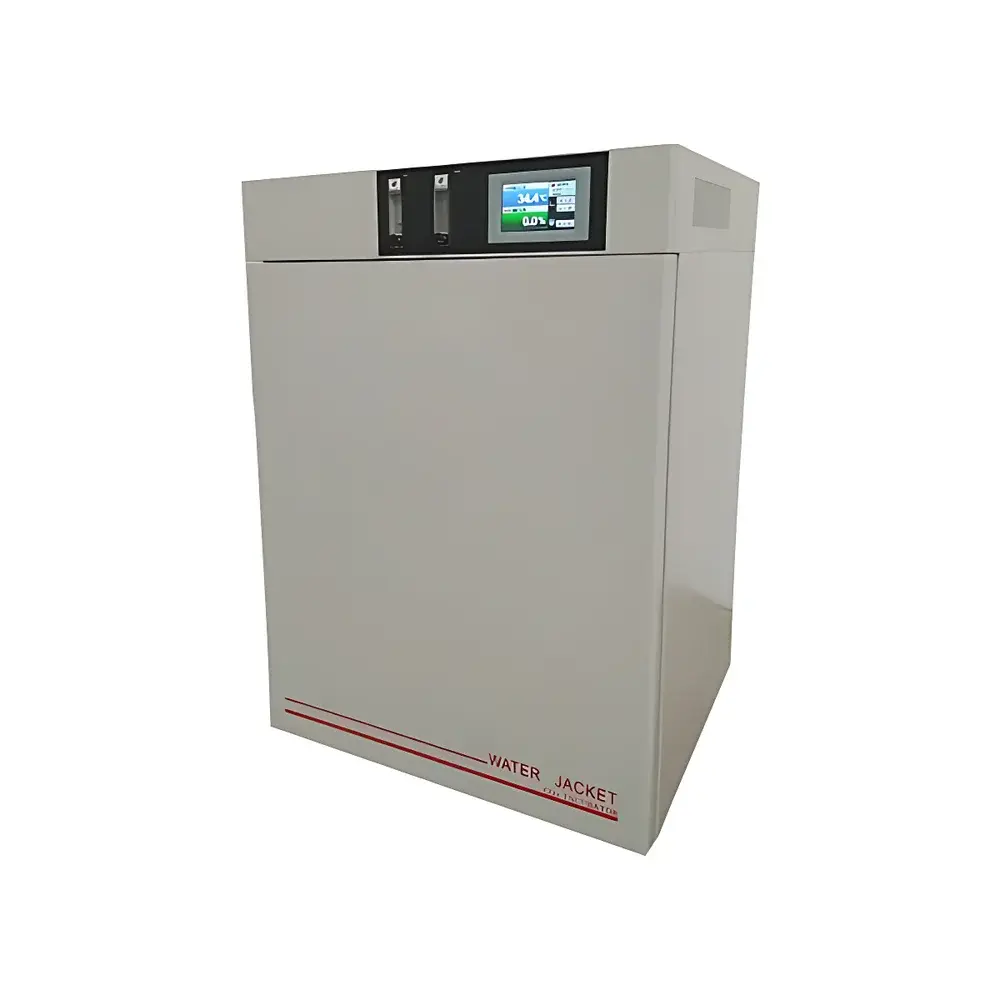
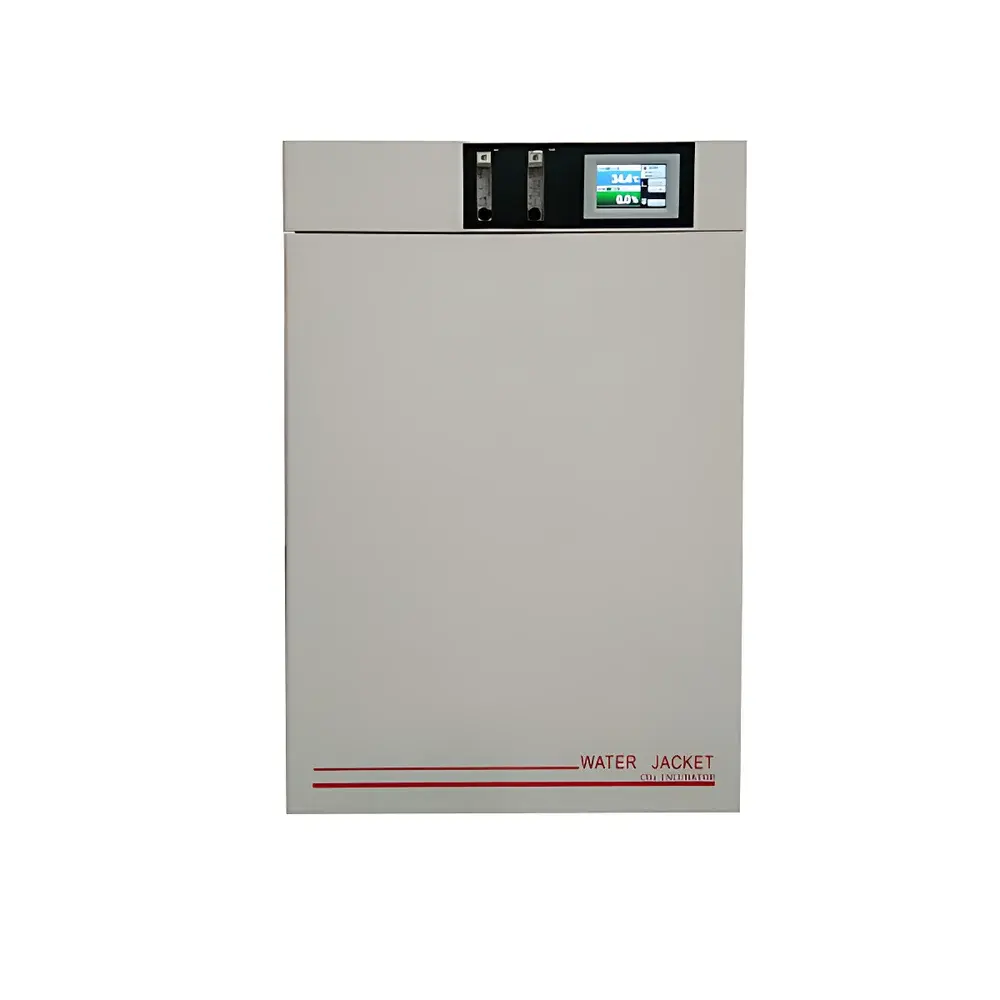
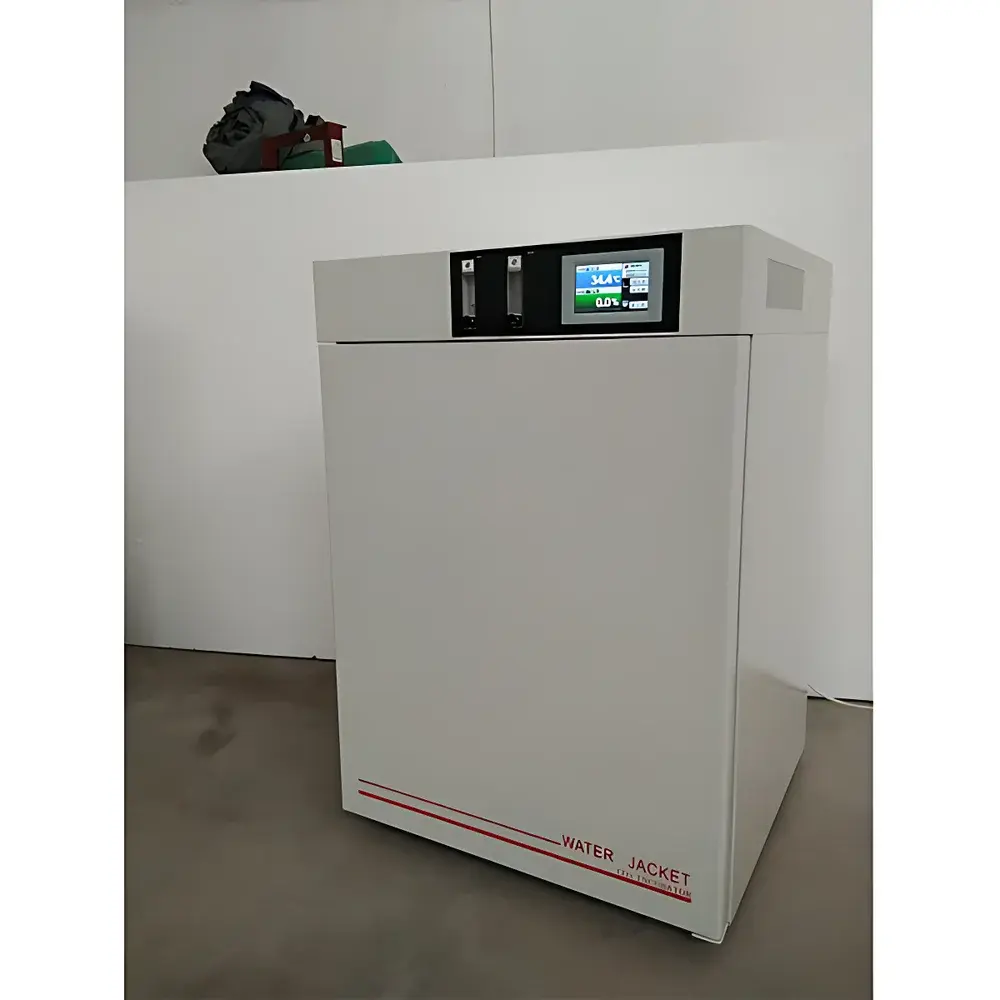
Chuanna HH.CHP-TD Advanced CO₂ Incubator with 90°C Humidified Sterilization
| Brand | Chuanna Instrument |
|---|---|
| Origin | Zhejiang, China |
| Instrument Type | Air-Jacketed CO₂ Incubator |
| CO₂ Detection | Infrared (IR) Sensor |
| Temperature Control Range & Accuracy | Ambient +5°C to 65°C |
| Temperature Uniformity | ±0.2°C |
| CO₂ Concentration Control Range & Accuracy | 0–20% |
| Chamber Capacity | 80 L |
| Standard Configuration | 90°C Humidified Sterilization Cycle |
Overview
The Chuanna HH.CHP-TD is an air-jacketed, high-reliability CO₂ incubator engineered for routine and sensitive mammalian cell culture applications in academic research laboratories, biopharmaceutical QC environments, and clinical cell therapy facilities. It employs non-dispersive infrared (NDIR) sensing technology for real-time, drift-compensated CO₂ concentration monitoring—ensuring stable gas-phase control critical for pH maintenance in bicarbonate-buffered media. The chamber utilizes a dual-wall air-jacketed thermal architecture with independent door heating and microprocessor-based PID temperature regulation to minimize thermal gradients and eliminate condensation on the inner observation window. Its humidified sterilization protocol operates at 90°C with saturated steam generated via natural water pan evaporation, delivering validated microbial reduction (>6-log reduction of Bacillus stearothermophilus spores per ISO 14644-1 Annex B and ISO 15223-1 compliant validation protocols) without requiring external steam generators or complex plumbing.
Key Features
- Air-jacketed thermal design with independent door heating circuitry prevents cold bridging and eliminates interior glass fogging during frequent access.
- Finnish-sourced NDIR CO₂ sensor with automatic baseline compensation and factory calibration traceable to NIST standards ensures long-term measurement stability and repeatability (±0.1% CO₂ accuracy over 12 months).
- Stainless steel chamber with seamless semi-circular corners and removable stainless steel shelves facilitate ISO 13485-compliant cleaning and decontamination procedures.
- UV-C germicidal lamp (254 nm) integrated into the chamber ceiling enables scheduled non-contact surface disinfection between cultures—compatible with GLP audit requirements for environmental monitoring logs.
- Dual-door structure: outer insulated door and inner tempered glass door allow visual inspection without compromising thermal or gaseous stability (temperature recovery <3 min after 10-sec opening at 37°C/5% CO₂).
- Microprocessor-controlled humidification system maintains >95% RH at 37°C using passive water pan evaporation; humidity level displayed digitally with optional external RH probe interface.
- Independent over-temperature cut-off circuit with mechanical backup thermostat provides redundant safety per IEC 61010-1 Class II requirements.
Sample Compatibility & Compliance
The HH.CHP-TD supports standard T-25, T-75, and multi-well plate formats, as well as roller bottles and hypoxia-compatible modular inserts (not included). Chamber dimensions (W×D×H: 400 × 400 × 500 mm) accommodate up to six 175 cm² flasks simultaneously with unobstructed airflow distribution. All wetted surfaces are electropolished AISI 304 stainless steel, compliant with USP <661.1> for extractables profiling. The unit meets CE marking requirements under Directive 2014/30/EU (EMC) and 2014/35/EU (LVD), and its sterilization cycle aligns with ISO 13408-1 for aseptic processing validation. Optional IQ/OQ documentation packages support FDA 21 CFR Part 11-compliant installation and operational qualification.
Software & Data Management
The embedded controller features a 4.3-inch capacitive touchscreen with multilingual UI (English, German, French, Spanish), configurable alarm thresholds, and real-time trend logging for temperature, CO₂, and humidity (10,000-point internal memory). USB export enables CSV-formatted data transfer for integration with LIMS or ELN systems. Audit trail functionality records all parameter changes, door openings, sterilization cycles, and alarm events with user ID stamping—fully compliant with ALCOA+ principles for data integrity. Remote monitoring via optional Ethernet module supports SNMP v3 and Modbus TCP protocols for centralized facility management.
Applications
This incubator is routinely deployed in stem cell expansion, primary neuron culture, hybridoma production, and 3D organoid development where precise CO₂–pH coupling and contamination-free operation are non-negotiable. Its 90°C humidified sterilization mode replaces formaldehyde fumigation in GMP cleanrooms, reducing downtime and eliminating toxic residue concerns. The stable thermal uniformity (±0.2°C) and rapid CO₂ recovery (<60 sec to ±0.2% of setpoint post-door-open) make it suitable for time-lapse microscopy workflows requiring uninterrupted environmental fidelity. Academic core facilities use its programmable ramp-hold profiles for differentiation studies involving temperature-shifted induction protocols.
FAQ
What validation documentation is available for the 90°C humidified sterilization cycle?
Chuanna provides a pre-validated cycle definition file with thermocouple mapping data (per ISO 14644-2 Annex D), spore challenge reports, and PQ protocol templates for user-executed requalification.
Is the NDIR CO₂ sensor field-replaceable and recalibratable?
Yes—the sensor module is hot-swappable and supports two-point calibration using certified gas standards (0% and 10% CO₂ in N₂); calibration coefficients are stored in EEPROM with firmware version lock.
Does the incubator comply with FDA 21 CFR Part 11 for electronic records?
When equipped with the Ethernet module and activated audit trail license, the system meets Part 11 requirements for electronic signatures, secure login, and immutable record retention.
Can external sensors be integrated for environmental monitoring?
The RS-485 port supports third-party O₂, volatile organic compound (VOC), or particle counters via Modbus RTU; analog inputs accept 4–20 mA signals from calibrated external probes.
What is the recommended maintenance interval for HEPA filtration?
The optional 0.3 µm HEPA filter (installed upstream of the circulation fan) should be inspected quarterly and replaced annually—or sooner if pressure drop exceeds 250 Pa—as documented in the preventive maintenance logbook.