
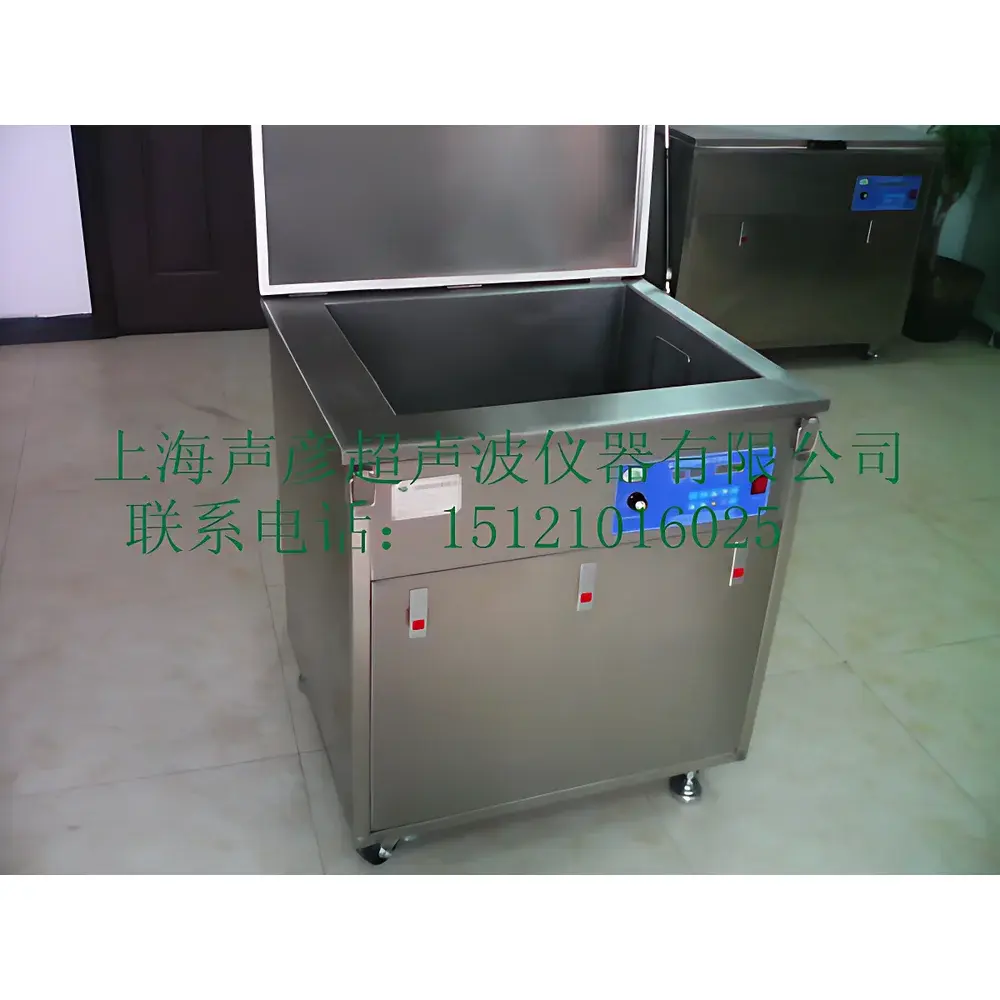
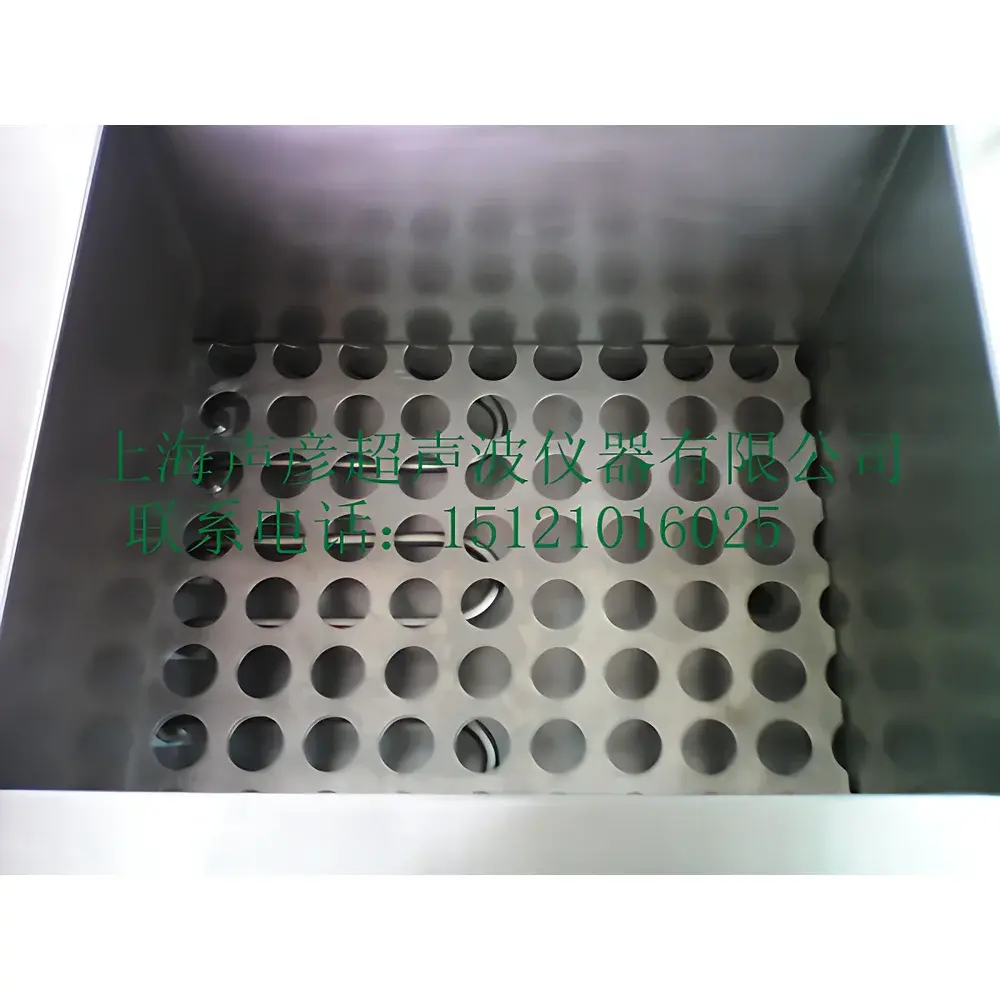
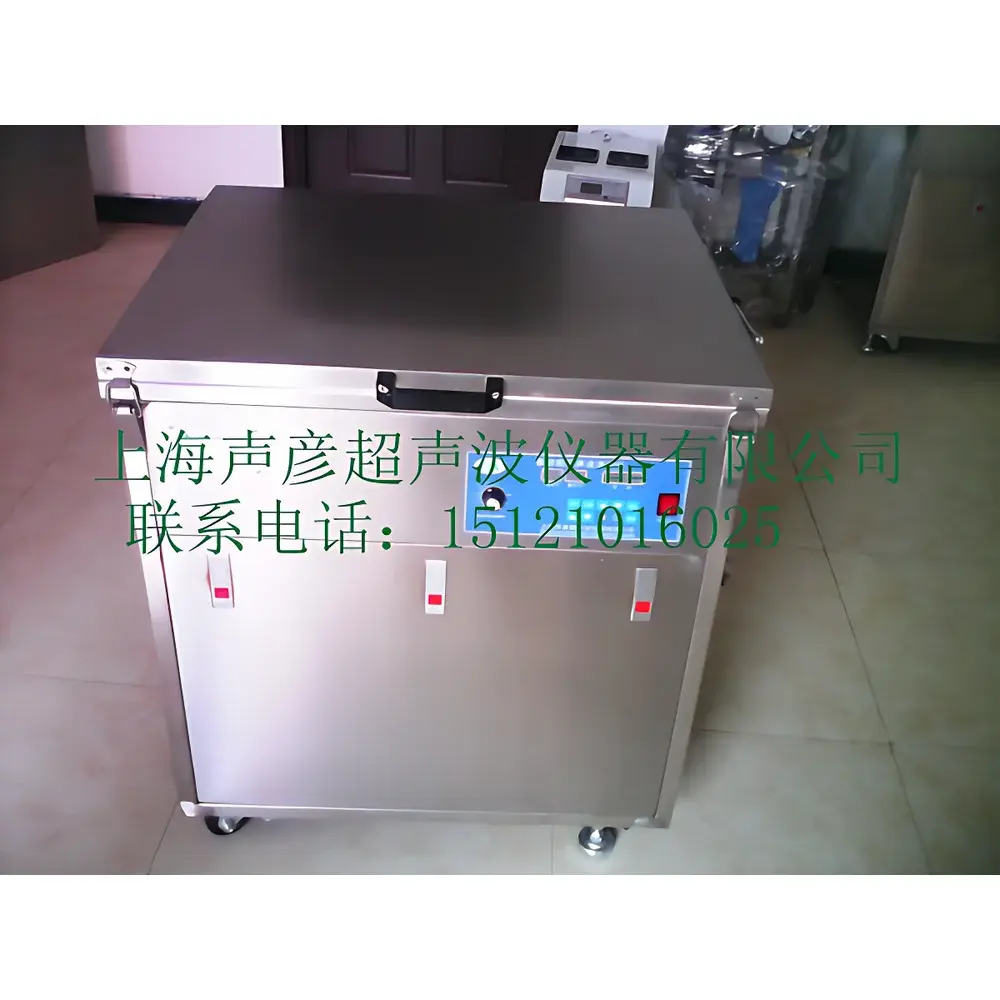
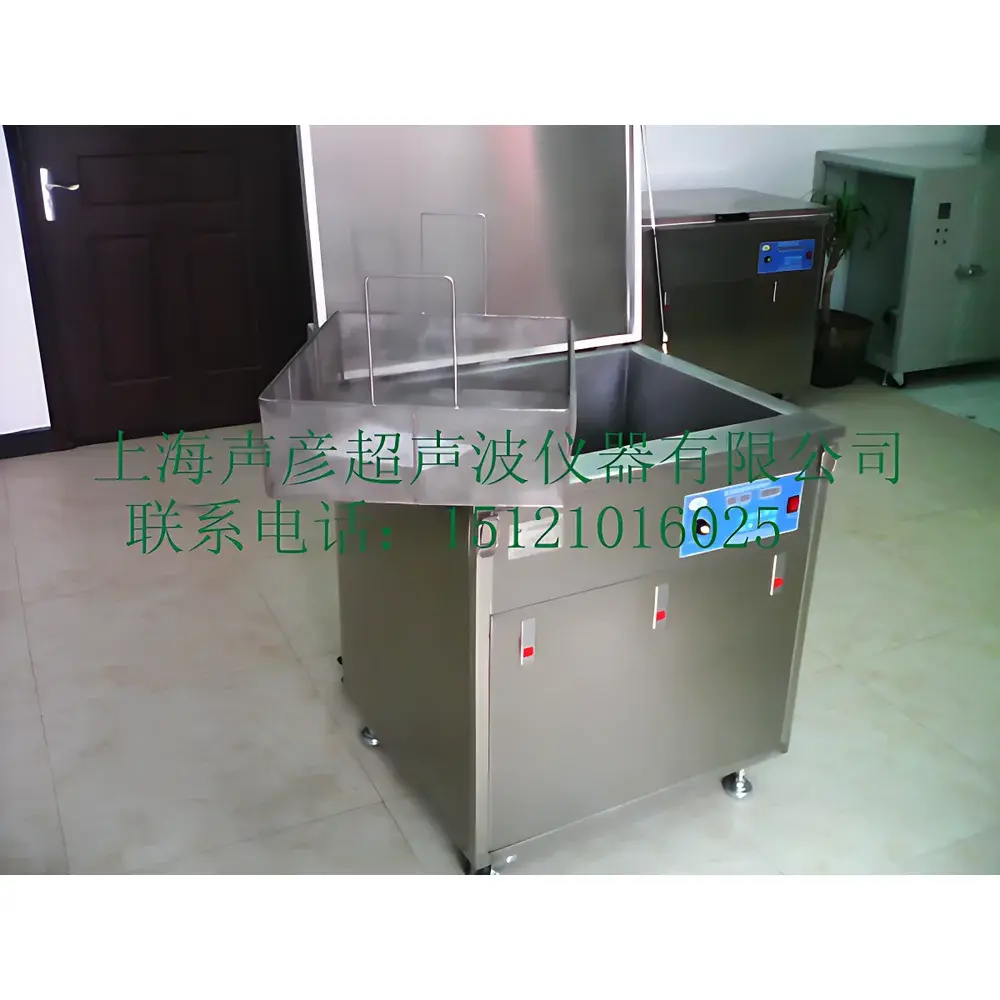
Shengyan SCQ-140911C Single-Frequency High-Capacity Ultrasonic Cleaner
| Brand | Shengyan Ultrasonics (SYCS) |
|---|---|
| Origin | Shanghai, China |
| Model | SCQ-140911C |
| Tank Capacity | 135 L |
| Ultrasonic Frequency | 28 kHz |
| Ultrasonic Power Output | 2000 W |
| Power Adjustment Range | 10–100% |
| Heating Temperature Range | Ambient to 80 °C |
| Timer Range | 1–600 min |
| Sound-Dampening Lid | Yes (sealed with latch) |
| Manual Fill/Drain | Yes (1-inch NPT ports) |
| Construction | 2.0 mm thick SUS304 stainless steel tank |
| External Dimensions (L×W×H) | 660 × 560 × 750 mm |
| Internal Tank Dimensions (L×W×H) | 600 × 500 × 450 mm |
| Heating Power | 6 kW (dual heating elements) |
| Casters | 4 swivel casters with brakes |
| Power Supply | 220 VAC, 50 Hz |
| Basket Included | Yes (supports cylindrical parts up to Ø0.5 mm × 500 mm) |
Overview
The Shengyan SCQ-140911C is a single-frequency, high-power ultrasonic cleaning system engineered for demanding laboratory and industrial maintenance applications where consistent cavitation intensity, thermal stability, and large-volume processing are required. Operating at a fixed frequency of 28 kHz, the unit leverages low-frequency ultrasonic energy to generate robust cavitation bubbles in aqueous or solvent-based cleaning media—ideal for removing particulate contamination, oils, oxides, carbon deposits, and organic residues from complex geometries including blind holes, internal channels, threaded surfaces, and micro-textured substrates. Its 135-liter stainless steel tank (SUS304, 2.0 mm wall thickness) supports batch processing of large components or multiple smaller items simultaneously, while the integrated 6 kW dual-heating system enables precise temperature control from ambient to 80 °C—critical for enhancing detergent efficacy and accelerating soil dissolution without compromising material integrity.
Key Features
- 2000 W ultrasonic transducer output with continuous 10–100% power regulation via digital interface—enabling optimization of cavitation intensity for delicate vs. robust substrates.
- Microprocessor-controlled timer with 1-second resolution across a 1–600 minute range (up to 9 h 59 min 59 s), supporting both short-cycle degassing and extended soak-cleaning protocols.
- Hermetically sealed, latched sound-dampening lid compliant with ISO 9614-2 noise emission guidelines—reducing operational noise to ≤65 dB(A) at 1 m distance.
- Full manual fill-and-drain capability via standard 1-inch NPT inlet/outlet ports; compatible with external recirculation or filtration loops when integrated into centralized lab utility systems.
- Integrated heavy-duty SUS304 wire basket (included) designed to accommodate cylindrical workpieces up to Ø0.5 mm × 500 mm—optimized for uniform energy distribution and mechanical support during sonication.
- Four locking swivel casters facilitate safe repositioning within shared lab spaces; reinforced chassis accommodates static loads up to 200 kg when fully filled.
- Digital LED display with real-time feedback on set temperature, elapsed time, power level, and fault status—including overtemperature, dry-run, and current-limit alerts.
Sample Compatibility & Compliance
The SCQ-140911C is validated for use with a broad spectrum of materials commonly encountered in analytical, semiconductor, optics, and precision engineering laboratories—including borosilicate glass, fused silica, alumina ceramics, stainless steel (304/316), titanium alloys, silicon wafers, and anodized aluminum. It meets general safety requirements per IEC 61010-1:2010 for electrical equipment used in laboratory environments. While not certified to UL or CE for standalone medical device reprocessing, its design aligns with key principles referenced in ISO 15883-1 (washer-disinfectors) and ASTM D2603 (ultrasonic cleaning validation methodology). For GLP/GMP-regulated workflows, the instrument supports audit-ready operation through deterministic timer logging and manual process documentation; optional RS232 or USB data export modules (sold separately) enable integration with LIMS for traceable parameter recording.
Software & Data Management
The SCQ-140911C operates via embedded firmware without proprietary software dependencies. All operational parameters—including time, temperature, and power—are stored in non-volatile memory and retained after power cycling. While no cloud connectivity or remote monitoring is built-in, the unit provides TTL-level serial output (RS232) for third-party integration with laboratory automation platforms or custom SCADA interfaces. Users may log cleaning cycles manually using standardized SOP templates aligned with ISO/IEC 17025 clause 7.7 (reporting of results) and FDA 21 CFR Part 11 Annex A (electronic records)—provided external timestamped acquisition and user authentication are implemented at the system level.
Applications
- Pre-analytical sample preparation: cleaning HPLC columns, GC injectors, autosampler vials, and ICP-MS nebulizers to prevent cross-contamination and signal drift.
- Semiconductor fabrication support: removal of photoresist residues and metallic contaminants from mask blanks and wafer carriers prior to metrology.
- Optical component servicing: restoration of anti-reflective coated lenses, laser cavity mirrors, and fiber optic ferrules without surface abrasion.
- Mechanical engineering QA/QC: post-machining deburring of hydraulic valves, fuel injectors, and bearing assemblies prior to dimensional inspection.
- Biochemical research: cell lysate clarification, nanoparticle dispersion homogenization, and DNA shearing pre-library prep—when operated without heating and with degassed buffers.
- Educational laboratories: demonstration of acoustic cavitation physics, sonochemical reaction kinetics, and interfacial cleaning mechanisms in physical chemistry curricula.
FAQ
What cleaning solutions are compatible with the SCQ-140911C?
Aqueous alkaline, neutral, and mild acidic detergents—as well as low-viscosity solvents such as isopropanol, ethanol, and terpene-based formulations—are suitable. Avoid halogenated solvents (e.g., chloroform, trichloroethylene) due to corrosion risk and ultrasonic degradation hazards.
Can this unit be used for sterilization?
No. Ultrasonic cleaning removes bioburden but does not achieve sterility. It is a critical pre-sterilization step—followed by autoclaving, ethylene oxide, or hydrogen peroxide plasma treatment per ISO 13485 and AAMI ST79.
Is the heater independently controllable from ultrasonic activation?
Yes. Heating and sonication functions operate independently; users may activate heating only (for pre-warming), sonication only (for cold cleaning), or both concurrently.
Does the unit include degassing functionality?
While not equipped with a dedicated vacuum degas cycle, the 28 kHz frequency and adjustable power allow effective in-situ degassing of cleaning baths during initial operation—typically completed within 5–10 minutes at 30–50% power.
What maintenance is required for long-term reliability?
Monthly inspection of transducer mounting bolts, quarterly descaling of heating elements (if using hard water), and annual verification of timer accuracy and temperature sensor calibration against NIST-traceable references.



