
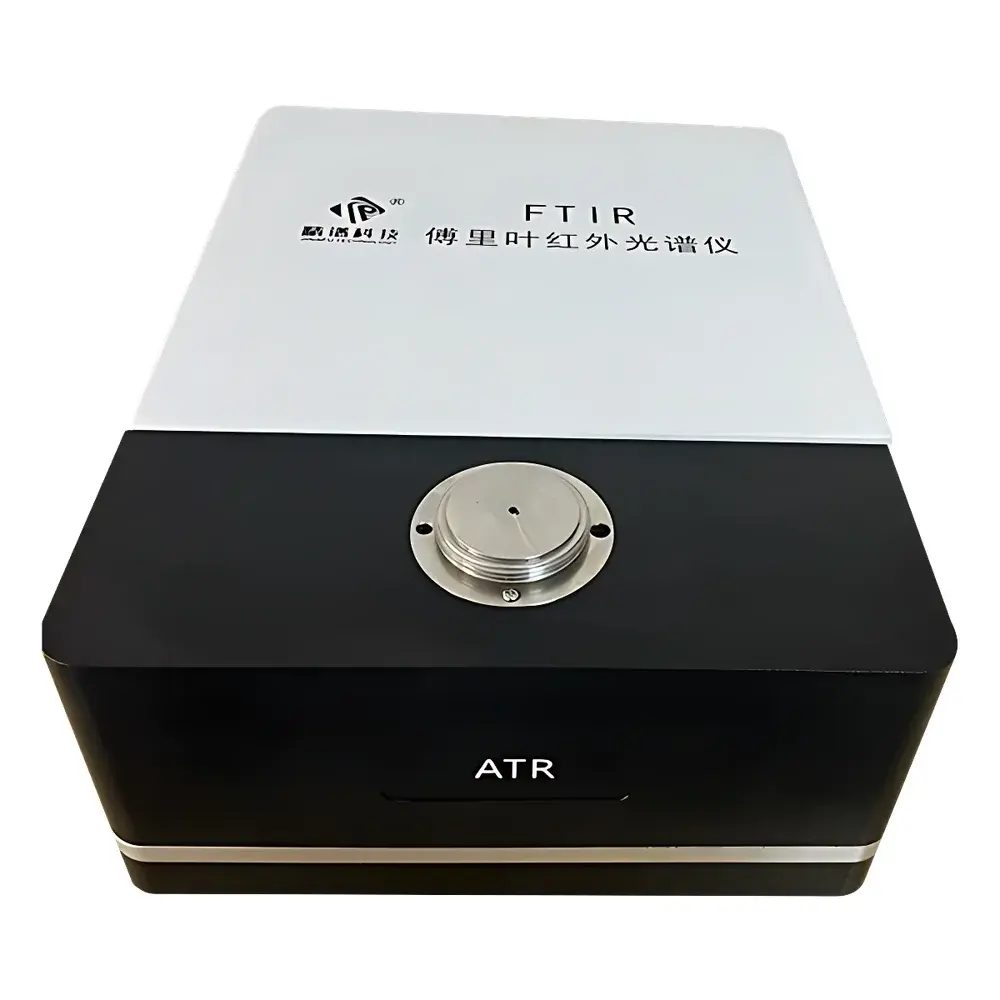
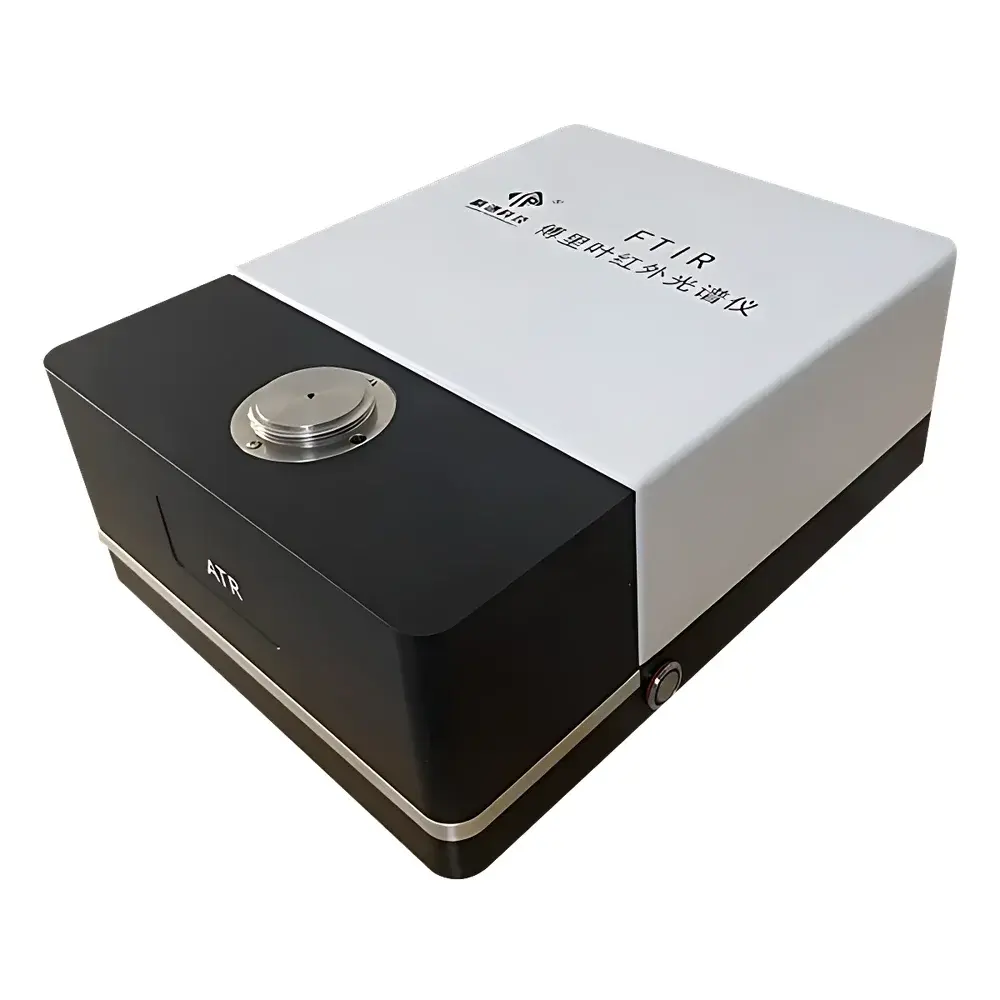
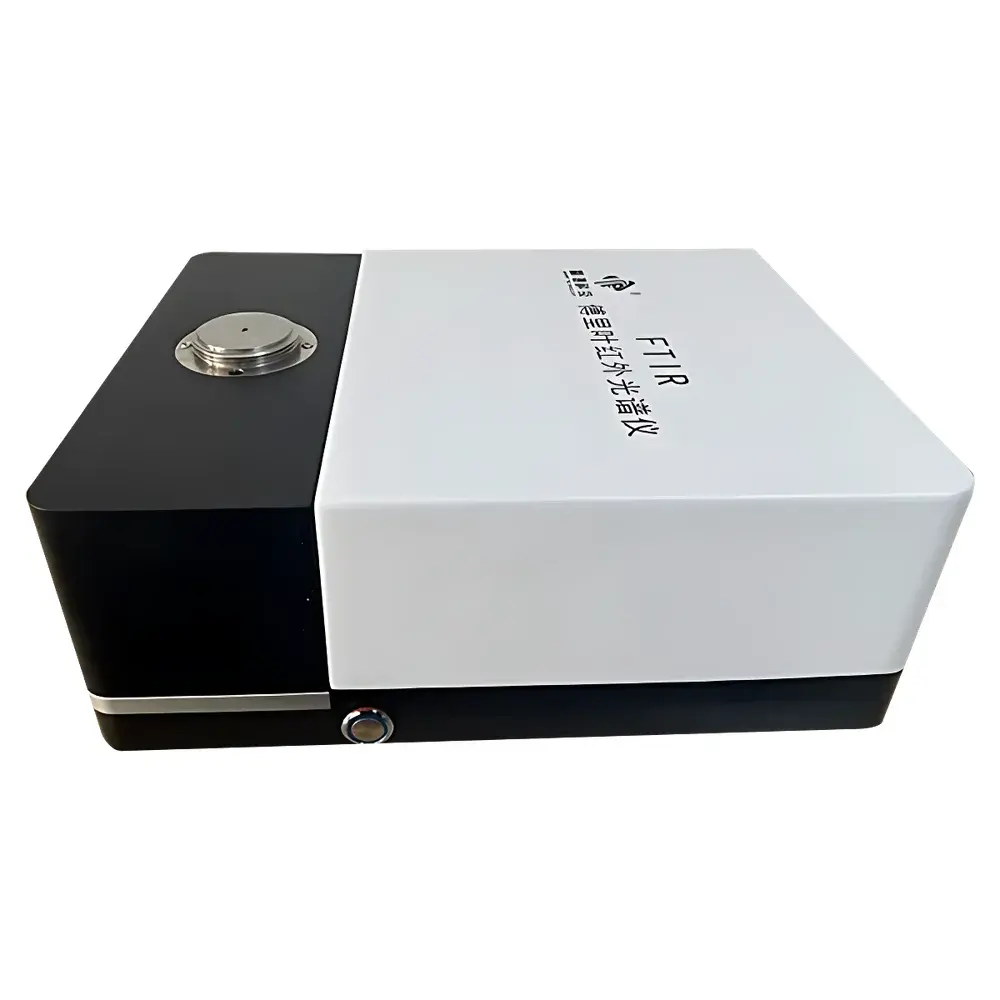
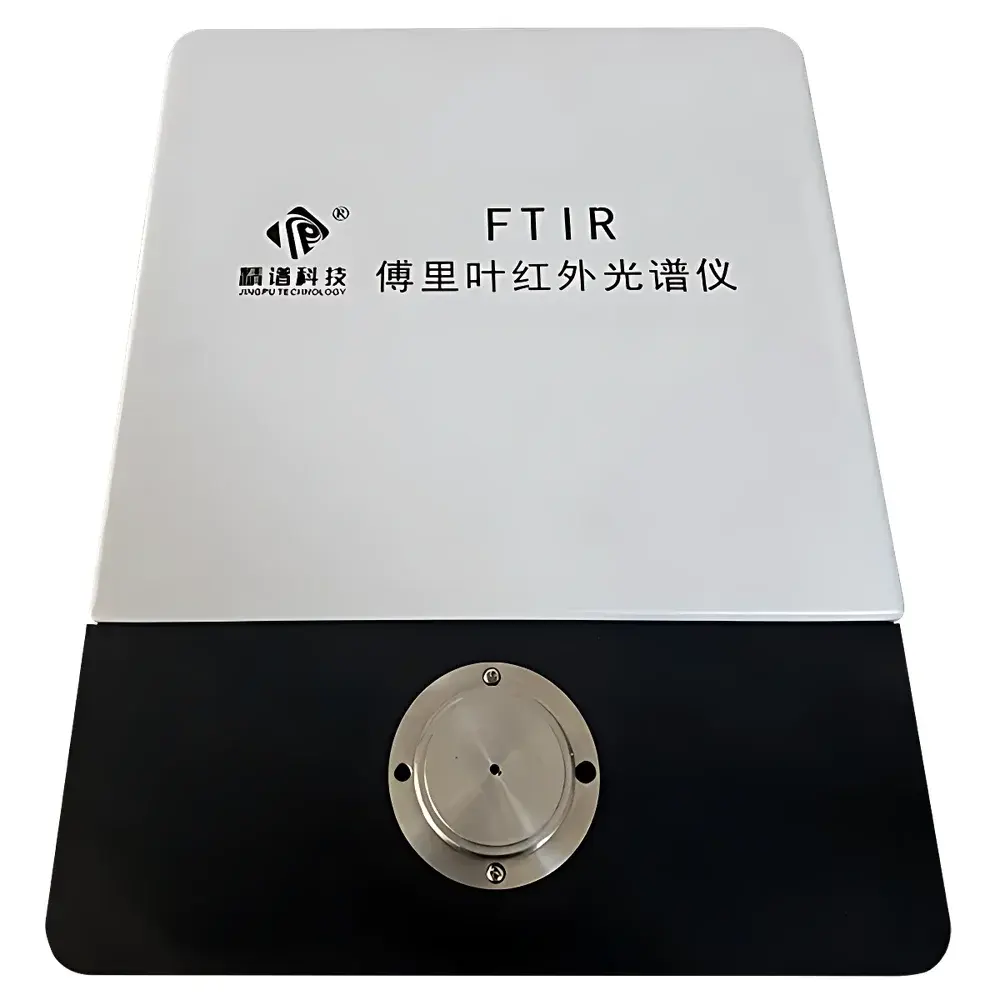
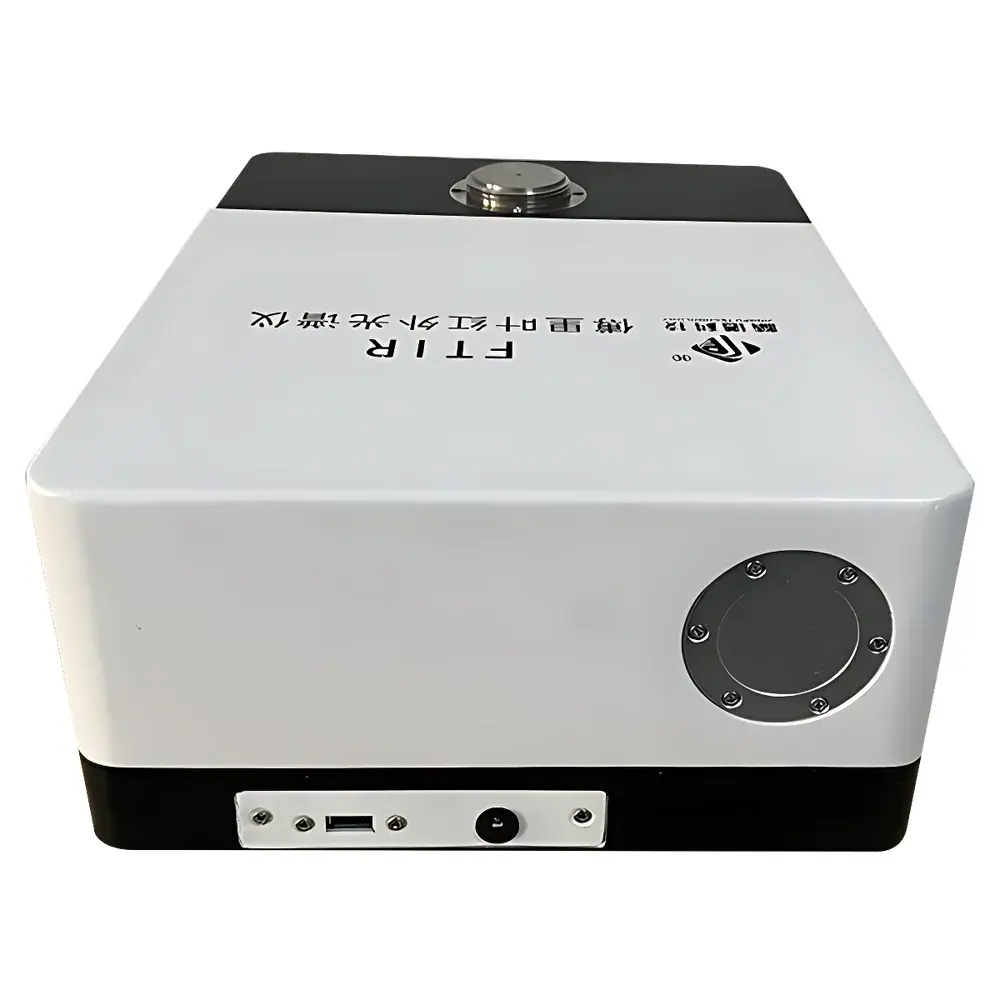
Jingpu Technology JP-AFL25B Portable Fourier Transform Infrared (FTIR) Spectrometer
| Brand | Jingpu Technology |
|---|---|
| Origin | Henan, China |
| Model | JP-AFL25B |
| Instrument Type | Portable |
| FTIR Architecture | Interferometric (Michelson-type) |
| Wavenumber Range | 7800–350 cm⁻¹ |
| Spectral Resolution | ≤1 cm⁻¹ |
| Wavenumber Accuracy | ≤0.01 cm⁻¹ |
| Signal-to-Noise Ratio (SNR) | >45,000:1 (at 4 cm⁻¹, 1 min scan, MCT detector) |
| Beam Splitter | Multi-layer coated KBr with hydrophobic coating |
| Detector | Dual-mode DTGS / MCT (user-selectable) |
| IR Source | Long-life air-cooled high-intensity broadband source |
| Scan Speed | Software-selectable, continuously variable (0.1–2.5 cm/s) |
| Optical Platform | Monolithic hardened aluminum base with integrated interferometer and detector chambers |
| Mirror System | Gold-coated corner-cube retroreflectors (monolithic, adhesive-free) |
| Environmental Protection | Industrial-grade resistive humidity control + physical desiccant barrier |
| Data Interface | USB 2.0/3.0 |
| OS Compatibility | Windows 7/10/11 (64-bit) |
| Software | IRPro v5.x (database-driven, ASTM E2412 & EN 14078 compliant modules included) |
| Certified Compliance | ISO 9001, AAA Measurement Management System, EMC-compliant per GB/T 18268.1–2010 (CNAS-verified) |
Overview
The Jingpu Technology JP-AFL25B is a field-deployable Fourier Transform Infrared (FTIR) spectrometer engineered for high-fidelity molecular identification and quantitative analysis in non-laboratory environments. Based on Michelson interferometry, the instrument acquires full mid-infrared spectra via rapid-scanning interferogram acquisition and fast Fourier transformation. Its optical architecture features a monolithic aluminum optical bench, gold-coated corner-cube retroreflectors (eliminating alignment drift), and fully sealed, compartmentalized interferometer and detector modules — ensuring long-term stability under variable ambient conditions. Designed for regulatory-grade applications, the JP-AFL25B meets electromagnetic compatibility (EMC) requirements per GB/T 18268.1–2010 and supports traceable calibration protocols aligned with ISO/IEC 17025 principles. The system operates across the standard mid-IR range (7800–350 cm⁻¹), delivering ≤1 cm⁻¹ resolution and wavenumber accuracy of ≤0.01 cm⁻¹ — performance validated against NIST-traceable polystyrene film standards.
Key Features
- Robust portable platform with shock-absorbing chassis and integrated environmental monitoring: real-time temperature/humidity sensors trigger visual alerts when thresholds exceed operational limits (10–35 °C, <60% RH).
- Dual-detector capability: switchable DTGS (room-temperature) or liquid-nitrogen-cooled MCT for enhanced sensitivity in low-concentration or fast-dynamics measurements.
- Hydrophobic beam splitter: multi-layer coated KBr with proprietary moisture-resistant overcoat; ZnSe option available for extended durability in humid or corrosive atmospheres.
- Adhesive-free interferometer: monolithic gold-coated corner cubes ensure zero alignment drift over thermal cycling and mechanical vibration — critical for field repeatability.
- Full-spectrum data acquisition at user-defined scan speeds (0.1–2.5 cm/s), enabling optimization for SNR, throughput, or time-resolved studies.
- Comprehensive hardware-level protection: resistive dehumidification circuitry + replaceable desiccant cartridge + hermetic detector chamber sealing.
Sample Compatibility & Compliance
The JP-AFL25B supports solid, liquid, and gas-phase samples via modular accessories: 13 mm die press with KBr pellet kit, demountable liquid cells (30 × 5 mm KBr windows), ATR probes (ZnSe or diamond), and gas cells (path lengths 1–10 cm). All accessories comply with ISO 17025 sampling integrity guidelines. Regulatory readiness includes built-in audit trail logging (per FDA 21 CFR Part 11 requirements), electronic signature support, and GLP/GMP-compatible report templates. Certificate of Conformance includes ISO 9001:2015 and AAA Measurement Management System certification. EMC validation documentation (CNAS-accredited test report) is supplied post-delivery.
Software & Data Management
IRPro v5.x is a database-native FTIR workstation supporting spectral annotation, library search (≥200,000 reference spectra), differential spectroscopy, baseline correction, peak integration, and multivariate calibration. Quantitative modules implement ASTM E2412 (biodiesel oxidation stability) and EN 14078 (fatty acid methyl ester content) algorithms with pre-loaded calibration models. Spectral processing tools include Savitzky-Golay smoothing, vector normalization, and second-derivative analysis. All raw interferograms and processed spectra are stored in vendor-neutral .spa/.srs formats. Software updates are provided free-of-charge for the instrument’s operational lifetime, with version-controlled release notes and validation summaries.
Applications
- Pharmaceutical QA/QC: excipient identification, counterfeit drug screening, packaging material verification per USP <851>, and GMP-compliant raw material release testing.
- Polymer characterization: quantification of crystallinity in polyolefins, oxidation index in rubber, carbonyl index in aged plastics, and additive migration in food-contact films.
- Fuel & lubricant analysis: T501 antioxidant concentration in transformer oil (ASTM D2668), benzene content in gasoline (ASTM D3606), and carbon-type distribution in mineral oils (ASTM D2425).
- Environmental monitoring: identification of petroleum hydrocarbons in soil/water extracts, silica polymorph differentiation in airborne dust (OSHA ID-142), and functional group mapping in microplastics.
- Materials science: emissivity measurement of architectural glazing (ISO 10292), interstitial oxygen in silicon wafers (ASTM F121), and residual solvent quantification in battery electrode coatings.
FAQ
Is the JP-AFL25B suitable for GLP-regulated laboratories?
Yes — it includes full audit trail logging, electronic signatures, user access controls, and 21 CFR Part 11–compliant software architecture.
Can the instrument be used for quantitative analysis without external calibration standards?
Quantitative modules include factory-calibrated models for common assays (e.g., ASTM E2412 biodiesel oxidation); however, method-specific validation using in-house reference standards is required for regulatory submissions.
What environmental conditions limit field deployment?
Operational range is 10–35 °C and <60% RH; extended operation beyond this requires active climate control or accessory-based environmental enclosures.
Does the system support ATR measurements?
Yes — optional single-bounce ZnSe or diamond ATR accessories are available with pressure-adjustable contact mechanisms and integrated alignment guides.
How is spectral reproducibility maintained during transport?
The monolithic optical bench, adhesive-free corner-cube mirrors, and sealed interferometer chamber eliminate sensitivity to orientation shifts or minor impacts typical of mobile use.
Related Products




