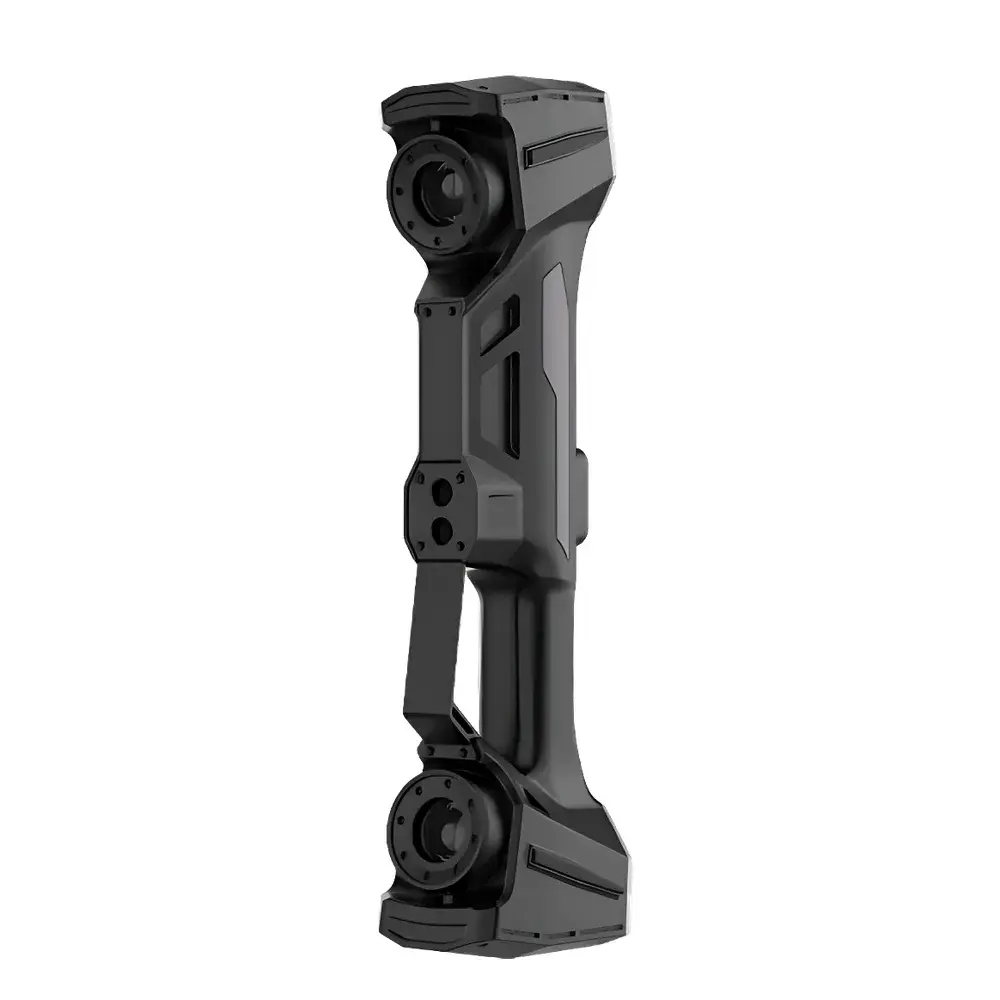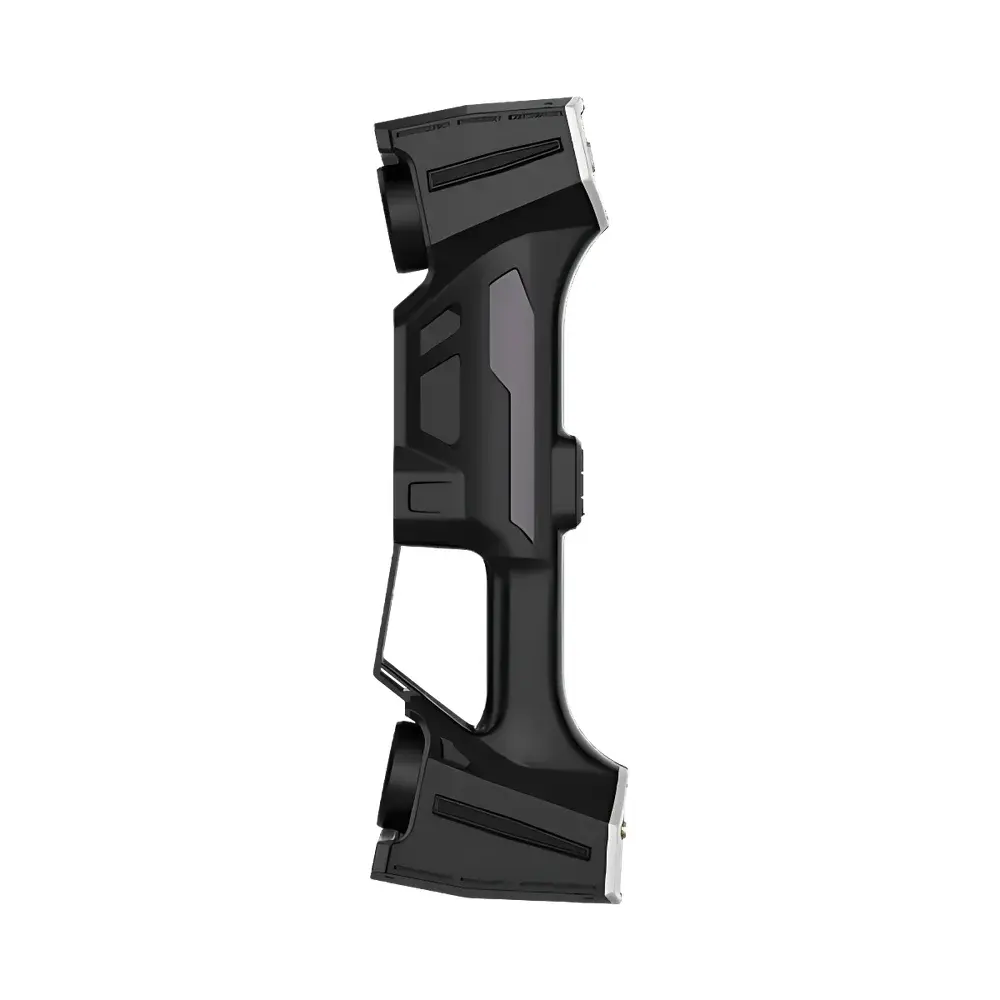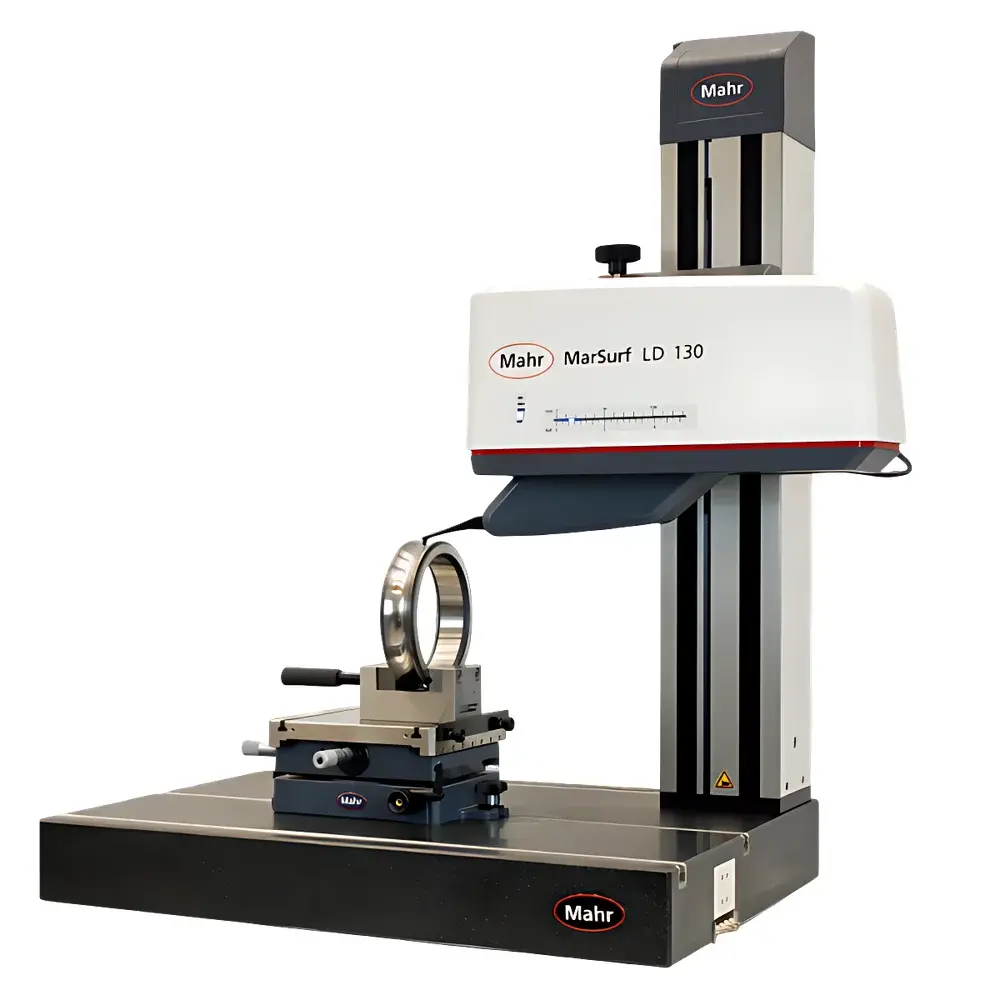
Mahr MarSurf LD 130 Series Contact Profilometer
| Brand | Mahr |
|---|---|
| Origin | Germany |
| Model | MarSurf LD 130 Series |
| Measurement Principle | Stylus-based profilometry |
| Probe Type | Contact stylus |
| Max. Measuring Length | 130 mm (with 100 mm stylus) / 260 mm (with 200 mm stylus) |
| Vertical Travel | 13 mm / 26 mm |
| Vertical Resolution | Sub-nanometer |
| Residual Noise | <20 nm Rz |
| Probe Exchange | Magnetic quick-lock system |
| Structural Design | Modular architecture |
Overview
The Mahr MarSurf LD 130 Series is a high-precision, modular contact profilometer engineered for simultaneous contour and surface roughness characterization in industrial metrology laboratories and quality control environments. Based on Mahr’s decades of expertise in tactile surface measurement, the LD 130 and LD 260 variants employ proven skidless stylus scanning technology grounded in ISO 25178-2 and ISO 4287 standards. The instrument operates on the principle of vertical displacement transduction: a diamond-tipped stylus traces the surface topography under controlled force (typically 0.7–4 mN), while an inductive or capacitive sensor captures sub-nanometer vertical deflections with high linearity and thermal stability. This enables traceable, repeatable acquisition of areal and profile parameters—including Ra, Rz, Rq, Rsk, Rku, Pc, and full 2D/3D topographic maps—within a single scan cycle, eliminating sequential repositioning and reducing cumulative alignment uncertainty.
Key Features
- Integrated dual-mode operation: Simultaneous acquisition of form (contour) and finish (roughness) data in one uninterrupted scan—no manual recalibration or probe reconfiguration required.
- Sub-nanometer vertical resolution supported by low-drift, high-bandwidth transduction and active vibration compensation, delivering residual noise below 20 nm Rz (per ISO 25178-6).
- Magnetic quick-lock probe holder enabling tool-free, repeatable stylus exchange with automatic recognition of probe geometry and calibration offsets.
- Extended travel capability: 13 mm vertical range (LD 130) or 26 mm (LD 260), paired with horizontal measuring lengths up to 130 mm or 260 mm using standardized 100 mm or 200 mm stylus carriers.
- Modular mechanical architecture with field-replaceable drive units, Z-actuators, and sensor modules—designed for long-term serviceability and minimal downtime during preventive maintenance.
- High-speed scanning: Linear velocity up to 2 mm/s with programmable acceleration profiles, optimized for throughput without compromising data fidelity at critical sampling densities (≥1000 points/mm).
Sample Compatibility & Compliance
The MarSurf LD 130 Series accommodates a broad spectrum of rigid engineering components—from machined metal parts and precision-ground ceramics to injection-molded polymers and coated substrates—provided surface hardness exceeds 200 HV and features remain within the stylus tip radius (typically 2 µm or 5 µm diamond). It complies with international metrological requirements including ISO 25178 (Geometrical Product Specifications – Surface texture), ISO 4287 (Profile method – Terms, definitions and surface texture parameters), and VDI/VDE 2658 (Guidelines for tactile surface measurement). All systems are supplied with factory calibration certificates traceable to PTB (Physikalisch-Technische Bundesanstalt) and support GLP/GMP audit readiness through configurable user access levels and electronic signature workflows.
Software & Data Management
MarWin software (v8.x or later) provides full instrument control, real-time visualization, and standardized reporting per ISO 14253-1 and ASME B46.1. The platform supports automated parameter calculation, filtering (Gaussian, Spline, Robust), and multi-scale analysis (separation of waviness, roughness, and form). Raw profile data is stored in vendor-neutral ASCII or .x3p (ISO 25178-7) format. For regulated environments, optional MarWin FDA Edition includes 21 CFR Part 11 compliance features: electronic signatures, audit trail logging, role-based permissions, and data integrity validation. Export modules integrate seamlessly with statistical process control (SPC) platforms and enterprise MES/QMS systems via OPC UA or CSV/XML interfaces.
Applications
- Precision machining verification: Form deviation analysis of shafts, bores, and cam profiles in automotive and aerospace powertrain components.
- Bearing surface qualification: Assessment of raceway geometry, waviness, and micro-roughness to predict fatigue life and lubrication behavior.
- Medical device inspection: Measurement of implant surface topography (e.g., dental abutments, orthopedic stems) per ISO 14644 and ASTM F2791.
- Tooling and mold validation: Evaluation of EDM-surfaced cavities, optical mold inserts, and micro-textured surfaces prior to production release.
- Research-grade surface science: Correlation of topographic metrics with tribological performance, adhesion strength, or coating delamination thresholds.
FAQ
What stylus tip radii are supported?
Standard options include 2 µm and 5 µm diamond tips; custom radii (e.g., 0.5 µm, 12 µm) are available upon request and require corresponding calibration certification.
Can the system measure soft or compliant materials?
It is not recommended for elastomers, gels, or thermoplastics below 80 °C; contact force and tip geometry may induce plastic deformation—non-contact alternatives (e.g., confocal or interferometric profilometers) are advised.
Is thermal drift compensated during extended scans?
Yes—integrated temperature sensors monitor ambient and stage thermal gradients, and MarWin applies real-time correction algorithms based on material-specific expansion coefficients.
How is traceability maintained across calibration cycles?
Each instrument ships with a PTB-traceable calibration certificate covering vertical scale, linearity, and stylus geometry; annual recalibration services include full uncertainty budget documentation per ISO/IEC 17025.
Does the modular design support future upgrades?
Yes—the base unit accepts hardware upgrades including enhanced Z-actuators, extended travel stages, and advanced probe modules (e.g., lateral force sensing), all managed via firmware-compatible interface protocols.