
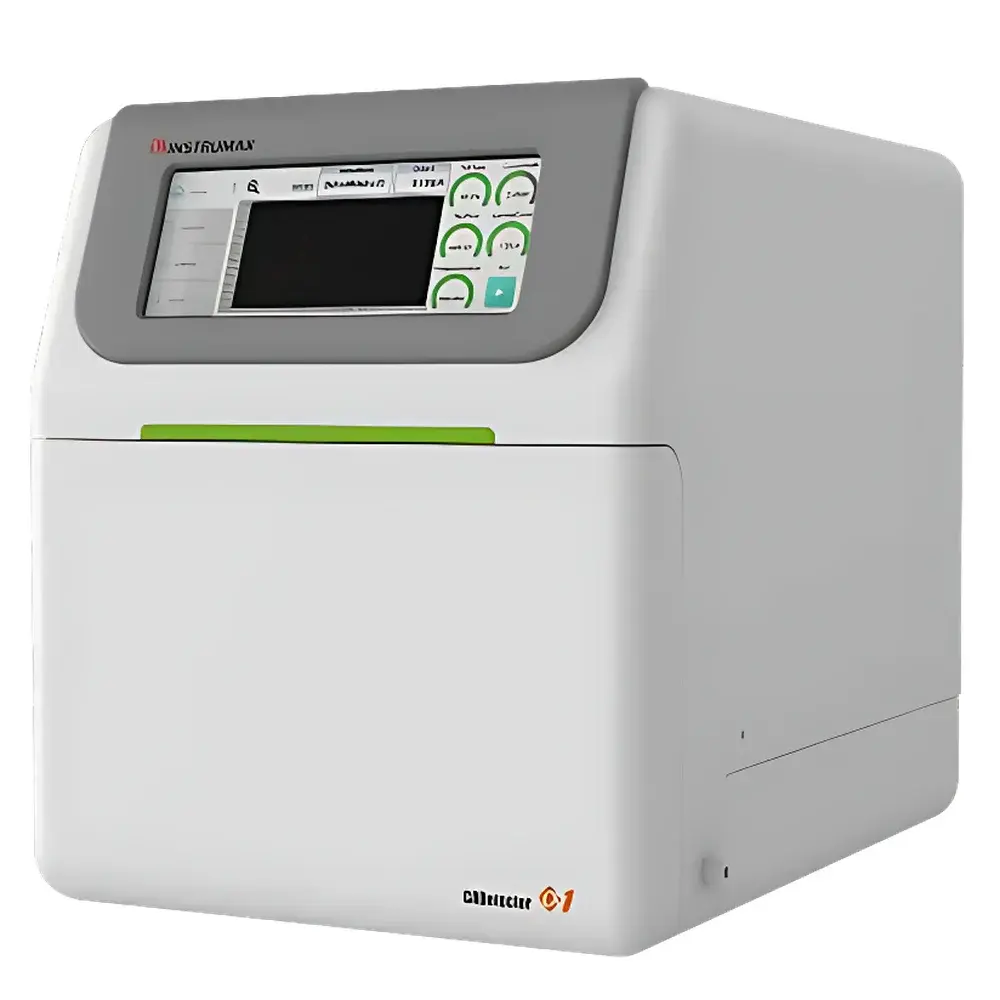
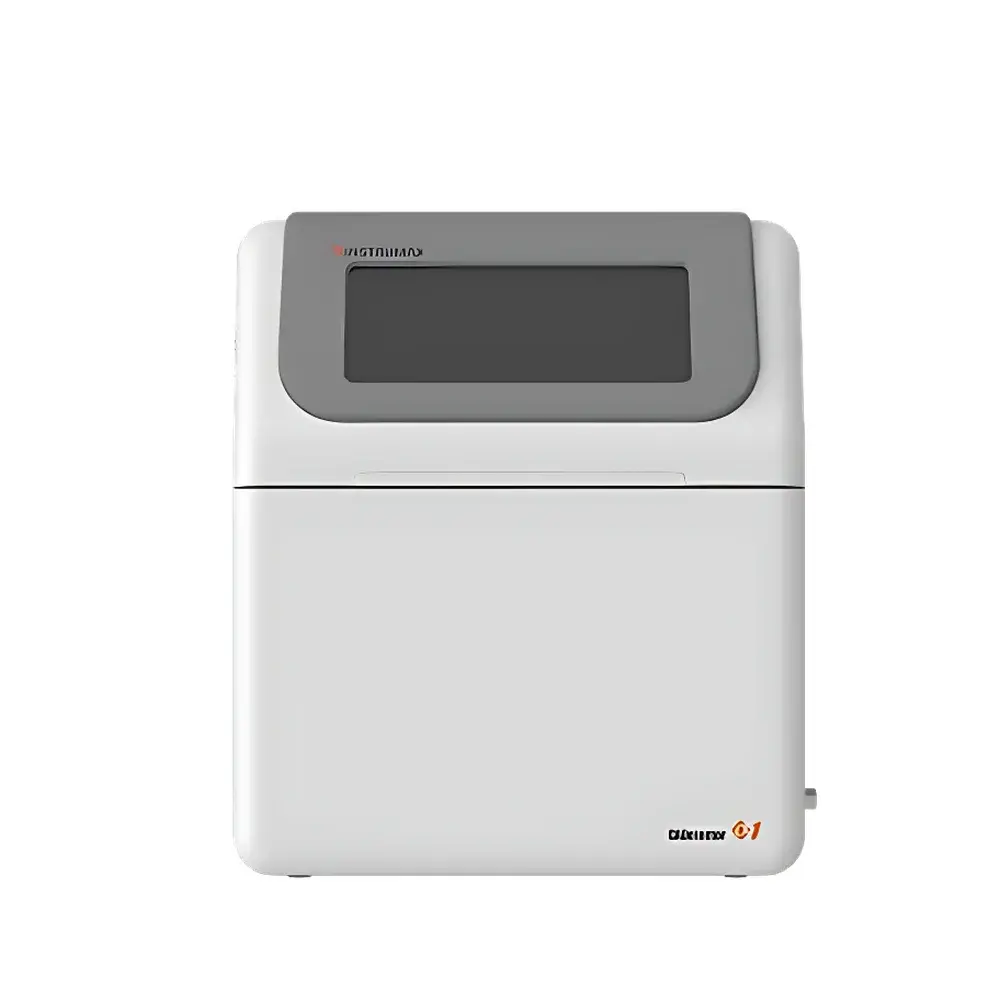
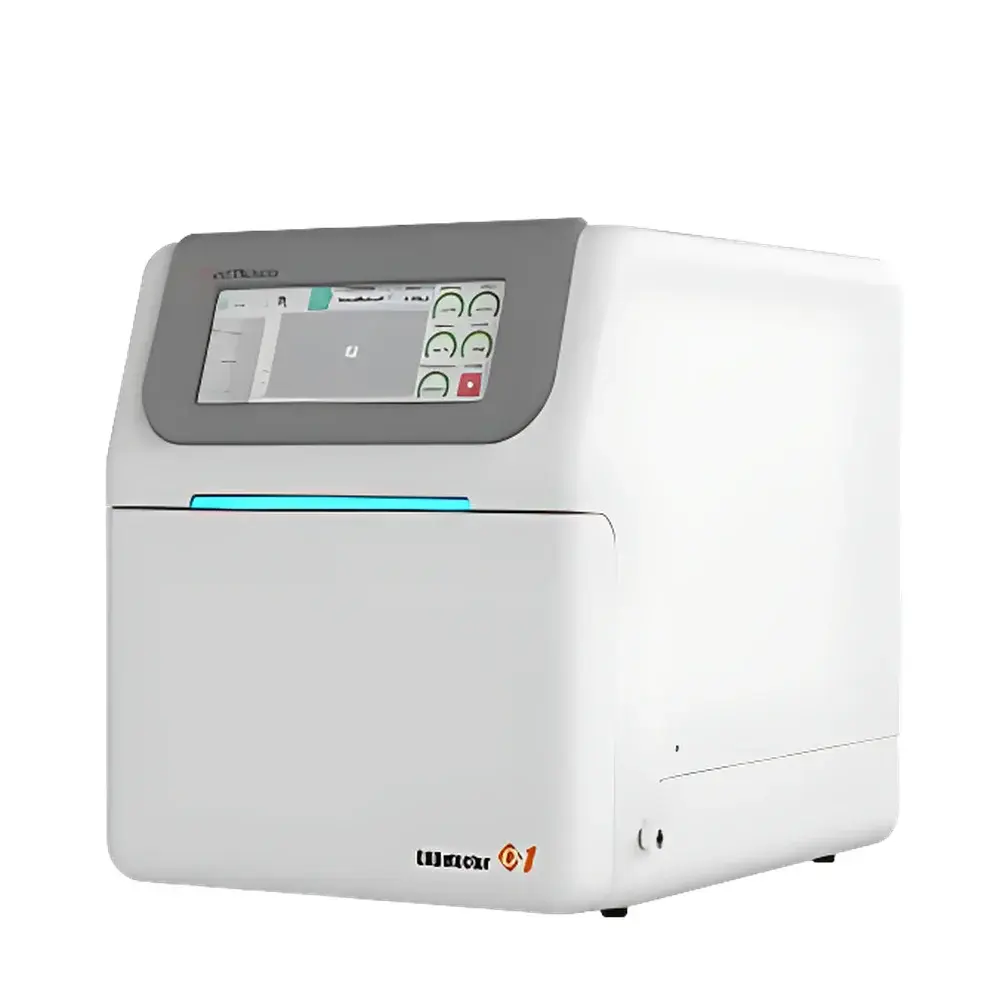
Instrumax CADetector a1 Charged Aerosol Detector
| Brand | Instrumax |
|---|---|
| Origin | Tianjin, China |
| Manufacturer Type | Original Equipment Manufacturer (OEM) |
| Product Category | Domestic |
| Model | CADetector a1 |
| Price Range | USD 42,000 – 49,000 (FOB Tianjin) |
| Compatible Systems | HPLC, UPLC, SFC |
| Detector Type | Charged Aerosol Detector (CAD), classified as a universal mass-sensitive detector distinct from ELSD |
Overview
The Instrumax CADetector a1 is a high-performance Charged Aerosol Detector (CAD) engineered for universal, mass-sensitive detection in liquid chromatography applications. Unlike UV-Vis, fluorescence, or electrochemical detectors—which require specific chromophores, fluorophores, or redox-active functional groups—the CADetector a1 operates on a physical detection principle independent of molecular structure. It detects non-volatile and semi-volatile analytes by converting eluent into a fine aerosol, evaporating the mobile phase, charging residual analyte particles via controlled nitrogen-based corona discharge, and quantifying the resulting electrical current proportional to particle surface charge. As a true mass-sensitive detector, its response correlates directly with analyte mass rather than optical or electronic properties—enabling consistent relative response factors across compound classes without calibration standards for each individual substance. This makes it particularly valuable for quantitative analysis of complex mixtures where reference standards are unavailable or impractical, such as natural product extracts, excipients, lipids, polymers, and surfactants.
Key Features
- Universal detection capability for non-volatile and semi-volatile compounds, including those lacking UV absorbance, fluorescence, or ionizability
- Mass-sensitive response mechanism ensures uniform detector response per unit mass across diverse chemical classes under constant mobile phase conditions
- High sensitivity with sub-nanogram detection limits (typical LOD < 1 ng on-column for many compounds)
- Excellent precision: intra-day and inter-day RSD < 2% for peak area, supporting GLP/GMP-compliant workflows
- Wide linear dynamic range exceeding four orders of magnitude (10⁴), eliminating the need for logarithmic data transformation
- Patented aerosol generation and charge optimization architecture improves droplet size distribution control and charging efficiency
- Integrated nitrogen gas management system with pressure regulation and flow stabilization for reproducible aerosol formation
- Robust thermal design of the evaporation drift tube ensures consistent solvent removal across gradient elution methods
Sample Compatibility & Compliance
The CADetector a1 supports compatibility with common reversed-phase, hydrophilic interaction (HILIC), and normal-phase LC mobile phases—including water, acetonitrile, methanol, isopropanol, and volatile buffers (e.g., ammonium acetate/formate). It is incompatible with non-volatile salts (e.g., phosphate buffers) and high-boiling solvents (e.g., DMSO, DMF), requiring method adaptation or post-column desalting for such applications. The detector meets essential regulatory expectations for analytical instrumentation used in regulated environments: its firmware architecture supports audit trail functionality compliant with FDA 21 CFR Part 11 requirements when integrated with validated chromatography data systems (CDS); raw signal output adheres to ASTM E2656 (Standard Guide for Validation of Charged Aerosol Detectors); and performance validation protocols align with USP <621>, EP 2.2.46, and ISO 11843-7 for detection limit estimation. It is referenced in multiple pharmacopoeial monographs—including USP Deoxycholic Acid, Gadobutrol, Topiramate, and Vigabatrin—as well as ISO standards for polyethylene glycol quantification in nonionic surfactants and APEO analysis in textiles.
Software & Data Management
The CADetector a1 communicates via standard analog voltage output (0–1 V or 0–5 V full scale) and optional digital RS-232/USB interface for direct integration with third-party CDS platforms (e.g., Waters Empower, Thermo Chromeleon, Agilent OpenLab). Instrument control parameters—including nebulizer gas pressure, drying gas temperature, and charging voltage—are accessible through a local LCD interface or remote command set. All operational settings and signal acquisition metadata are timestamped and exportable in CSV format. When deployed in validated laboratories, the detector supports full traceability: instrument logs record power-on cycles, error events, and parameter changes; raw chromatograms retain embedded acquisition timestamps and hardware configuration fingerprints. Optional firmware updates maintain alignment with evolving ICH Q2(R2) guidelines on analytical procedure validation and ensure continued compliance with ISO/IEC 17025:2017 requirements for testing laboratories.
Applications
The CADetector a1 delivers robust performance across industries requiring reliable quantification of unchromophoric or poorly ionizable analytes. In pharmaceutical development, it enables accurate assay of APIs and impurities in formulations containing excipients (e.g., polysorbates, PEGylated lipids) that lack UV signatures. In biopharmaceutical QC, it supports residual host cell protein (HCP) monitoring and lipid nanoparticle (LNP) characterization. Food and beverage labs apply it to quantify sweeteners, organic acids, carbohydrates, and emulsifiers without derivatization. Environmental analysts use it for alkylphenol ethoxylates (APEOs) and perfluorinated compounds (PFCs) in wastewater matrices. In materials science, it facilitates quality control of polymer additives, surfactant blends, and battery electrolyte components. Its ability to provide near-uniform response across structural analogues also makes it ideal for relative purity assessment in herbal medicine standardization—supporting Chinese Pharmacopoeia monographs for Ophiopogon japonicus (Maidong), Morinda officinalis (Bajitian), and Polygonatum odoratum (Yuzhu) formula granules.
FAQ
How does the CADetector a1 differ fundamentally from an ELSD?
Unlike ELSD—which measures scattered light intensity from dried particles and exhibits compound-dependent response due to differences in refractive index and particle morphology—the CADetector a1 measures electric charge carried by uniformly charged particles, yielding mass-proportional signals with significantly improved linearity and reproducibility.
Can the CADetector a1 be used with gradient elution methods?
Yes, provided volatile mobile phase components are used and the evaporation drift tube temperature is optimized to accommodate changing solvent composition and boiling point profiles.
Is method transfer from UV to CAD straightforward?
Retention times remain consistent, but sensitivity, peak shape, and baseline stability may differ; method re-optimization of gas flows and temperatures is recommended, especially for early-eluting or highly polar compounds.
Does CAD require compound-specific calibration for quantitation?
No—under identical mobile phase and injection conditions, equal masses of different non-volatile analytes generate comparable responses, enabling cross-calibration using a single reference standard.
What maintenance routines are required to sustain optimal CAD performance?
Daily: Nebulizer capillary inspection and cleaning with appropriate solvents; weekly: Drain trap emptying and drift tube visual inspection; quarterly: Charging electrode cleaning and gas filter replacement per manufacturer’s preventive maintenance schedule.



