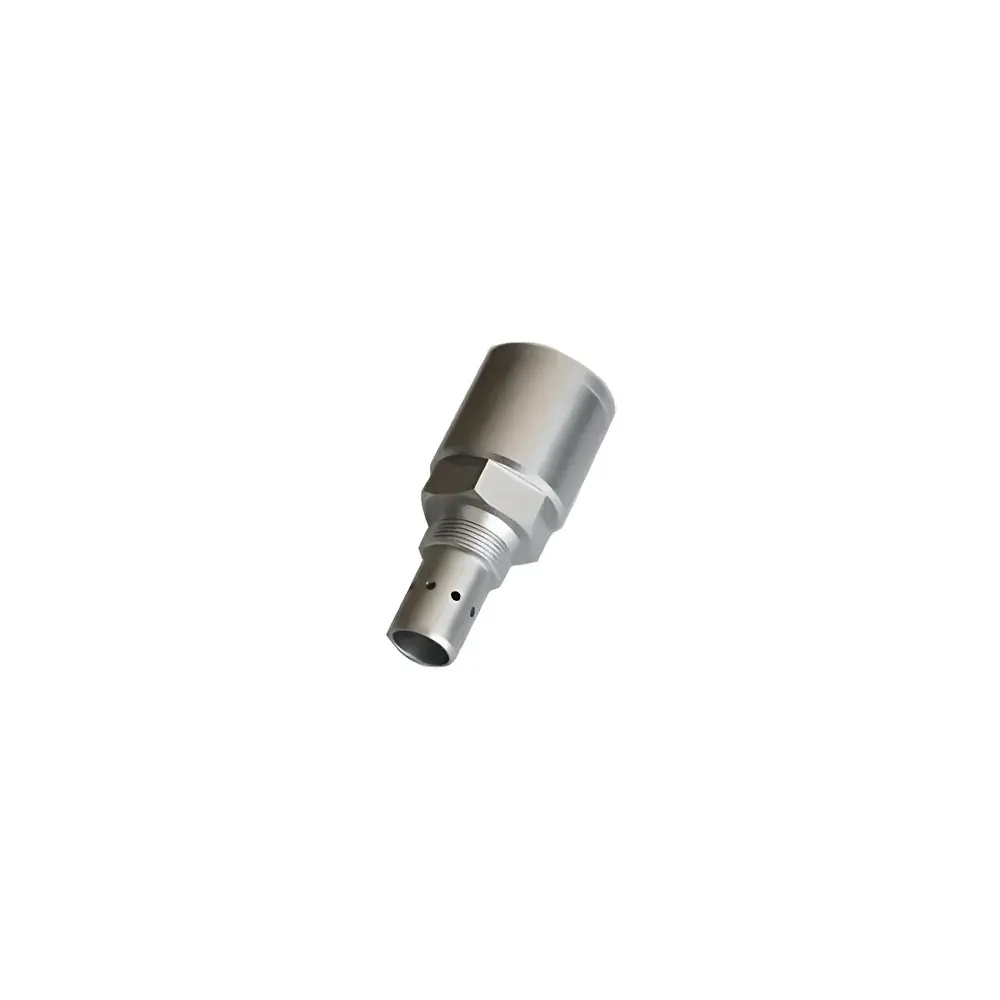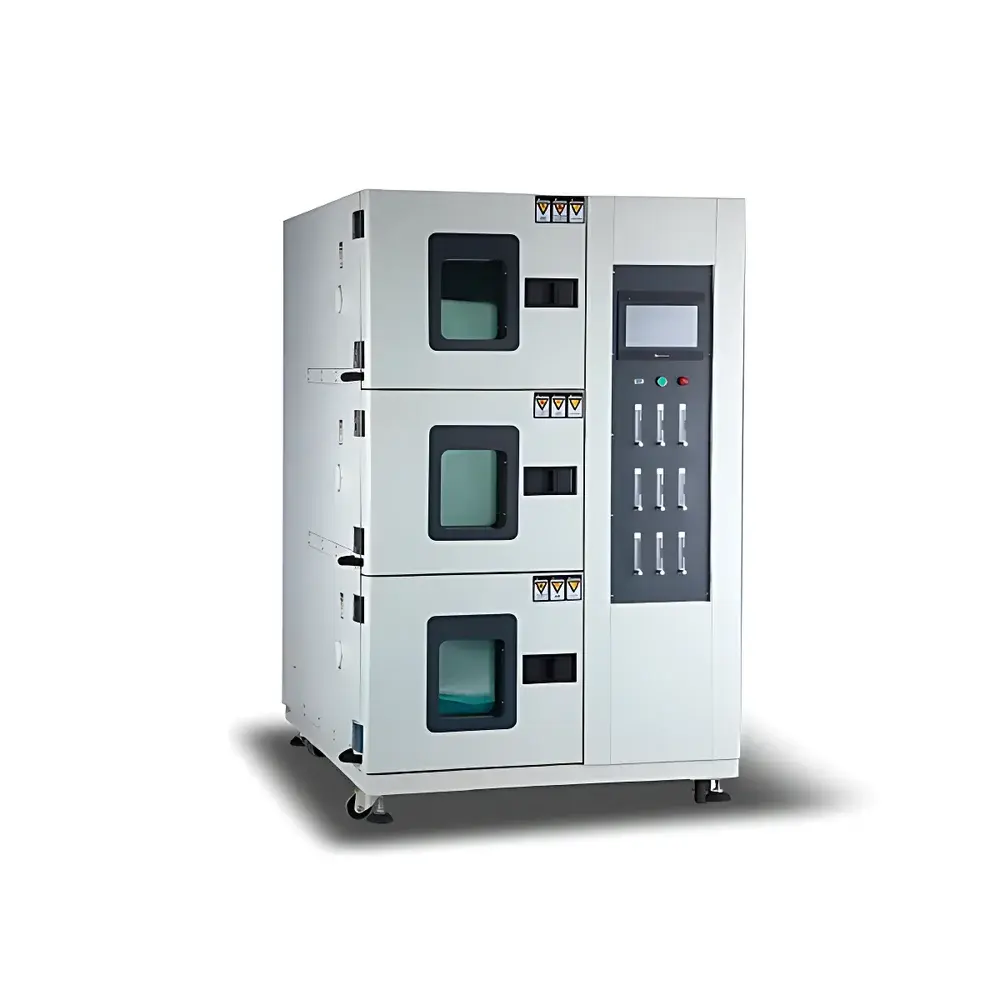
GBPI GQ-300F Triple-Chamber Controlled Atmosphere Storage Test Chamber
| Brand | GBPI |
|---|---|
| Model | GQ-300F |
| Chamber Count | 3 × 120 L |
| O₂ Range | 0–50% (0.01% resolution, ±1% accuracy) |
| CO₂ Range | 0–20% (0.01% resolution, ±1% accuracy) |
| N₂ Range | 0–100% (balance gas) |
| C₂H₄ Range | 0–200 ppm (0.1 ppm resolution, ±1% accuracy) |
| Temperature Range | −5°C to +50°C (±0.5°C control accuracy, ±2°C uniformity) |
| Humidity Range | Ambient to 95% RH (±3% RH control accuracy) |
| Refrigeration Capacity | 1 HP |
| Humidification Power | 2000 W (per chamber, independent) |
| Illumination Power | 10 W (per chamber, LED) |
| Total Rated Power | 15 kW |
| Supply | AC 380 V, 3-phase 5-wire |
| Dimensions (W×D×H) | 170 cm × 116 cm × 192 cm |
| Net Weight | 550 kg |
| Construction | Stainless steel interior (rounded corners), double-glazed vacuum-insulated viewing doors, color-coated steel exterior |
| Gas Delivery | External N₂ generator (optional), O₂/CO₂ cylinder supply (regulated to 0–0.4 MPa), integrated C₂H₄ catalytic scrubber & gas exchange pump |
| Flow Control | High-precision mass flow controllers (1 mL/min resolution) |
| Control System | Embedded microcomputer with 10-inch true-color touchscreen HMI, real-time multi-parameter logging, independent per-chamber setpoint programming |
| Safety | Over-temperature/over-current protection, fuse-based fault isolation, ozone sterilization module (timed manual activation) |
Overview
The GBPI GQ-300F Triple-Chamber Controlled Atmosphere Storage Test Chamber is an engineered research platform designed for rigorous postharvest physiology studies and shelf-life validation of fresh horticultural commodities—including fruits, vegetables, cut flowers, and nursery stock. It operates on the principle of dynamic gas composition regulation within sealed, thermally isolated environments, enabling precise replication and long-term maintenance of defined atmospheric conditions: oxygen (O₂), carbon dioxide (CO₂), nitrogen (N₂), and ethylene (C₂H₄). Unlike static storage systems, the GQ-300F employs closed-loop feedback control using high-stability electrochemical and infrared gas sensors, coupled with mass flow-controlled gas injection and catalytic ethylene oxidation, to sustain target concentrations within validated tolerances. Its triple-chamber architecture allows parallel experimental designs—such as factorial gas treatments, temperature-humidity interaction trials, or cultivar comparison studies—without cross-contamination or operational interference. The system meets foundational requirements for GLP-compliant storage experimentation and supports method development aligned with ISO 22030 (postharvest quality assessment), ASTM F2099 (modified atmosphere packaging testing), and FAO/WHO Codex Alimentarius guidelines for fresh produce handling.
Key Features
- Three independent 120 L test chambers with fully decoupled environmental control—each equipped with dedicated temperature, humidity, gas mixing, ethylene abatement, UV-free LED illumination, ozone sterilization, condensate drainage, and real-time sensor monitoring.
- Integrated microprocessor-based control system with 10-inch capacitive touchscreen interface; supports individual chamber parameter configuration, trend visualization, alarm logging, and exportable CSV data records.
- High-fidelity gas measurement using OEM-certified electrochemical O₂/CO₂ sensors and semiconductor-based C₂H₄ detectors (0.1 ppm resolution), calibrated traceably to NIST-traceable standards.
- Precision gas delivery via digitally regulated mass flow controllers (1 mL/min minimum increment), ensuring reproducible gas blending ratios across extended operation cycles (≥72 h continuous stability).
- Thermal management combining quartz-tube resistive heating and scroll-type compressor refrigeration, governed by PID algorithms with solid-state relay output—eliminating mechanical contact wear and improving thermal inertia response.
- Stainless steel working chamber (AISI 304, radius-curved internal corners), double-vacuum-insulated tempered glass viewing doors, and anti-condensation drainage design for unobstructed visual observation without environmental perturbation.
- Ozone-based surface sterilization subsystem with user-defined exposure duration (1–60 min), activated via front-panel soft key; complements passive hygiene protocols during chamber turnover.
- Modular gas infrastructure: external nitrogen generation (optional), cylinder-fed O₂/CO₂ with dual-stage pressure regulation (0–0.4 MPa output), and integrated catalytic ethylene destruction unit achieving >95% C₂H₄ removal efficiency at 25°C.
Sample Compatibility & Compliance
The GQ-300F accommodates heterogeneous biological samples ranging from single-fruit units (e.g., apples, mangoes) to bulk-packed leafy greens, cut stems, or potted seedlings—provided physical dimensions fit within the 120 L cavity volume and do not obstruct airflow or sensor access ports. Chamber interiors permit adjustable stainless-steel shelving and optional perforated trays to optimize convective gas exchange around specimens. From a regulatory standpoint, the instrument’s architecture supports audit-ready data integrity: all sensor readings, setpoints, actuator states, and user interventions are timestamped and stored locally with configurable retention periods. While not pre-certified for FDA 21 CFR Part 11 compliance, its embedded controller provides full audit trail capability—including operator ID tagging, electronic signature prompts (via optional USB keyboard), and tamper-evident log encryption—enabling laboratory-specific validation under ISO/IEC 17025 or GMP Annex 11 frameworks.
Software & Data Management
The onboard firmware implements a deterministic real-time operating system (RTOS) that samples all critical parameters at 2 Hz and archives compressed time-series datasets internally (≥12 months at default 1-min intervals). Data export occurs via RS232 serial interface (standard) or optional Ethernet/Wi-Fi module (firmware upgrade required), supporting direct ingestion into LIMS platforms or MATLAB/Python-based analysis workflows. The HMI software includes built-in statistical tools: deviation histograms, chamber-to-chamber variance reports, and automated pass/fail evaluation against user-defined specification limits (e.g., “O₂ must remain between 2.5–3.5% for 14 days”). No cloud dependency or proprietary vendor software is required for basic operation or raw data retrieval.
Applications
- Postharvest respiration rate quantification under varied O₂/CO₂ partial pressures.
- Ethylene sensitivity profiling across developmental stages (e.g., climacteric vs. non-climacteric fruit ripening inhibition).
- Validation of active packaging materials’ gas transmission rates (OTR/COTR) in simulated retail environments.
- Microbial load dynamics (yeast/mold/bacterial colony counts) under controlled CA stress conditions.
- Chilling injury threshold mapping for tropical species subjected to suboptimal low-temperature CA storage.
- Light-quality effects on anthocyanin retention in berries under specific RH/O₂ combinations.
- Protocol development for commercial CA cold chain integration—bridging lab-scale findings to warehouse-scale implementation.
FAQ
What gas purity specifications are required for external cylinder supplies?
O₂, CO₂, and N₂ must be ≥99.999% pure (5.0 grade), supplied through dual-stage regulators delivering stable 0–0.4 MPa output pressure. All gas lines must use oxygen-compatible stainless-steel or PTFE tubing with zero-leak compression fittings.
Is the system compatible with third-party data acquisition software?
Yes—RS232 ASCII protocol documentation is provided upon request, enabling integration with LabVIEW, Python (pySerial), or custom SCADA systems. Modbus TCP support is available via optional firmware update.
How is ethylene actively removed from the chamber atmosphere?
A heated catalytic converter (Pt/Pd on ceramic substrate) oxidizes C₂H₄ to CO₂ and H₂O at 250–300°C; combined with periodic forced gas exchange via integrated diaphragm pump, it maintains steady-state ethylene below 0.1 ppm during extended trials.
Can humidity be controlled independently of temperature in each chamber?
Yes—each chamber features a dedicated 2000 W resistive humidifier with PID-driven water level sensing and condensate auto-evacuation, allowing RH modulation from ambient up to 95% regardless of concurrent thermal setpoint.
What maintenance intervals are recommended for sensor calibration?
Gas sensors require zero/span verification every 90 days using certified calibration gases (NIST-traceable); temperature/humidity probes should be checked annually against reference metrology equipment per ISO 17025 clause 6.5.