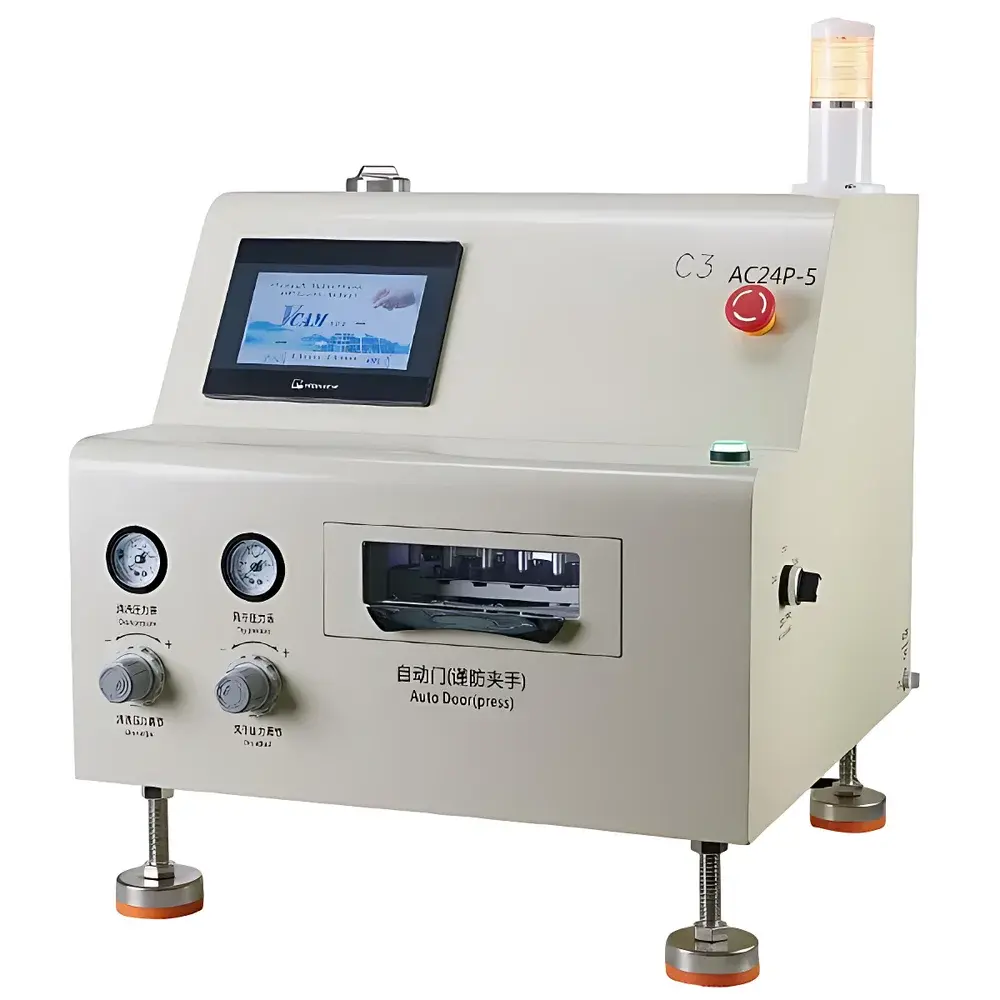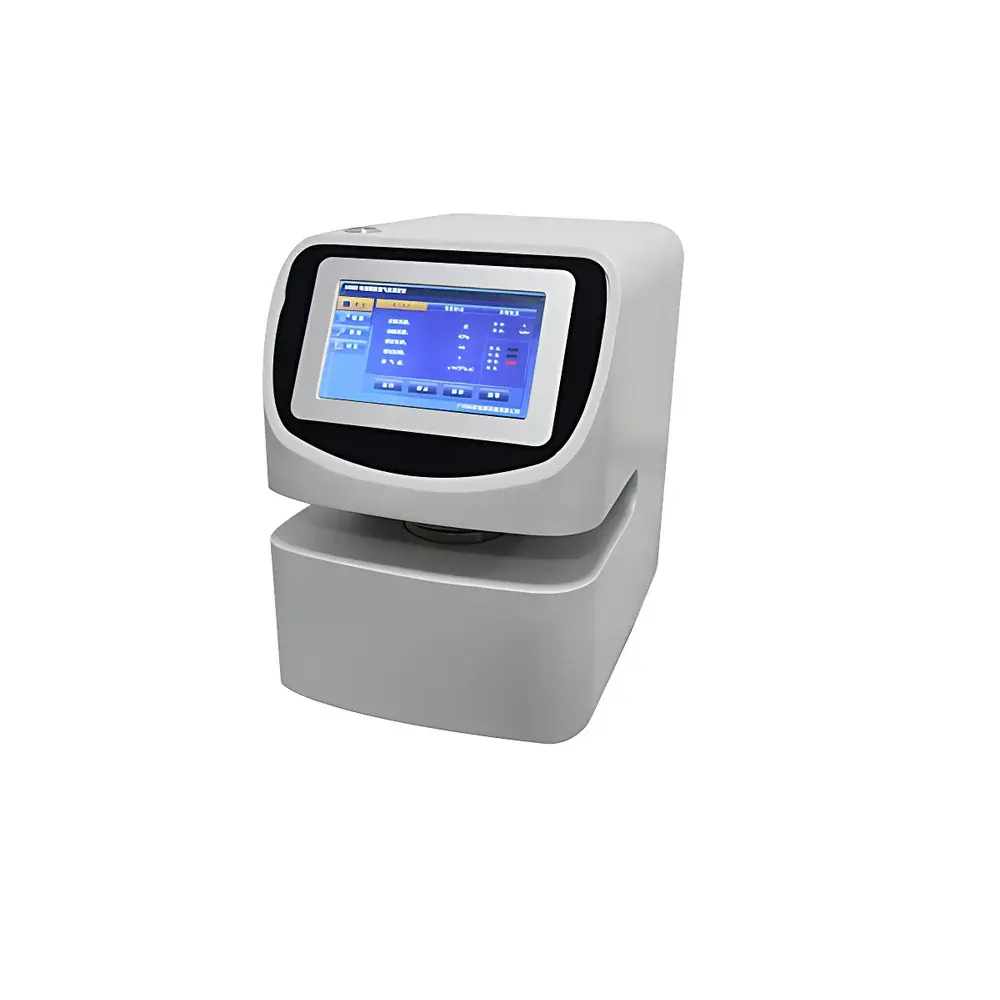
GBPI N600 Battery Separator Air Permeability Tester
| Brand | GBPI |
|---|---|
| Origin | Guangdong, China |
| Manufacturer Type | Direct Manufacturer |
| Region of Origin | Domestic (China) |
| Model | N600 |
| Price Range | USD 4,200 – 7,000 |
| Test Methods | Gurley, Schopper-Riegler, Bentzen |
| Standards Compliance | SJ/T 10171–2016, GB/T 458–2008, GB/T 36363–2018 |
| Permeability Range | 0.01–2.5 µm/(Pa·s) |
| Air Flow Rate Range | 0.01–120 mL/min (customizable) |
| Resolution | 0.001 µm/(Pa·s) |
| Differential Pressure Range | 0–3 kPa |
| Pressure Accuracy | ±0.01 kPa |
| Test Area Options | 6.42 cm² or 10.0 ± 0.2 cm² |
| Sample Dimensions | 50 mm × 50 mm (Gurley/Bentzen), 60 mm × 100 mm (Schopper-Riegler) |
| Conditioning | 24 h at <40 °C and 10–35% RH |
| Chamber Temperature & Humidity Monitoring | Integrated sensor |
| Seal Integrity | ≤1.0 mL/h leakage |
| Power | 100 W |
| Input | 220 V, 50 Hz |
| Dimensions (L×W×H) | 500 mm × 400 mm × 300 mm |
Overview
The GBPI N600 Battery Separator Air Permeability Tester is a precision-engineered instrument designed specifically for quantitative evaluation of gas permeability in microporous polyolefin separators used in lithium-ion batteries. It operates on three internationally recognized pneumatic resistance principles—Gurley, Schopper-Riegler, and Bentzen—each standardized for distinct pressure-differential regimes and flow measurement protocols. The device measures the time required for a defined volume of air (e.g., 100 mL under Gurley conditions) to pass through a fixed sample area under controlled differential pressure, yielding permeability values expressed in µm/(Pa·s)—a unit directly traceable to Darcy’s law and widely adopted in battery material qualification. Its design prioritizes metrological integrity: pressure control is stabilized to ±0.01 kPa across a 0–3 kPa range, and real-time environmental monitoring ensures test repeatability under specified conditioning protocols (SJ/T 10171–2016, GB/T 458–2008). Unlike generic packaging permeability testers, the N600 integrates battery-specific sample geometry (50 mm × 50 mm and 60 mm × 100 mm fixtures), calibrated effective areas (6.42 cm² and 10.0 ± 0.2 cm²), and low-leakage (<1.0 mL/h) test chamber architecture—critical for detecting subtle variations in separator pore structure that impact ionic conductivity and thermal shutdown behavior.
Key Features
- Triple-method platform: Seamless switching between Gurley (ΔP = 1.23 kPa ± 0.01 kPa), Schopper-Riegler (ΔP = 1.00 kPa or 2.50 kPa ± 0.01 kPa), and Bentzen (ΔP = 1.47 kPa ± 0.02 kPa) modes via software-selectable configuration.
- High-precision pressure regulation: Digital closed-loop control with ±0.01 kPa accuracy over full 0–3 kPa range—exceeding requirements of all three referenced standards.
- Dual-area test fixture: Interchangeable masks enable rapid transition between 6.42 cm² (Gurley/Bentzen) and 10.0 ± 0.2 cm² (Schopper-Riegler) effective test areas without recalibration.
- Integrated environmental monitoring: Onboard temperature and relative humidity sensors continuously log chamber conditions during test execution—essential for GLP-compliant reporting and moisture-sensitive separator evaluation.
- Large-volume test chamber (1 L capacity): Ensures laminar, non-turbulent airflow across the full operational flow range (0.01–120 mL/min), minimizing compressibility effects and improving signal-to-noise ratio.
- Standalone + PC operation: Embedded LCD interface supports offline testing with local data storage; optional USB/RS232 connectivity enables synchronized acquisition, real-time graphing, and automated report generation via GBPI proprietary software.
Sample Compatibility & Compliance
The N600 is optimized for rigid and semi-rigid microporous membranes, including monolayer and multilayer polyethylene (PE), polypropylene (PP), and PE/PP coextruded battery separators. Its clamping mechanism accommodates thicknesses from 9 µm to 40 µm with uniform sealing force, preventing edge bypass leakage. All test procedures adhere strictly to SJ/T 10171–2016 (Section 5.3: Air Permeability Test for Alkaline Battery Separators), GB/T 458–2008 (Paper and Paperboard Air Permeance), and GB/T 36363–2018 (Technical Specifications for Lithium-Ion Battery Polyolefin Separators). Instrument validation includes documented seal integrity verification (≤1.0 mL/h), pressure transducer calibration traceable to national metrology institutes, and inter-laboratory reproducibility studies per ISO/IEC 17025 guidelines. Optional accessories—including oil-free air compressor, pressure regulator, and calibrated reference membranes—support full audit readiness for GMP/QA environments.
Software & Data Management
The accompanying GBPI PermeaSoft™ v3.2 provides compliant data handling aligned with FDA 21 CFR Part 11 requirements: user-level access control, electronic signatures, full audit trail (including parameter changes, start/stop timestamps, and environmental logs), and encrypted raw data export (CSV, PDF, XML). Automated calculation modules convert raw time/volume/pressure inputs into standardized permeability indices (µm/(Pa·s)), Gurley seconds, and Schopper-Riegler degrees—all annotated with uncertainty estimates derived from instrument specifications. Batch testing templates allow predefined sequences for incoming QC lots, while statistical process control (SPC) charts monitor longitudinal trends across production runs. All data files include embedded metadata (operator ID, sample ID, ambient conditions, method parameters) to satisfy ISO 17025 documentation clauses.
Applications
- Quality control of commercial Li-ion separator batches against internal specifications and customer datasheets (e.g., Celgard®, Entek®, SK IE Technology).
- Process development support: Correlating calendering pressure, quench rate, and stretching ratios with permeability shifts during pilot-line scale-up.
- Failure analysis: Diagnosing pore collapse, coating defects, or thermal shrinkage-induced airflow restriction post-abuse testing (e.g., 130 °C oven exposure).
- R&D screening of novel ceramic-coated, PVDF-blended, or electrospun nanofiber separators where baseline permeability must be benchmarked against industry norms.
- Supplier qualification audits requiring third-party verifiable permeability data under harmonized test conditions.
FAQ
Which test method should I use for lithium-ion battery separator qualification?
Gurley is most commonly specified in OEM technical agreements due to its direct correlation with ionic resistance and rate capability; however, Schopper-Riegler offers higher sensitivity for ultra-low-permeability separators (>1000 Gurley sec), and Bentzen provides rapid screening for production line release.
Can the N600 measure permeability of wet-laid nonwovens or gel polymer electrolytes?
Yes—provided samples are dimensionally stable under test pressure and do not deform or swell significantly during measurement. For hydrophilic materials, pre-conditioning per GB/T 10722–2019 (rubber—determination of air permeability) is recommended.
Is external air supply mandatory?
An oil-free compressed air source (≥0.6 MPa) is required for pressure generation; the optional GBPI-certified air compressor meets ISO 8573-1 Class 0 purity requirements to prevent contamination of sensitive separator surfaces.
How often does the system require recalibration?
Annual pressure transducer and flow sensor calibration is recommended; GBPI provides NIST-traceable calibration certificates and on-site service contracts compliant with ISO/IEC 17025.
Does the software support LIMS integration?
Yes—via configurable ODBC drivers and HL7-compatible API endpoints, enabling bidirectional data exchange with laboratory information management systems used in contract manufacturing organizations (CMOs) and tier-1 battery cell producers.