
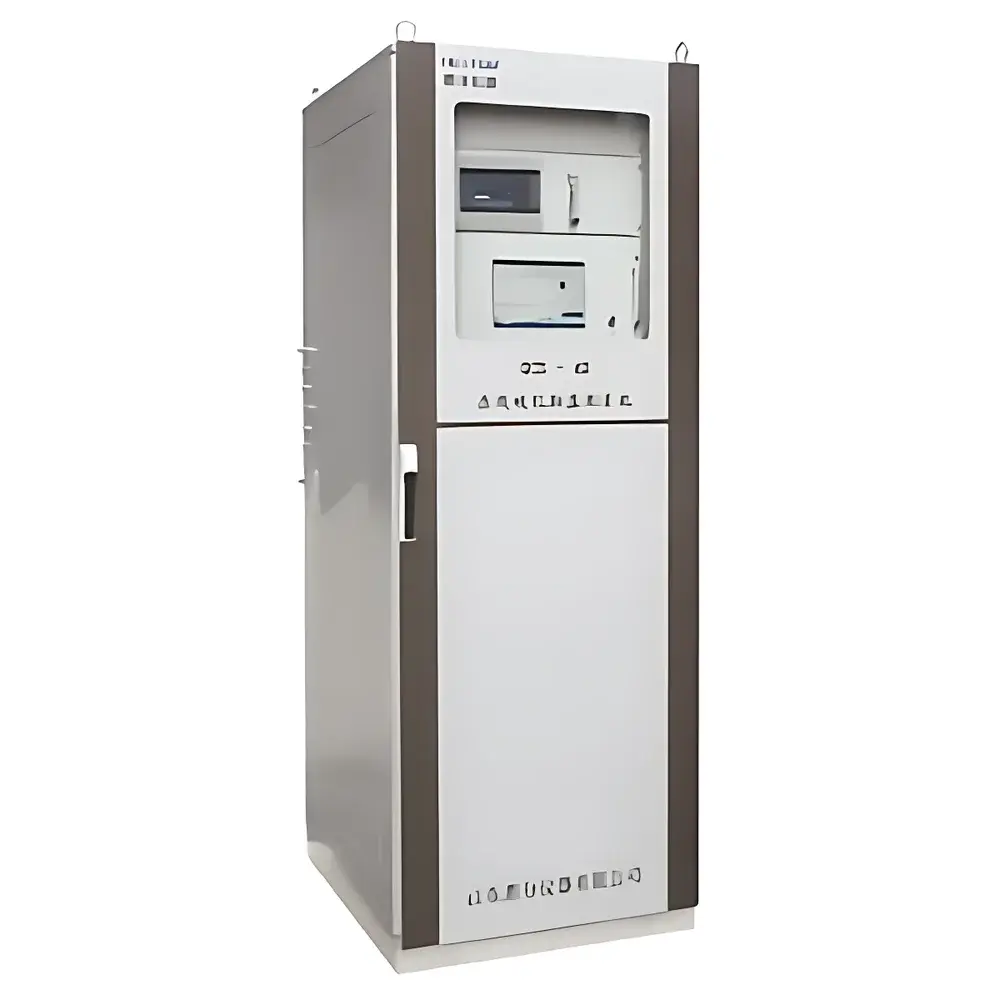
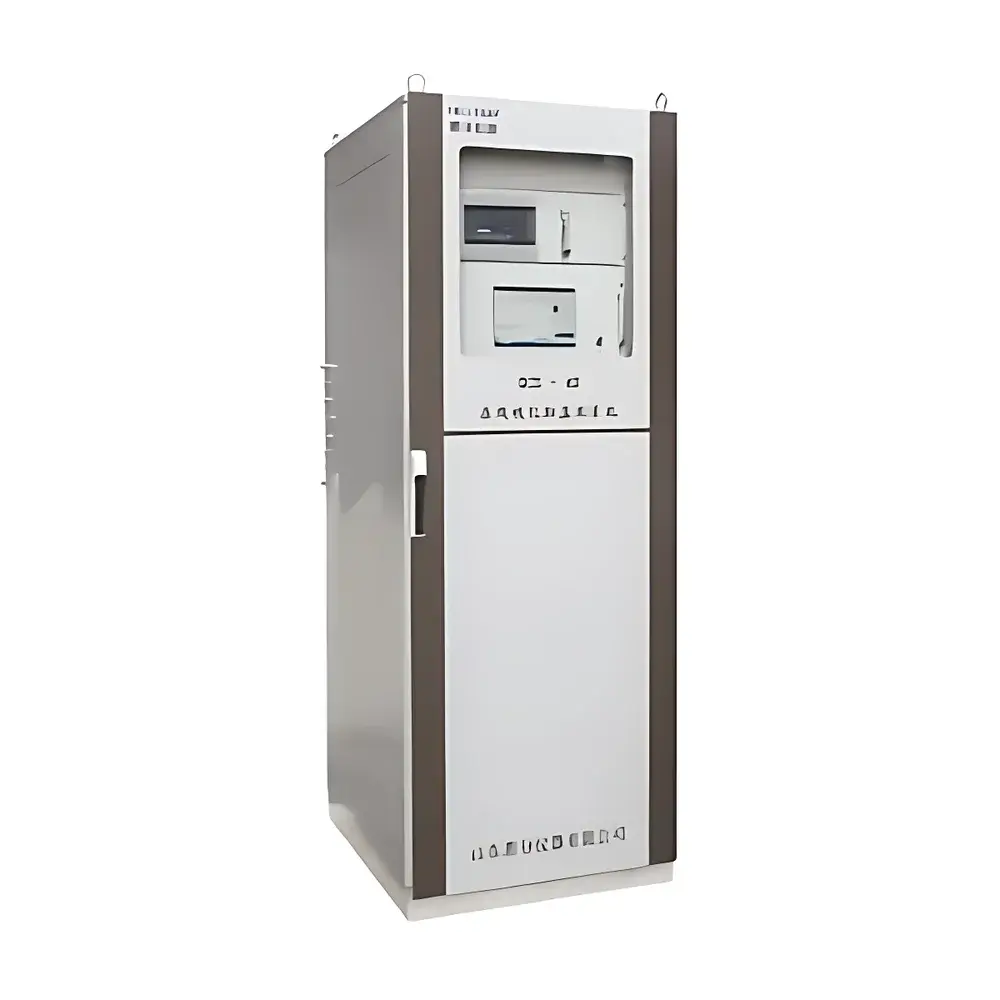
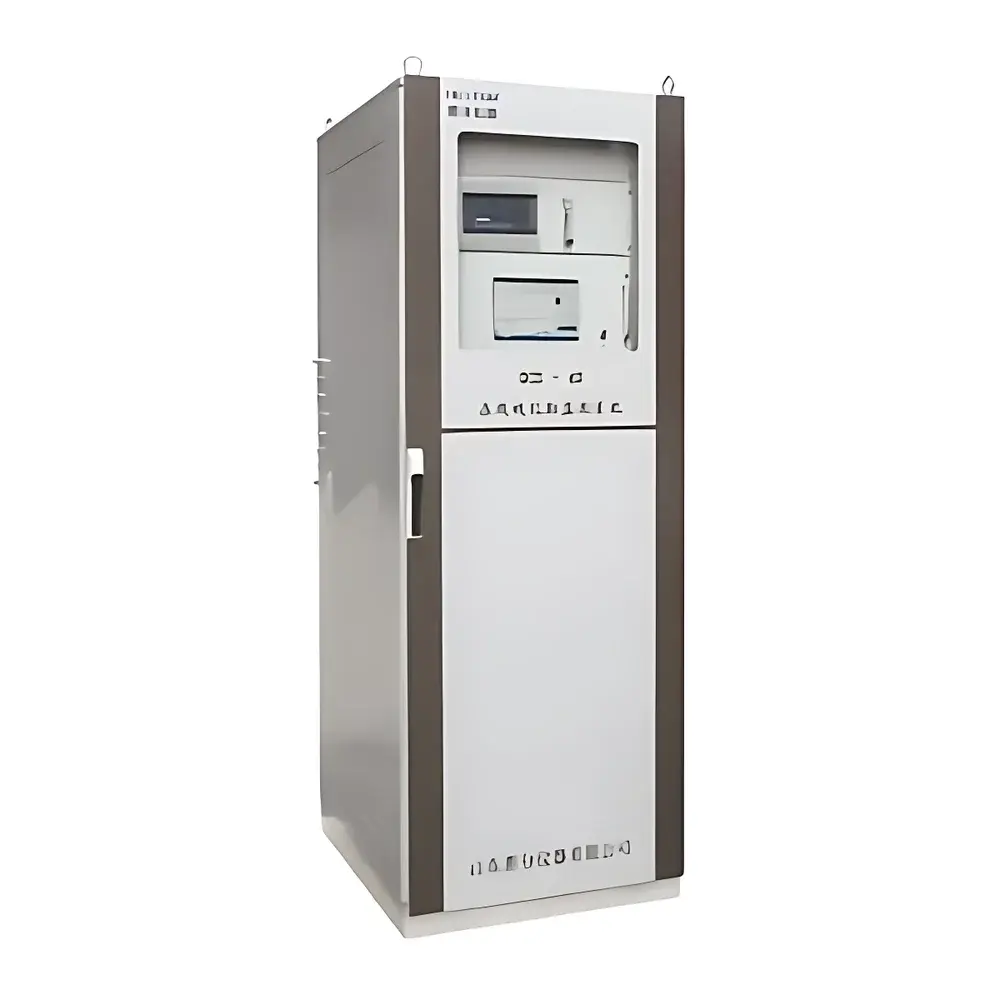
Shinsco GCS-60 Flame Photometric Detection Gas Chromatograph for Sulfur Compounds Analysis
| Brand | Shinsco |
|---|---|
| Origin | Shandong, China |
| Manufacturer Type | Manufacturer |
| Model | GCS-60 |
| Detector Type | Flame Photometric Detector (FPD) |
| Measurement Range | 50 ppb – 0.1% (v/v) |
| Accuracy | ±5% for major components, ±10% for trace components |
| Output Signal | 4–20 mA |
| Communication | RS232 / RS485 (Modbus RTU) |
| Dimensions | 800 × 700 × 1900 mm |
| Weight | 170 kg |
| Power Requirement | 5 kW (increases with heated sample line length) |
| Operating Temperature | 5–45 °C |
| Operating Humidity | 5–95% RH |
| Compliance Standard | GB/T 28727–2012 |
Overview
The Shinsco GCS-60 is a dedicated gas chromatograph engineered for quantitative analysis of sulfur-containing compounds—including hydrogen sulfide (H₂S), carbonyl sulfide (COS), and total sulfur—in industrial process gases. It implements flame photometric detection (FPD), a highly selective and sensitive detection principle based on the chemiluminescent emission of excited sulfur dioxide (SO*) at 394 nm upon combustion in a hydrogen-rich flame. This optical selectivity enables reliable discrimination of sulfur species against hydrocarbon-rich matrices commonly found in natural gas, coke oven gas, blast furnace gas, and refinery off-gas streams. Designed as an integrated cabinet system, the GCS-60 eliminates external plumbing complexity and thermal instability associated with benchtop GC configurations. Its architecture supports continuous, unattended operation in plant environments—meeting the functional requirements of real-time process monitoring, emissions compliance verification, and feedstock quality control.
Key Features
- Integrated heated sample introduction system with temperature-controlled stainless-steel or PTFE-lined sampling lines (up to 180 °C), minimizing condensation and adsorption losses of reactive sulfur species.
- Optimized FPD with passivated internal surfaces (e.g., quartz or deactivated ceramic) to reduce catalytic decomposition and memory effects—ensuring high reproducibility (<2% RSD over 24 h for 1 ppm H₂S).
- High-cycle PEEK rotary valve (imported, rated >1 million actuations) for precise, low-dead-volume gas sampling and loop injection—critical for maintaining integrity of low-concentration standards.
- Intuitive touchscreen HMI with multi-level access control (operator, engineer, administrator), enabling parameter configuration, method scheduling, alarm logging, and diagnostic status monitoring.
- Embedded hardware-level fault detection: automatic shutdown and alerting for abnormal column oven temperature, carrier gas pressure drop, flame extinction, or detector signal saturation.
- Modular column compartment accommodating up to two parallel capillary columns (e.g., DB-Sulfur, CP-Sil 5 CB, or custom-packed alumina PLOT) with independent temperature programming.
Sample Compatibility & Compliance
The GCS-60 is validated for direct analysis of pressurized, moisture-saturated, and particulate-laden gas streams without offline pretreatment—provided inlet filtration (0.5 µm sintered metal) and coalescing moisture removal are installed upstream. It complies with GB/T 28727–2012 “Gas Analysis—Determination of Sulfur Compounds—Flame Photometric Gas Chromatography Method”, which specifies calibration protocols, detection limits, and uncertainty evaluation procedures aligned with ISO/IEC 17025 requirements. While not pre-certified to ASTM D5504 or ISO 8573-6, its operational parameters (detection range, linearity, repeatability) are fully compatible with those standards’ technical scope for sulfur speciation in compressed gases. The system supports audit-ready data handling under GLP/GMP frameworks when paired with compliant LIMS integration.
Software & Data Management
Data acquisition and instrument control are managed via embedded firmware with dual-mode interface: local touchscreen operation and remote supervisory control via Modbus RTU over RS485 (multi-drop capable) or RS232 (point-to-point). All chromatographic data—including raw detector voltage traces, peak integration tables, calibration curves, and system logs—are timestamped and stored internally (≥12 months at 1-min sampling interval). The 4–20 mA analog output is configurable per analyte (e.g., H₂S-only or total sulfur equivalent), supporting integration into DCS/SCADA systems. Optional OPC UA gateway module enables secure, encrypted data export to cloud-based asset performance management platforms, with full traceability of user actions, method changes, and calibration events—satisfying FDA 21 CFR Part 11 electronic record requirements when deployed with digital signature and audit trail activation.
Applications
- Natural gas transmission: Real-time H₂S and COS monitoring upstream of amine treaters to prevent corrosion and ensure pipeline specification compliance (e.g., ≤4 ppmv H₂S per ISO 8573-6 Class 2).
- Steelmaking operations: Continuous analysis of blast furnace top gas for sulfur balance modeling and desulfurization efficiency assessment.
- Petrochemical refining: Quantification of organic sulfur (e.g., mercaptans, thiophenes) in FCC overheads and hydrotreater product streams to optimize catalyst life and meet gasoline sulfur limits (e.g., <10 ppm per Euro 6/ULSD).
- Biogas upgrading facilities: Verification of H₂S removal efficiency across iron sponge or biological scrubbers prior to grid injection.
- Environmental compliance: Stack emission testing for sulfur oxides (SOₓ) precursors in incineration and syngas generation processes.
FAQ
What sulfur species can the GCS-60 reliably quantify?
The system is validated for hydrogen sulfide (H₂S), carbonyl sulfide (COS), methyl mercaptan (CH₃SH), carbon disulfide (CS₂), and total sulfur (as SO₂-equivalent) using appropriate column chemistry and calibration standards.
Is the GCS-60 suitable for use in hazardous areas (Zone 1/2)?
The base unit is rated for non-hazardous locations (IP54 enclosure); explosion-proof variants with ATEX/IECEx certification require factory modification and separate documentation.
How often does the FPD require maintenance?
Under typical operation (24/7), the detector’s jet and photomultiplier tube require cleaning every 6–12 months; the hydrogen/air supply filters should be replaced quarterly.
Can the system be calibrated automatically?
Yes—via integrated standard gas manifold with solenoid-valve sequencing; optional dynamic dilution module supports multi-point calibration from a single certified cylinder.
Does the GCS-60 support regulatory reporting formats?
Raw data export (CSV, ASCII) and configurable report templates (PDF/Excel) include mandatory fields for QA/QC: analyst ID, calibration date, reference standard lot number, system suitability test results, and uncertainty estimates per ISO/IEC 17025 Annex A.





