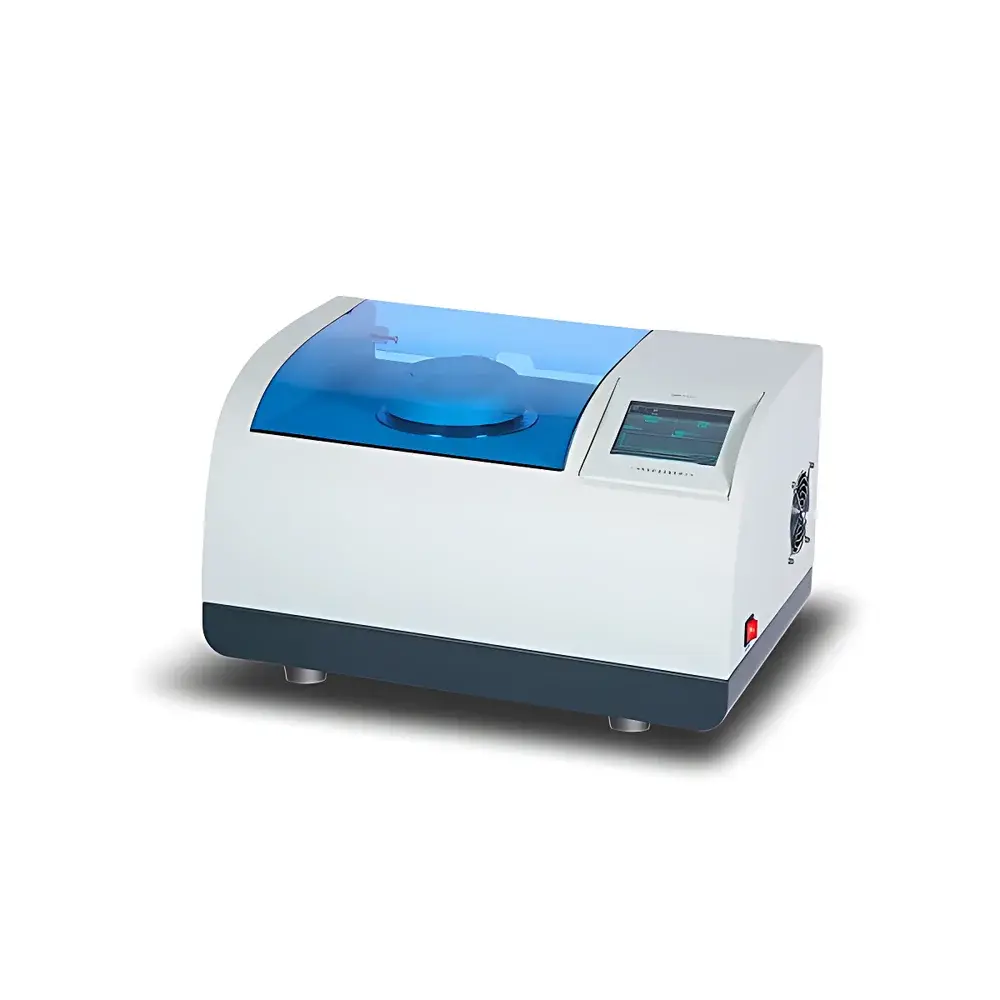
GBPI W401U Water Vapor Transmission Rate (WVTR) Tester for Lithium-ion Battery Films
| Brand | GBPI |
|---|---|
| Model | W401U |
| Origin | Guangdong, China |
| Manufacturer | GBPI Packaging Instrument Co., Ltd. |
| Application | WVTR measurement of thin films and packaging materials for lithium-ion battery separators, flexible electronics, and pharmaceutical packaging |
| Standards Compliance | GB/T 26253-2010, YBB 00092003-2015, ISO 15106-2:2005, ASTM F1249-2013, JIS K7129-2008 |
| Measurement Range | 0.001–100 g/(m²·24h) |
| Resolution | 0.001 g/(m²·24h) |
| Temperature Control | 15–45 °C (optional up to 60 °C), ±0.1 °C accuracy |
| Humidity Control | 30–90 %RH, ±1 %RH accuracy |
| Test Area | 50.24 cm² (configurable down to 0.785 cm² with optional fixtures) |
| Specimen Size | Ø100 mm, ≤3 mm thickness |
| Carrier Gas | Ultra-high-purity N₂ (≥99.999 %), 0.1 MPa minimum pressure, 5–120 mL/min flow rate |
| Power Supply | AC 220 V, 50 Hz, 750 W |
| Dimensions | 600 × 400 × 330 mm |
| Weight | 80 kg |
Overview
The GBPI W401U Water Vapor Transmission Rate (WVTR) Tester is an ISO/ASTM-compliant gravimetric-coulometric hybrid instrument engineered for high-precision permeation analysis of ultra-low-permeability barrier materials—particularly critical in lithium-ion battery separator development, flexible OLED encapsulation, and sterile medical packaging. It operates on the principle of dynamic carrier gas coulometric detection: a controlled humidity gradient is established across a conditioned test specimen sealed in a dual-chamber cell; nitrogen carrier gas sweeps the permeate side and transports transmitted water vapor to a high-stability dual-beam infrared sensor (not electrolytic), enabling real-time quantification of mass flux per unit area and time. Unlike static cup methods, the W401U delivers trace-level resolution (0.001 g/(m²·24h)) with full environmental control (±0.1 °C, ±1 %RH), making it suitable for characterizing AlOₓ-coated PET, SiOₓ-deposited PP, and ceramic-filled polyolefin separators where moisture ingress below 10 mg/m²/day directly impacts cycle life and thermal runaway safety.
Key Features
- Triple-mode permeation testing: configurable high-/medium-/low-barrier modes with adaptive flow calibration to maintain laminar transport conditions across 3 orders of magnitude in WVTR.
- ARM-based embedded control architecture: fully autonomous operation without external PC; color TFT touchscreen interface supports real-time visualization of temperature, RH, sensor output, and cumulative transmission curves.
- Dual-stream humidity generation: independent dry-gas and saturated-humid-gas mixing enables stable, programmable RH setpoints from 30–90 %RH with <1 %RH drift over 72-h continuous runs.
- Modular fixture system: standard 50.24 cm² test area (Ø100 mm), expandable via certified adapters for container testing (bottles, pouches, trays) and micro-area films (down to 0.785 cm²).
- GMP-aligned software platform: compliant with FDA 21 CFR Part 11 and EU Annex 11 requirements—role-based access control (admin/operator/observer), full audit trail (system/method/run-level), electronic signatures, and immutable data logging.
- Traceable metrology: supplied with GBW(E)130543/4 certified reference standards; integrated calibration workflow allows user-performed verification using national standard membranes without third-party intervention.
Sample Compatibility & Compliance
The W401U accommodates rigid and flexible substrates up to 3 mm thick, including microporous polyolefin battery separators, metallized PET/PP laminates, PVD-coated barrier films, silicone elastomer medical patches, and glass-reinforced composites. Its sealed test chamber design meets ISO 15106-2 Annex B for edge-effect minimization and supports validation per USP for pharmaceutical blister packaging. All hardware and firmware comply with IEC 61000-4 electromagnetic immunity standards and GB/T 26253-2010 mechanical stability requirements. Calibration certificates are issued against NIM-traceable standards; annual verification intervals align with ISO/IEC 17025 laboratory accreditation protocols.
Software & Data Management
GBPI’s WinWVTR v3.2 software provides GLP-compliant data governance: raw sensor outputs, environmental logs, and calculated WVTR values are stored in encrypted SQLite databases with SHA-256 hashing. Reporting modules generate PDF/Office-exportable documents containing test parameters, calibration history, uncertainty budgets (k=2), and pass/fail flags against user-defined specification limits. Batch processing supports up to 99 sequential tests with auto-resume after power interruption. Raw data export includes timestamped CSV files with millisecond-resolution sensor readings, compatible with JMP, MATLAB, and LIMS integration via ODBC drivers.
Applications
- Lithium-ion battery R&D: quantifying moisture barrier performance of ceramic-coated separators and solid-state electrolyte films under accelerated aging (45 °C / 90 %RH).
- Flexible electronics: evaluating WVTR of thin-film encapsulation layers for OLED lighting panels and foldable display backplanes.
- Pharmaceutical packaging: validating aluminum-laminated cold-form blisters per YBB 00092003-2015 and USP moisture ingress thresholds.
- Medical device packaging: certifying Tyvek®/foil pouches for ISO 11607-1 sterile barrier systems.
- Food packaging innovation: benchmarking nanocellulose-reinforced bioplastics against PET/AlOₓ benchmarks under tropical storage conditions (40 °C / 90 %RH).
FAQ
What carrier gas is required, and why must it be ≥99.999% pure?
Ultra-high-purity nitrogen (N₂) is mandatory to eliminate background H₂O interference in the detection stream; impurities >10 ppm can saturate the IR sensor baseline and invalidate low-WVTR measurements (<0.1 g/(m²·24h)).
Can the W401U test 3D containers like battery pouches or blister packs?
Yes—using the optional GBPI-CF-02 container fixture kit, which maintains hermetic seal integrity while accommodating variable geometry and internal headspace volume compensation.
How does the system ensure long-term sensor stability?
The dual-beam IR detector incorporates active reference channel compensation and automatic zero-point correction during idle cycles; sensor health diagnostics log signal-to-noise ratio and drift metrics accessible via maintenance mode.
Is external PC operation mandatory?
No—the embedded ARM controller supports standalone testing, data review, report generation, and firmware updates via USB or Ethernet; PC connectivity is optional for advanced statistical analysis or LIMS synchronization.
What documentation is provided for regulatory submissions?
Factory-issued IQ/OQ protocols, traceable calibration certificates (NIM reference standards), software validation summary (per GAMP5), and 21 CFR Part 11 compliance statement are included with each unit.