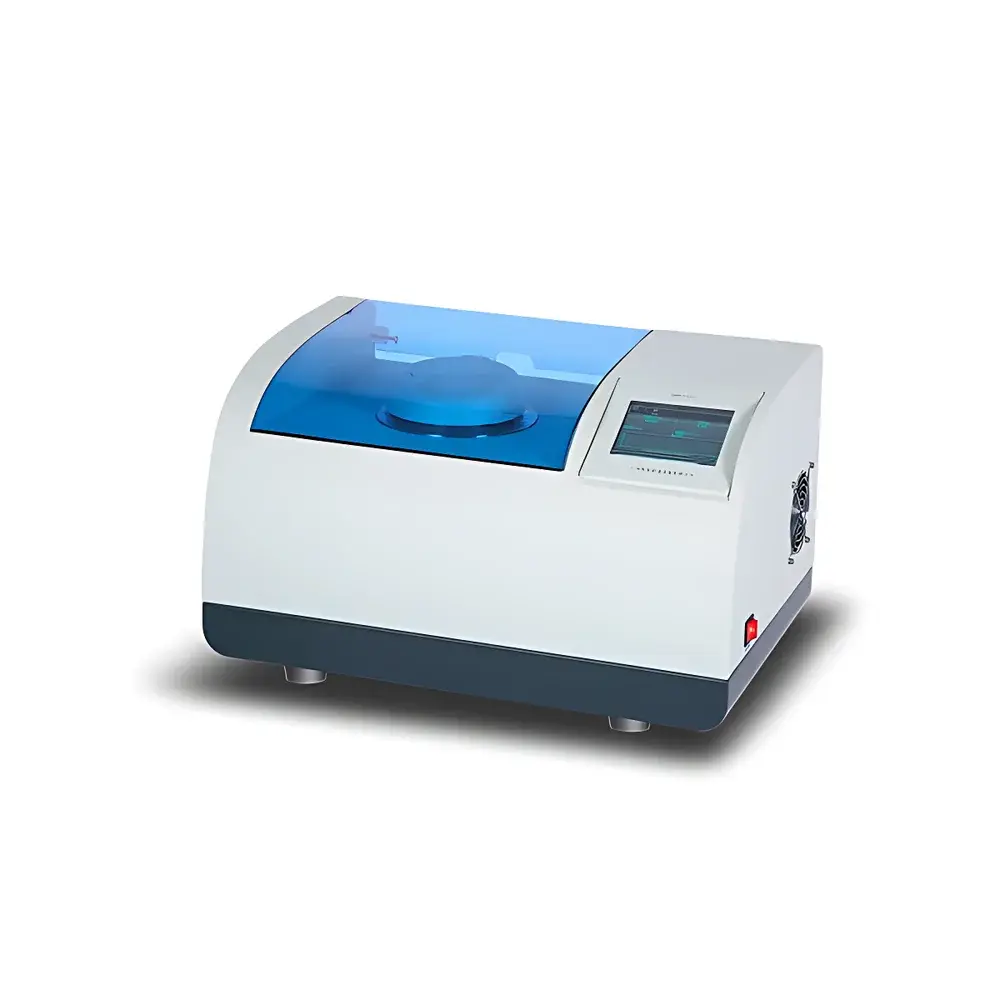
GBPI W401 Infrared Water Vapor Transmission Rate (WVTR) Tester
| Brand | GBPI |
|---|---|
| Model | W401 |
| Measurement Principle | Infrared Detection |
| Test Range | 0.001–100 g/(m²·24h) |
| Resolution | 0.001 g/(m²·24h) |
| Temperature Control | 15–45 °C (optional up to 60 °C), ±0.1 °C accuracy |
| Humidity Control | 30–90 %RH (up to 100 %RH), ±1 %RH accuracy |
| Test Area | 50.24 cm² (down to 0.785 cm² with optional fixtures) |
| Sample Size | Ø100 mm |
| Max Sample Thickness | ≤3 mm |
| Carrier Gas | Ultra-high-purity N₂ (99.999 %), 0.1 MPa min pressure, 5–120 mL/min flow rate |
| Power Supply | AC 220 V, 50 Hz, 750 W |
| Dimensions | 600 × 400 × 330 mm |
| Weight | 80 kg |
Overview
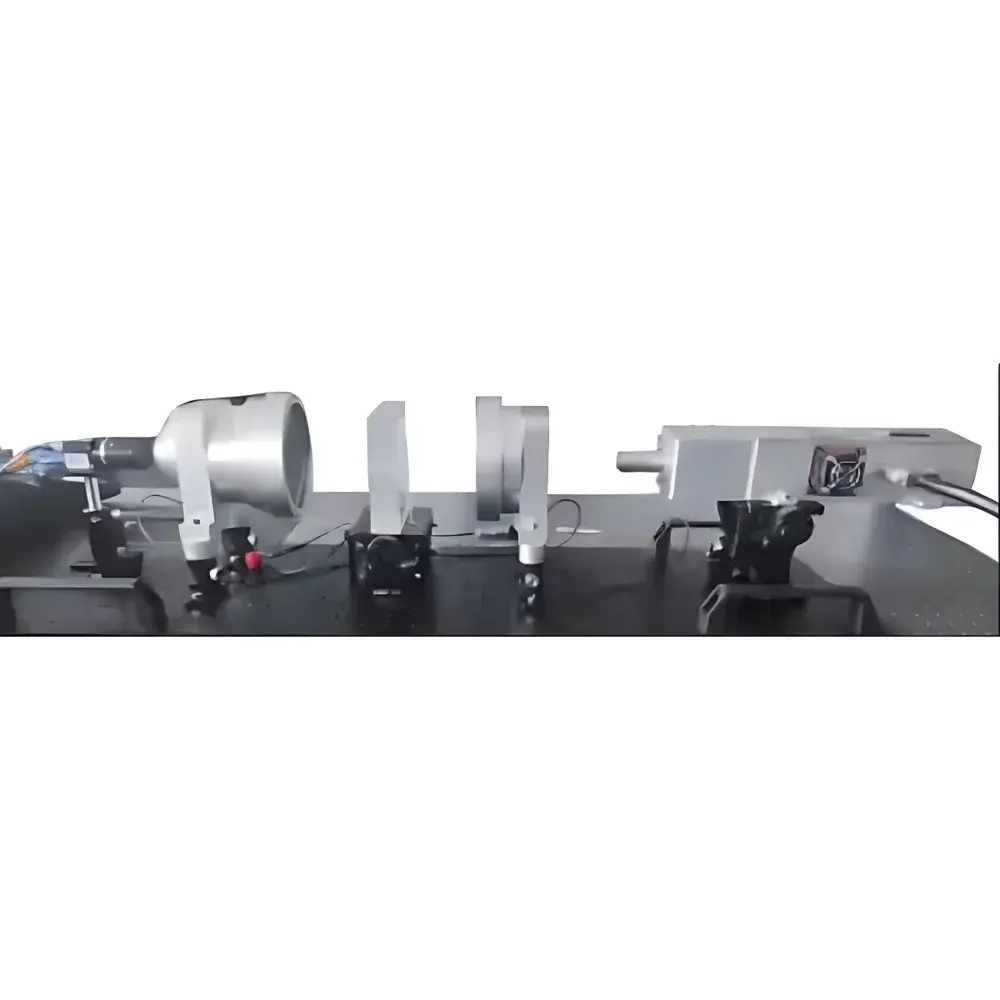
The GBPI W401 Infrared Water Vapor Transmission Rate (WVTR) Tester is a precision instrument engineered for quantitative determination of water vapor permeation through packaging materials and functional barriers under controlled temperature and humidity conditions. It operates on the principle of modulated infrared (IR) absorption spectroscopy—where water vapor molecules traversing the test specimen are carried by a dry nitrogen carrier gas stream into a high-sensitivity IR detection chamber. The instrument measures the absolute concentration of H₂O in real time, enabling direct calculation of WVTR (g/m²·24h) based on Fick’s first law of diffusion and standardized mass transport equations. Designed specifically for regulatory-compliant barrier characterization, the W401 meets the physical measurement requirements of major international standards including ASTM F1249-2013, ISO 15106-2:2005, JIS K7129-2008, GB/T 26253-2010, and YBB 00092003-2015. Its architecture supports both film/sheet testing and container-level evaluation (e.g., bottles, pouches, trays) via interchangeable sample fixtures—making it suitable for R&D laboratories, quality control units, and regulatory submission environments in pharmaceuticals, medical devices, food packaging, flexible electronics, and specialty coatings.
Key Features
- Infrared detection core: Utilizes a thermally stabilized, dual-beam IR sensor with auto-zero compensation and built-in over-range protection—ensuring long-term signal stability and minimal drift during extended operation.
- High-precision environmental control: Dual-channel humidity generation (dry/wet gas mixing) delivers ±1 %RH accuracy across 30–90 %RH; programmable temperature control (15–45 °C standard, 15–60 °C optional) maintains ±0.1 °C uniformity within the test chamber.
- Modular fixture system: Standard 50.24 cm² test area (Ø100 mm aperture); optional micro-fixtures reduce effective area to 0.785 cm² for ultra-low-permeability materials such as metallized PET or aluminum foil laminates.
- Autonomous ARM-based controller: Embedded Linux OS enables standalone operation without external PC; color TFT touchscreen provides real-time visualization of temperature, RH, H₂O concentration, and calculated WVTR curves—with configurable display layers and on-device report generation.
- GMP-aligned software architecture: Compliant with Annex 11 (EU GMP) and FDA 21 CFR Part 11 requirements; includes role-based user access (administrator, operator, reviewer), method audit trails, system event logging, and immutable data change records.
- Calibration traceability: Validated using GBW(E)130543/4 certified national reference standards for WVTR; supports user-performed verification via standard material testing with automatic correction factor application.
Sample Compatibility & Compliance
The W401 accommodates a broad spectrum of planar and three-dimensional specimens. Planar formats include monolayer and multilayer polymer films (e.g., PE, PP, PET, PA), metalized substrates (AlOx, SiOx, Al foil), barrier-coated papers, and ceramic or rubber sheets up to 3 mm thickness. For containers, optional fixtures enable headspace analysis of rigid and semi-rigid packaging—including blister cavities, HDPE bottles, aluminum-plastic pouches, and thermoformed trays. All test configurations adhere to the sample conditioning, mounting, and environmental stabilization protocols defined in ISO 2528 and ASTM D6701. Instrument validation documentation aligns with ICH Q5C, USP , and EU Pharmacopoeia 2.6.27 for packaging integrity assessment in drug product development.
Software & Data Management
GBPI’s proprietary WinWVTR software provides full lifecycle data governance. Test methods are stored as encrypted, version-controlled templates with embedded metadata (operator ID, timestamp, environmental setpoints, calibration status). Real-time curve overlays display temperature, RH, raw IR absorbance, and derived WVTR simultaneously—with zoom, export, and baseline subtraction functions. All raw sensor outputs and intermediate calculations are retained in an SQLite-based local database, supporting SQL queries and batch reporting. Audit trail logs capture every action—including login/logout events, parameter edits, report generation, and manual data overrides—with SHA-256 hashing for tamper evidence. Export formats include PDF (with digital signature option), Excel (.xlsx), and CSV for LIMS integration.
Applications
- Pharmaceutical primary packaging qualification per ICH Q5C stability protocols
- Barrier performance benchmarking of solar backsheet films (IEC 61215-2 MQT10)
- Moisture ingress modeling for OLED encapsulation layers
- QC release testing of sterile barrier systems (ISO 11607-1)
- Accelerated aging correlation studies using Arrhenius modeling
- Regulatory dossier preparation for FDA 510(k), CE Marking, and PMDA submissions
- Material substitution validation in food contact packaging (EC 1935/2004)
FAQ
Does the W401 support container testing out of the box?
Yes—container testing requires optional fixtures (sold separately), including cylindrical adapters for bottles and custom cavity mounts for pouches and trays. All fixtures maintain sealed test environments meeting ASTM F1249 leakage criteria.
What nitrogen purity is required for carrier gas?
Ultra-high-purity nitrogen (99.999 % minimum) is mandatory to avoid interference from CO₂, hydrocarbons, or residual moisture that could saturate the IR detector or skew baseline stability.
Can the instrument be integrated into a networked QC lab environment?
Yes—the W401 supports Ethernet TCP/IP communication and OPC UA server mode for seamless integration with MES, LIMS, and SCADA platforms. Remote monitoring and scheduled calibration alerts are configurable.
Is third-party IQ/OQ/PQ protocol documentation available?
GBPI provides comprehensive validation kits—including URS, FAT/SAT checklists, installation qualification templates, operational qualification protocols (with acceptance criteria per ASTM E2500), and performance qualification test scripts aligned with ISO/IEC 17025.
How often must the IR sensor be recalibrated?
Under normal use (≤8 hrs/day, stable lab conditions), annual recalibration using GBW(E)130543/4 reference standards is recommended. Sensor health diagnostics run automatically at startup and are logged in the audit trail.