
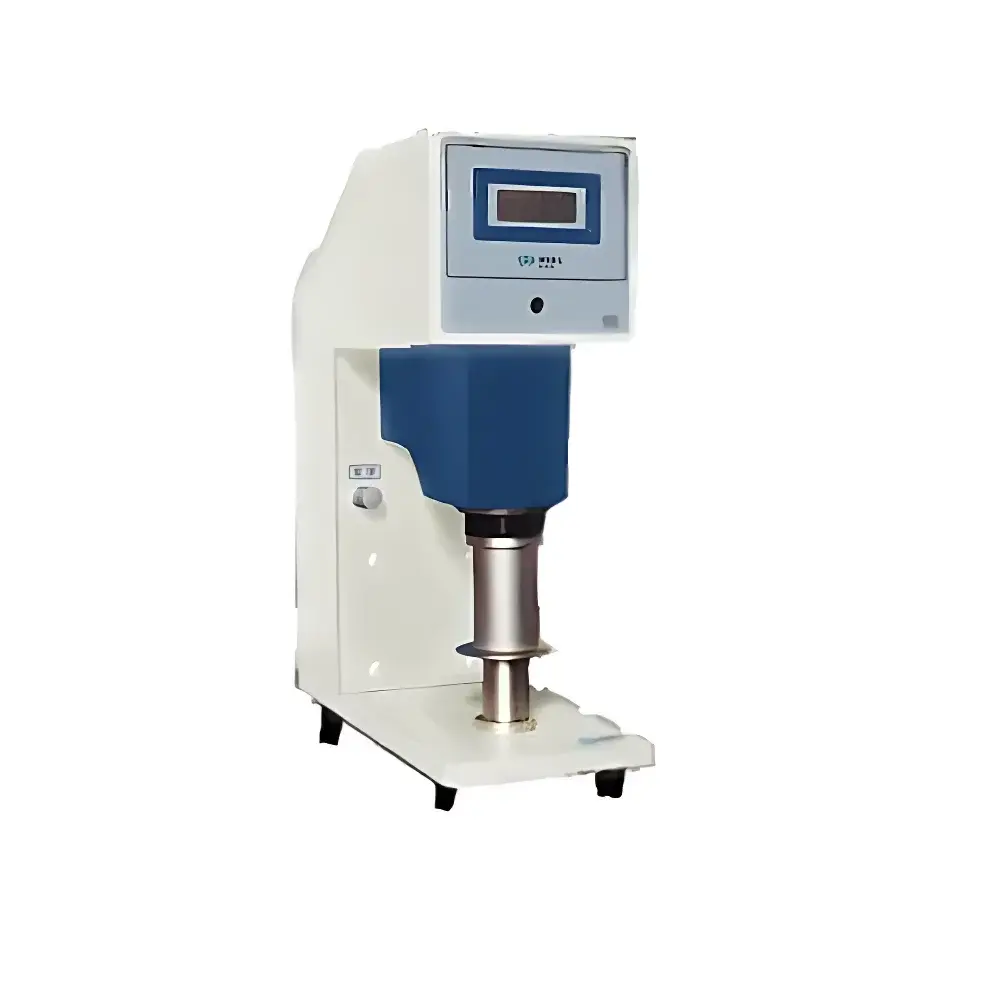
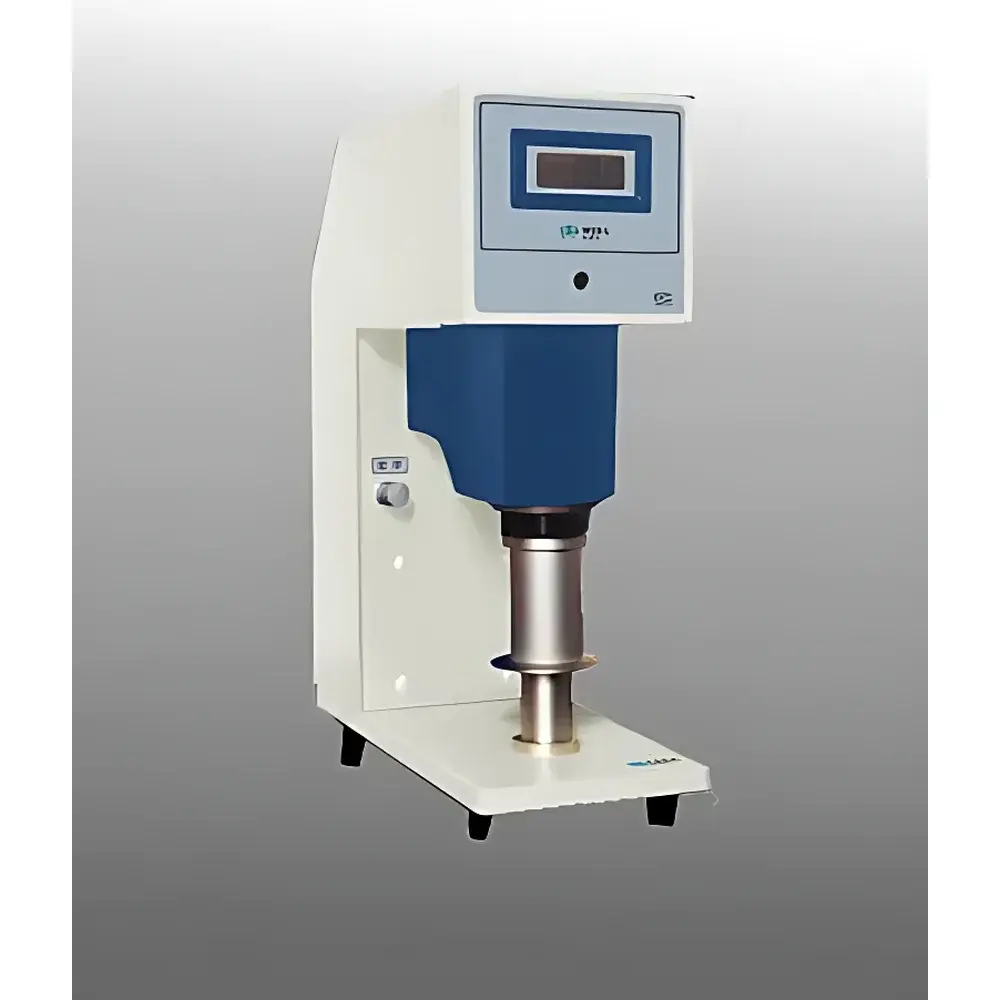
GBPI WSB-L Whiteness Meter
| Brand | GBPI |
|---|---|
| Origin | Guangdong, China |
| Manufacturer Type | Manufacturer |
| Country of Origin | China |
| Model | WSB-L |
| Price | Upon Request |
| Measurement Range | 0–120% |
| Resolution | 0.1% |
| Illumination Geometry | 45°/0° |
| Peak Wavelength | 457 nm |
| Detector | Silicon Photodiode |
| Stability | ±0.2% |
| Repeatability | 0.3% |
| Accuracy (Indication Error) | ±1.5% |
| Compliance Standards | GB/T 5950, GB/T 2931, GB/T 8940.1 |
Overview
The GBPI WSB-L Whiteness Meter is a dedicated optical measurement instrument engineered for the quantitative assessment of whiteness in flat-surfaced solids and powdered materials. It operates on the principle of reflectance photometry at a standardized wavelength—specifically, narrow-band illumination centered at 457 nm—aligned with internationally recognized spectral sensitivity for blue-light reflectance, which correlates strongly with human-perceived whiteness. The 45°/0° illumination geometry ensures consistent angular control: light strikes the sample surface at 45° incidence while the detector, positioned at 0° (normal to the surface), captures diffuse + specular-excluded reflectance. This configuration minimizes directional bias and enhances measurement reproducibility across heterogeneous or textured samples such as paper sheets, ceramic tiles, starch granules, and crystalline food-grade powders (e.g., refined sugar and table salt). Designed for routine quality control environments, the WSB-L delivers traceable, operator-independent results without requiring spectrophotometric calibration or spectral data interpretation.
Key Features
- Optimized 457 nm primary bandpass filter matched to CIE-defined whiteness weighting function for compliance with Chinese national standards (GB/T 5950, GB/T 2931, GB/T 8940.1)
- Fixed-angle 45°/0° optical path architecture ensuring geometric consistency and minimizing inter-instrument variability
- High-stability silicon photodiode detector with low thermal drift and calibrated responsivity over the operational range (0–120% reflectance)
- Sliding sample holder mechanism enabling rapid, repeatable positioning of rigid planar specimens—including A4-sized paper, plastic films, and coated boards
- Backlit LCD display with 0.1% resolution and real-time numeric readout; no external PC required for basic operation
- Robust mechanical housing and temperature-compensated electronics suitable for factory floor or QC laboratory deployment
Sample Compatibility & Compliance
The WSB-L accommodates both solid and particulate samples within defined dimensional constraints: flat specimens up to 100 mm × 100 mm and powders loaded into standardized sample cups (depth ≥ 5 mm, surface leveled). It is routinely deployed in pulp & paper mills (for ISO brightness and TAPPI brightness correlation), building material production (ceramic glazes, gypsum board, PVC panels), and food processing facilities (monitoring whiteness consistency of sucrose, sodium chloride, wheat starch, and rice flour). All measurements adhere to the metrological requirements specified in GB/T 8940.1–2008 (“Whiteness of Paper and Paperboard — Part 1: Instrumental Method Using Blue Light”), GB/T 5950–2002 (“Methods of Test for Whiteness of Building Materials”), and GB/T 2931–2008 (“Test Methods for Whiteness of Starch”). While not a full spectral device, its fixed-wavelength design satisfies regulatory acceptance criteria for process verification where standard-compliant pass/fail thresholds are established.
Software & Data Management
The WSB-L operates as a standalone instrument with embedded firmware; no proprietary software is required for acquisition or display. However, analog output (0–5 V DC) and optional RS-232 interface support integration into centralized SCADA or LIMS platforms for automated data logging. When connected to compliant laboratory systems, measurement records—including date/time stamp, operator ID (if entered manually), and result value—can be archived with audit-trail capability meeting GLP documentation expectations. Though not certified for FDA 21 CFR Part 11 electronic signature enforcement, the instrument’s deterministic output and non-volatile memory retention (last 99 readings) facilitate internal traceability during QA reviews and internal audits.
Applications
- Quality assurance of bleached kraft paper, newsprint, and tissue products against target whiteness specifications
- In-process monitoring of titanium dioxide pigment dispersion efficiency in paint and coating formulations
- Batch release testing of pharmaceutical excipients (e.g., microcrystalline cellulose, lactose monohydrate) per USP uniformity guidance
- Evaluation of aging-related yellowing in polymer films and laminated packaging substrates
- Raw material screening for agricultural commodities including milled rice, corn starch, and edible salt prior to packaging
- Validation of cleaning efficacy on reusable stainless-steel surfaces in food-grade equipment
FAQ
Does the WSB-L comply with ISO 2470 or ISO 11475?
No—the WSB-L implements the 457 nm blue-light method per GB/T 8940.1 and is not configured for ISO 2470 (diffuse/8° geometry) or ISO 11475 (CIE whiteness index calculation). It is intended for domestic regulatory alignment, not international ISO certification.
Can it measure yellowness or tint?
No—whiteness is reported as a single scalar value (%). Yellowness index (YI) or CIE whiteness (WI) calculations require multi-wavelength spectral data, which this instrument does not acquire.
Is calibration traceable to NIM or other national standards?
Yes—GBPI provides factory calibration using reference tiles certified by the National Institute of Metrology (NIM), China, with documented uncertainty budgets available upon request.
What maintenance is required?
Annual verification using supplied white calibration tile (certified reflectance ≥ 95% at 457 nm) is recommended; optical path cleaning with lint-free swabs and isopropyl alcohol every 3 months ensures long-term stability.
Is the sliding sample holder compatible with irregular or curved surfaces?
No—the 45°/0° geometry requires optically flat, matte-finish surfaces. Curved, glossy, or transparent samples yield non-representative readings and are outside the scope of validated use.





