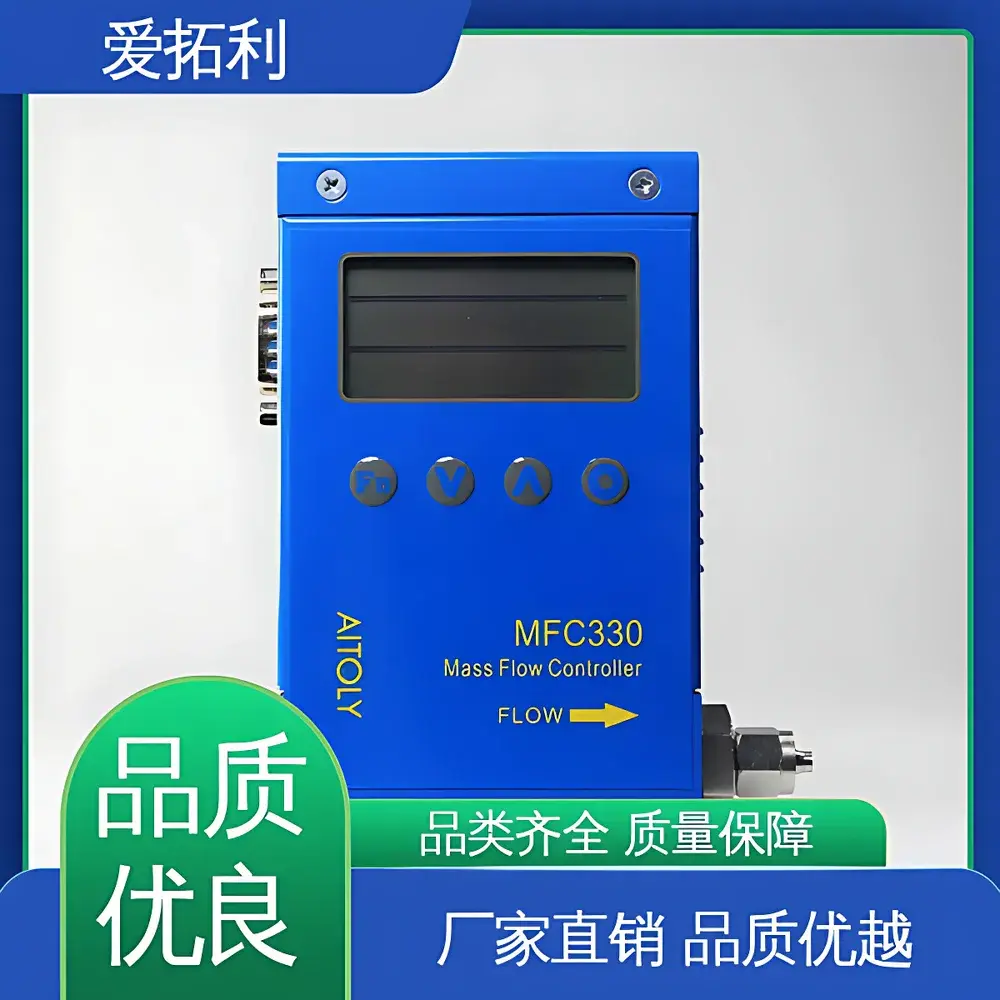
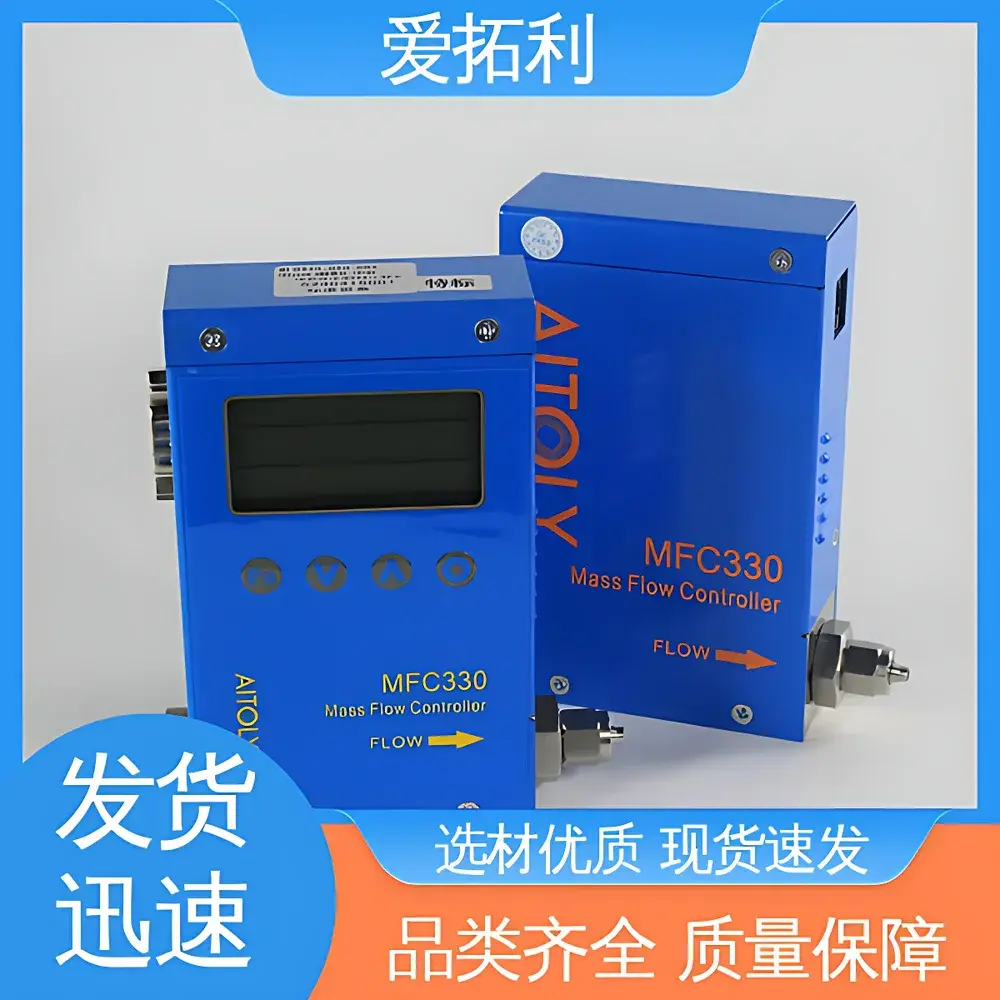
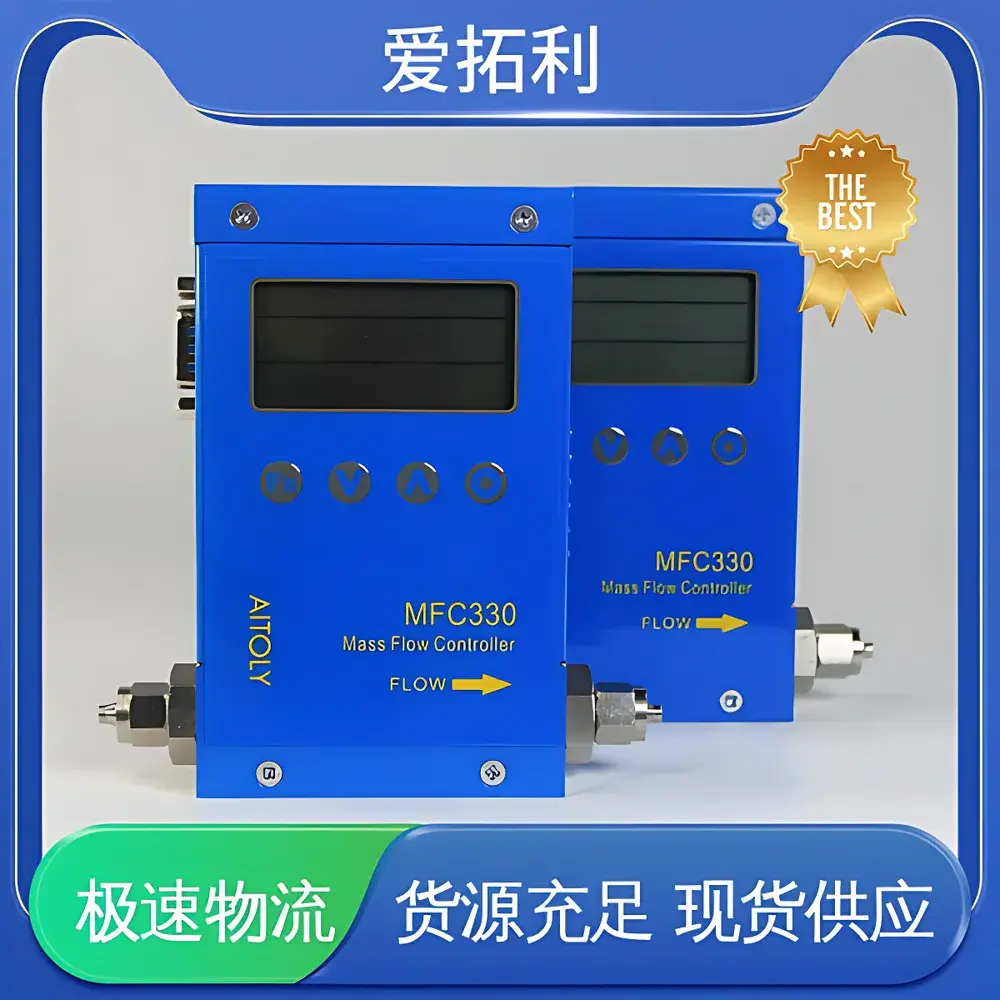
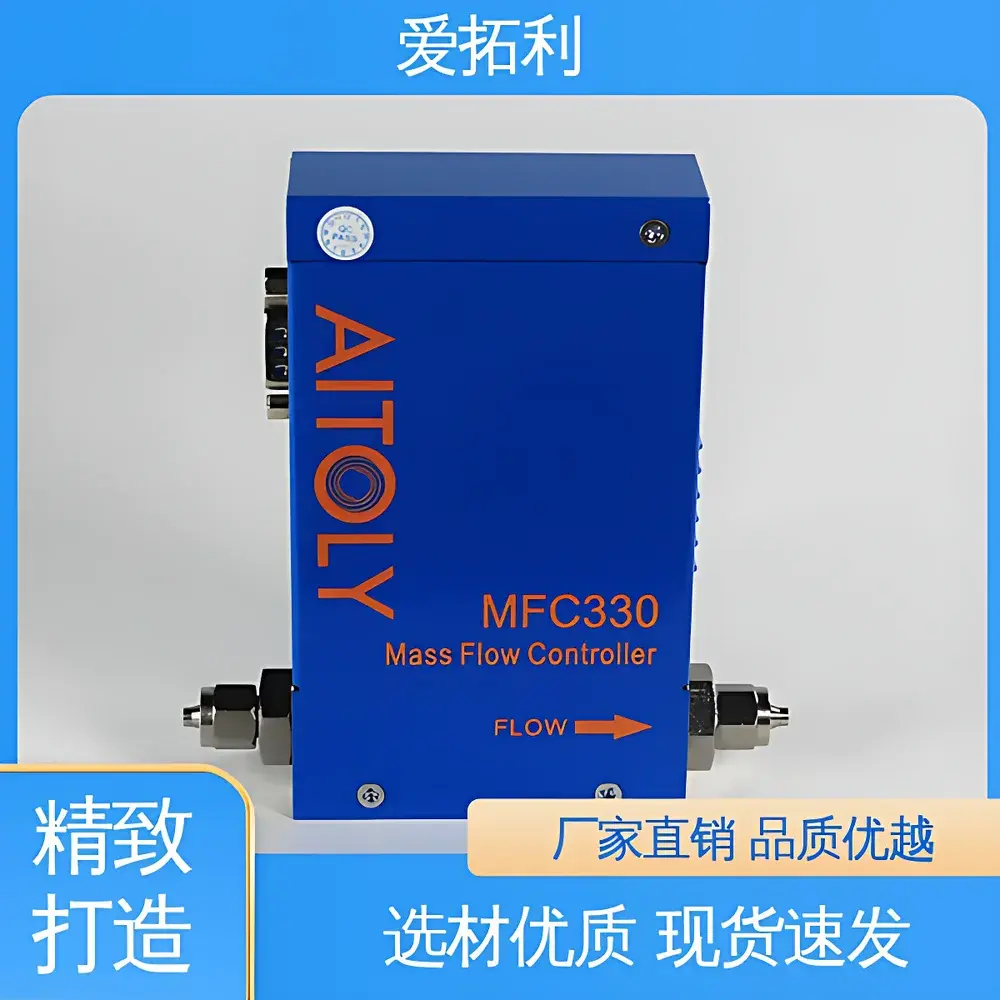
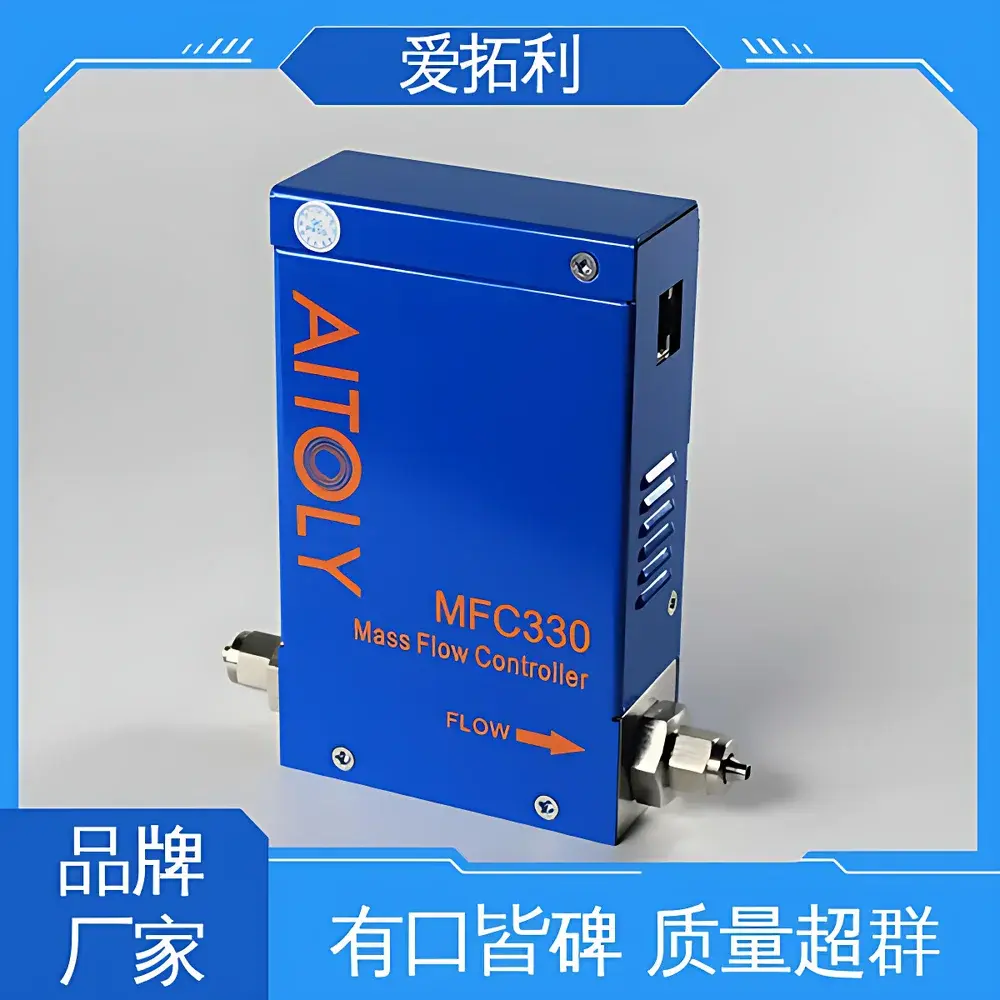
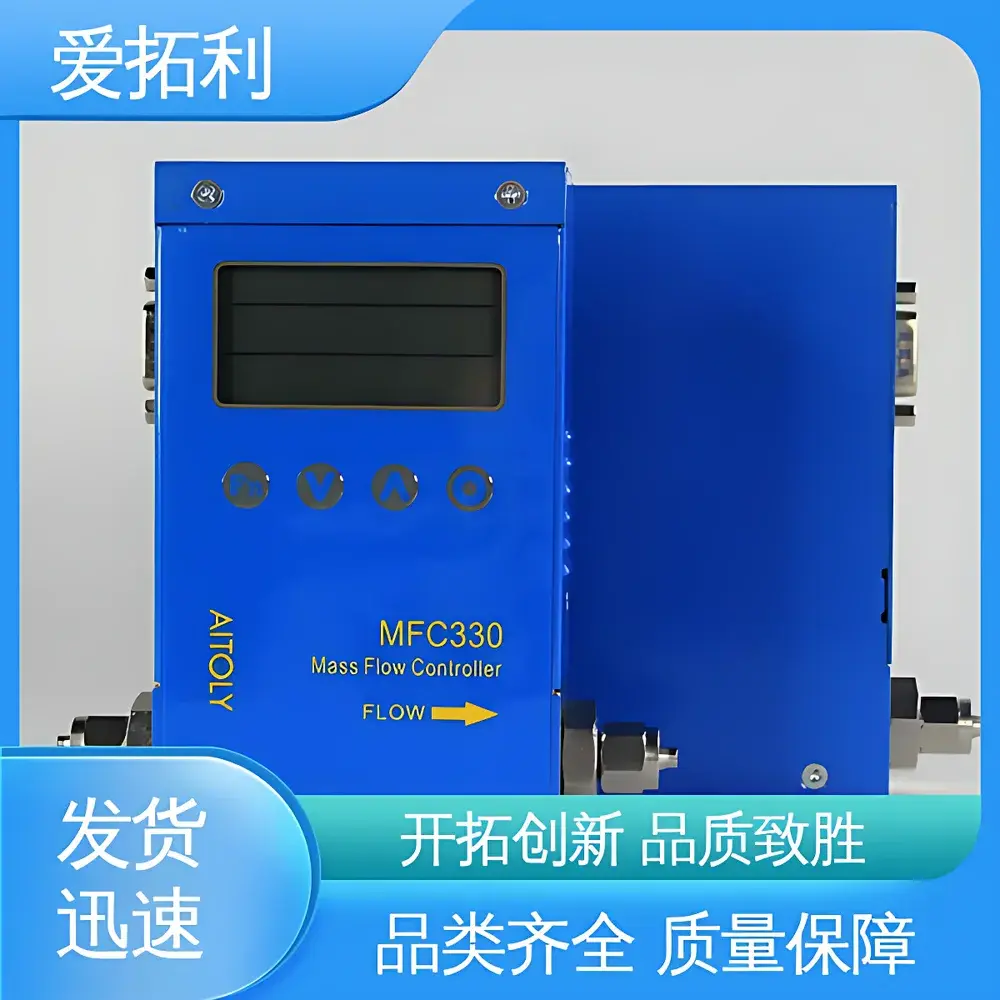
Atotech MFC330 Thermal Mass Flow Controller
| Brand | Atotech |
|---|---|
| Origin | Jiangsu, China |
| Manufacturer Type | Authorized Distributor |
| Product Type | Thermal Mass Flow Controller |
| Model | MFC330 |
| Flow Range Options | 0–2 / 10 / 20 / 50 / 100 / 300 / 500 sccm |
| Accuracy | ±1% FS |
| Repeatability | ±0.2% FS |
| Linearity | ±0.2% FS |
| Control Range | 1–100% FS (1:100) |
| Measurement Range | 0.5–100% FS (1:200) |
| Response Time | <3 s |
| Warm-up Time | 5 min (T95), 30 min recommended for optimal stability |
| Valve Type | Normally Closed |
| Gas Compatibility | Clean, dry gases |
Overview
The Atotech MFC330 is a precision-engineered thermal mass flow controller designed for stable, high-reproducibility gas flow regulation in laboratory, pilot-scale, and industrial process environments. It operates on the principle of constant-temperature anemometry: a heated sensing element (capillary tube-based thermal sensor) measures convective heat transfer from the flowing gas stream, enabling direct mass flow measurement independent of pressure and temperature fluctuations—provided gas composition remains within calibrated parameters. The integrated bypass architecture routes a representative fraction of total flow across the sensor while the remainder passes through a parallel path regulated by a high-bandwidth proportional control valve. This closed-loop configuration ensures dynamic setpoint tracking with minimal hysteresis and drift, even under variable inlet pressure or ambient temperature conditions.
Key Features
- Capillary-tube thermal sensor architecture optimized for low-flow sensitivity and long-term zero stability
- Fast-response proportional solenoid valve (normally closed) with sub-3-second step response to flow setpoint changes
- Wide turndown ratio: 1:100 for control (1–100% FS) and 1:200 for measurement (0.5–100% FS)
- Factory-calibrated for up to 12 common industrial gases (N₂, O₂, Ar, He, CO₂, Air, H₂, CH₄, C₂H₆, NH₃, SF₆, and custom blends); gas selection switchable via front-panel or digital interface
- Integrated temperature compensation algorithm compliant with ISO 14644-3 and ASTM E2913 standards for cleanroom and controlled-environment applications
- Robust stainless-steel wetted parts (316L SS body, Hastelloy C-276 optional) suitable for corrosion-resistant operation
- Standard analog I/O (0–5 V / 0–10 V / 4–20 mA) plus RS-485 Modbus RTU for integration into SCADA, PLC, or centralized process control systems
Sample Compatibility & Compliance
The MFC330 is validated for use with clean, dry, non-condensing gases having particulate content <0.1 µm and dew point ≤ –40 °C. It supports gas mixtures with known thermal properties and is compatible with ISO 8573-1 Class 2 compressed air quality specifications. For pharmaceutical and bioprocessing applications, the device meets mechanical design requirements aligned with ASME BPE-2022 for single-use and reusable fluid path components. While not intrinsically safe certified, it may be deployed in Zone 2/Class I Div 2 environments when installed with appropriate barrier systems. Device firmware and hardware architecture support audit-trail-capable operation per FDA 21 CFR Part 11 when used with compliant host software and access controls.
Software & Data Management
The MFC330 includes embedded firmware supporting real-time flow monitoring, setpoint ramping profiles, and alarm thresholds (e.g., over-range, sensor fault, valve timeout). Optional PC-based configuration utility enables advanced calibration coefficient editing, gas-specific scaling factor adjustment, and firmware updates. All operational events—including power cycles, setpoint changes, and error codes—are timestamped and stored in non-volatile memory (10,000-event buffer). When integrated via Modbus RTU, flow data can be logged at user-defined intervals (100 ms–10 s resolution) into LIMS or MES platforms compliant with ISA-88 and ISA-95 data models. Raw sensor output and control valve duty cycle are accessible for diagnostic trending and predictive maintenance analysis.
Applications
- Precise gas dosing in semiconductor CVD, PECVD, and etch tool purge sequences
- Controlled atmosphere furnaces and thermal processing systems requiring repeatable N₂/H₂/Ar flows
- Calibration laboratories performing flow standard intercomparisons against primary standards (e.g., bell prover, critical flow venturi)
- Environmental emission monitoring systems (CEMS) where trace gas spiking and dilution require certified mass flow accuracy
- Bioreactor headspace gas control (O₂, CO₂, air) under GLP-compliant cell culture protocols
- Research-grade fuel cell test stations requiring stoichiometric reactant delivery under variable backpressure
FAQ
What gas calibration options are available for the MFC330?
Standard factory calibrations cover N₂, O₂, Ar, He, CO₂, Air, H₂, CH₄, C₂H₆, NH₃, SF₆, and synthetic air. Custom gas calibrations are available upon request with certified gas mixture certificates traceable to NIST or NMi.
Is the MFC330 compatible with vacuum or negative-pressure downstream conditions?
The device is rated for operation at absolute inlet pressures from 0.1 to 1.0 MPa and differential pressure drops up to 0.3 MPa. It is not designed for true vacuum (<1 kPa abs) operation but performs reliably under moderate backpressure (up to 100 kPa gauge).
How does the MFC330 handle gas composition changes during operation?
Gas composition must remain within ±2% of the calibrated mixture. Significant deviations require either recalibration or use of multi-gas compensation firmware (optional upgrade), which applies real-time thermal property correction based on user-input gas fractions.
What is the recommended maintenance interval?
No routine sensor cleaning is required under clean-gas conditions. Annual verification against a traceable reference standard is recommended per ISO/IEC 17025 guidelines. Valve lifetime exceeds 10 million cycles under typical lab-duty cycling.