
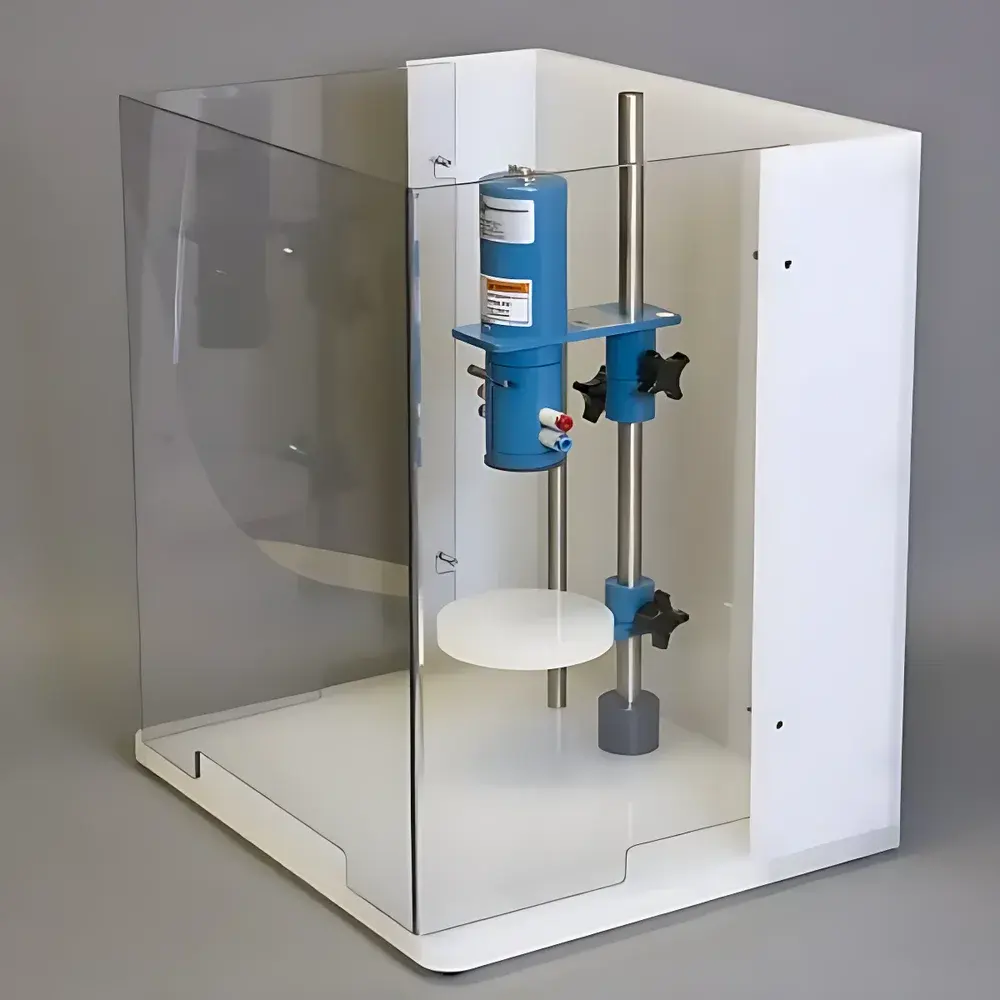
PINE AFMSRCE Advanced Rotating Disk and Ring-Disk Electrode System
| Brand | Pine Instruments (Pine Test Equipment, Inc.) |
|---|---|
| Origin | USA |
| Manufacturer Status | Authorized Distributor |
| Origin Category | Imported |
| Model | AFMSRCE / MSR |
| Rotation Speed Range | 0–10,990 rpm |
| Motor Power | 20 W |
| Speed Display Accuracy | ±1% |
| Control Architecture | Separated Motor & Controller Units |
| Electrical Protection | Integrated Surge and Voltage Instability Protection |
| Interface | Analog Input/Output (0–10 V) for External Speed Command and Tachometer Signal Output |
| Electrode Compatibility | Standard RDE, RRDE, and Rotating Ring-Disk Electrode (RRDE) configurations |
Overview
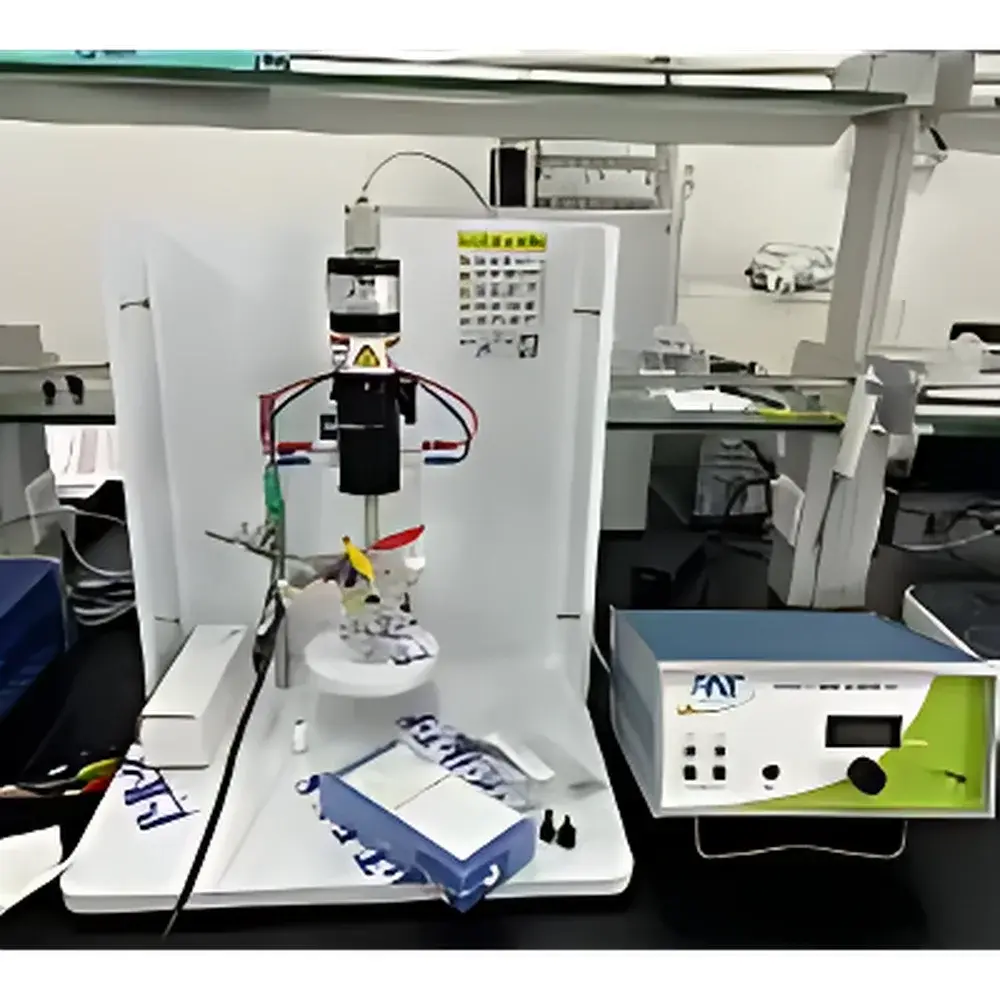
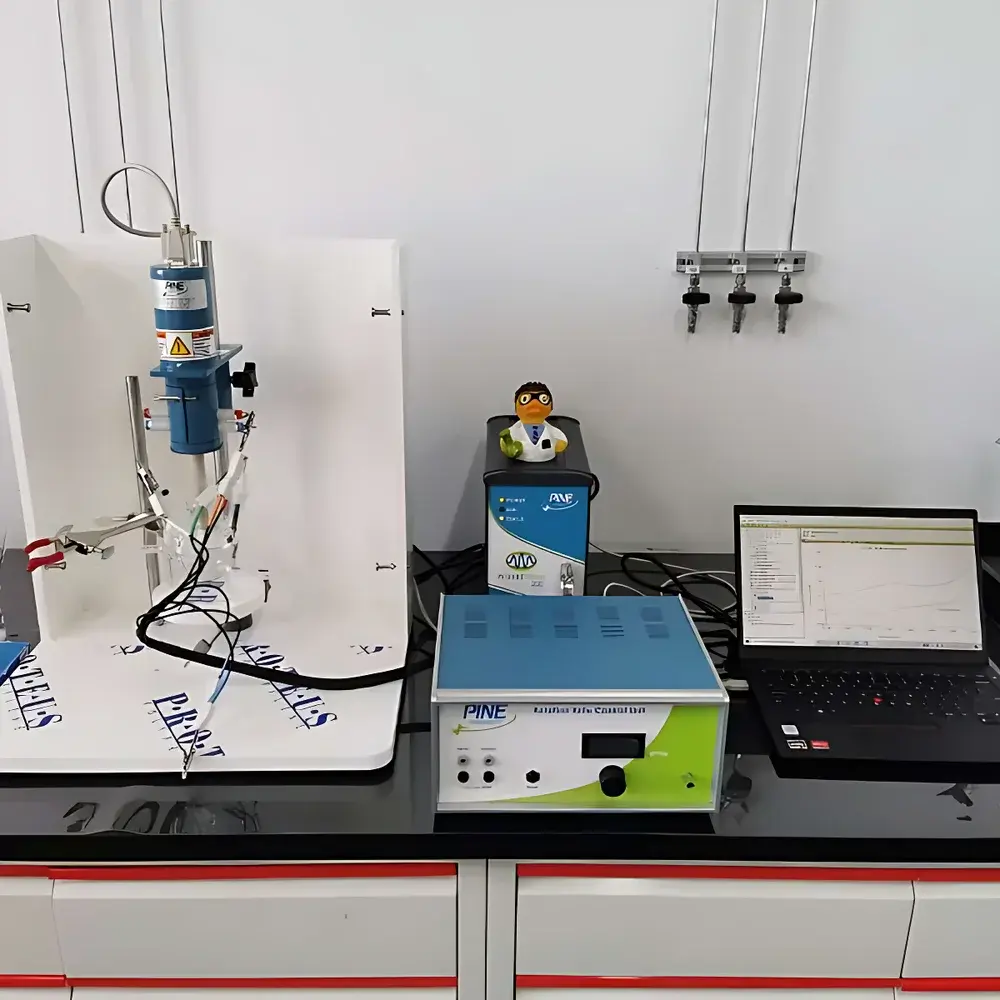
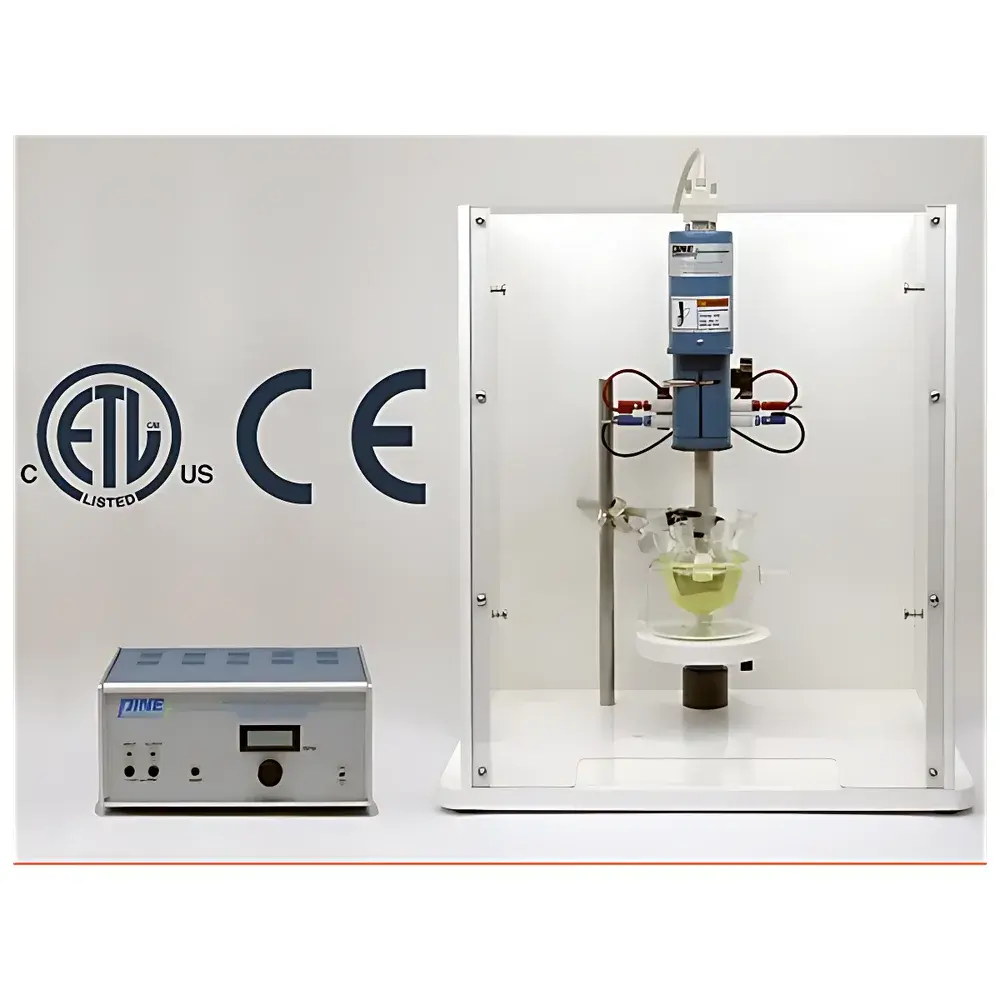
The PINE AFMSRCE is a high-precision, modular rotating electrode system engineered for advanced electrochemical kinetics and mechanistic studies under controlled hydrodynamic conditions. Based on the classical Levich and Koutecký–Levich theoretical frameworks, the system enables quantitative mass-transport-controlled measurements via rotating disk electrode (RDE) and rotating ring-disk electrode (RRDE) configurations. Its core architecture separates the motor drive unit from the electronic speed controller—minimizing electromagnetic interference, preventing volatile electrolyte vapor ingress into sensitive electronics, and ensuring long-term operational stability in corrosive or inert-atmosphere glovebox environments. Designed and manufactured in the United States by Pine Test Equipment, Inc., the AFMSRCE complies with international design standards for laboratory-grade electrochemical instrumentation and integrates seamlessly with third-party potentiostats, frequency response analyzers, and data acquisition systems.
Key Features
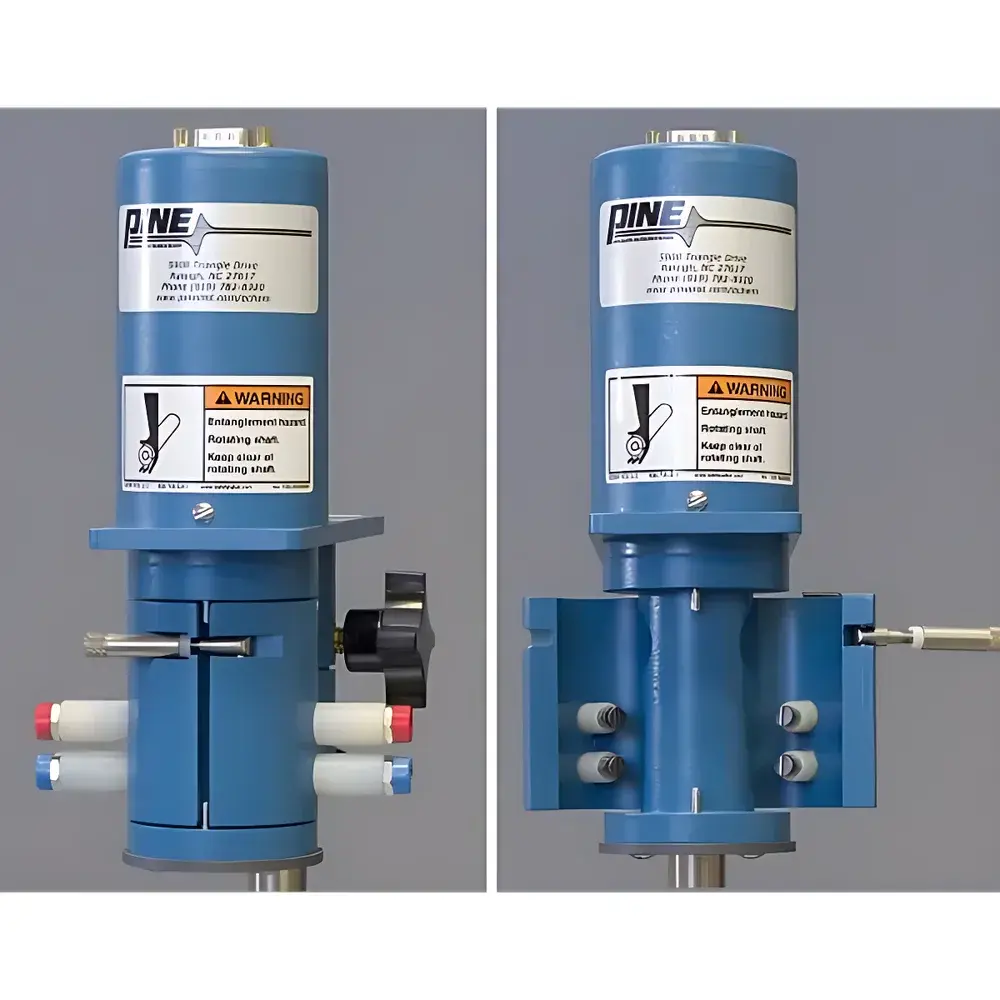
- Wide rotational speed range: 0–10,990 rpm with ±1% display accuracy, achieved via brush-type silver-carbon commutation for low-noise torque transmission and extended service life.
- Modular, decoupled control architecture: Independent motor housing and controller unit allow physical separation—critical for use inside gloveboxes, fume hoods, or sealed electrochemical cells.
- Analog I/O interface (0–10 V): Accepts external voltage signals from potentiostats to synchronize rotation with potential sweep protocols; simultaneously outputs real-time tachometer signals for oscilloscope monitoring or external device triggering.
- Integrated electrical protection circuitry: Guards against transient overvoltage, brownout, and line-frequency fluctuations—ensuring consistent performance during extended kinetic experiments or overnight automated sequences.
- Interchangeable electrode holder design: Supports standard 6-mm OD RDE shafts, dual-channel RRDE assemblies (e.g., Pt ring + GC disk), and custom-configured rotating ring-disk-ring (RRDR) geometries.
Sample Compatibility & Compliance
The AFMSRCE accommodates a broad spectrum of electrode materials—including glassy carbon, platinum, gold, nickel, and modified carbon composites—enabling studies across acidic, alkaline, non-aqueous, and ionic liquid electrolytes. Its mechanical design conforms to ASTM D1148-15 (standard practice for rotating electrode calibration) and supports method validation per ISO 17025-accredited laboratories. When operated with traceable calibration standards and documented SOPs, the system meets GLP requirements for catalyst screening and corrosion testing. Full audit trail capability is maintained when paired with compliant electrochemical workstations supporting FDA 21 CFR Part 11–enabled software (e.g., AfterMath, EC-Lab, or NOVA).
Software & Data Management
While the AFMSRCE itself is hardware-only and does not include embedded firmware or proprietary GUI, its analog I/O compatibility ensures full interoperability with industry-standard electrochemical platforms. Users may configure closed-loop rotation control within potentiostat software (e.g., synchronize rotation start/stop with CV initiation) and log synchronized time-stamped datasets containing current, potential, and rotational speed. Exported data files (CSV, TXT, or binary formats) retain metadata such as calibration constants, electrode geometry, and temperature—facilitating reproducible Koutecký–Levich analysis and Tafel slope derivation in post-processing tools like MATLAB, Python (SciPy), or OriginLab.
Applications
- Oxygen reduction reaction (ORR) and oxygen evolution reaction (OER) kinetics in PEMFC and metal–air battery catalyst development.
- Quantitative determination of intermediate species (e.g., H2O2) in multi-electron transfer processes using ring-disk collection efficiency calibration.
- Electrochemical corrosion studies: evaluation of passivation behavior, pitting susceptibility, and inhibitor efficiency under controlled convection.
- CO2 electroreduction mechanism elucidation—distinguishing surface-bound intermediates from solution-phase products via ring detection.
- Electrocatalyst stability assessment through accelerated degradation protocols involving repeated potential cycling at fixed rotation rates.
FAQ
Is the AFMSRCE compatible with all commercial potentiostats?
Yes—its 0–10 V analog input/output interface is standardized and supported by major platforms including BioLogic SP-300, Gamry Interface 5000, Princeton Applied Research PARSTAT, and Metrohm Autolab PGSTAT series.
Does the system include electrode calibration documentation?
Pine provides geometric calibration certificates for standard RDE/RRDE tips (e.g., tip radius, disk/ring gap, collection efficiency); users must perform periodic mechanical verification using certified tachometers per ASTM D1148.
Can the AFMSRCE operate inside an argon-filled glovebox?
Yes—the motor and controller are physically separable; only the motor head enters the glovebox, while the controller remains outside via feedthrough-compatible cabling.
What maintenance is required for long-term reliability?
Annual inspection of carbon brushes, bearing lubrication, and verification of concentricity using optical alignment tools is recommended; Pine offers factory recalibration services upon request.
Is firmware upgrade support available?
No—this is an analog-controlled electromechanical system without embedded microprocessors; performance consistency relies on hardware precision and external signal integrity.





