
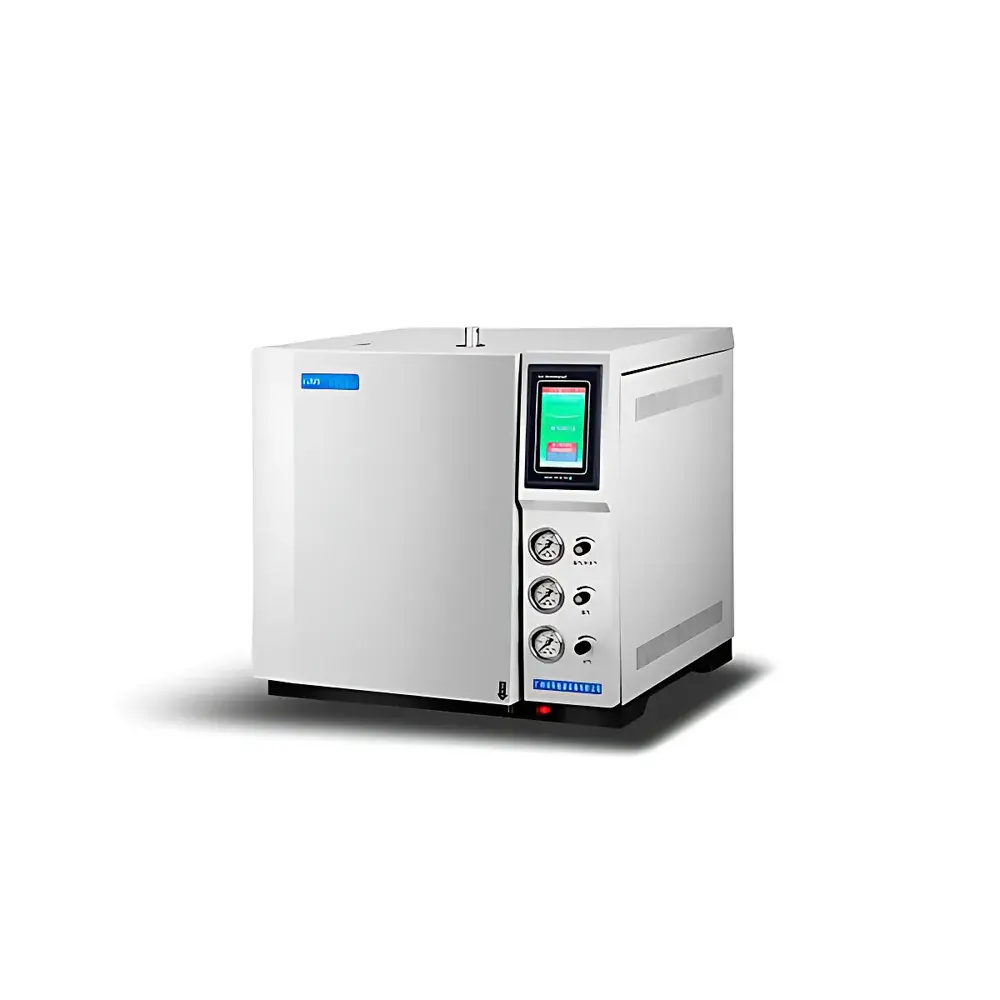
GBPI GC9802-K Ethylene Oxide Residual Analysis System for Medical Masks
| Brand | GBPI |
|---|---|
| Origin | Guangdong, China |
| Manufacturer Type | Manufacturer |
| Origin Category | Domestic |
| Model | GC9802-K |
| Price Range | USD 14,000–21,000 |
| Instrument Type | Laboratory Gas Chromatograph |
| Application Field | Environmental & Medical Device Testing |
| Detector | Hydrogen Flame Ionization Detector (FID) |
| Detection Limit | ≤3×10⁻¹² g/s (n-Hexadecane) |
| Baseline Noise | ≤2×10⁻¹⁴ A |
| Baseline Drift | ≤1×10⁻¹³ A/30 min |
| Column | EO-Specific Capillary Column (30 m × 0.32 mm × 0.5 µm) |
| Oven Temperature Range | 4 °C above ambient to 450 °C (1 °C increments) |
| Temperature Control Accuracy | ±0.1 °C |
| Temperature Gradient Uniformity | ±1% |
| Independent Temperature Zones | 6 |
| Programmable Temperature Ramping | 16 steps |
| Ramp Rate | 0.1–60 °C/min |
| Maximum Run Time | 6000 min |
| Injection Mode | Split/Splitless with Septum Purge |
| Optional Accessories | Zero-Air Generator (3 L/min, oil-free, dehydrated/deoiled), H₂ Generator (300 mL/min, 99.999% purity), High-Purity N₂ Supply (99.999%, cylinder + regulator), EO Certified Reference Standards |
| Software | Dual-Channel Chinese GUI Workstation with Instrument Control, Real-Time Chromatogram Display, Zoom/Pan Functionality, PDF Report Export, Audit-Trail-Ready Data Logging |
Overview
The GBPI GC9802-K Ethylene Oxide Residual Analysis System is a dedicated laboratory gas chromatograph engineered for precise, reproducible quantification of residual ethylene oxide (EO) in sterilized medical masks and other single-use healthcare devices. It operates on the fundamental principle of capillary gas chromatography coupled with flame ionization detection (GC-FID), delivering high sensitivity and selectivity for volatile organic compounds—particularly EO—at trace levels (sub-ppm). Designed in strict alignment with international regulatory expectations for medical device biocompatibility testing, the system enables laboratories to comply with ISO 10993-7, USP , and FDA guidance on residual sterilant validation. Its robust architecture supports routine QC/QA workflows in GMP-compliant environments, where method transferability, inter-laboratory reproducibility, and data integrity are non-negotiable.
Key Features
- Dedicated EO analysis configuration: Pre-optimized 30 m × 0.32 mm × 0.5 µm fused-silica capillary column with stationary phase tailored for EO separation from interfering matrix volatiles (e.g., ethanol, acetaldehyde).
- Six independently controlled temperature zones—including oven, injector, detector, and transfer lines—ensure thermal stability critical for low-level EO retention time reproducibility (RSD < 0.2% over 24 h).
- FID with verified detection limit ≤3×10⁻¹² g/s (n-hexadecane) and baseline noise ≤2×10⁻¹⁴ A meets sensitivity requirements for EO quantitation down to 0.1 µg/g per ISO 10993-7 Annex B.
- Programmable 16-step temperature ramping (0.1–60 °C/min) enables sharp peak resolution of EO from co-eluting solvents common in mask substrate materials (e.g., polypropylene melt-blown layers).
- Integrated split/splitless inlet with septum purge minimizes carryover and ensures consistent injection volume accuracy across repeated analyses.
- Real-time dual-channel workstation provides synchronized control, chromatogram visualization, baseline correction, peak integration (tangent skim or vertical drop), and automated calibration curve generation (linear/non-linear).
- Hardware-level safety protocols include dual overtemperature protection (programmable setpoint + independent hardware cutoff) and automatic shutdown on gas flow failure.
Sample Compatibility & Compliance
The GC9802-K is validated for headspace analysis of EO residues extracted from Class I–III medical masks per YY/T 0969–2013, GB 19083–2010, and YY 0469–2011. Sample introduction utilizes standardized 20-position headspace autosampler-ready vials (20 mL) with crimp-seal septa, compatible with ISO 11358–1 headspace equilibration parameters (e.g., 60 °C, 30 min, 500 rpm agitation). The system supports full compliance with GLP and GMP documentation requirements: electronic signatures, user access levels, audit-trail-enabled method changes, and raw data immutability (per FDA 21 CFR Part 11 readiness). All calibration standards—including certified EO reference materials traceable to NIST SRM 1691—are managed within the workstation’s reference library with expiry tracking.
Software & Data Management
The dual-channel Chinese-language workstation (English firmware optional) delivers full instrument control, real-time chromatographic visualization, and compliant data handling. Features include dynamic zoom/pan of chromatograms, overlay of up to 16 runs for comparative analysis, customizable report templates (PDF, Excel, CSV), and embedded calculation modules for residual EO mass concentration (µg/g) based on internal standard response ratios. Raw data files (.raw) are stored with metadata (operator ID, method name, injection time, sequence ID), and all processing steps—including integration events and manual peak edits—are timestamped and logged in an immutable audit trail. Data export conforms to LIMS interoperability standards (ASTM E1384, HL7).
Applications
- Quantitative determination of EO residuals in surgical masks, N95 respirators, and isolation gowns post-sterilization.
- Validation of EO sterilization cycle efficacy and aeration time optimization per ISO 11135.
- QC release testing of packaging materials (e.g., Tyvek pouches) for EO permeation and leaching potential.
- Environmental monitoring of EO emissions from sterilization facilities (ambient air, stack gas).
- Residual solvent analysis in pharmaceutical primary packaging (blister foils, laminates) per ICH Q3C guidelines.
- Method development and verification for alternative sterilants (e.g., hydrogen peroxide vapor) where EO cross-contamination must be excluded.
FAQ
What regulatory standards does the GC9802-K support for EO residue testing?
It is configured to meet YY/T 0969–2013, GB 19083–2010, ISO 10993-7, USP , and ASTM F2735–21 requirements for EO quantitation in medical devices.
Can the system be upgraded for multi-residue analysis beyond EO?
Yes—by installing alternative columns (e.g., DB-624 for chlorinated solvents) and detectors (ECD for halogenated compounds), it functions as a general-purpose GC platform compliant with EPA Method 8260D.
Is the software compliant with FDA 21 CFR Part 11?
The workstation supports electronic signatures, role-based access control, and audit-trail logging; full Part 11 compliance requires site-specific validation per your SOPs.
What consumables require regular replacement?
FID jet, inlet liner, septa, O-rings, and GC column—typical service intervals are documented in the maintenance logbook and tracked via software alerts.
Does GBPI provide method validation support?
Yes—application notes, system suitability test protocols, and IQ/OQ documentation packages are available upon request for GMP-regulated installations.




