
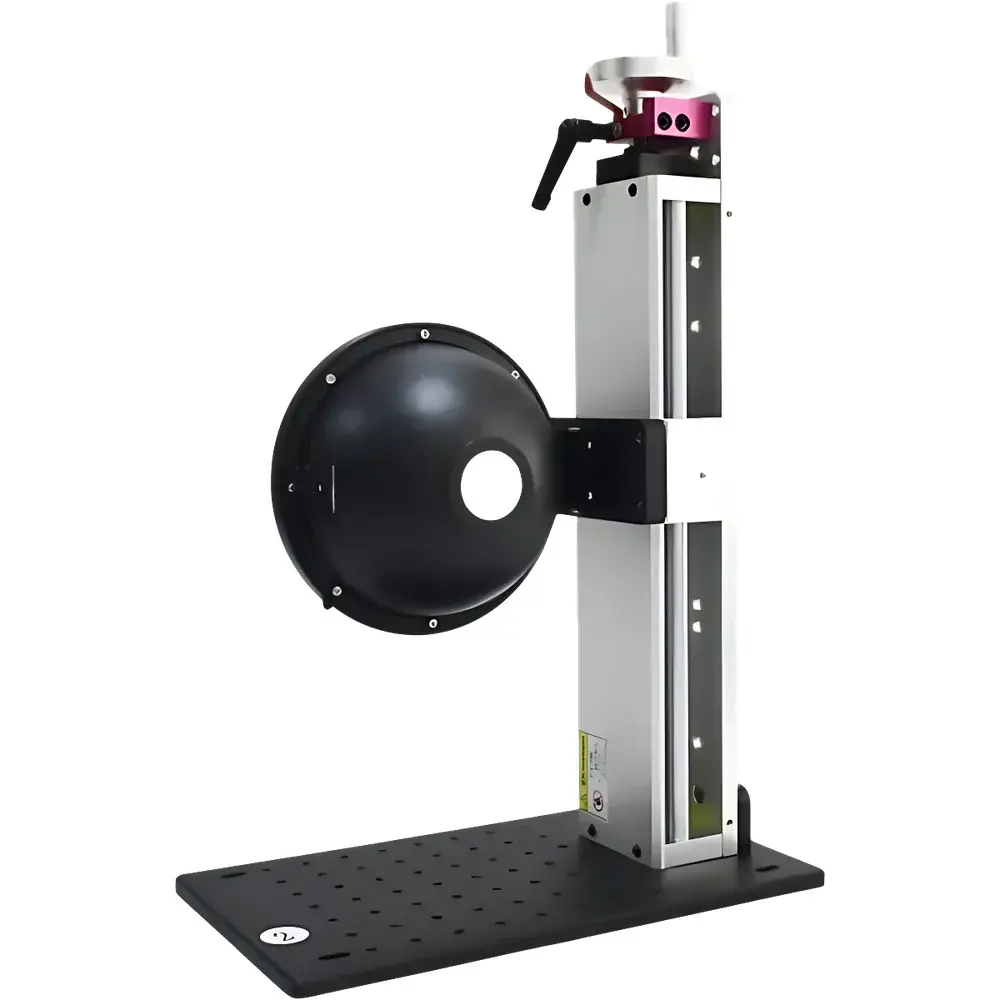
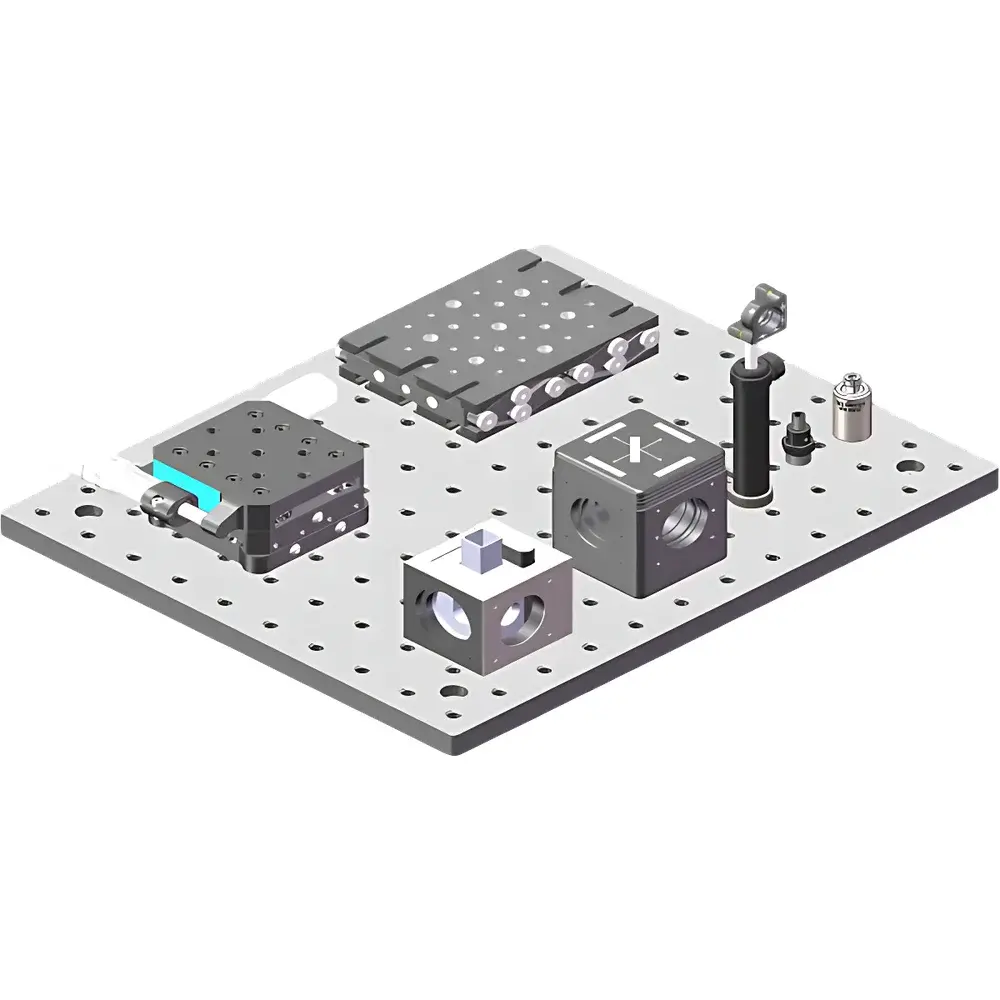
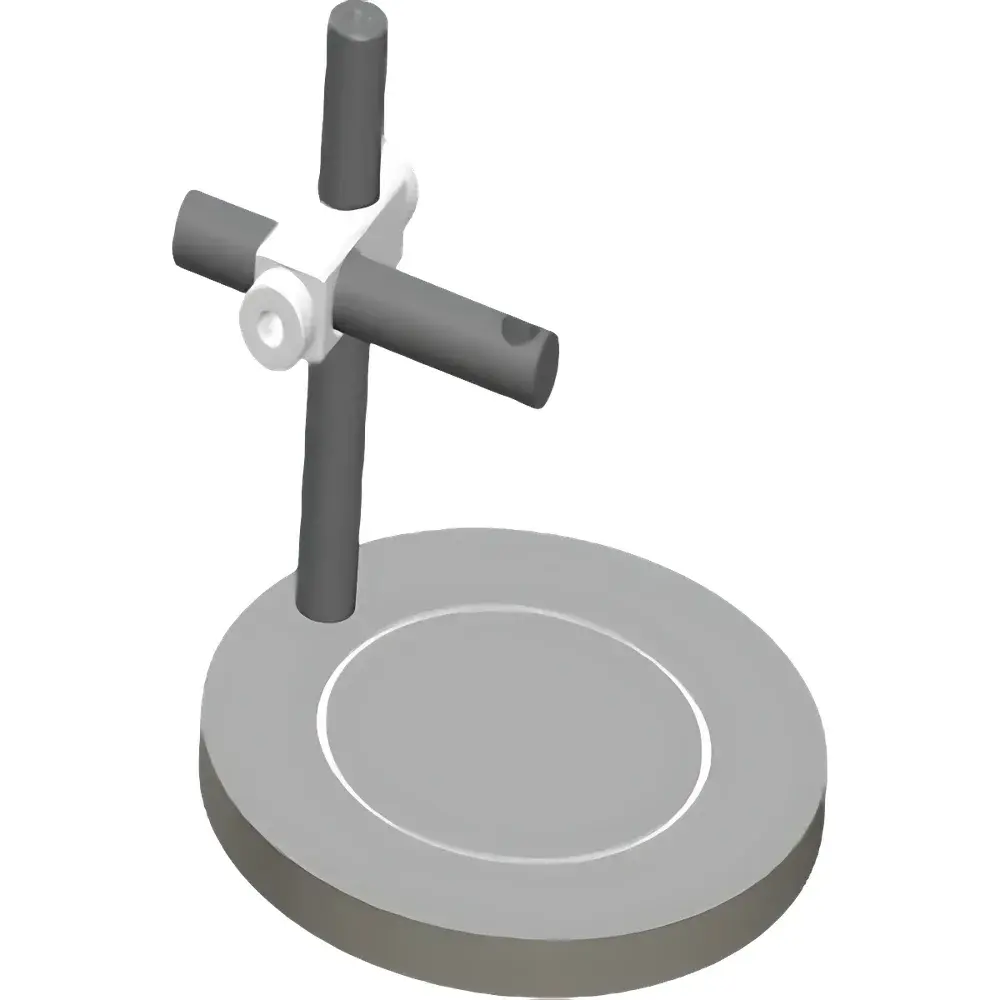
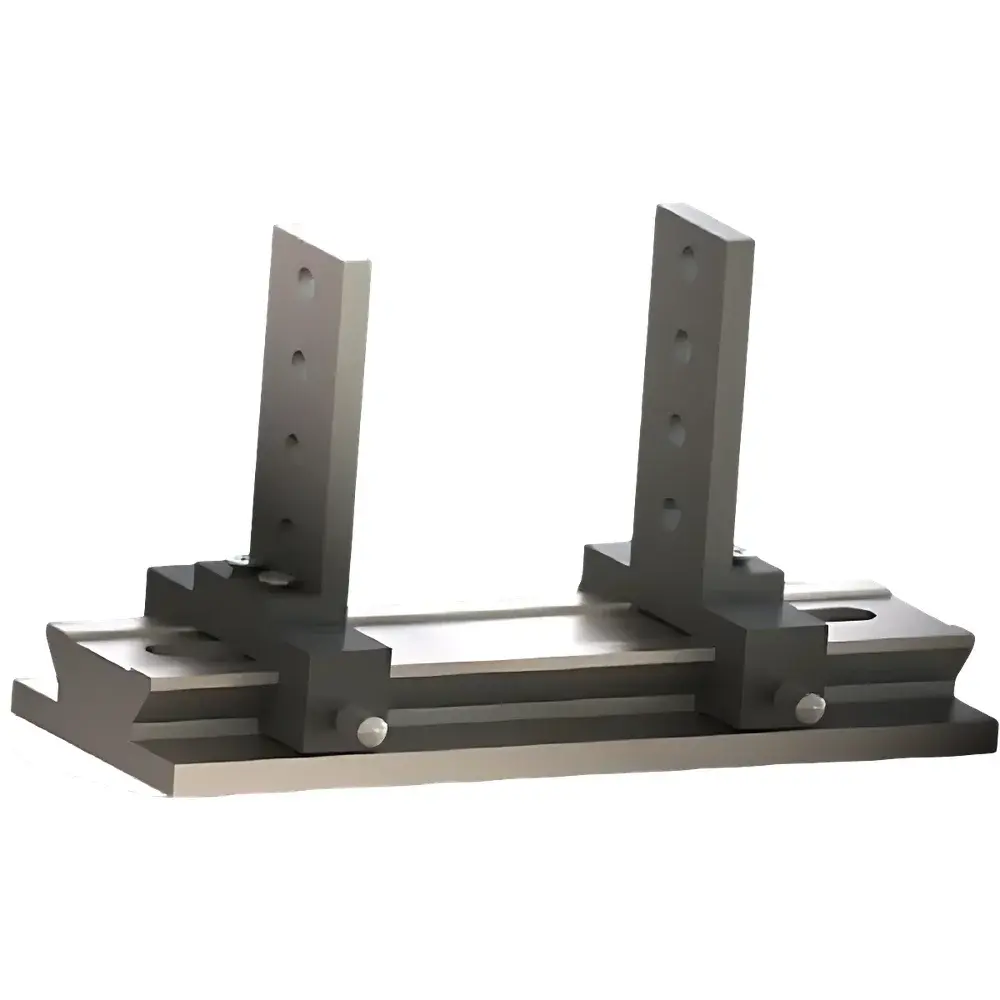
Luchu Technology GJY Series Optical Mounting Platform & Spectroscopy Mechanical Accessories
| Brand | Luchu Technology |
|---|---|
| Origin | Anhui, China |
| Manufacturer Type | OEM/ODM Manufacturer |
| Country of Origin | China |
| Model | GJY |
| Pricing | Upon Request |
Overview
The Luchu Technology GJY Series Optical Mounting Platform and Spectroscopy Mechanical Accessories constitute a modular, precision-engineered family of optomechanical components designed for laboratory-grade spectroscopic system integration. These accessories operate on fundamental principles of mechanical stability, kinematic alignment, and repeatable positioning—critical requirements for maintaining beam path integrity in UV-Vis, NIR, Raman, fluorescence, and FTIR spectroscopy setups. Unlike single-purpose fixtures, the GJY platform architecture enables deterministic assembly of optical trains with sub-millimeter positional repeatability and angular stability under thermal and vibrational loads typical in shared instrumentation labs or QC environments. Each component is manufactured to ISO 2768-mK general tolerances, with black anodized aluminum (6061-T6) construction ensuring non-magnetic, low-outgassing performance compatible with vacuum-compatible spectroscopy enclosures and cleanroom-adjacent installations.
Key Features
- Modular interoperability: Standardized M4, M6, and 1/4″-20 threaded mounting holes across all components—including optical breadboards, shear-type height-adjustable stages, multi-axis translation stages, cuvette holders, optical rails (optical benches), kinematic adjustment bases, and support rods—enabling rapid reconfiguration without tool duplication.
- Thermal and mechanical stability: Breadboard surfaces feature 25 mm pitch hole patterns with counterbored recesses; base plates incorporate internal stiffening ribs to minimize deflection under static loads up to 15 kg.
- Alignment fidelity: Two-dimensional translation stages offer ±0.02 mm resolution via micrometer-driven lead screws; angular adjustment bases provide ±3° tilt range with locking thumbscrews for collimation-sensitive applications such as laser-induced breakdown spectroscopy (LIBS) or cavity ring-down spectroscopy (CRDS).
- OEM/ODM capability: Full custom design support—from bespoke cuvette holder geometries accommodating non-standard cell path lengths (e.g., 0.1 mm to 50 mm) to CNC-machined rail-integrated spectrometer mounts compliant with Thorlabs, Newport, or Sutter footprint standards.
- Surface finish and compatibility: All aluminum parts undergo Type II sulfuric acid anodization (per MIL-A-8625), yielding a 15–25 µm hardcoat layer resistant to abrasion, corrosion, and stray light scatter—essential for low-signal spectroscopic detection.
Sample Compatibility & Compliance
The GJY series supports universal integration with commercially available spectroscopic hardware, including but not limited to Ocean Insight, Avantes, Hamamatsu, and StellarNet spectrometers; fiber-coupled light sources (deuterium-halogen, LED, laser diodes); and sample interface modules (transmission cells, ATR crystals, integrating spheres). Components comply with ISO 9001:2015 manufacturing protocols and meet RoHS Directive 2011/65/EU material restrictions. While not certified to IEC 61000-6-3 (EMC) or UL 61010-1 (safety) as standalone units—consistent with industry practice for passive mechanical accessories—the system architecture facilitates full compliance when integrated into end-user instruments validated per FDA 21 CFR Part 11 (for electronic records in regulated labs) or ISO/IEC 17025 (for accredited testing laboratories).
Software & Data Management
As passive mechanical infrastructure, GJY components require no embedded firmware or driver software. However, their design explicitly supports traceable experimental reproducibility: each stage and mount includes engraved serial identifiers enabling linkage to lab notebook entries, LIMS records, or instrument configuration files (e.g., OceanView .cfg, AvaSoft .set). For GLP/GMP-aligned workflows, users may document setup configurations—including XYZ coordinates, rotation angles, and clamping torque values—in audit-ready formats compatible with electronic lab notebooks (ELNs) such as LabArchives or Benchling. Optional calibration reports (available upon request) include dimensional verification data per ASME B89.1.10M, supporting metrological traceability in regulated environments.
Applications
- UV-Vis-NIR absorbance and reflectance measurements using variable-pathlength cuvettes or integrating sphere couplers.
- Raman spectroscopy alignment rigs requiring precise backscattering geometry and laser focus stabilization.
- Fluorescence quantum yield systems incorporating calibrated reference standards and goniometric detector positioning.
- FTIR attenuated total reflectance (ATR) stage assemblies with temperature-controlled sample contact pressure.
- Educational optics labs deploying customizable benchtop spectroscopy workstations aligned to ASTM E275, E334, and ISO 13406-2 optical safety standards.
FAQ
Are GJY components compatible with third-party optical rails and posts?
Yes—all standard GJY rails, posts, and clamps conform to ANSI/ISO metric threading (M4, M6) and imperial (1/4″-20, 8-32) specifications used by Thorlabs, Newport, and Edmund Optics.
Do you provide dimensional drawings or STEP files for integration into optical design software?
Yes—STEP, IGES, and PDF dimensional drawings are supplied with every order, including GD&T callouts per ISO 1101 for critical alignment features.
Can GJY stages be used in vacuum environments?
Standard anodized aluminum versions are suitable for rough vacuum (<10⁻² mbar); for high-vacuum applications (≤10⁻⁶ mbar), optional vacuum-compatible surface treatments and vented hardware are available upon specification.
Is technical support available for system-level optical layout optimization?
Yes—Luchu Technology provides free pre-sales optical train layout consultation and post-purchase mechanical integration guidance, including tolerance stack-up analysis and vibration isolation recommendations.




