
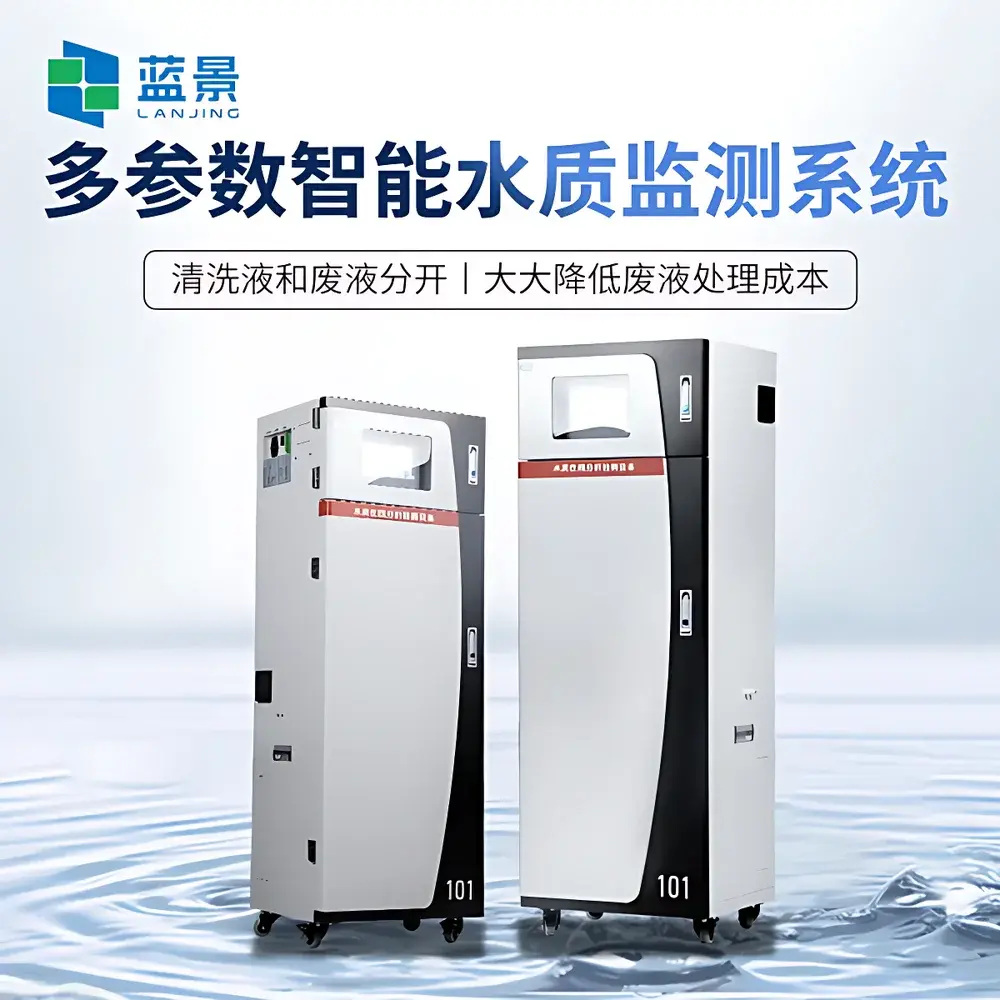
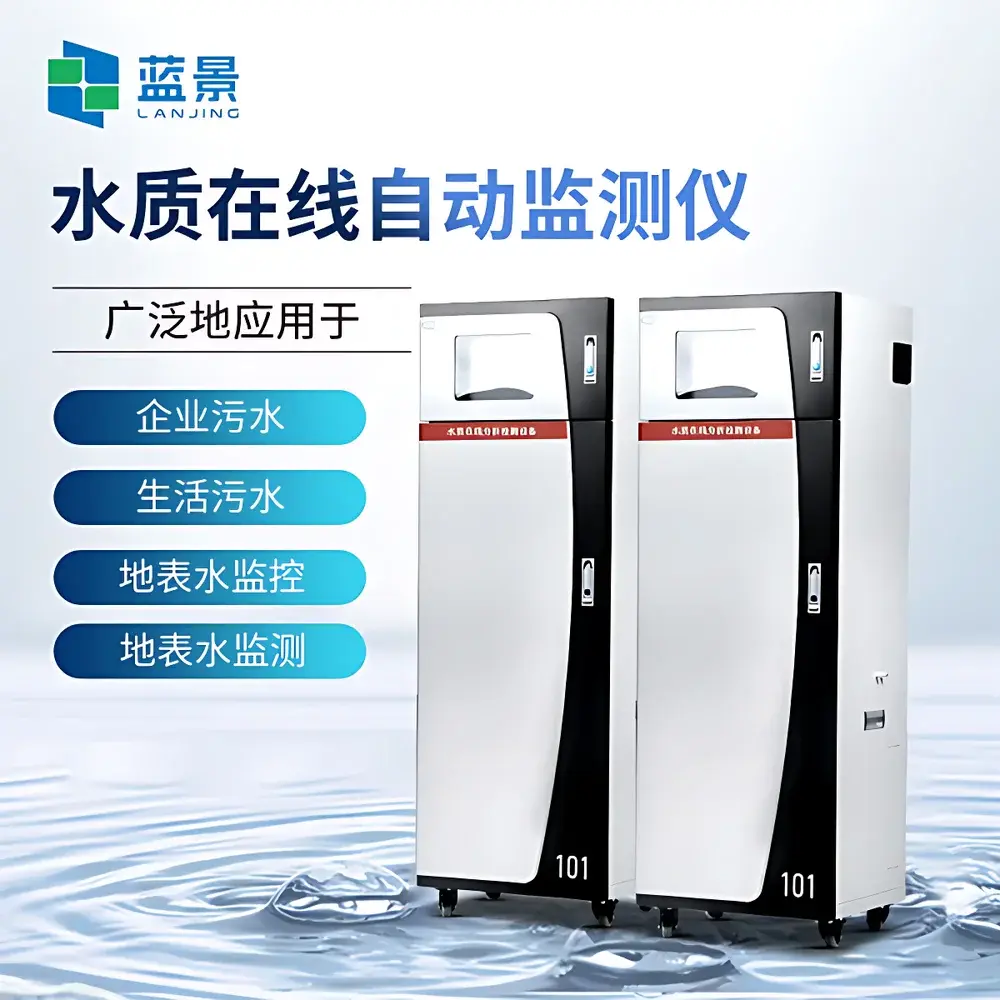
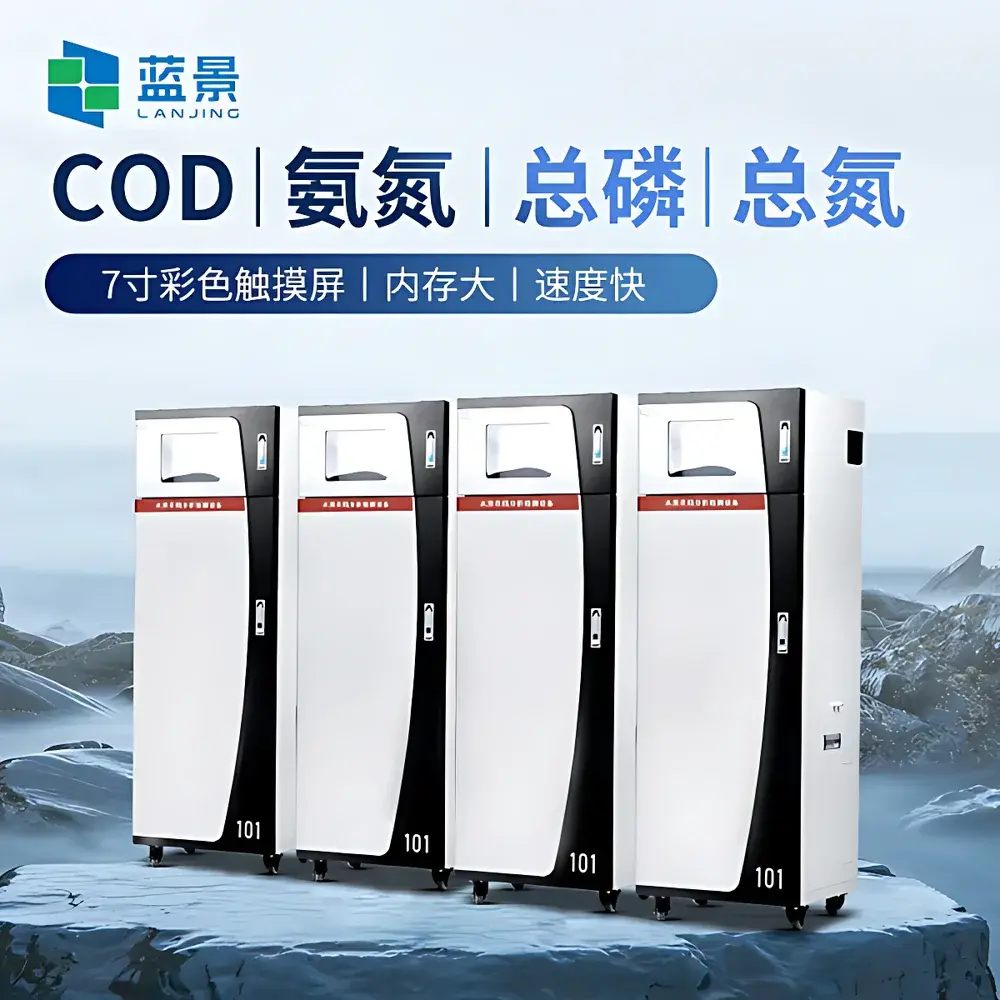
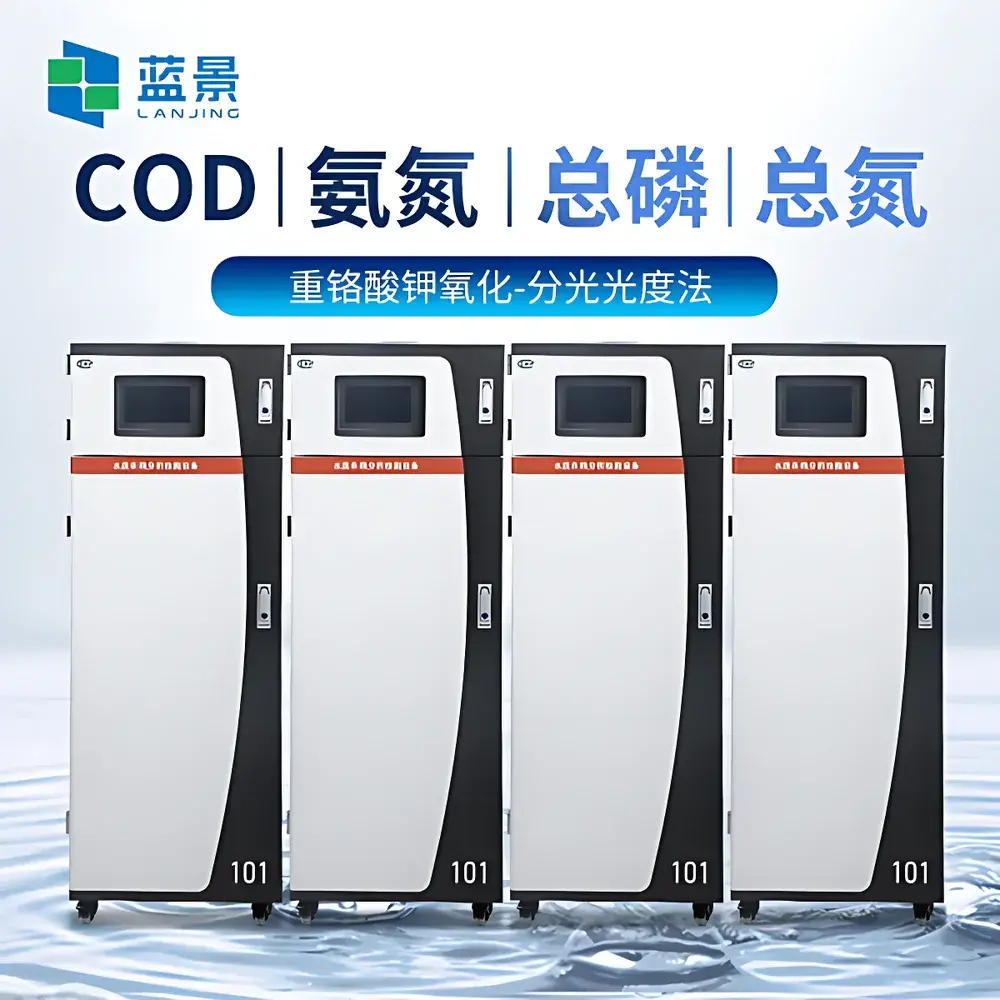
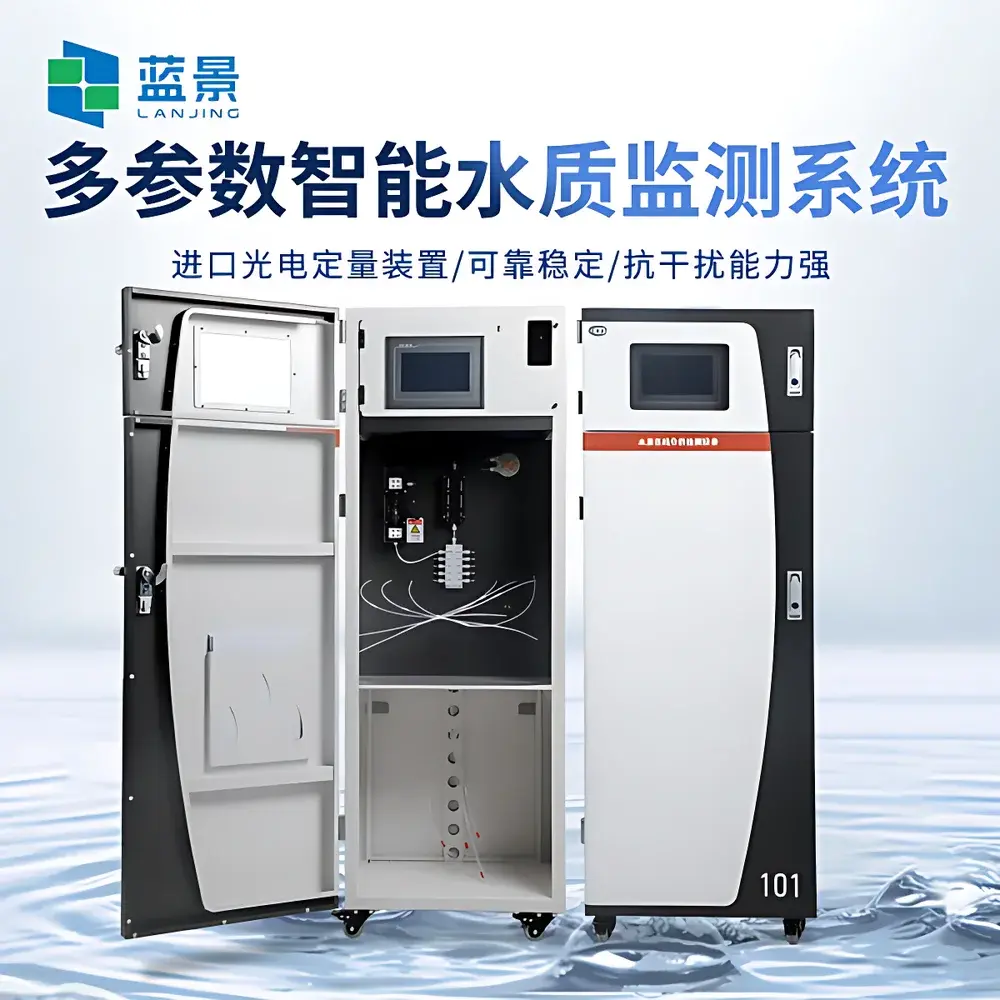
Lanjing LJ-201 Online Ammonia-Nitrogen Analyzer for Water Quality Monitoring
| Brand | Lanjing |
|---|---|
| Model | LJ-201 |
| Measurement Principle | Salicylate Spectrophotometry |
| Measurement Ranges | (0–5), (0–10), (0–25), (0–50), (0–125), (0–250) mg/L NH₃–N |
| Zero Drift | ±0.02 mg/L |
| Span Drift | ±1.0% F.S. |
| Accuracy | ±8.0% at 20% F.S., ±5.0% at 50% F.S., ±3.0% at 80% F.S. |
| Limit of Quantitation | 0.15 mg/L |
| Repeatability | ≤2.0% |
| Cycle Time | ≤60 min |
| MTBF | ≥720 h |
| Insulation Resistance | >20 MΩ |
| Output Interfaces | RS232 / RS485, 4–20 mA analog |
| Dimensions | 500 × 440 × 1440 mm (L×W×H) |
| Weight | 55 kg |
| Display | 7-inch color touch screen |
| Control System | Industrial PLC |
| Operating Temperature | 5–35 °C |
| Operating Humidity | 20–85% RH |
| Power Supply | AC 220 V ±25 V, 50 Hz ±0.5 Hz |
| Rated Power | 100 W |
Overview
The Lanjing LJ-201 Online Ammonia-Nitrogen Analyzer is a fully automated, continuous water quality monitoring instrument engineered for reliable, long-term quantification of ammonia-nitrogen (NH₃–N) in aqueous matrices. It operates on the internationally validated salicylate spectrophotometric method—compliant with ISO 11732:2005 and equivalent national standards (e.g., HJ 535–2009 in China)—where ammonia reacts with salicylate and hypochlorite under alkaline conditions to form a stable blue-green indophenol complex, measured photometrically at 655 nm. The system integrates precise fluidic handling, temperature-controlled reaction cuvettes, dual-beam optical detection, and embedded calibration logic to ensure high reproducibility across variable sample conditions. Designed for unattended operation in municipal, industrial, and environmental monitoring stations, the LJ-201 delivers trace-level sensitivity (LOQ = 0.15 mg/L) and robust performance under fluctuating ambient conditions (5–35 °C, 20–85% RH).
Key Features
- Multi-range auto-switching capability across six user-selectable measurement spans (0–5 to 0–250 mg/L NH₃–N), minimizing manual intervention and optimizing dynamic response.
- Integrated industrial-grade PLC controller with deterministic real-time scheduling, ensuring deterministic cycle timing (≤60 minutes per analysis) and fault-tolerant sequence execution.
- Dual-reservoir architecture separates cleaning solution and waste effluent streams—reducing hazardous waste volume by up to 40% and simplifying regulatory compliance for disposal logistics.
- Optimized reagent consumption: <1.2 mL per analysis cycle, achieved via micro-dosing pumps and closed-loop flow control—lowering operational cost and reducing chemical storage footprint.
- 7-inch high-brightness TFT resistive touch display with local data logging (≥30 days of 15-minute interval records), supporting on-device configuration, diagnostic review, and alarm history playback.
- Comprehensive self-diagnostic suite including low-reagent alert, optical path contamination warning, pump stall detection, temperature deviation flagging, and automatic zero/span verification at scheduled intervals.
- Enhanced interference mitigation: proprietary reagent formulation minimizes matrix effects from common ions (e.g., Ca²⁺, Mg²⁺), turbidity (<200 NTU), and chromaticity (absorbance ≤0.1 at 655 nm), validated per ASTM D1292–22 protocols.
Sample Compatibility & Compliance
The LJ-201 is validated for direct analysis of raw influent, secondary effluent, surface water, groundwater, and treated wastewater without pre-filtration (for samples ≤100 µm particulate load). It meets mechanical and electrical safety requirements per IEC 61000-6-2 (EMC immunity) and IEC 61010-1 (safety of measurement equipment). Data integrity functions—including audit-trail-enabled parameter change logs, time-stamped calibration records, and non-volatile memory retention—support adherence to GLP principles and facilitate alignment with ISO/IEC 17025:2017 documentation expectations. While not FDA 21 CFR Part 11-certified out-of-the-box, its secure user access levels (admin/operator/guest), immutable event logs, and password-protected configuration interface provide foundational infrastructure for regulated environments.
Software & Data Management
Embedded firmware supports Modbus RTU over RS485 and ASCII protocol over RS232 for seamless integration into SCADA, DCS, or centralized telemetry platforms. Analog 4–20 mA outputs are isolated and linearized per selected range, configurable with zero/scale offset correction. Remote access is enabled via optional Ethernet module (not included), permitting secure HTTPS-based configuration and real-time trend visualization through vendor-neutral JSON/REST API endpoints. All measurement data, alarms, and maintenance events are timestamped with UTC synchronization support and exportable in CSV format via USB host port. Firmware updates are performed via signed binary packages to prevent unauthorized modification.
Applications
- Continuous compliance monitoring at municipal wastewater treatment plant (WWTP) discharge points, aligned with national effluent limits (e.g., China’s GB 18918–2002 Class A/B standards).
- Process control in industrial pretreatment systems—especially for semiconductor, pharmaceutical, and food processing facilities requiring strict NH₃–N removal verification prior to biological treatment.
- Early-warning surveillance of surface water bodies (rivers, lakes, reservoirs) for agricultural runoff or sewage leakage incidents.
- Integration into multi-parameter water quality monitoring buoys or kiosks, where space-constrained deployment and low power draw (100 W nominal) are critical design constraints.
- Supporting environmental impact assessments (EIA) and long-term ecological trend analysis through standardized, auditable data acquisition.
FAQ
What regulatory standards does the LJ-201 comply with for ammonia-nitrogen measurement?
It implements the salicylate method per ISO 11732:2005 and Chinese standard HJ 535–2009; electrical safety follows IEC 61010-1, and EMC immunity conforms to IEC 61000-6-2.
Can the analyzer operate without external network connectivity?
Yes—the core measurement, local display, data logging, and alarm functions are fully autonomous; network interfaces are optional for remote supervision.
How often is manual maintenance required?
Typical preventive maintenance intervals are every 90 days, including optical window cleaning, tubing inspection, and reagent reservoir replacement; MTBF exceeds 720 hours between unplanned interventions.
Is the system compatible with third-party SCADA platforms?
Yes—Modbus RTU over RS485 enables native integration with most industrial automation systems without custom drivers.
Does the instrument support automatic calibration verification using standard solutions?
Yes—programmable auto-calibration sequences include zero check (deionized water) and span verification (certified NH₄Cl standard), with pass/fail criteria logged and reportable.
Related Products







