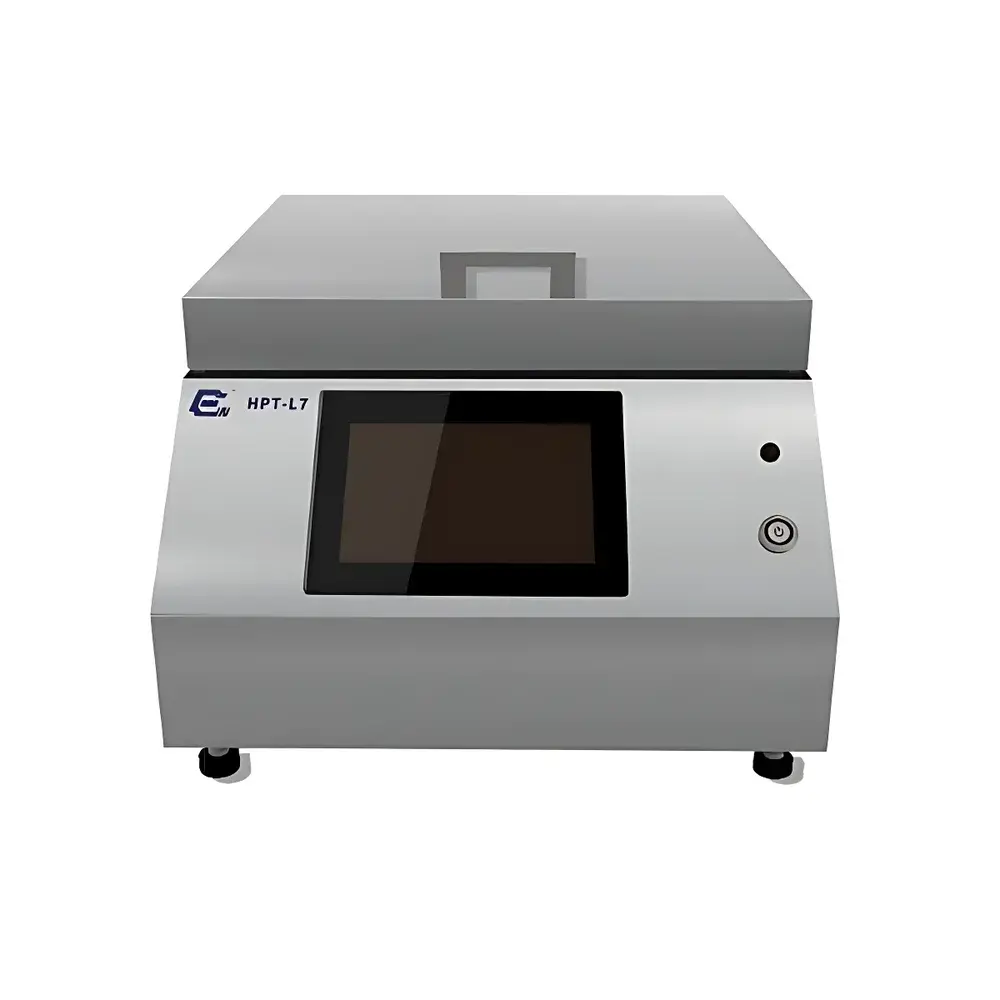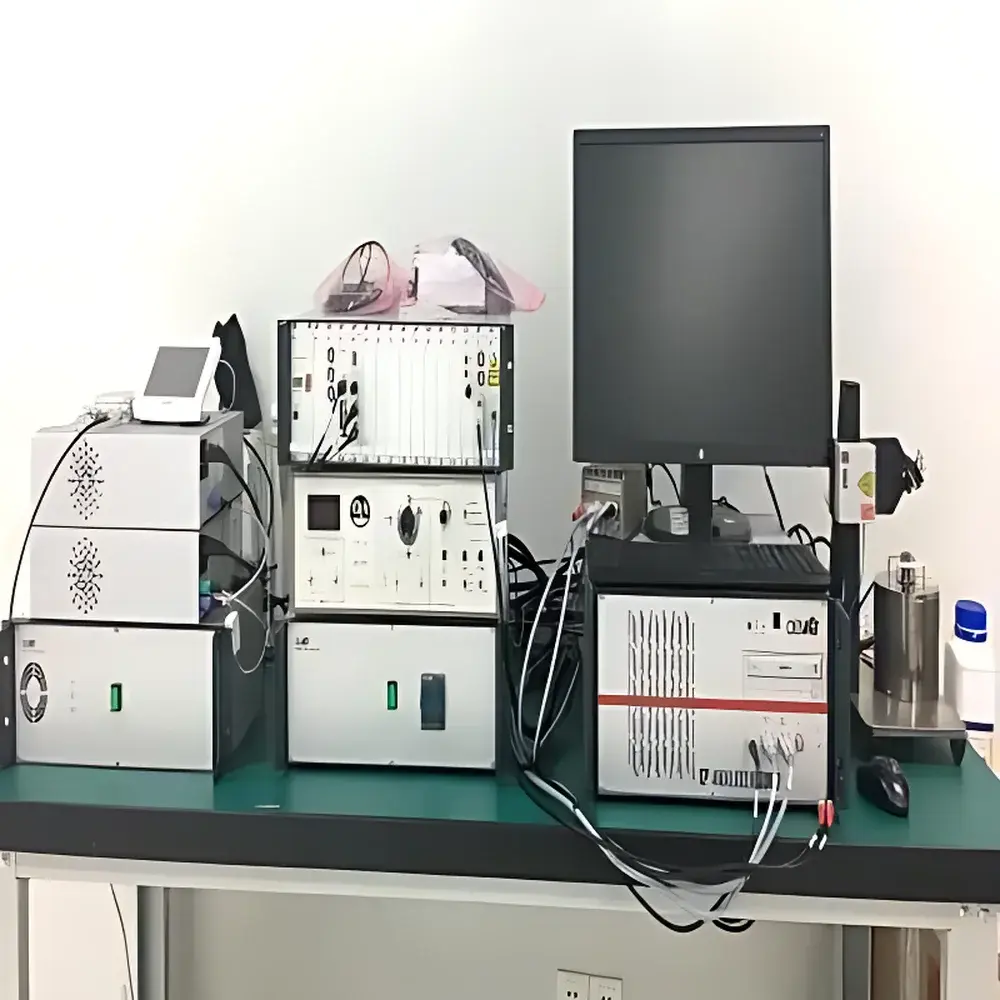
aixACCT TF Analyzer 3000E High-Speed Modular Ferroelectric Test System
| Brand | aixACCT |
|---|---|
| Origin | Germany |
| Model | TF Analyzer 3000E |
| Voltage Range | ±25 V (extendable to ±10 kV) |
| Hysteresis Frequency | up to 1 MHz (high-speed FE module) |
| Minimum Pulse Width | 50 ns |
| Minimum Rise Time | 10 ns |
| Fatigue Test Frequency | up to 16 MHz |
| Current Measurement Range | 1 pA – 1 A |
| Maximum Load Capacitance | 1 nF |
| Output Current Peak | ±1 A |
| Software Platform | aixPlorer v7.x (Windows 7-based) |
| Compliance | GLP/GMP-ready architecture, ASTM E2941-22 compatible, supports 21 CFR Part 11 audit trails (with optional software license) |
Overview
The aixACCT TF Analyzer 3000E is a high-speed, modular ferroelectric characterization system engineered for precision measurement of polarization hysteresis, fatigue endurance, retention stability, imprint behavior, leakage current, and dynamic dielectric response in advanced functional materials. Based on the fundamental principles of charge displacement integration under controlled electric field excitation—using high-fidelity voltage sourcing, sub-nanosecond timing resolution, and picoampere-level current sensing—the system enables quantitative evaluation of ferroelectric, piezoelectric, and pyroelectric properties across thin films, bulk ceramics, multilayer stacks, and emerging oxide heterostructures. Its architecture adheres to metrological best practices for materials science instrumentation, incorporating calibrated signal paths, temperature-stable analog front-ends, and deterministic real-time data acquisition synchronized to hardware triggers. Designed for both academic research labs and industrial R&D environments, the TF Analyzer 3000E meets the increasing demand for accelerated testing protocols in next-generation memory devices (e.g., FeRAM, FeFET), energy harvesting components, and high-frequency transducers.
Key Features
- Modular platform supporting interchangeable functional units: FE (ferroelectric standard), MR (magnetoresistive/ferromagnetic), RX (relaxation current), and DR (self-discharge) modules—each independently configurable and hot-swappable.
- High-speed FE module capable of dynamic hysteresis acquisition at up to 1 MHz, with minimum pulse width of 50 ns and rise time of 10 ns—enabling nanosecond-scale switching kinetics analysis.
- Fatigue testing at frequencies up to 16 MHz, facilitating rapid assessment of domain wall pinning, defect accumulation, and interface degradation mechanisms in ferroelectric capacitors.
- Integrated current amplifier with 12-decade dynamic range (1 pA to 1 A), optimized for low-leakage film characterization and high-current switching events.
- Onboard dedicated Windows 7 host computer with real-time OS extensions, preloaded with aixPlorer v7.x software suite—including automated test sequencing, scriptable parameter sweeps, and raw binary data export.
- Expandable voltage output: standard ±25 V range; optionally extended to ±10 kV via external high-voltage amplifier modules for thick-film or single-crystal studies.
- Native compatibility with third-party peripherals including laser interferometers (for strain-resolved d33), AFM/SPM systems (for local polarization mapping), cryogenic stages (4 K–473 K), and PPMS platforms.
Sample Compatibility & Compliance
The TF Analyzer 3000E accommodates a broad spectrum of sample geometries and material classes: sputtered/pulsed-laser-deposited thin films (5 nm–5 µm), screen-printed thick films (10–100 µm), bulk polycrystalline ceramics (up to Ø25 mm × 5 mm), and wafer-level test structures (2″–8″). Electrode configurations include top-bottom, interdigitated, and lateral-contact arrangements. All electrical interfaces comply with IEC 61000-4-5 surge immunity standards and feature galvanic isolation for safety-critical high-voltage operation. The system’s firmware and software architecture support GLP and GMP workflows, including electronic signatures, user access control tiers, and full 21 CFR Part 11 audit trail generation when licensed. It aligns with ASTM E2941-22 (“Standard Test Method for Measuring Polarization Hysteresis Loops of Ferroelectric Thin Films”) and ISO/IEC 17025 traceability requirements when used with NIST-traceable calibration kits.
Software & Data Management
aixPlorer v7.x provides a unified graphical interface for experiment design, execution, and post-processing. Users define multi-step protocols—such as PUND (Positive-Up-Negative-Down), wake-up cycling, or temperature-ramped hysteresis sweeps—via drag-and-drop workflow editors. Raw current/voltage waveforms are acquired at up to 2 GS/s (with optional digitizer add-on) and stored in HDF5 format for interoperability with Python (NumPy, SciPy), MATLAB, and OriginLab. Built-in algorithms compute coercive field (Ec), remnant polarization (Pr), saturation polarization (Ps), loss tangent, and fatigue-induced polarization decay rates. Data integrity is ensured through checksummed storage, automatic backup to network drives, and version-controlled experiment templates. Optional modules enable impedance spectroscopy (via integrated lock-in or external analyzer coupling) and statistical batch analysis across 256 parallel channels for wafer-level screening.
Applications
- Ferroelectric memory development: endurance testing of HfO2-based FeFETs under sub-100 ns pulses; imprint evolution studies in Pb(Zr,Ti)O3 (PZT) capacitors.
- Piezoelectric MEMS: d33,f coefficient extraction from butterfly loops combined with laser Doppler vibrometry.
- Thermoelectric oxide interfaces: pyroelectric coefficient (p = dP/dT) quantification during controlled thermal ramps (±0.1°C/s).
- Relaxor ferroelectrics: separation of reversible (Maxwell-Wagner) and irreversible (space-charge) relaxation currents using RX module step-response deconvolution.
- DRAM capacitor qualification: self-discharge lifetime (τSD) measurement per DR module under bias conditions mimicking standby mode.
- Multiferroic heterostructures: concurrent application of electric field (FE module) and magnetic field (MR module + external magnet) for magnetoelectric coupling coefficient (α) determination.
FAQ
What distinguishes the TF Analyzer 3000E from earlier models like the 2000E?
The 3000E introduces significantly higher bandwidth—1 MHz hysteresis acquisition versus 5 kHz in the 2000E—and nanosecond-scale pulse fidelity (50 ns width, 10 ns rise time), enabling kinetic studies previously inaccessible with conventional ferroelectric testers.
Can the system perform simultaneous electric and magnetic field stimulation?
Yes—when equipped with the MR module and an external superconducting magnet or PPMS, users can apply DC or AC magnetic fields while executing ferroelectric protocols, supporting cross-coupled property mapping.
Is temperature-controlled testing supported out of the box?
The base unit does not include thermal control, but it integrates seamlessly with commercially available cryo- or thermo-stages (e.g., Linkam TS1500, Janis ST-100) via analog I/O and digital trigger synchronization.
How is data security and regulatory compliance handled?
With the optional Compliance Pack, aixPlorer enforces role-based access, electronic signatures, immutable audit logs, and encrypted data-at-rest—fully satisfying FDA 21 CFR Part 11 and EU Annex 11 requirements for regulated environments.
What calibration services are available?
aixACCT offers factory calibration against NIST-traceable standards for voltage, current, and timing domains, with annual recalibration certificates and uncertainty budgets provided per ISO/IEC 17025 guidelines.