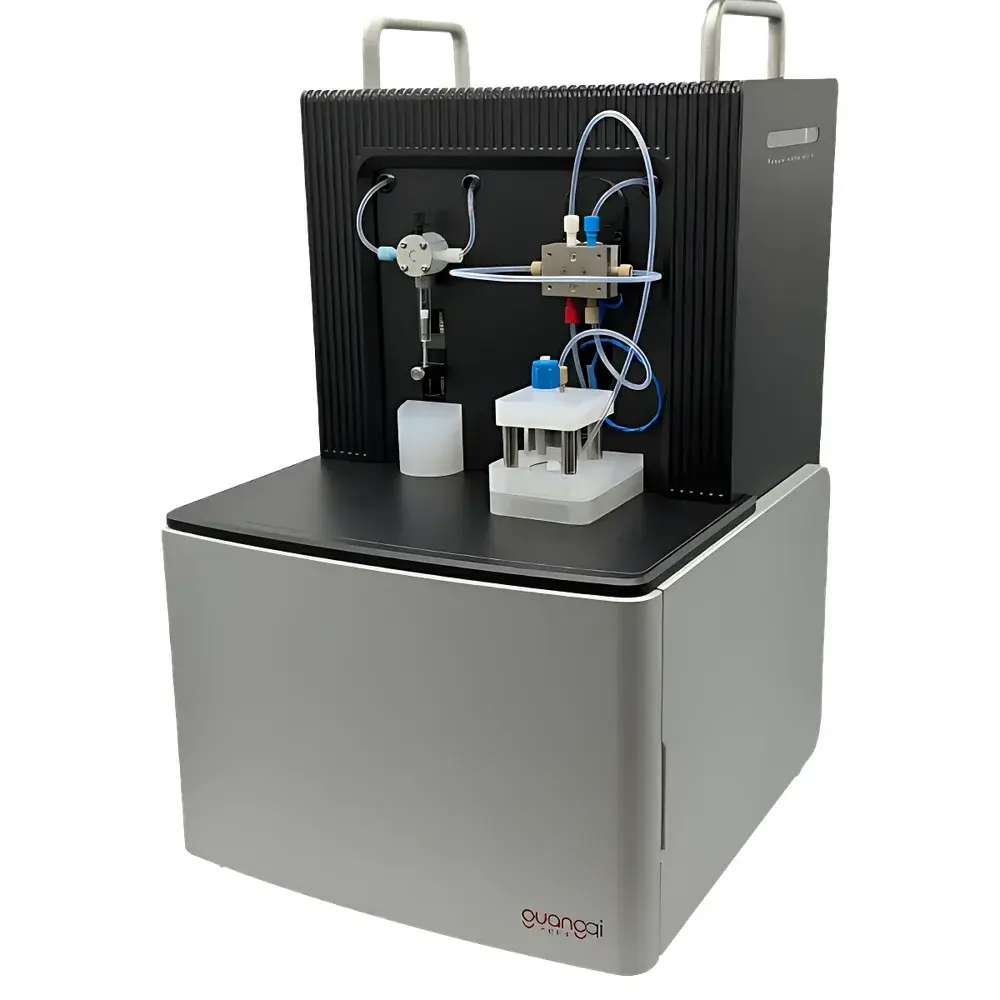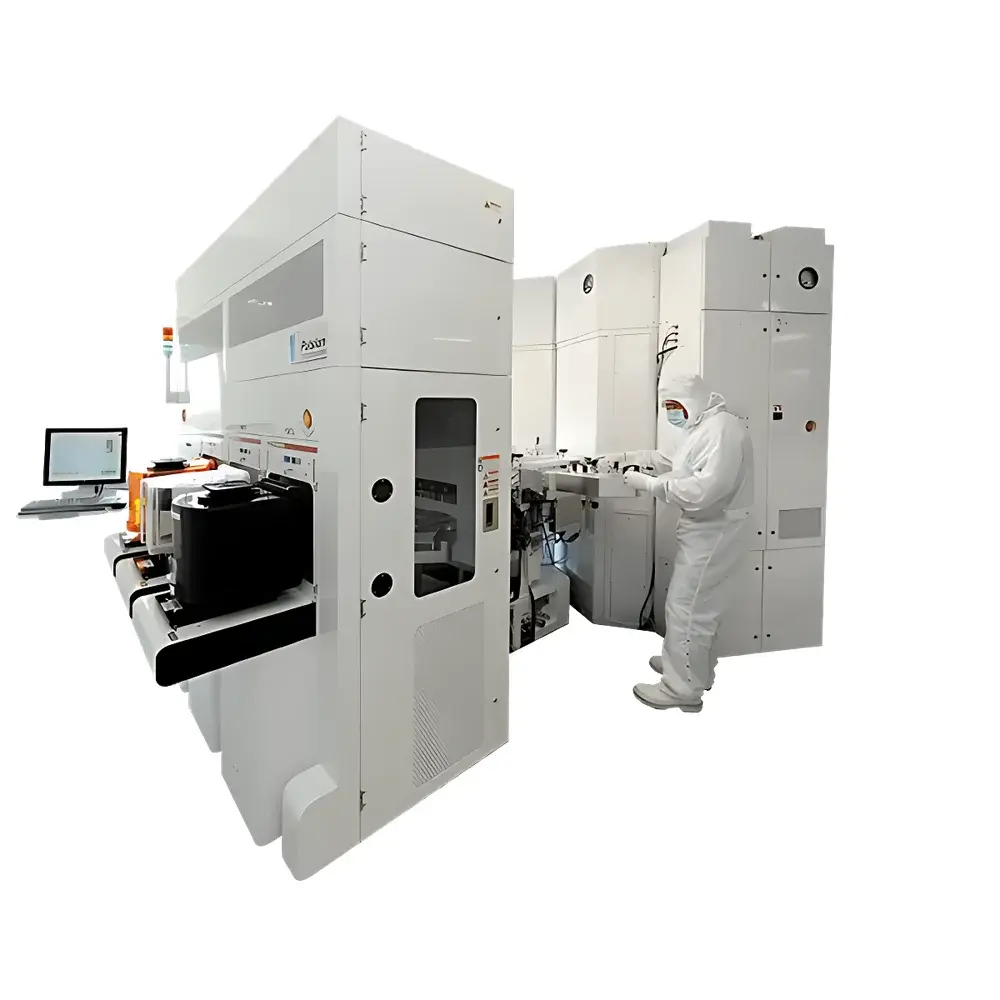
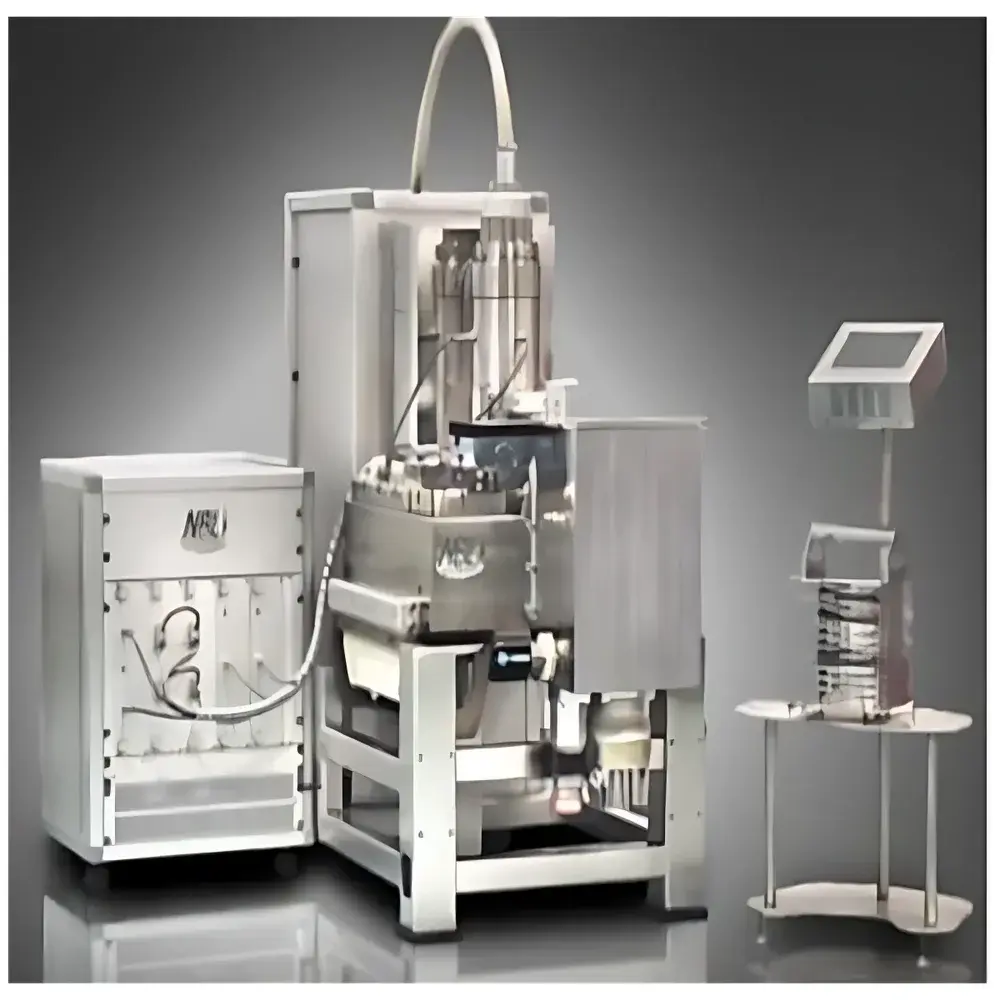
Q-ONE™ Deterministic Single-Ion Implantation System by LK Technology
| Brand | LK Technology |
|---|---|
| Origin | Germany |
| Model | Q-ONE |
| Product Type | Medium-Current Ion Implanter |
| Implant Energy | 50 keV |
| Wafer Size | 8–12 inch |
| Implant Species | p⁺ (proton) |
| Ion Source Options | Liquid Metal Ion Source (LMIS), Plasma Ion Source |
| Beam Current | sub-femtoampere (fA) range |
| Positioning Accuracy | < 10 nm |
| Detection Efficiency | ≥ 98% |
| Compliance | ISO 14644-1 Class 4 cleanroom compatible, CE-marked, RoHS compliant |
Overview
The Q-ONE™ Deterministic Single-Ion Implantation System is a purpose-built platform for quantum device fabrication and nanoscale materials engineering. Engineered around a high-stability, ultra-low-current focused ion beam (FIB) architecture, it enables deterministic placement of individual ions into solid-state substrates with sub-10 nm spatial fidelity and verified event-by-event detection. Unlike conventional medium-current implanters used in IC manufacturing—where statistical dose control dominates—the Q-ONE operates in a fundamentally different regime: it delivers precisely one ion per trigger, confirms each implant via secondary electron or ion-induced signal detection, and records timestamped positional metadata for every event. This capability is grounded in Coulomb blockade–informed beam blanking, time-resolved charge-integration detection, and closed-loop stage synchronization. The system supports both semiconductor-grade silicon wafers (8–12 inch) and non-planar nanostructures (e.g., nanowires, photonic crystals, 2D material flakes), making it uniquely suited for quantum bit (qubit) registration, dopant-defined quantum dots, and defect-center engineering in wide-bandgap materials.
Key Features
- Deterministic single-ion delivery with real-time, on-the-fly verification using integrated secondary particle detection—detection efficiency ≥ 98% across H⁺, Si⁺, Er⁺, Bi⁺, and other species.
- Modular ion source architecture: dual-path compatibility with liquid metal ion sources (LMIS) for heavy/multi-charge species (e.g., Si₂⁺, Bi₃⁺) and plasma-based gas-fed sources for light elements (H⁺, N⁺, O⁺).
- Nanopositioning stage with interferometric feedback, ≤ 5 nm RMS repeatability, and active thermal drift compensation—certified for operation under ISO 14644-1 Class 4 cleanroom conditions.
- Sub-femtoampere beam current stability (< 0.5% RMS over 1 h), enabling controlled delivery of isolated ion events without statistical uncertainty.
- Proprietary Q-Implant™ software suite with scripting API (Python), GDSII import, and native support for patterned implantation—including arbitrary shape definition, dose gradient mapping, and multi-layer overlay alignment.
- Fully traceable audit log compliant with GLP/GMP documentation requirements; optional FDA 21 CFR Part 11 electronic signature module available upon configuration.
Sample Compatibility & Compliance
The Q-ONE accommodates standard semiconductor substrates (Si, SiC, GaN, diamond, sapphire) as well as freestanding nanomaterials mounted on TEM grids or custom MEMS carriers. It supports direct implantation into cryogenic stages (down to 4 K, optional add-on) for low-temperature defect stabilization. All vacuum components meet UHV specifications (< 5 × 10⁻⁹ mbar base pressure), and the ion optical column is baked-in to minimize hydrocarbon contamination. The system conforms to IEC 61000-6-3 (EMC), IEC 61000-6-4 (immunity), and carries full CE marking under the Machinery Directive 2006/42/EC and Electromagnetic Compatibility Directive 2014/30/EU. Process documentation aligns with ISO/IEC 17025 calibration traceability pathways and ASTM F394–22 (Standard Guide for Ion Implantation in Quantum Device Fabrication).
Software & Data Management
Q-Implant™ provides a unified interface for beam tuning, pattern definition, real-time dose monitoring, and post-process data export in HDF5 and CSV formats. Each implanted ion is logged with X/Y/Z coordinates, timestamp (±10 ns resolution), ion species ID, energy setting, and detection channel amplitude—enabling spatial correlation analysis with subsequent characterization (e.g., cathodoluminescence, STM, or confocal microscopy). Raw detection waveforms are stored for offline pulse-shape discrimination. The software includes built-in tools for Monte Carlo simulation coupling (SRIM/TRIM integration), overlay registration against pre-existing lithographic markers, and batch-mode recipe execution across multiple wafers. Audit trails record all parameter changes, user logins, and hardware state transitions—fully exportable for regulatory review.
Applications
- Quantum processor fabrication: Deterministic placement of P, As, or Er atoms in silicon to form nuclear spin qubits or optically active color centers in diamond (e.g., SiV⁻, GeV⁻) with inter-qubit spacing ≤ 20 nm.
- Nanoscale dopant profiling: Site-specific doping of individual nanowires, graphene nanoribbons, or transition metal dichalcogenide monolayers to modulate carrier concentration, valley polarization, or exciton binding energy.
- Ion-beam lithography: Direct-write patterning using Bi⁺ (high sputter yield) or H⁺ (low-damage resist modification), including single-ion exposure for ultimate-resolution maskless lithography validation.
- Defect engineering: Creation of tailored vacancy complexes (e.g., V–N in diamond, VSi–CSi in SiC) via controlled co-implantation sequences with synchronized annealing protocols.
- Reference metrology: Generation of certified ion-implanted standards for SIMS calibration, TEM sample preparation, and quantum sensor benchmarking.
FAQ
What ion species can be implanted with the Q-ONE?
The system supports p⁺, H⁺, He⁺, Si⁺, P⁺, As⁺, Er⁺, Nd⁺, Au⁺, Bi⁺, and cluster/multi-charged variants via LMIS, plus N⁺, O⁺, and F⁺ via plasma source—subject to mass analyzer calibration and vacuum compatibility.
Is cryogenic implantation supported?
Yes; a liquid-helium-cooled stage option enables implantation at 4 K, critical for suppressing ion diffusion and stabilizing shallow defect configurations.
How is implant accuracy verified post-processing?
Each ion impact is confirmed in real time; final verification is performed via atom probe tomography (APT), scanning tunneling microscopy (STM), or resonant fluorescence mapping—protocols documented in application notes Q-ONE-APN-07 and Q-ONE-APN-12.
Can the Q-ONE integrate with existing cleanroom automation?
It features SECS/GEM interface compliance and supports FOUP/FOSB load-lock integration via optional SMIF port adapter and robotic handler handshake protocol.
What maintenance intervals are recommended?
LMIS emitter replacement every 6 months under continuous use; plasma source cleaning every 3 months; full column bake-out and mass analyzer recalibration annually—per maintenance schedule Q-ONE-MAN-REV4.