
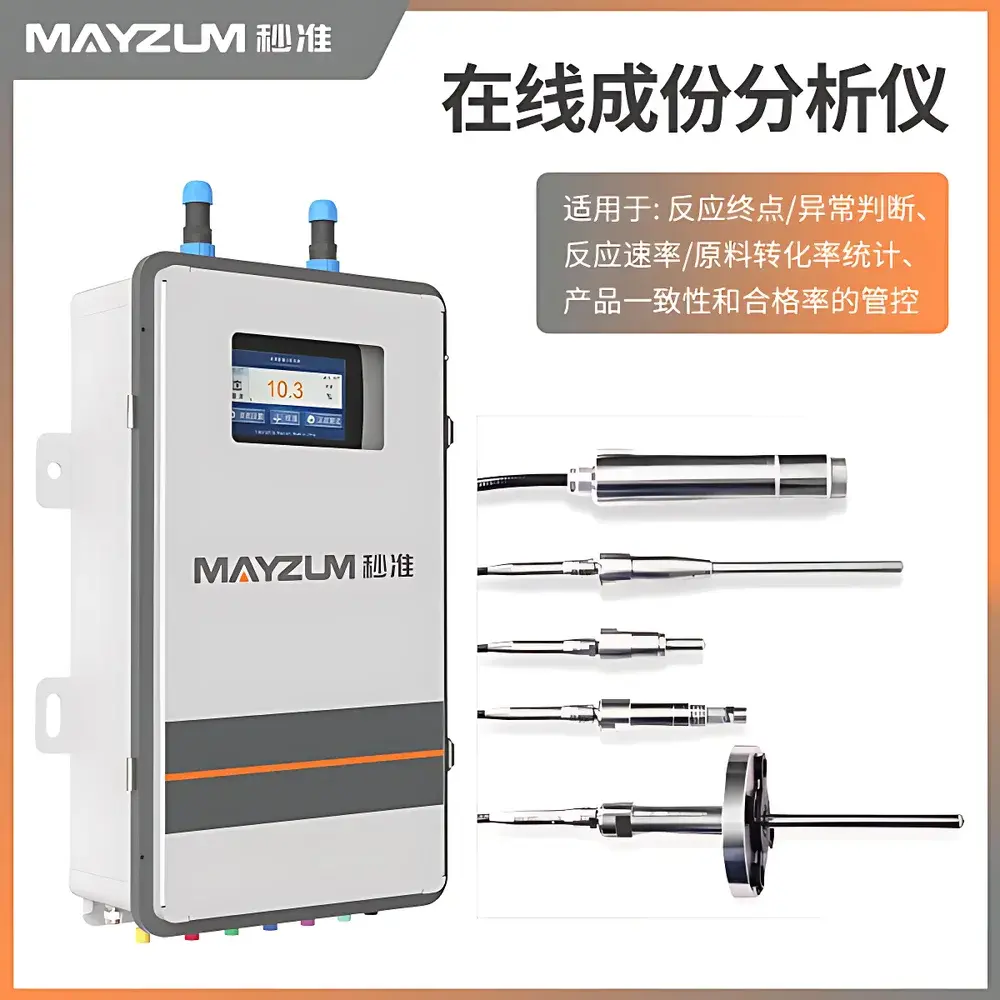
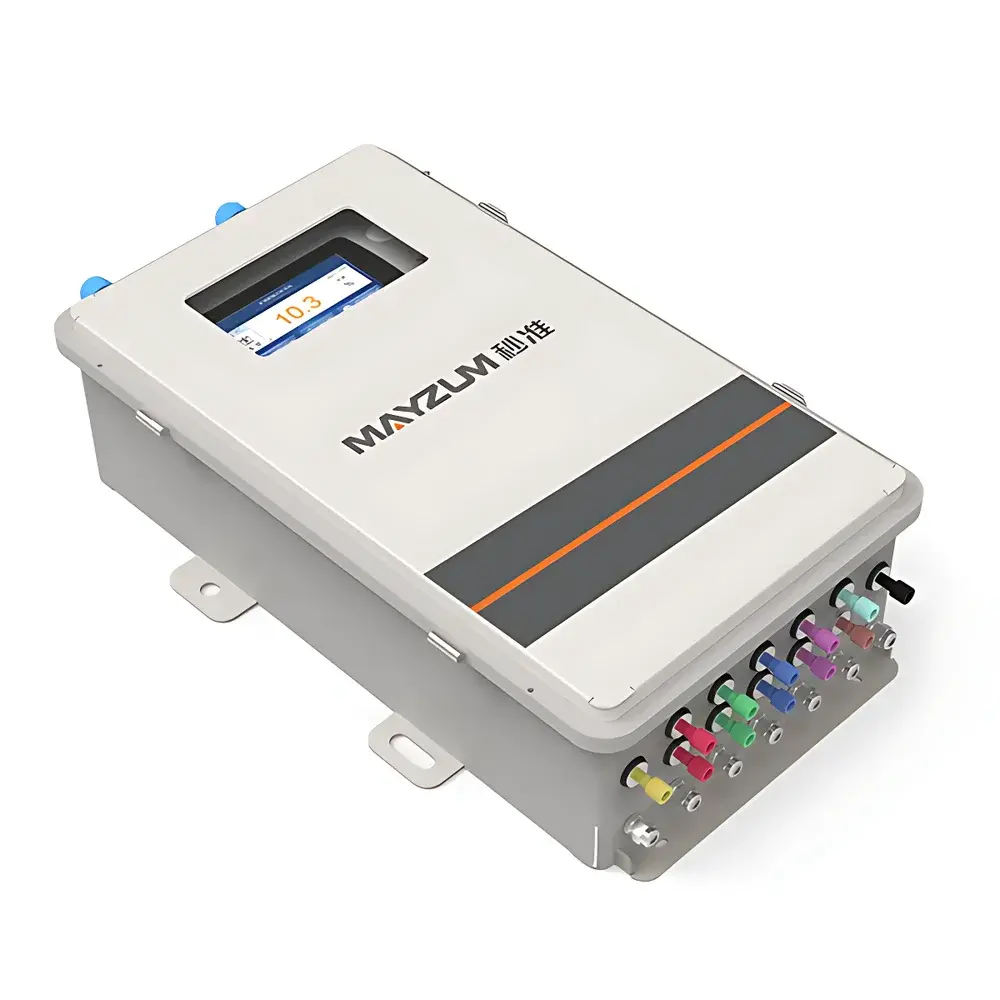
MAYZUM MAZ-Ra300-BSJZ Online Methyl Acrylate Concentration Analyzer
| Brand | MAYZUM |
|---|---|
| Origin | Guangdong, China |
| Manufacturer Type | Authorized Distributor |
| Country of Origin | China |
| Model | MAZ-Ra300-BSJZ |
| Instrument Type | Online Raman Spectrometer |
| Spectral Resolution | 6 cm⁻¹ |
Overview
The MAYZUM MAZ-Ra300-BSJZ is an industrial-grade online Raman spectrometer engineered for real-time, non-invasive quantitative analysis of methyl acrylate (MA) concentration in continuous chemical processes. Leveraging high-stability 785 nm laser excitation and optimized fiber-coupled optics, the system captures characteristic Raman scattering signatures unique to C=C, C=O, and ester-group vibrational modes—enabling selective quantification of MA even in complex multicomponent matrices such as reaction mixtures, polymerization feeds, or purification streams. Unlike offline HPLC or titration methods, the MAZ-Ra300-BSJZ delivers process-relevant data with ≤3-second measurement cycle time, supporting closed-loop control of reaction endpoints, conversion rate monitoring, and batch-to-batch consistency verification under GMP-compliant manufacturing environments.
Key Features
- Real-time, in-line concentration monitoring without sample extraction or reagent consumption—eliminating analytical waste and operator exposure risk.
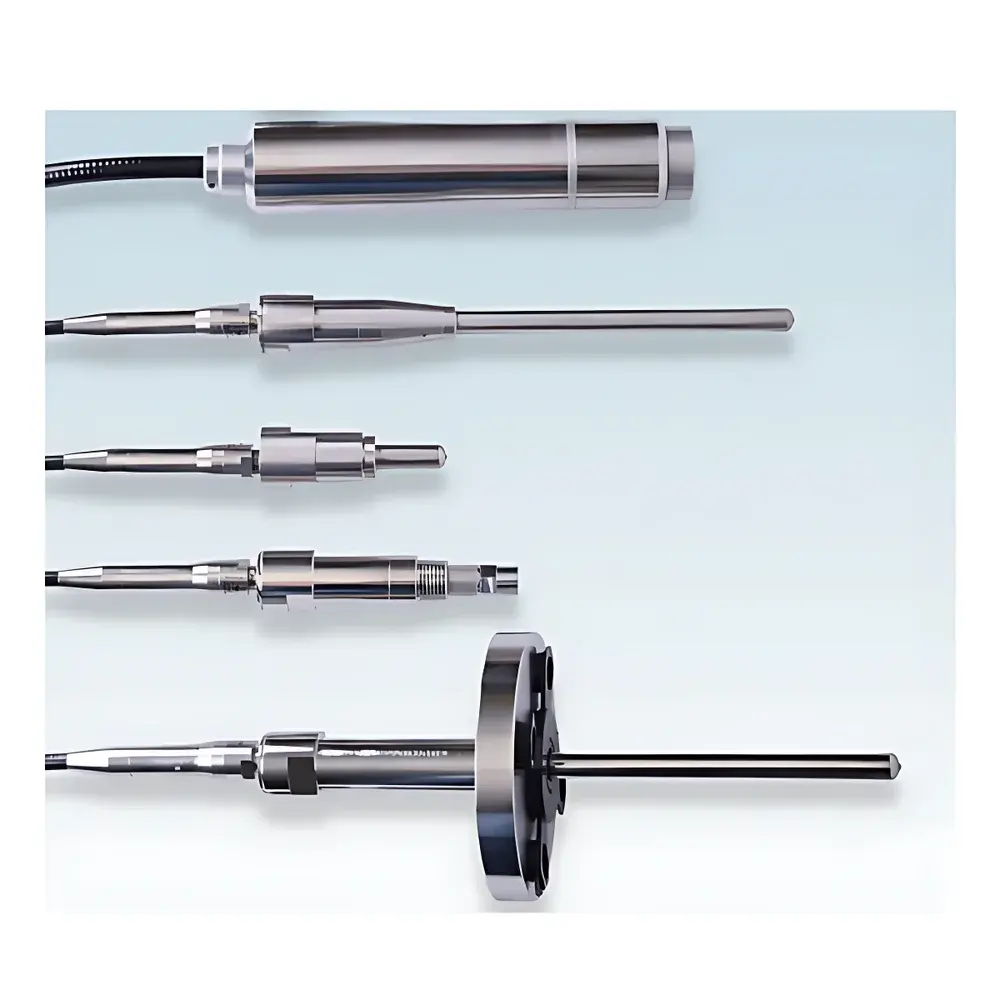
- Multi-mode probe integration: supports non-contact transmission (through quartz/glass windows), immersion-type flanged, sanitary clamp (DIN 11851), NPT-threaded, and flow-cell configurations—each with customizable wetted materials including Hastelloy C-276, PTFE, and M400 alloy.
- Robust thermal design: operational range from –10 °C to 130 °C; IP67-rated probe housing; pressure tolerance up to 1 MPa.
- Modular architecture: single analyzer unit can simultaneously manage up to six independent Raman probes via time-multiplexed acquisition—ideal for multi-point process mapping across reactors, distillation columns, or blending vessels.
- Embedded touchscreen interface with intuitive calibration management, spectral baseline correction, and user-defined alarm thresholds (high/low concentration, flow interruption, probe disconnection).
- Comprehensive data logging: automatic timestamped storage of spectra and derived concentration values for ≥3 years; exportable in CSV and HDF5 formats for LIMS or MES integration.
Sample Compatibility & Compliance
The MAZ-Ra300-BSJZ demonstrates broad compatibility across chemically diverse process streams—including organic solvents (e.g., toluene, THF), aqueous electrolytes, viscous monomer blends, and thermally labile biocatalytic broths. It reliably quantifies methyl acrylate in presence of common interferents such as acrylic acid, methanol, water, and polyacrylate oligomers. The system adheres to IEC 61000-6-2/6-4 for electromagnetic compatibility and meets ATEX/IECEx Zone 2 requirements when equipped with optional explosion-proof enclosures. All firmware and data handling protocols support audit trails compliant with FDA 21 CFR Part 11 and EU Annex 11 for electronic records and signatures—ensuring traceability during regulatory inspections.
Software & Data Management
The embedded RamanView™ software provides full spectral acquisition, multivariate calibration (PLS, PCR), and real-time chemometric modeling deployment. Users may import reference libraries generated from laboratory-grade FT-Raman or dispersive benchtop instruments, or build custom models using in-situ process data. Remote access is enabled via secure TCP/IP (HTTPS/SSH), supporting integration with DeltaV, Emerson DCS, Siemens Desigo, or OPC UA–compliant SCADA systems. Data integrity safeguards include role-based user permissions, encrypted local storage, and configurable auto-backup to network drives or cloud repositories (AWS S3, Azure Blob). All calibration updates and model revisions are version-controlled with metadata tagging for GLP/GMP documentation.
Applications
- End-point detection in free-radical polymerization of methyl acrylate and copolymers.
- In-process monitoring of nitration, hydrogenation (e.g., furfural → furfuryl alcohol), and enzymatic nitrile hydrolysis reactions.
- Quality assurance in API synthesis where MA serves as a reactive intermediate or solvent.
- Concentration control in mixed-acid systems (HNO₃/H₂SO₄) during nitrocellulose or explosive precursor manufacturing.
- Batch consistency evaluation in peptide solid-phase synthesis involving acrylate-based linkers.
- Fermentation broth analysis for acrylate-tolerant microbial strains in green chemistry applications.
- Hazardous material screening in raw material intake—detecting adulteration or mislabeling of MA shipments.
FAQ
What is the minimum detectable concentration for methyl acrylate in aqueous solution?
Detection limits are matrix-dependent; typical LOD ranges from 0.1% w/w to 0.5% w/w under standard probe geometry and 30-second integration—validated per ASTM E1847 for spectroscopic quantitative analysis.
Can the system operate in Class I Div 1 hazardous areas?
Yes—with optional IS-rated probe housings and intrinsically safe barrier kits certified to UL 913 and IEC 60079-11.
Is third-party validation support available for pharmaceutical process validation?
MAYZUM provides IQ/OQ documentation templates, URS alignment assistance, and on-site protocol execution support aligned with USP <1058>, ISO/IEC 17025, and PIC/S TR-13 guidelines.
How frequently does the calibration model require revalidation?
Model stability is verified during routine PQ testing; revalidation intervals are typically 3–6 months, or after major process changes, per ICH Q2(R2) recommendations.
Does the system support PAT framework implementation?
Yes—the MAZ-Ra300-BSJZ is fully compatible with FDA’s Process Analytical Technology initiative, providing real-time critical quality attribute (CQA) data for Design Space definition and control strategy development.



