
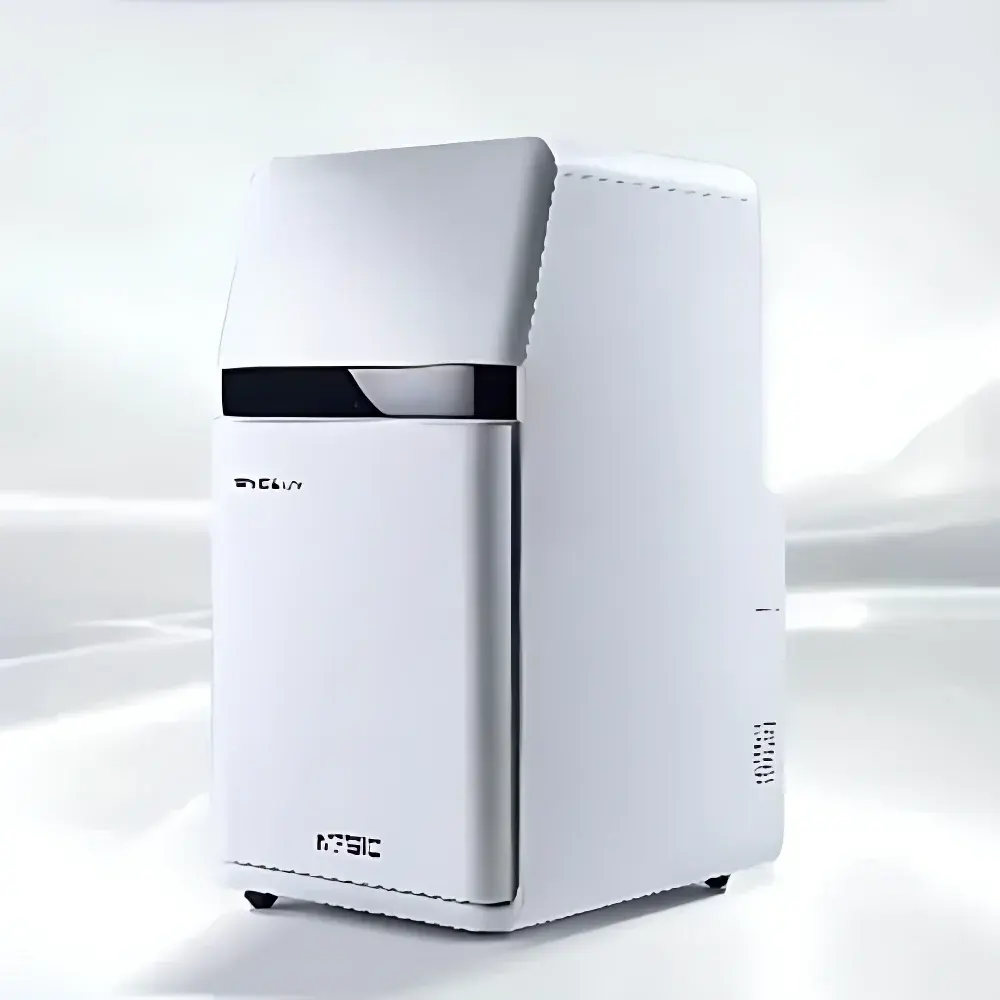
KeChenStarFly LumiFluor AVIS Faye A Small Animal In Vivo Optical Imaging System
| Brand | KeChenStarFly |
|---|---|
| Origin | Beijing, China |
| Manufacturer Type | Direct Manufacturer |
| Product Category | Domestic |
| Model | LumiFluor AVIS Faye A |
| Instrument Type | Optical In Vivo Imaging System |
| Price Range | USD 70,000 – 700,000 (approx.) |
| Imaging Modalities | Bioluminescence & Fluorescence |
Overview
The KeChenStarFly LumiFluor AVIS Faye A Small Animal In Vivo Optical Imaging System is a high-sensitivity, dual-modality optical imaging platform engineered for quantitative non-invasive visualization of biological processes in live rodents. Based on cooled CCD detection and optimized optical path design, the system enables high-resolution bioluminescent and fluorescent signal acquisition under low-background, light-tight conditions. It operates on the principle of photon detection—bioluminescence imaging (BLI) captures enzymatically generated photons from luciferase-expressing cells (e.g., firefly or Renilla luciferase), while fluorescence imaging (FLI) detects exogenously administered fluorophores (e.g., Cy5.5, ICG, Alexa Fluor dyes) upon excitation by narrow-band LED sources. Designed for longitudinal studies in immunocompromised and immunocompetent murine models, the system supports real-time monitoring of tumor progression, metastasis, cell trafficking, gene expression dynamics, and therapeutic response—without requiring tissue sectioning or sacrifice.
Key Features
- Scientific-grade deep-cooled CCD camera with thermoelectric cooling to −90 °C, delivering high quantum efficiency (>85% at 600 nm) and ultra-low dark current (<0.001 e⁻/pixel/sec), essential for detecting weak bioluminescent signals.
- Integrated, fully automated light-tight imaging chamber with precisely controlled internal geometry and reflective interior surfaces to maximize photon collection efficiency and minimize stray light interference.
- Dual-LED excitation module with selectable narrowband wavelengths (460–740 nm), enabling multiplexed fluorescence imaging with minimal spectral crosstalk.
- Motorized filter wheel accommodating up to 8 position-specific emission filters (e.g., 520 nm, 580 nm, 620 nm, 680 nm, 720 nm, 780 nm), supporting spectral unmixing and quantitative multi-fluorophore analysis.
- Optional integrated small-animal anesthesia delivery and scavenging system compliant with ISO 8573-1 Class 2 compressed air quality standards and OSHA exposure limits for isoflurane.
- Modular thermal regulation unit (optional) maintains stable animal core temperature (36–37 °C) during prolonged imaging sessions, preserving physiological relevance and reducing motion artifacts.
Sample Compatibility & Compliance
The LumiFluor AVIS Faye A accommodates mice (up to 50 g) and rats (up to 300 g) in supine or prone positioning via adjustable stage inserts. Its imaging workflow aligns with GLP-compliant preclinical study requirements, including audit-trail-enabled software logging, user-access controls, and timestamped metadata embedding per acquisition. While not certified for clinical use, the system meets key design principles referenced in ISO 13485 (for manufacturer quality systems) and supports data integrity practices consistent with FDA 21 CFR Part 11 when configured with electronic signature and secure archiving modules. All optical components comply with IEC 61000-4 electromagnetic compatibility standards.
Software & Data Management
The proprietary LumiFluor Studio software provides end-to-end control—from hardware synchronization and exposure parameter optimization (gain, binning, integration time) to quantitative ROI analysis, background subtraction, and spectral normalization. It supports batch processing of longitudinal datasets, automatic animal contour detection, and export of calibrated radiance values (p/s/cm²/sr) for BLI and fluorescence intensity (AU/mm²) for FLI. Data formats include TIFF (16-bit), NIfTI, and CSV; metadata adheres to MIAME/MINR guidelines. Software validation documentation is available upon request for regulated environments, and optional integration with LabArchives ELN or OpenLab software is supported via API.
Applications
- Oncology: Quantification of orthotopic or subcutaneous tumor burden, metastatic seeding, and oncolytic virus replication kinetics.
- Immunology: Tracking of adoptively transferred luciferase-labeled T cells or fluorescently tagged macrophages in inflammation and autoimmunity models.
- Drug Development: Pharmacodynamic assessment of targeted therapeutics (e.g., antibody–drug conjugates) using reporter-based biomarker expression.
- Gene Therapy: Validation of vector biodistribution and transgene expression duration in liver, lung, or CNS following systemic or local delivery.
- Nanomedicine: Real-time evaluation of nanoparticle accumulation, clearance, and target engagement in disease-relevant tissues.
- Neuroscience: Monitoring of neuroinflammation via TSPO-targeted fluorescent probes or microglial luciferase reporters in Alzheimer’s or stroke models.
FAQ
What is the minimum detectable flux for bioluminescence imaging?
System sensitivity is validated at ≤10³ photons/sec/cm²/sr under standard acquisition settings (1 min exposure, −90 °C sensor, 4×4 binning); actual detection limit depends on substrate kinetics, injection route, and animal physiology.
Can the system perform spectral unmixing for multiple fluorophores simultaneously?
Yes—when equipped with ≥6 emission filters and calibrated reference spectra, the software performs linear unmixing of up to four co-localized fluorophores with <5% cross-talk error.
Is the software compliant with 21 CFR Part 11 for regulated studies?
The base software includes audit trail, electronic signatures, and role-based permissions; full Part 11 compliance requires optional validation package and on-site configuration review.
Does the system support IVIS-compatible filter sets or protocols?
While not physically compatible with IVIS hardware, the LumiFluor AVIS Faye A uses industry-standard filter bandpasses (e.g., 520/30 nm, 620/40 nm) and exports data in interoperable formats for cross-platform comparison.
What maintenance is required for long-term stability?
Annual calibration of LED output intensity and CCD quantum efficiency is recommended; vacuum pump oil replacement (for cooled CCD) every 18 months; no consumables required for optical path or electronics.




