
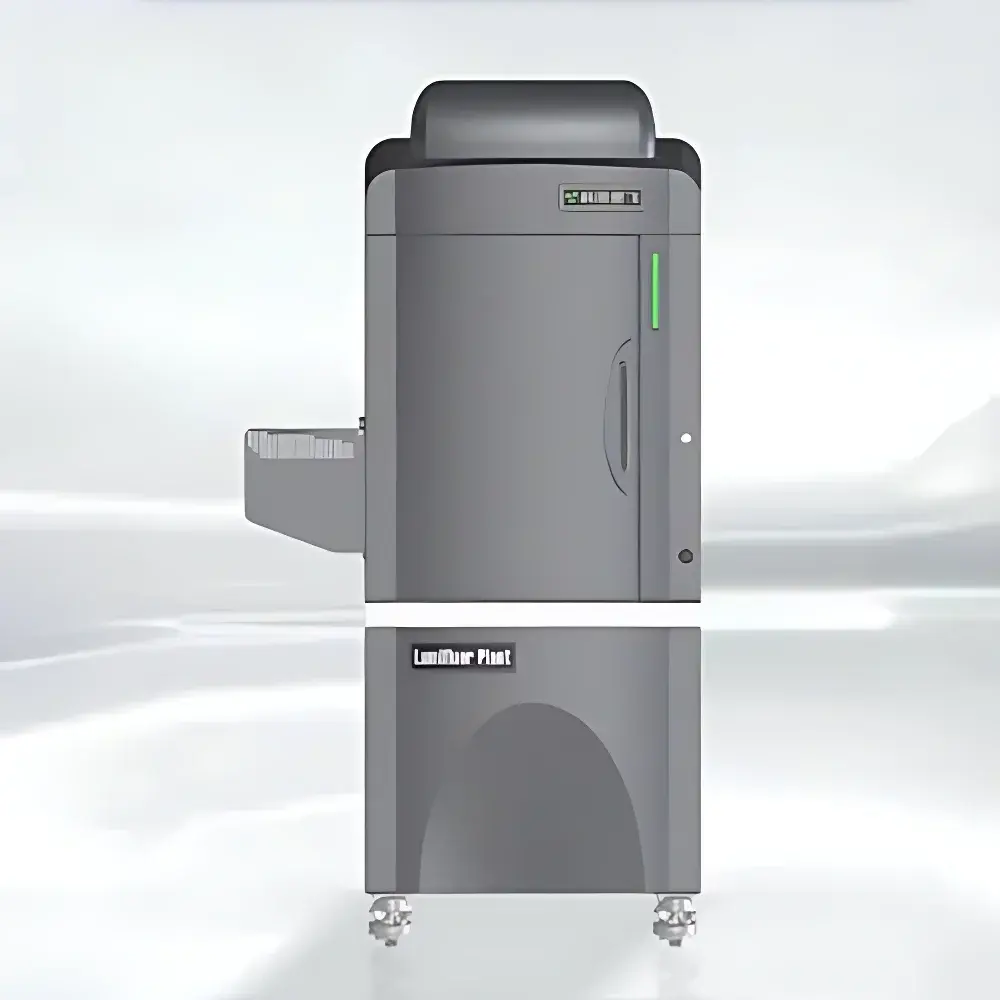
KECHENSTARFLY Plant lumiScreen DIL High-Throughput Dynamic Phenotyping Imaging System for Seedlings
| Brand | KECHENSTARFLY |
|---|---|
| Origin | Beijing, China |
| Manufacturer Type | Original Equipment Manufacturer (OEM) |
| Product Category | Domestic |
| Model | Plant lumiScreen DIL |
| Price Range | USD 70,000 – 700,000 |
Overview
The KECHENSTARFLY Plant lumiScreen DIL is a fully integrated, high-throughput dynamic phenotyping imaging platform engineered for non-invasive, longitudinal monitoring of plant seedlings at sub-millimeter spatial resolution and minute-scale temporal resolution. Built upon a modular optical architecture combining wide-field visible-light imaging, chemiluminescence detection, and optional fluorescence excitation pathways, the system implements quantitative image-based phenotyping grounded in controlled-environment plant physiology. Its core measurement principle relies on time-series acquisition of morphometric, photometric, and kinetic parameters—including hypocotyl elongation rate, cotyledon expansion dynamics, root architecture development, and bioluminescent reporter expression—under programmable environmental regimes. Designed specifically for early-stage plant development studies, the system supports standardized phenotypic data acquisition compliant with FAIR (Findable, Accessible, Interoperable, Reusable) principles and integrates seamlessly into large-scale functional genomics pipelines.
Key Features
- Modular optical design supporting simultaneous or sequential acquisition across visible-light, chemiluminescence, and optional fluorescence channels
- High-precision XYZ translation stage with micron-level positioning repeatability (±1.5 µm) and travel range up to 300 mm × 300 mm × 150 mm
- Automated environmental control system enabling independent regulation of temperature (10–35 °C, ±0.3 °C), relative humidity (30–90% RH, ±3%), light intensity (0–1000 µmol/m²/s PAR), spectral composition (RGB + far-red LED arrays), and CO₂ concentration (ambient–2000 ppm)
- Dedicated seedling-stage imaging chamber with vibration-dampened optics mount and anti-reflection baffling to minimize stray light interference
- Integrated hardware-triggered shutter synchronization ensuring precise exposure timing across multi-channel acquisitions
- Scalable throughput architecture supporting up to 96 individual seedling units per imaging cycle, with automated sample indexing and position registration
Sample Compatibility & Compliance
The Plant lumiScreen DIL accommodates a broad spectrum of model and crop species at the seedling stage—including Arabidopsis thaliana, Oryza sativa, Brassica rapa, Glycine max, and Zea mays—grown on agar plates, soil substrates, or hydroponic mats. Sample holders are compatible with standard Petri dishes (90 mm and 150 mm), multi-well plates (6-, 12-, 24-, 48-, and 96-well formats), and custom trays conforming to ANSI/SLAS footprint specifications. All imaging modules comply with IEC 61000-6-3 (EMC emission limits) and IEC 61000-6-2 (immunity requirements). Environmental control subsystems meet ISO 17025 traceability standards for sensor calibration. Data acquisition workflows support audit trails and electronic signatures required under GLP and 21 CFR Part 11 when deployed with validated software configurations.
Software & Data Management
The system operates via two tightly coupled software suites: LuminaControl (real-time hardware orchestration) and PhenomeAnalyzer (quantitative image analysis). LuminaControl provides scriptable experiment sequencing, environmental parameter logging at 1 Hz resolution, and hardware fault diagnostics with event-driven notifications. PhenomeAnalyzer implements AI-assisted segmentation using U-Net–based convolutional neural networks trained on annotated plant morphology datasets, delivering measurements including projected area, perimeter, aspect ratio, convex hull metrics, pixel-intensity kinetics, and circadian rhythm phase estimation. All raw images and derived metadata are stored in vendor-neutral HDF5 format with embedded EXIF-style tags compliant with MIAPPE v1.1. Export options include CSV, JSON-LD, and ISA-Tab for integration with ELN systems (e.g., LabArchives, Benchling) and public repositories such as AraPheno or Phenome Networks.
Applications
- Forward and reverse genetic screening of mutant or natural accessions under controlled abiotic stress (drought, salinity, nutrient deficiency, temperature shift)
- Time-resolved characterization of hormone response dynamics (e.g., auxin-, ABA-, or jasmonate-induced growth modulation)
- Validation of CRISPR/Cas9-edited lines through longitudinal morphometric profiling
- Quantification of pathogen-induced defense responses using luminescent reporter lines (e.g., PR1::LUC, PDF1.2::LUC)
- Root-shoot coordination analysis under gravistimulation or light-gradient conditions (when paired with optional gravity or spectral modules)
- Development of machine learning–trained phenotypic biomarkers predictive of adult-stage agronomic traits
FAQ
What is the minimum detectable change in seedling height or leaf area?
The system achieves sub-pixel spatial resolution of ≤5 µm/pixel at maximum magnification, enabling reliable detection of absolute changes ≥10 µm in linear dimensions and ≥0.01 mm² in projected area over consecutive time points.
Can the system operate unattended for multi-day experiments?
Yes—hardware watchdog timers, redundant power management, and automated thermal drift compensation allow continuous operation for up to 14 days without manual intervention, provided environmental consumables (e.g., water reservoirs, CO₂ tanks) are adequately replenished.
Is third-party software integration supported?
The API layer exposes RESTful endpoints for instrument control and data retrieval; Python SDK and MATLAB bindings are provided for custom workflow automation and integration with analysis frameworks such as PlantCV or DeepPlant.
Does the system support GMP-compliant validation documentation?
Upon request, KECHENSTARFLY delivers IQ/OQ protocols, calibration certificates traceable to NIST standards, and software validation packages aligned with ASTM E2500 and Annex 11 guidelines.
What maintenance intervals are recommended?
Optical alignment verification every 6 months; LED spectral output calibration annually; mechanical stage lubrication and belt tension check every 12 months—full service logs are recorded within the system’s internal maintenance database.
Related Products





