
LXTECH LX-EP1 High-Throughput Automated High-Performance Fiber Sizing Agent Synthesis System
| Brand | LXTECH |
|---|---|
| Origin | Anhui, China |
| Manufacturer Type | Authorized Distributor |
| Country of Origin | China |
| Model | LX-EP1 |
| Price Range | USD 14,000 – 1.4 million |
Overview
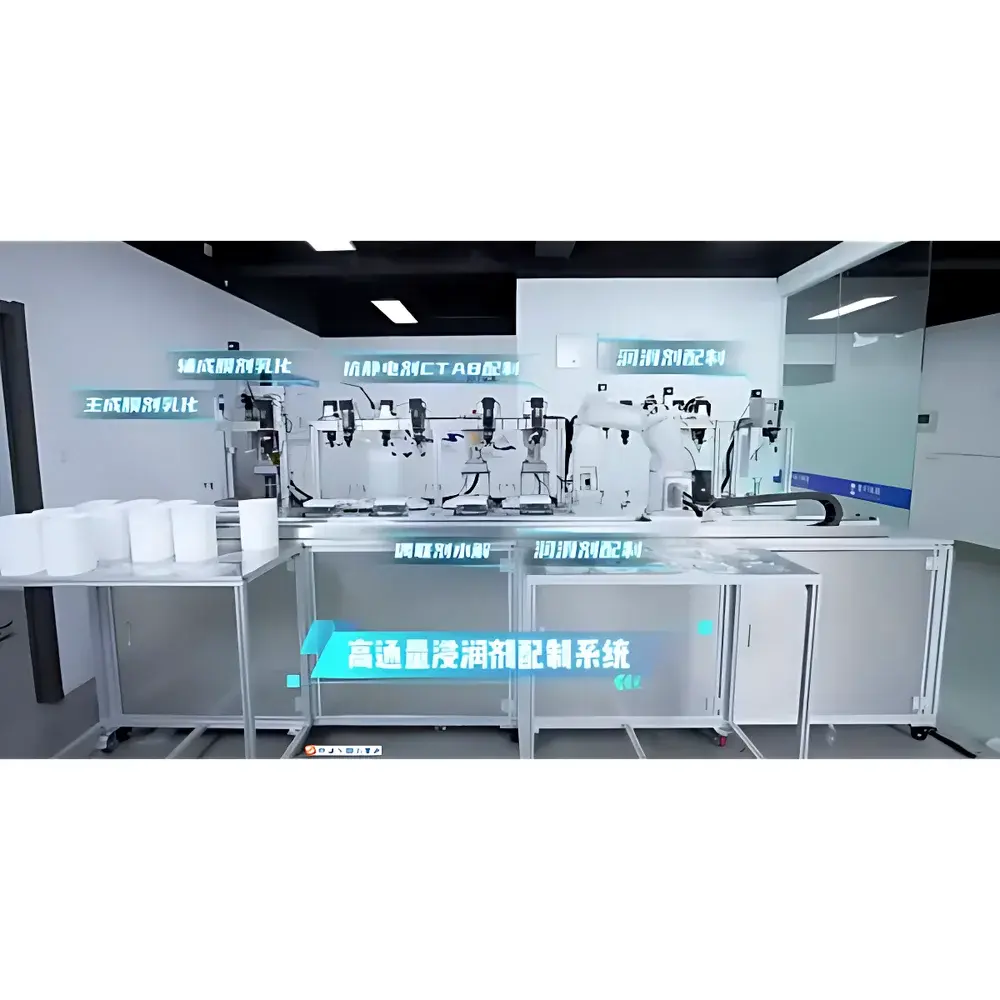
The LXTECH LX-EP1 is an integrated, high-throughput automated synthesis platform engineered for the precise, reproducible, and scalable development of fiber sizing agents—particularly for advanced inorganic fibers such as basalt, carbon, and ceramic-based reinforcements. It operates on a continuous-flow chemistry architecture combined with modular batch-integrated reaction control, enabling parallel synthesis of multiple formulations under tightly regulated thermal, mixing, and dosing conditions. Unlike conventional manual or semi-automated emulsion synthesis setups, the LX-EP1 implements closed-loop feedback control across all critical process stages—from raw material conditioning to final product stabilization—ensuring consistent droplet size distribution, interfacial tension modulation, and polymer grafting efficiency essential for high-performance composite interphase engineering.
Key Features
- Modular workflow architecture: Pre-treatment unit (solvent drying, solid dispersion, nanoparticle deagglomeration), precision metering station (±0.5% volumetric accuracy for liquids; ±1.2% gravimetric repeatability for powders), and multi-zone reaction manifold (temperature range: −10 °C to 120 °C, ±0.3 °C stability)
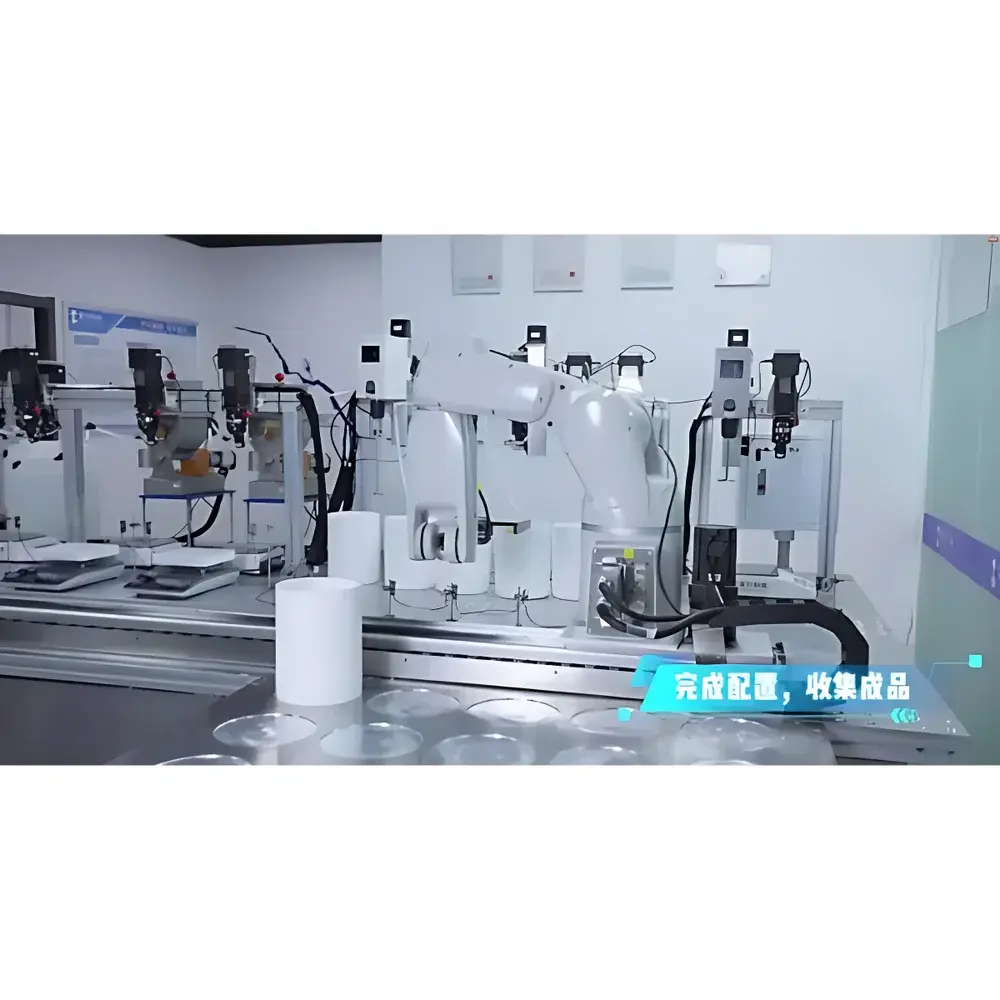
- Robotic sample handling system: 6-axis collaborative robot with ISO Class 5 cleanroom-rated end-effectors, supporting vial loading/unloading, cap sealing, and in-line sampling without operator intervention
- Intelligent integration hub: Real-time synchronization of PLC-controlled actuators, HPLC-grade peristaltic pumps, and inline PAT sensors (pH, conductivity, turbidity) via OPC UA protocol
- Scalable throughput: Configurable for 1–96 parallel synthesis channels; typical cycle time per formulation: 22–180 minutes depending on polymerization kinetics and post-reaction quenching requirements
- Fail-safe operation: Integrated leak detection, overpressure relief valves, inert gas purging (N₂/Ar), and emergency shutdown compliant with IEC 61508 SIL2 functional safety standards
Sample Compatibility & Compliance
The LX-EP1 accommodates diverse feedstock morphologies—including aqueous/organic solvents, hydrophobic monomers, silane coupling agents, nano-silica dispersions, and functionalized polyacrylates—without cross-contamination between runs. All wetted components are constructed from electropolished 316L stainless steel, PTFE-lined tubing, and chemically resistant ceramic valves. The system meets ISO 13485 design control requirements for laboratory-scale medical device material development and supports audit-ready documentation per FDA 21 CFR Part 11 (electronic records/signatures), GLP Annex 11, and ISO/IEC 17025 traceability protocols. Reaction data logs include timestamped metadata for each parameter set, enabling full experimental reproducibility and regulatory submission readiness.
Software & Data Management
Control and monitoring are executed through LX-SyntheOS™ v4.2—a validated Windows-based platform featuring role-based access control, electronic lab notebook (ELN) integration (compatible with LabArchives and Benchling APIs), and automated report generation (PDF/CSV). All synthesis methods are stored as version-controlled SOPs with embedded calibration certificates and maintenance history. The software enforces method locking during GxP workflows and maintains immutable audit trails for parameter changes, user logins, and hardware status events. Raw sensor streams are archived at 10 Hz resolution and can be exported for multivariate analysis (e.g., PCA, PLS regression) to correlate formulation variables with final sizing film adhesion strength or fiber-matrix interlaminar shear test outcomes.
Applications
- Development and optimization of sizing formulations for basalt, carbon, and E-glass fibers used in aerospace prepregs and wind turbine blades
- Rapid screening of silane–polymer hybrid architectures for enhanced moisture resistance and thermal stability (up to 350 °C TGA onset)
- High-fidelity replication of pilot-scale emulsion polymerization kinetics for tech-transfer to continuous manufacturing lines (e.g., Corning’s flow reactors or Syrris Asia systems)
- Accelerated formulation mapping for functional coatings requiring controlled rheology, anti-corrosion additives, or UV-curable acrylate matrices
- Support of DOE-driven studies for DOE-defined response surfaces linking monomer ratio, initiator concentration, and surfactant HLB value to interfacial fracture toughness (GIC)
FAQ
What types of fiber substrates have been validated with this system?
Basalt fiber (ASTM D3878), PAN-based carbon fiber (ISO 10119), and aluminoborosilicate glass fiber (IEC 61249-2-21) have undergone full compatibility testing.
Can the system operate under inert atmosphere for oxygen-sensitive monomers?
Yes—integrated dual-gas manifold supports automatic switching between N₂ and Ar, with residual O₂ levels maintained below 50 ppm during polymerization.
Is remote monitoring supported for multi-site R&D teams?
The system includes TLS-secured web interface (HTTPS) and optional MQTT telemetry for real-time KPI dashboards accessible via corporate intranet or cloud VDI environments.
How is cleaning validation performed between batches?
Automated CIP sequence uses conductivity-based endpoint detection, with rinse water quality logged against USP <845> criteria for residue acceptance.
Does the platform support API export for LIMS integration?
RESTful API endpoints are provided for bidirectional synchronization with major LIMS vendors (LabVantage, Thermo Fisher SampleManager, STARLIMS), including sample ID propagation and result ingestion.



