
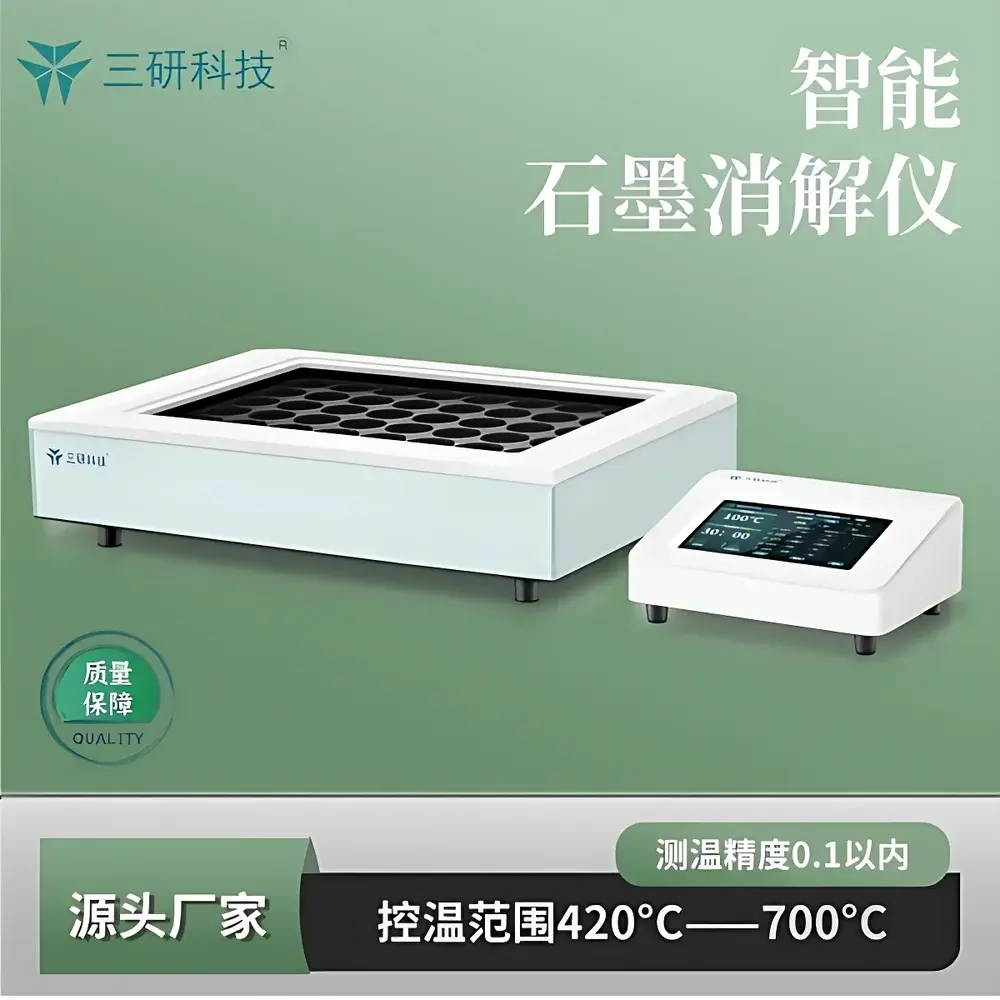
Sanyan Tech LF48 Intelligent Graphite Block Digestion System
| Brand | Sanyan Tech |
|---|---|
| Origin | Guangdong, China |
| Manufacturer Type | Direct Manufacturer |
| Product Category | Domestic |
| Model | LF48 |
| Instrument Type | Electric Heating Digestion System |
| Automation Level | Semi-Automatic |
| Digestion Positions | 48 |
| Max Heating Temperature | 250 °C |
| Temperature Control Accuracy | ±0.1 °C |
| Heating Principle | Resistive heating via high-purity graphite block with integrated electronic PID temperature control |
| Reagent Handling | Manual reagent addition (no integrated reagent dispensing channels) |
Overview
The Sanyan Tech LF48 Intelligent Graphite Block Digestion System is a semi-automated, high-capacity sample digestion platform engineered for precision, reproducibility, and operational safety in environmental, food, pharmaceutical, and industrial laboratories. It operates on the fundamental principle of conductive heating—leveraging the exceptional thermal conductivity, chemical inertness, and uniform heat distribution properties of high-density pyrolytic graphite. Unlike ceramic or aluminum blocks, graphite ensures minimal thermal gradient across all 48 digestion wells, enabling consistent decomposition of organic matrices under controlled acid digestion conditions (e.g., HNO₃–HCl–HF or H₂SO₄–H₂O₂ protocols). Designed to meet routine and regulatory-compliant digestion workflows—including those aligned with EPA Method 3015A, ISO 11047, and GB/T 17134—the LF48 delivers stable thermal performance up to 250 °C with real-time PID feedback control, minimizing inter-batch variability and supporting trace-level elemental analysis by ICP-OES, ICP-MS, or AAS.
Key Features
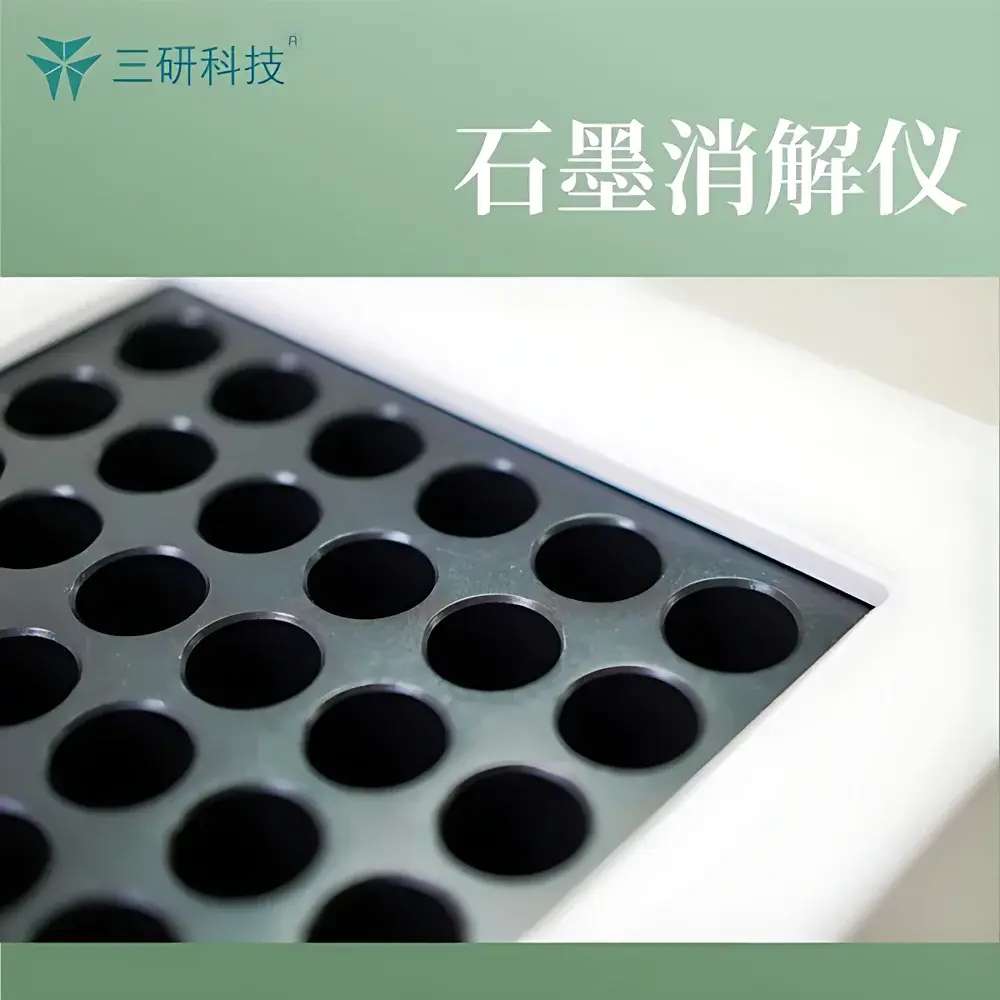
- 48-position high-density graphite digestion block fabricated from ultra-pure, low-ash graphite with surface passivation for long-term resistance to aqua regia, hydrofluoric acid, and hot concentrated alkalis.
- Precision temperature control with ±0.1 °C accuracy across full operating range (room temperature to 250 °C), achieved via dual independent heating modules and adaptive power modulation to reduce thermal stress on graphite elements.
- Semi-automated operation: programmable multi-step ramp-hold-cool sequences (up to 10 segments per method), start-time scheduling, and method recall functionality via intuitive touch-enabled controller.
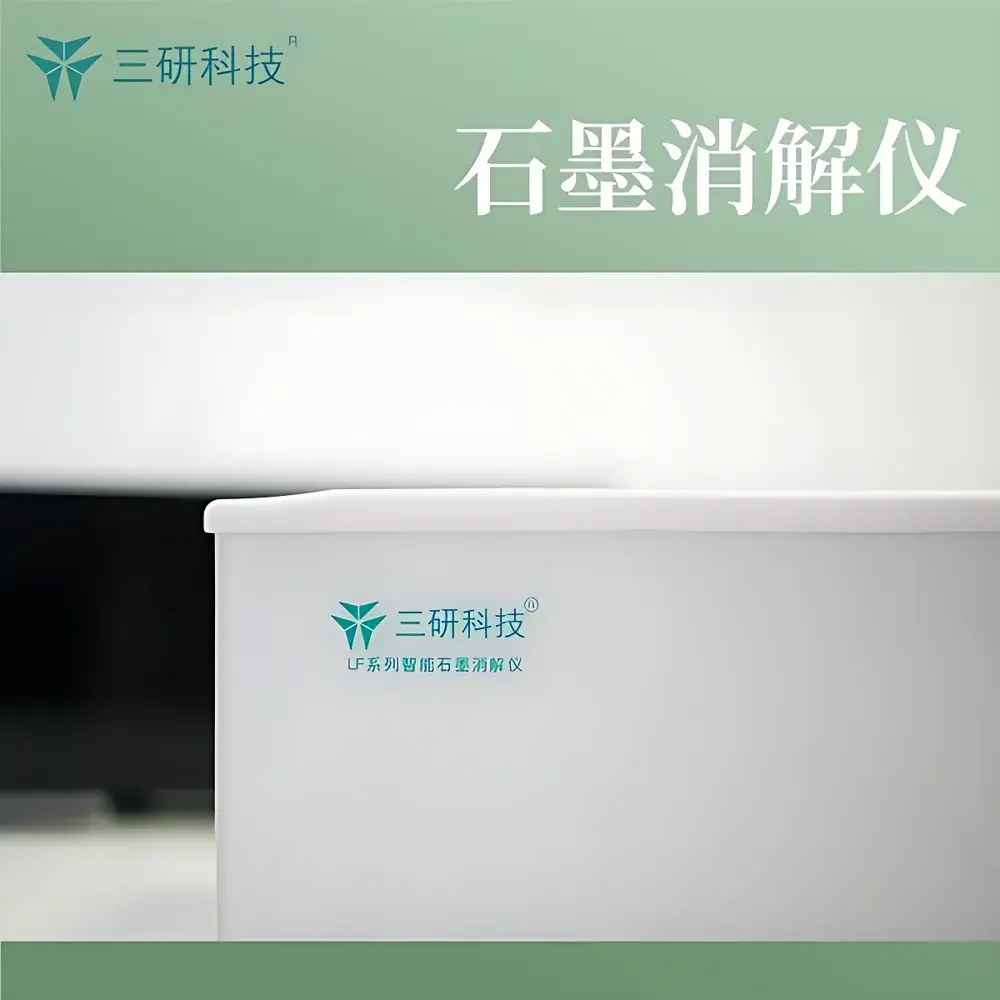
- Corrosion-resistant housing constructed entirely from molded PTFE (polytetrafluoroethylene), providing full protection against fume exposure, condensate corrosion, and accidental splashes during open-vessel digestion.
- Real-time monitoring interface displaying current temperature, setpoint, elapsed time, remaining time, and dynamic temperature curve visualization for full process traceability.
- No moving parts or fluidic manifolds—designed for mechanical robustness, low maintenance, and compatibility with standard 16 mm or 20 mm digestion tubes (e.g., borosilicate glass or PFA).
Sample Compatibility & Compliance
The LF48 accommodates a broad spectrum of solid and liquid samples requiring acid digestion prior to elemental quantification—including soils, sediments, biological tissues, wastewater sludge, food composites, and polymer ash. Its uniform thermal field supports standardized methods such as US EPA 3050B (for metals in soils), ISO 17294-2 (water analysis), and Chinese national standards GB/T 5009.x series. While the system itself does not include automated reagent delivery, its design conforms to GLP laboratory practices when operated with documented SOPs, calibrated thermocouples, and audit-ready log files. All temperature profiles are timestamped and exportable in CSV format, facilitating compliance with FDA 21 CFR Part 11 requirements when paired with validated LIMS integration.
Software & Data Management
The LF48 employs an embedded ARM-based controller with non-volatile memory for storing ≥100 user-defined digestion protocols. Each method includes configurable parameters: ramp rate (0.1–20 °C/min), hold duration (1–999 min), cooling delay, and safety cutoff thresholds. Temperature data is logged at 1-second intervals and viewable as interactive graphs directly on the display or exported via USB port. No proprietary software installation is required; exported logs are compatible with Excel, MATLAB, and laboratory informatics platforms. Firmware updates are performed offline via FAT32-formatted USB drive, ensuring continuity in regulated environments where network connectivity is restricted.
Applications
- Preparation of environmental samples (soil, sediment, fly ash) for heavy metal analysis (Pb, Cd, As, Cr, Hg) by ICP techniques.
- Digestion of food and feed samples per AOAC 999.10 and ISO 6498 for nutritional mineral profiling (Ca, Mg, Fe, Zn, Se).
- Decomposition of pharmaceutical excipients and active ingredients prior to residual catalyst testing (e.g., Pd, Pt, Rh).
- Processing of geological and mining samples under aggressive HF-containing protocols for rare earth element determination.
- Supporting QA/QC workflows in contract testing labs requiring high-throughput, method-locked digestion consistency across shifts and operators.
FAQ
Does the LF48 support fully automated reagent addition?
No. The LF48 requires manual pipetting or syringe-based reagent addition prior to program initiation. It is designed for laboratories prioritizing flexibility and cost-effective scalability over fluidic automation.
Can the graphite block be replaced independently?
Yes. The graphite block is a field-replaceable module with standardized mounting and thermocouple interface, allowing for scheduled refurbishment without full instrument decommissioning.
Is calibration traceable to national standards?
The system supports external calibration using NIST-traceable reference thermometers (e.g., Fluke 1523/1524). Built-in sensor verification routines allow daily performance checks per ISO/IEC 17025 requirements.
What tube types are compatible with the 48-position configuration?
Standard 16 mm OD borosilicate glass tubes (50 mL capacity), PFA digestion vials (up to 20 mm OD), and quartz crucibles (with optional adapter plate).
How is overheating or dry-run protection implemented?
Dual redundant thermal cutoffs: hardware-based limit switch at 260 °C and software-enforced upper bound at 250 °C, both triggering immediate power shutdown and audible alarm.



