
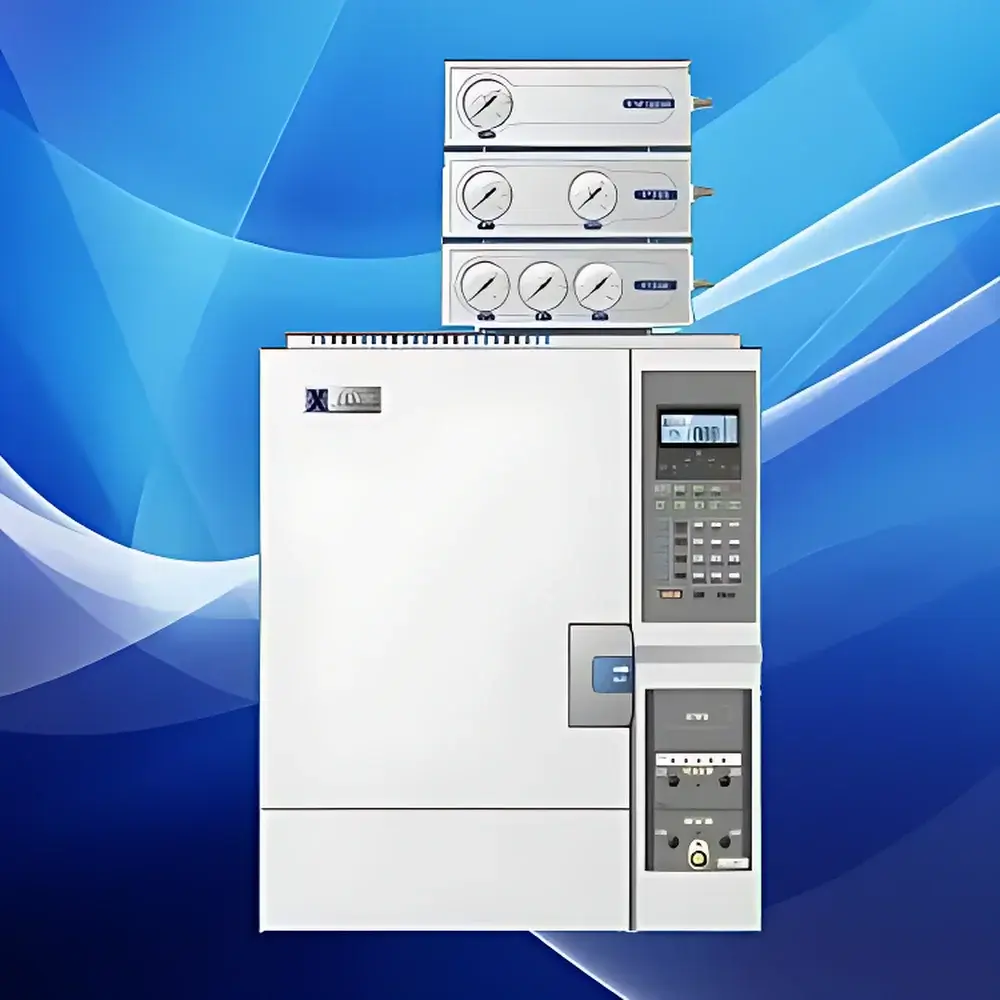
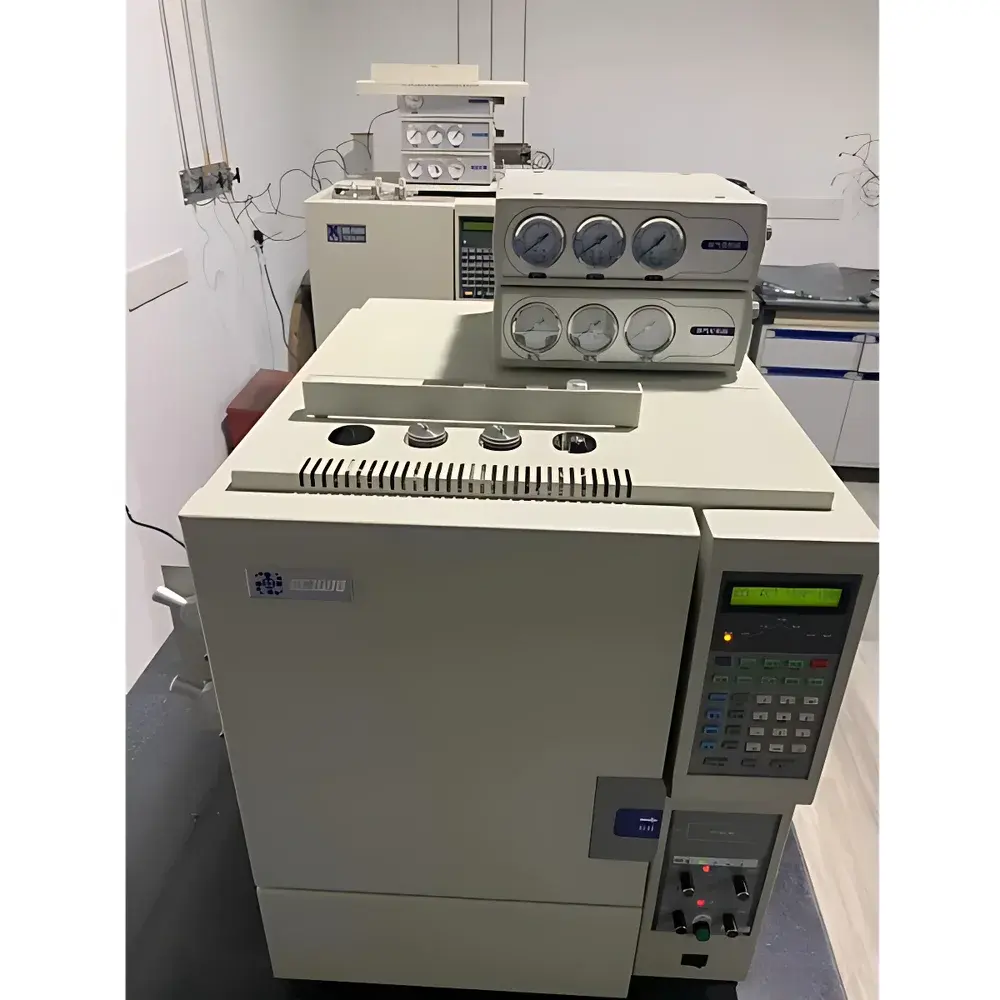
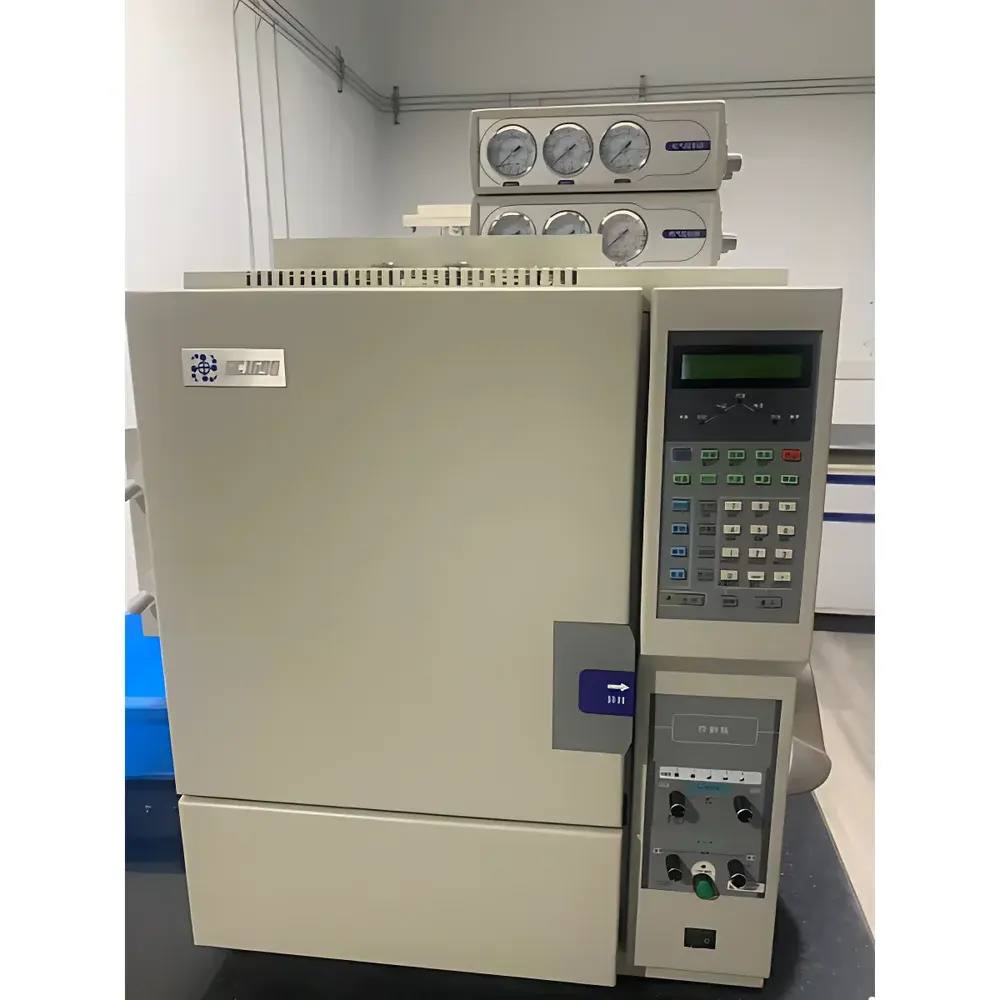
Jiedao GC1690 Baijiu-Specific Gas Chromatograph
| Brand | Jiedao |
|---|---|
| Origin | Zhejiang, China |
| Instrument Type | Laboratory Gas Chromatograph |
| Application Scope | General-Purpose with Baijiu (Chinese Liquor) Analysis Optimization |
| Temperature Control Zones | 6 Independent Channels (including Column Oven, Injector, Detector, AUX1–AUX3) |
| Column Oven Temp Range | +7 °C to 420 °C |
| Programmed Ramp Stages | 5-Stage Linear/Nonlinear |
| Oven Cooling Rate | Ambient air-cooled with motorized auto-backdoor |
| Carrier Gas Control | External modular gas control boxes (capillary, carrier, fuel/oxidant circuits) with manual flow/pressure adjustment |
| Injector Max Temp | 450 °C |
| Injector Pressure Range | 0–100 psi (adjustable) |
| Total Injector Flow Range | 0–200 mL/min |
| Detector Compatibility | Up to three simultaneous detectors (FID, TCD, FPD, NPD, ECD) |
| Safety Protections | Over-Temperature, Over-Current (TCD), and System Crash Protection |
| Display | Backlit LCD with color-coded membrane keyboard (green = temp, blue = detector, white = numeric, black = event) |
| Physical Design | Vertical column oven |
Overview
The Jiedao GC1690 Baijiu-Specific Gas Chromatograph is a laboratory-grade, general-purpose gas chromatography system engineered for high-reproducibility volatile organic compound (VOC) analysis—particularly optimized for the complex multi-analyte profiling required in Chinese baijiu (distilled spirit) quality control and authenticity verification. Based on classical packed and capillary gas chromatographic principles, the GC1690 separates analytes via differential partitioning between a mobile phase (inert carrier gas, e.g., N2, He, or H2) and a stationary phase coated inside fused-silica capillary or packed columns. Separated components elute at characteristic retention times and are quantified using selective detection mechanisms—including flame ionization (FID) for hydrocarbons, thermal conductivity (TCD) for permanent gases, electron capture (ECD) for halogenated compounds, and nitrogen-phosphorus (NPD) for trace esters and alcohols prevalent in fermented spirits. Its robust architecture supports routine compliance-driven workflows in food safety labs, distillery QC departments, and regional regulatory testing centers.
Key Features
- Six independent temperature-controlled zones: Includes column oven, dual injectors, three detector compartments, and AUX1 (external heating module), each with real-time monitoring and setpoint accuracy ±0.1 °C.
- High-stability column oven: Vertical design minimizes thermal radiation interference; operating range +7 °C to 420 °C with 5-stage programmable ramping; motorized auto-backdoor enables rapid ambient cooling between runs.
- Modular external gas control system: Segregated capillary, carrier, and fuel/oxidant gas boxes allow intuitive visual flow ratio tuning and field-swappable configuration without instrument downtime.
- Triple-detector capacity: Supports concurrent installation of any combination of FID, TCD, FPD, NPD, or ECD—enabling parallel detection modes for method flexibility and cross-validation.
- Comprehensive hardware protection suite: Integrated over-temperature cutoff (450 °C hard limit), TCD over-current shutdown (prevents tungsten filament damage during no-gas startup), and system-level crash detection with automatic power isolation.
- Ergonomic human interface: Backlit monochrome LCD with dedicated color-coded membrane keys reduces operator error; supports method storage, run logging, and parameter recall without PC dependency.
Sample Compatibility & Compliance
The GC1690 accommodates diverse sample introduction methods—packed-column on-column injection, split/splitless capillary injection, wide-bore capillary (WBC), vaporizing packed-column injection, and gas-tight 6-port valve sampling—making it suitable for liquid distillates, headspace vapors, and dissolved gas matrices. It meets foundational performance criteria aligned with ISO 17025:2017 for testing laboratories and supports method development compliant with GB/T 10345–2007 (Chinese National Standard for Baijiu Analysis) and GB 5009.48–2016 (Food Additive Testing). While not pre-certified to FDA 21 CFR Part 11, its event-logged parameter changes, password-protected method editing, and non-volatile memory provide a foundation for GLP/GMP-aligned documentation when integrated with validated LIMS or chromatography data systems (CDS).
Software & Data Management
The GC1690 operates as a standalone instrument with embedded firmware for method execution, peak integration, and basic calibration curve generation. Raw chromatograms and audit trails (e.g., temperature deviations, detector voltage shifts, gas pressure fluctuations) are stored internally and exportable via USB to standard CSV or ASCII formats. For full regulatory traceability, integration with third-party CDS platforms—such as Chromeleon™, OpenLab CDS, or custom Python-based parsers—is supported via RS-232 or optional Ethernet interface. All detector signal outputs conform to analog voltage standards (0–1 V or 0–5 V full scale), enabling seamless connection to legacy DAQ systems or modern digitizers.
Applications
- Quantitative analysis of ethyl acetate, ethyl lactate, isoamyl alcohol, and other flavor congeners in baijiu according to GB/T 10345–2007.
- Residual solvent screening in pharmaceutical intermediates (ICH Q3C guidelines).
- Hydrocarbon fingerprinting in petroleum fractions and lubricants (ASTM D3606, D5186).
- Trace pesticide residue detection in agricultural commodities using ECD/NPD configurations.
- Permanent gas analysis (O2, N2, CO, CH4) in fermentation off-gas streams via TCD.
- Environmental VOC monitoring in soil headspace and wastewater extracts (EPA Method 8260D).
FAQ
Does the GC1690 support method validation per ICH or USP guidelines?
Yes—when operated with documented SOPs, calibrated reference standards, and external CDS software supporting audit trails, the GC1690 satisfies core requirements for specificity, linearity, precision, and robustness in method validation protocols.
Can the instrument be upgraded to include electronic pressure control (EPC)?
The base model uses manually regulated mechanical pressure and flow controllers. EPC modules are not factory-integrated but may be retrofitted via third-party pneumatic control units compatible with its 0–10 V analog input interface.
What column dimensions and phases are recommended for baijiu analysis?
Standard configurations include 30 m × 0.32 mm ID fused-silica columns with 0.25 µm DB-WAX or HP-INNOWAX film thickness for polar congener separation; alternative options include FFAP or Stabilwax for enhanced ester resolution.
Is remote monitoring or network connectivity available?
Native Ethernet or Wi-Fi is not included; however, the RS-232 port allows connection to serial-to-Ethernet converters for lab-wide instrument monitoring within local networks.
How often does the system require preventive maintenance?
Injector liner replacement and septum change are recommended every 100 injections; column trimming every 2–3 months under continuous use; detector cleaning intervals depend on sample matrix cleanliness—typically quarterly for FID, semiannually for TCD.



