
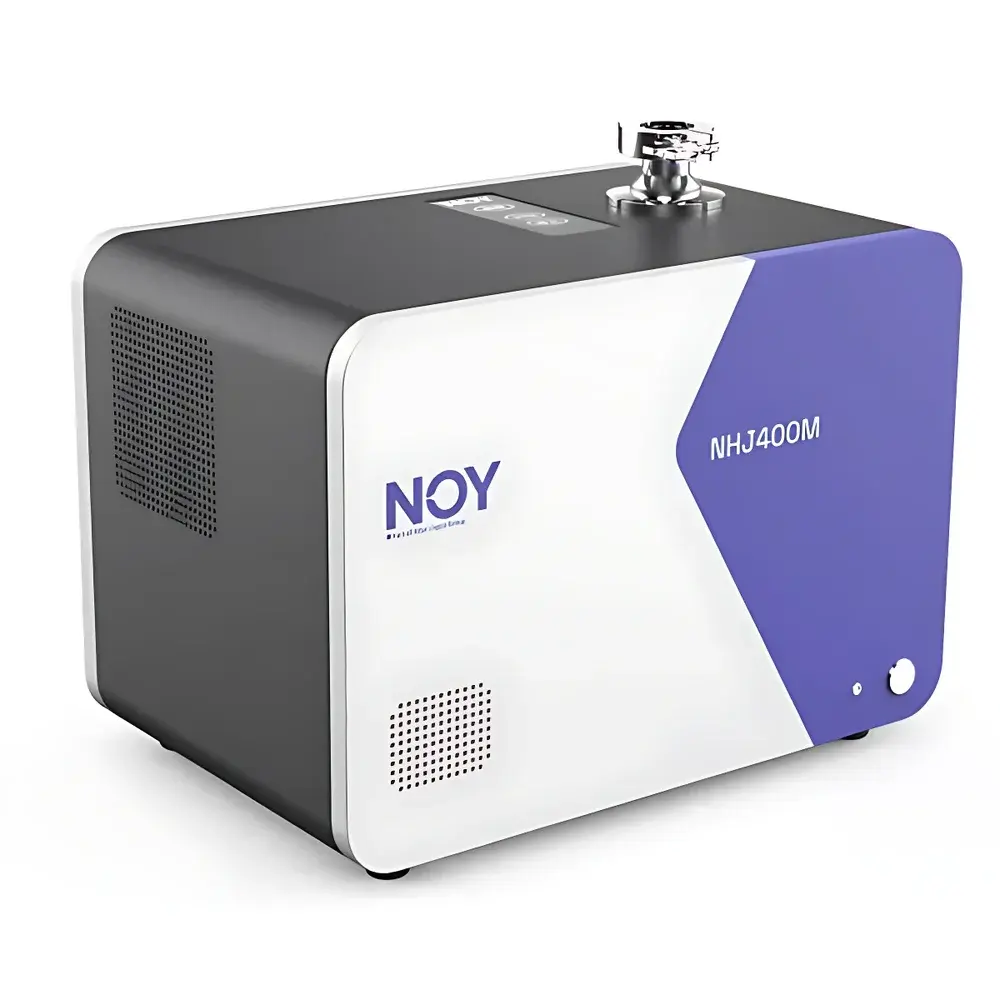
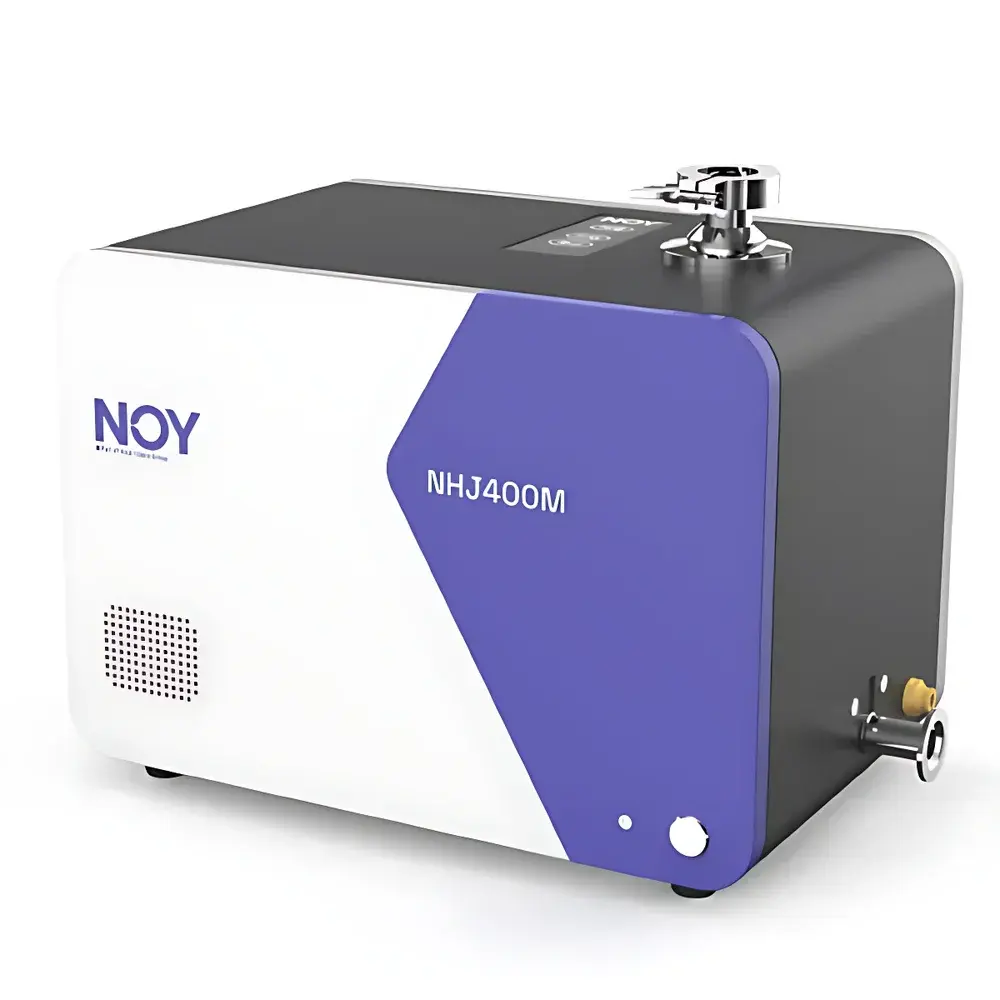
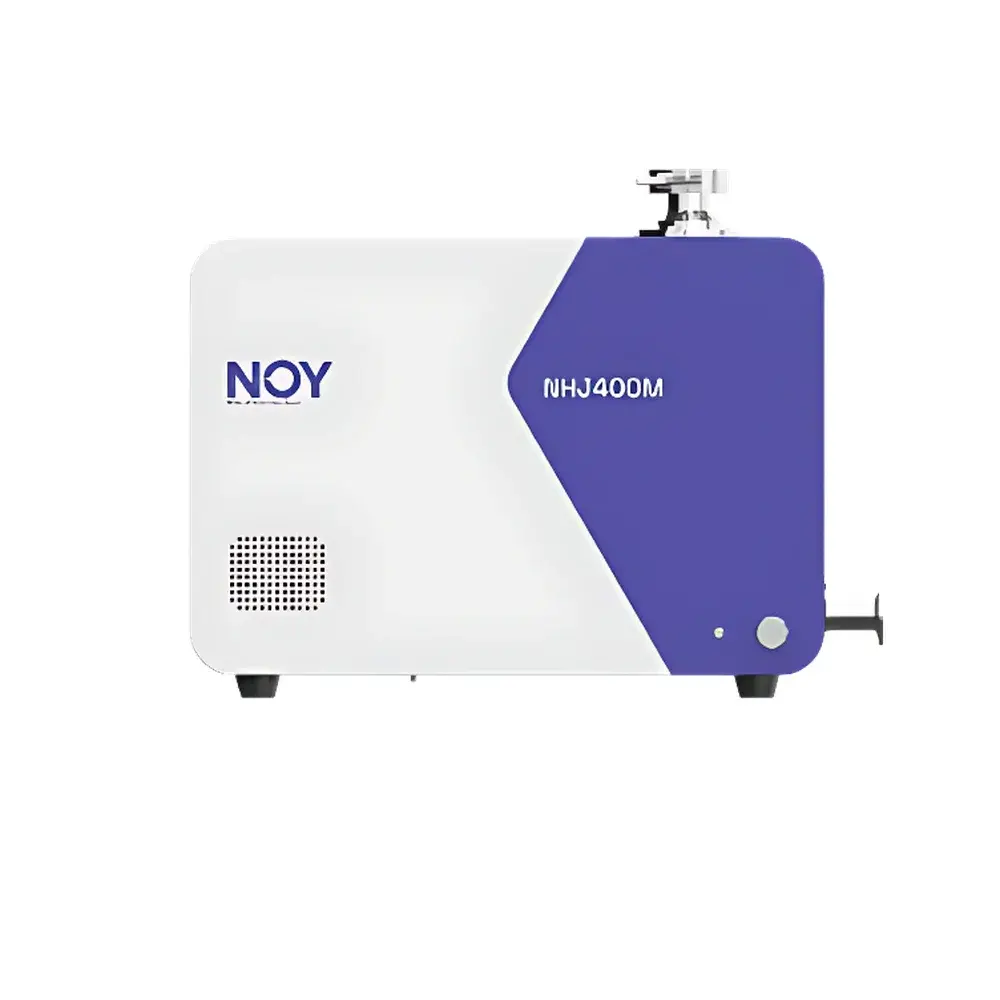
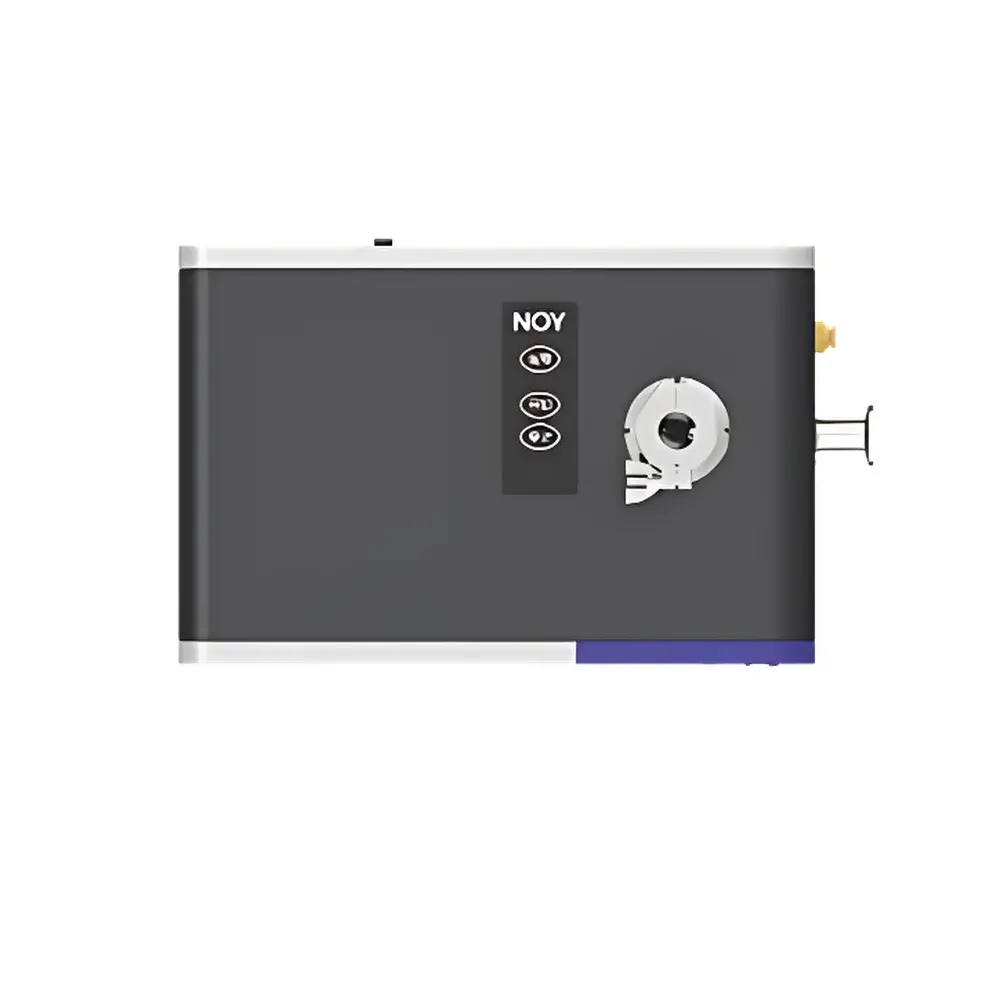
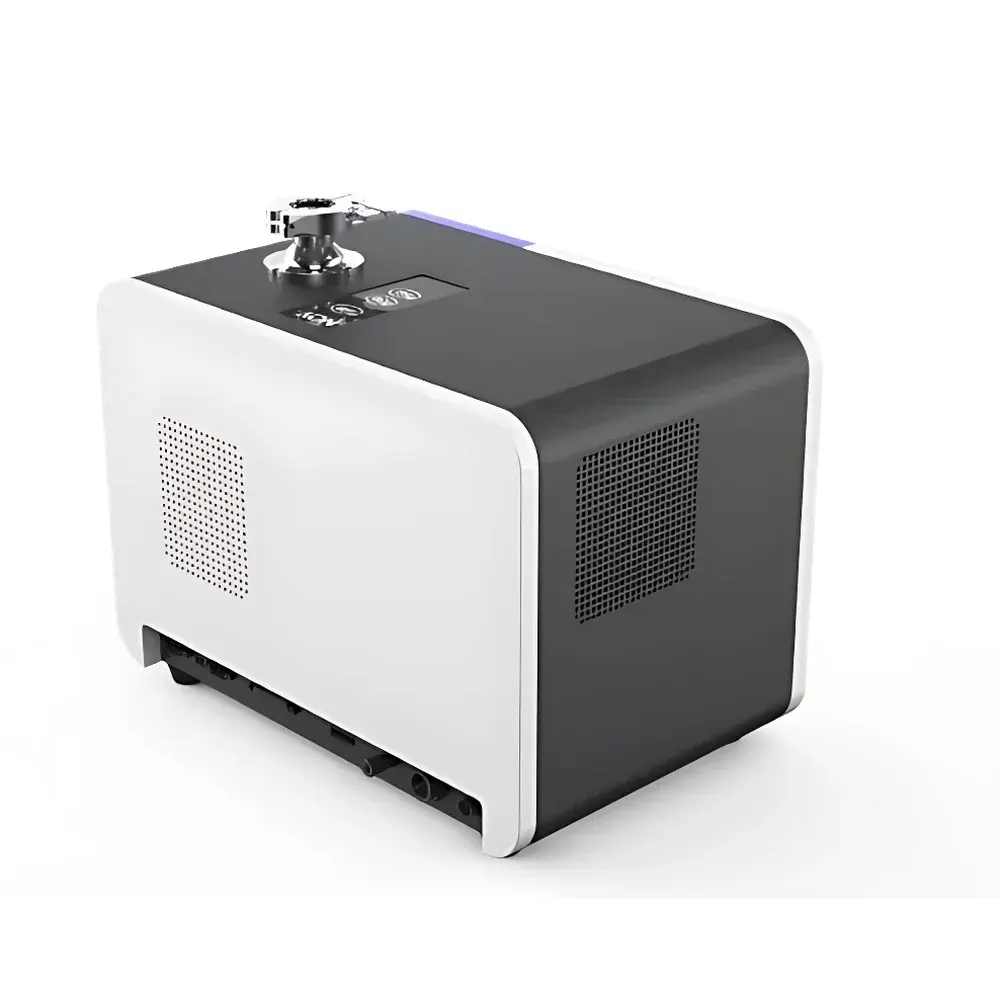
NOY NHJ400M Helium Mass Spectrometer Leak Detector
| Brand | NOY |
|---|---|
| Origin | Anhui, China |
| Manufacturer Type | Direct Manufacturer |
| Instrument Type | Benchtop |
| Detection Method | Vacuum Mode (also supports Sniffer Mode) |
| Minimum Detectable Leak Rate | 3×10⁻¹³ Pa·m³/s |
| Startup Time | ≤100 s |
| Response Time | ≤0.5 s |
| Maximum Inlet Pressure (for Vacuum Mode) | ≤2000 Pa |
| Leak Rate Display Range | 1×10⁻² to 1×10⁻¹³ Pa·m³/s (Vacuum Mode) |
| Dimensions | 420 × 275 × 359 mm |
| Weight | 26 kg |
| Ion Source | Dual Iridium Filament |
| Mass Analyzer | 180° Non-Uniform Magnetic Sector (U-Shaped Magnet) |
Overview
The NOY NHJ400M Helium Mass Spectrometer Leak Detector is a benchtop residual gas analyzer engineered for high-sensitivity quantitative leak detection in vacuum-integrated environments. It operates on the principle of magnetic sector mass spectrometry, utilizing helium (⁴He⁺) as a tracer gas and detecting its characteristic mass-to-charge ratio (m/z = 4) with high selectivity and signal stability. The instrument employs a 180° non-uniform magnetic field U-shaped magnet mass analyzer, which provides superior ion trajectory control and resistance to external magnetic interference—critical for maintaining measurement repeatability in industrial or shared-lab settings. Its dual iridium filament ion source ensures extended operational lifetime and consistent electron emission under varying vacuum conditions, minimizing downtime associated with filament replacement. Designed for integration into both standalone test benches and automated production lines, the NHJ400M delivers trace-level sensitivity without compromising mechanical robustness or system compatibility.
Key Features
- Benchtop form factor (420 × 275 × 359 mm; 26 kg) enables rapid deployment in QC labs, R&D cleanrooms, and inline manufacturing cells.
- Dual-mode operation: vacuum mode (for sealed component testing) and sniffer mode (for localized leak scanning), each with dedicated calibration and dynamic range optimization.
- Ultra-low minimum detectable leak rate of 3×10⁻¹³ Pa·m³/s in vacuum mode—meeting stringent requirements for aerospace components, semiconductor process chambers, and ultra-high vacuum (UHV) systems.
- Rapid system readiness: full operational status achieved within ≤100 seconds after power-on; real-time response latency ≤0.5 s ensures timely feedback during dynamic leak surveys.
- Robust inlet pressure tolerance up to 2000 Pa in vacuum mode, accommodating rough-pump transitions and mitigating risk of analyzer contamination during initial pump-down phases.
- Modular architecture supports customizable vacuum interface configurations—including CF, KF, and ISO flange options—and seamless integration with turbomolecular pumps, backing pumps, and pneumatic valving systems.
Sample Compatibility & Compliance
The NHJ400M is compatible with metallic, ceramic, and glass-based hermetic enclosures commonly used in vacuum electronics, medical devices (e.g., implantable pacemaker housings), cryogenic equipment, and analytical instrumentation. It conforms to fundamental principles outlined in ASTM E493 (Standard Practice for Leak Detection Using the Mass Spectrometer Leak Detector), ISO 9974 (Leak detection — Vocabulary), and ISO 10648-2 (Determination of leakage rates using tracer gases). While not pre-certified for FDA 21 CFR Part 11, its analog output, RS-232/RS-485 communication ports, and optional Ethernet interface support integration into validated GMP/GLP environments where audit-trail-capable SCADA or MES platforms manage data acquisition and user access logs.
Software & Data Management
The instrument includes embedded firmware with intuitive menu navigation and real-time leak rate visualization via integrated OLED display. Optional PC-based control software (Windows-compatible) provides time-stamped logging, multi-curve overlay, pass/fail threshold configuration, and CSV export for statistical process control (SPC) analysis. All measurement events—including startup sequence, calibration cycles, and alarm triggers—are timestamped and stored locally in non-volatile memory. Data integrity safeguards include write-protected firmware partitions and configurable password levels for operator, engineer, and administrator roles—facilitating alignment with internal quality management system (QMS) requirements.
Applications
- Quality assurance of vacuum-sealed components: MEMS sensors, vacuum interrupters, X-ray tubes, and laser cavities.
- In-process verification of weld integrity in stainless-steel vacuum chambers and heat exchangers.
- Final acceptance testing of medical devices subject to ISO 11607 (Packaging for terminally sterilized medical devices).
- Leak mapping of cryostats and superconducting magnet assemblies prior to cooldown.
- Research applications requiring quantitative helium permeation studies in thin-film barrier layers or polymer composites.
- Support for failure analysis labs performing root-cause investigation of vacuum degradation in legacy equipment.
FAQ
What vacuum level is required before initiating a vacuum-mode leak test?
A base pressure ≤1×10⁻² Pa is recommended prior to helium introduction; the instrument’s built-in pressure sensor monitors inlet conditions and inhibits measurement if above 2000 Pa.
Can the NHJ400M be calibrated using certified helium standards?
Yes—it accepts NIST-traceable helium standard leaks (e.g., 1×10⁻⁸ to 1×10⁻¹¹ Pa·m³/s) for full-scale and linearity verification per ISO/IEC 17025 guidelines.
Is remote monitoring supported?
Standard serial interfaces (RS-232/RS-485) enable integration with PLCs or central SCADA systems; optional Ethernet module adds Modbus TCP and HTTP API support.
How often does the ion source require maintenance?
Under typical usage (≤8 hrs/day, clean helium environment), dual iridium filaments maintain stable emission for ≥12 months before scheduled replacement.
Does the unit meet electromagnetic compatibility (EMC) requirements for industrial environments?
It complies with CISPR 11 Group 2 Class B emission limits and IEC 61326-1 immunity specifications for laboratory and light-industrial use.




