
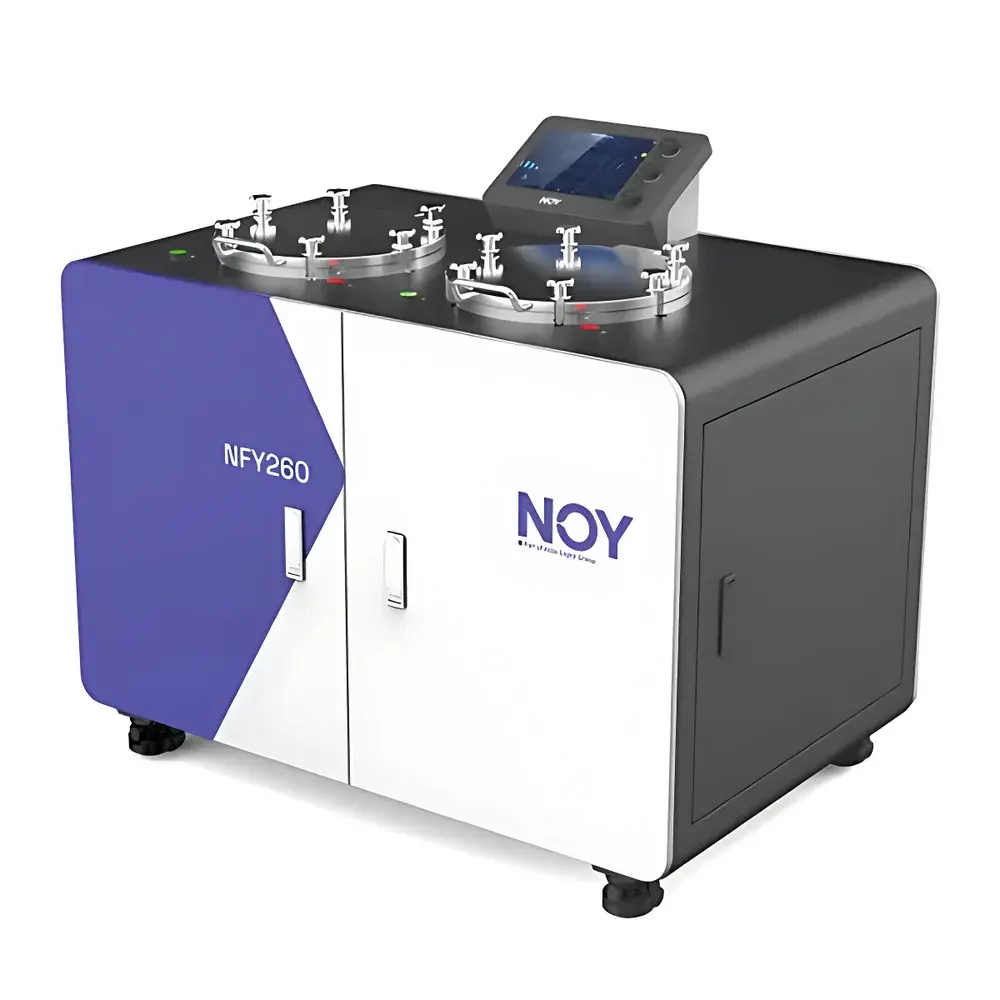
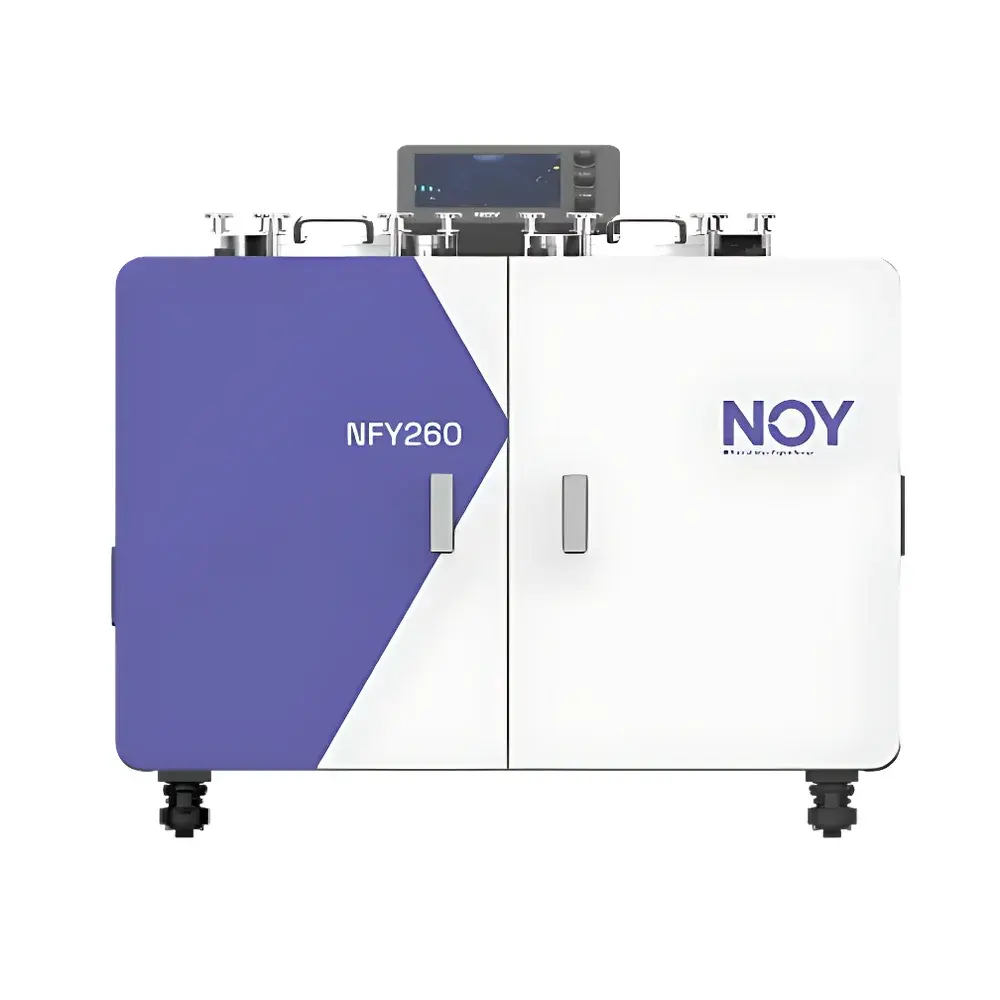
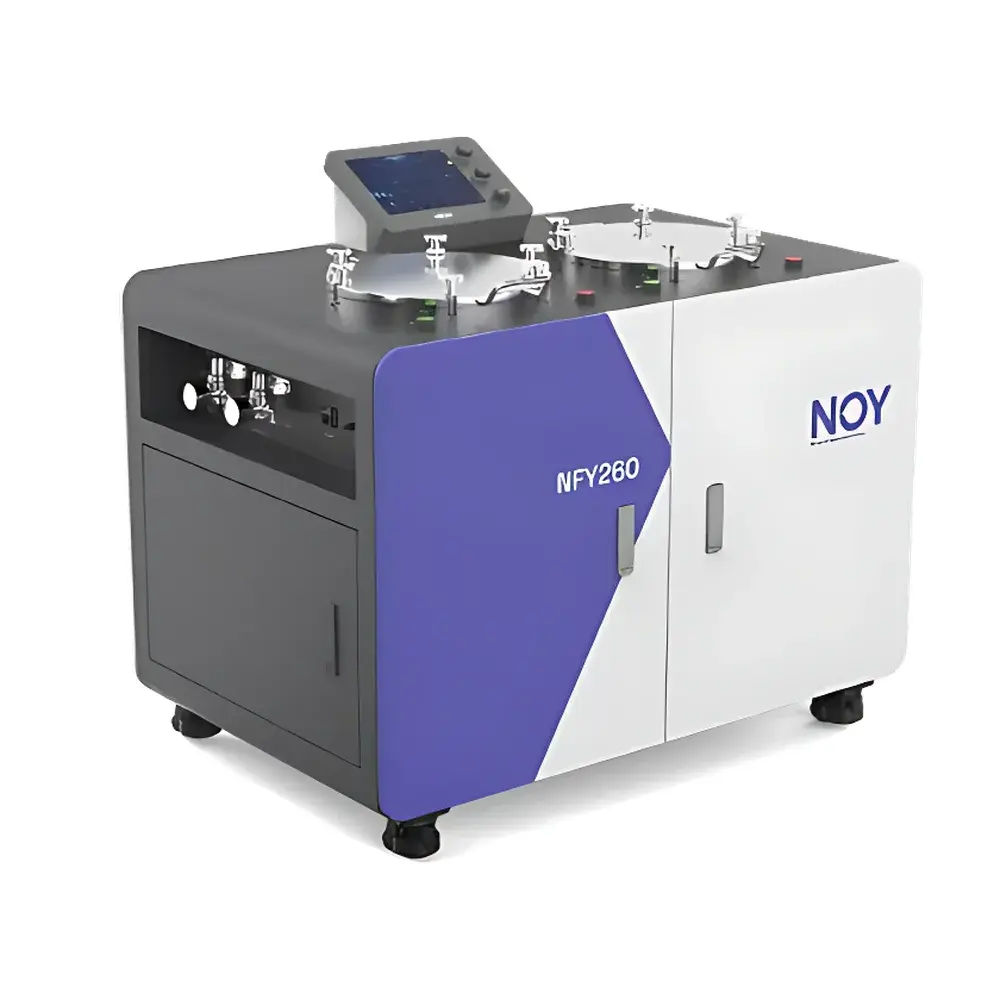
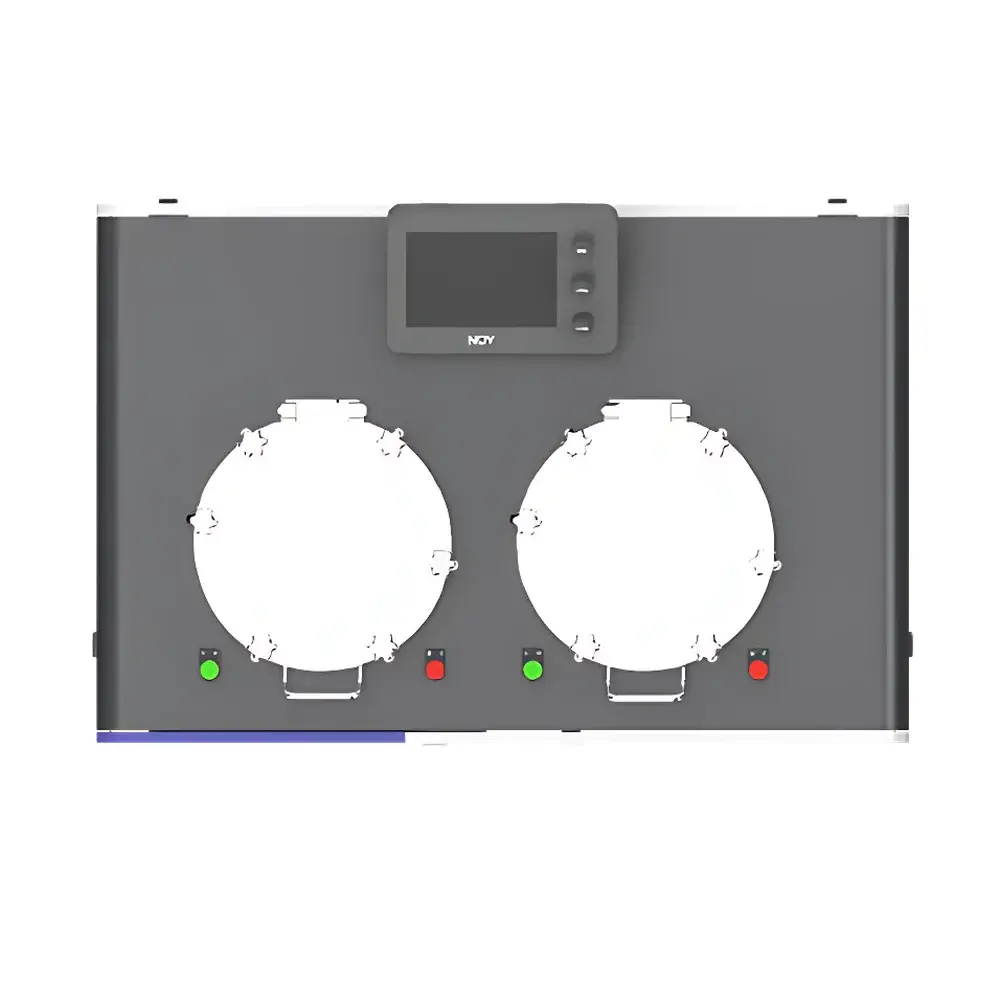
NOY NFY260 Helium Mass Spectrometer Leak Detector
| Brand | NOY |
|---|---|
| Origin | Anhui, China |
| Manufacturer Type | Direct Manufacturer |
| Instrument Type | Benchtop |
| Detection Method | Vacuum Mode |
| Minimum Detectable Leak Rate | 3×10⁻¹³ Pa·m³/s |
| Pump-down & Startup Time | ≤90 s |
| Response Time | ≤0.5 s |
| Maximum Inlet Pressure at Test Port | ≤2000 Pa |
Overview
The NOY NFY260 Helium Mass Spectrometer Leak Detector is a benchtop vacuum-mode residual gas analyzer engineered for high-sensitivity, quantitative leak detection in sealed components and vacuum systems. It operates on the principle of magnetic sector mass spectrometry, selectively ionizing helium atoms (mass-to-charge ratio m/z = 4) introduced into the detector’s high-vacuum measurement chamber. The instrument employs a quadrupole or magnetic sector mass filter—configured per ISO 20484:2017 (Leak testing — Vocabulary and definitions) and aligned with ASTM E499/E1574 standards for helium leak test methodology—to isolate helium ions from background gases (e.g., H₂, N₂, O₂, H₂O), enabling unambiguous identification and quantification of minute helium ingress. Designed for integration into QC laboratories, semiconductor packaging lines, and hermeticity validation workflows, the NFY260 delivers trace-level sensitivity without requiring ultra-high vacuum (UHV) pumping infrastructure, making it suitable for routine production-floor deployment under controlled ambient conditions.
Key Features
- High-sensitivity detection limit of 3×10⁻¹³ Pa·m³/s—validated per ISO 9927-1:2021 (Leak detection — Mass spectrometer leak detectors — Part 1: General requirements)
- Integrated electromechanical valve manifold with programmable sequencing, enabling fully automated vacuum cycling, helium introduction, and purge phases
- Capacitive pressure and level monitoring system for real-time tracking of helium supply cylinder pressure and fluorinated oil reservoir level via embedded touchscreen HMI
- Benchtop form factor (W×D×H ≈ 520 × 480 × 320 mm) with casters and reinforced chassis for lab mobility and vibration-damped operation
- Rapid system readiness: ≤90 s from atmospheric startup to operational vacuum baseline; ≤0.5 s signal response time post-helium pulse injection
- Test port rated for continuous operation up to 2000 Pa inlet pressure—compatible with both roughing-pump-backed and turbomolecular-pumped test configurations
Sample Compatibility & Compliance
The NFY260 supports leak testing of hermetically sealed devices across electronics, medical device, aerospace, and power electronics sectors—including MEMS sensors, lithium-ion battery casings, RF modules, implantable pacemaker housings, and vacuum-insulated panels. Its vacuum-mode architecture eliminates false positives from outgassing artifacts common in sniffer-mode instruments. All internal wetted surfaces are passivated stainless steel or electropolished 316L, ensuring compatibility with fluorinated oils (e.g., FC-40, FC-72) used as secondary tracer media in immersion-based leak verification per MIL-STD-883 Method 1014. The system conforms to electromagnetic compatibility (EMC) requirements per IEC 61326-1 and meets safety standards under IEC 61010-1 for laboratory electrical equipment. Audit-ready operation logs—including timestamped pressure curves, helium spike amplitudes, and valve actuation sequences—are retained onboard for GLP/GMP-compliant record retention.
Software & Data Management
The integrated 7-inch resistive touchscreen runs a real-time Linux-based firmware with intuitive icon-driven workflow navigation. Calibration data, user-defined test protocols (e.g., step-pressure hold, dynamic ramp, multi-point helium dosing), and historical leak rate trends are stored locally in encrypted SQLite databases. Export options include CSV-formatted reports with ISO/IEC 17025-aligned metadata (operator ID, calibration certificate number, environmental temperature/humidity stamps). Optional Ethernet or RS-485 interface enables remote command execution (SCPI-compatible) and integration into MES or LIMS platforms. All audit trails comply with FDA 21 CFR Part 11 requirements for electronic records and signatures when configured with role-based access control and digital signature authentication.
Applications
- Hermeticity validation of microelectronic packages (QFN, BGA, ceramic DIP) per J-STD-020 and MIL-STD-883 Method 1014
- Leak integrity assessment of implantable medical devices (e.g., neurostimulators, insulin pumps) under ISO 11607-2
- Quality gate screening for vacuum-jacketed cryogenic vessels and superconducting magnet enclosures
- In-process verification of laser-welded battery cell seams in EV manufacturing lines
- Failure analysis root-cause determination via localized helium spray mapping combined with vacuum chamber backpressure testing
FAQ
What vacuum pumping configuration is required to operate the NFY260?
The instrument includes an integrated dual-stage rotary vane backing pump and requires connection to a turbomolecular pump (≥200 L/s) for achieving the base pressure necessary for optimal helium ion transmission. A typical system achieves ≤1×10⁻⁵ Pa in the analyzer chamber.
Can the NFY260 detect leaks using gases other than helium?
No—the mass filter is optimized exclusively for helium (m/z = 4). While hydrogen (m/z = 2) may produce a detectable signal, its use is not supported due to interference risks, safety concerns, and noncompliance with ISO 20484 helium-specific test definitions.
Is fluorinated oil compatibility validated per industry standards?
Yes—fluorinated oils such as 3M™ Fluorinert™ FC-40 and FC-72 have been verified for use in immersion testing per ASTM F2391 (Standard Test Method for Determining Helium Leak Rates Using a Mass Spectrometer Leak Detector and a Fluorocarbon Tracer Liquid).
Does the system support automated calibration verification?
Yes—built-in reference leak ports accept certified stainless-steel capillary leaks (e.g., 1×10⁻⁹ Pa·m³/s) for daily performance checks traceable to NIST SRM 2136.
What is the recommended maintenance interval for the mass spectrometer filament?
Under normal operation (≤8 h/day, clean helium supply), the yttria-coated iridium filament has a service life exceeding 18 months; replacement is performed via front-access panel without vacuum break.




