
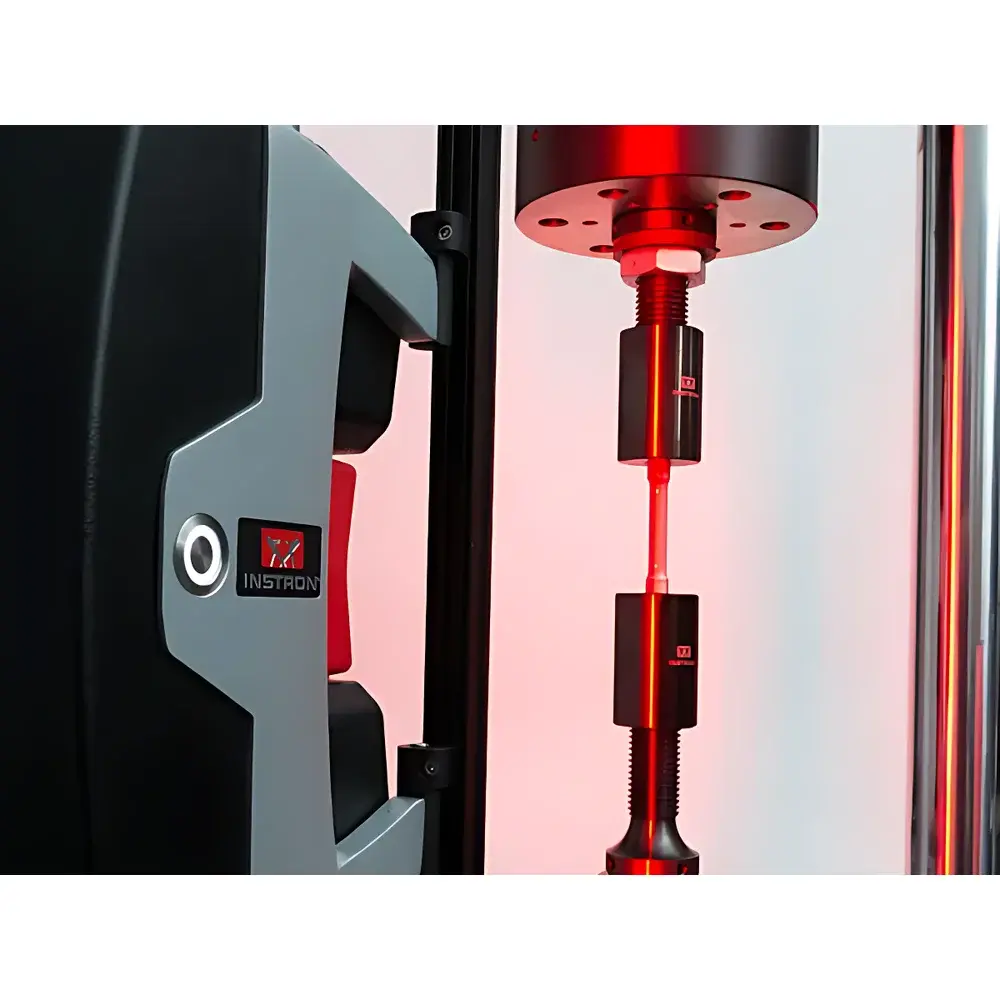
Instron AVE2 Advanced Video Extensometer
| Brand | Instron |
|---|---|
| Origin | USA |
| Manufacturer | Instron Corporation |
| Model | AVE2 |
| Input Interface | ±10 V analog compatible |
| Sampling Rate | 490 Hz |
| Compliance | ISO 527, ASTM D638, ASTM D3039 |
| Environmental Operation | Ambient, elevated/low temperature chambers, liquid baths |
| Output Compatibility | DIC-ready image sequences (AVI, TIFF stack) |
| Mounting | Universal optical rail + adjustable tripod base |
| Software Integration | Bluehill® 3 (native), third-party DIC platforms (e.g., VIC-2D, GOM Correlate) |
Overview
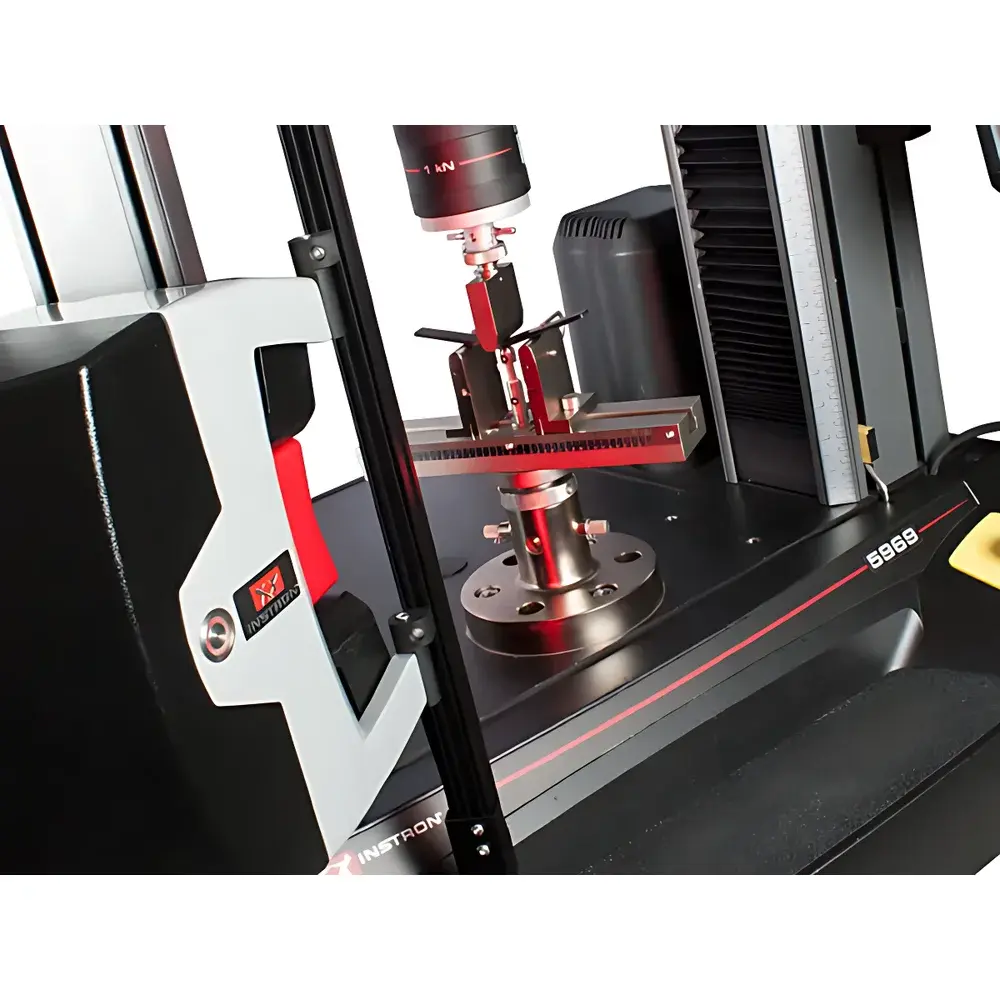
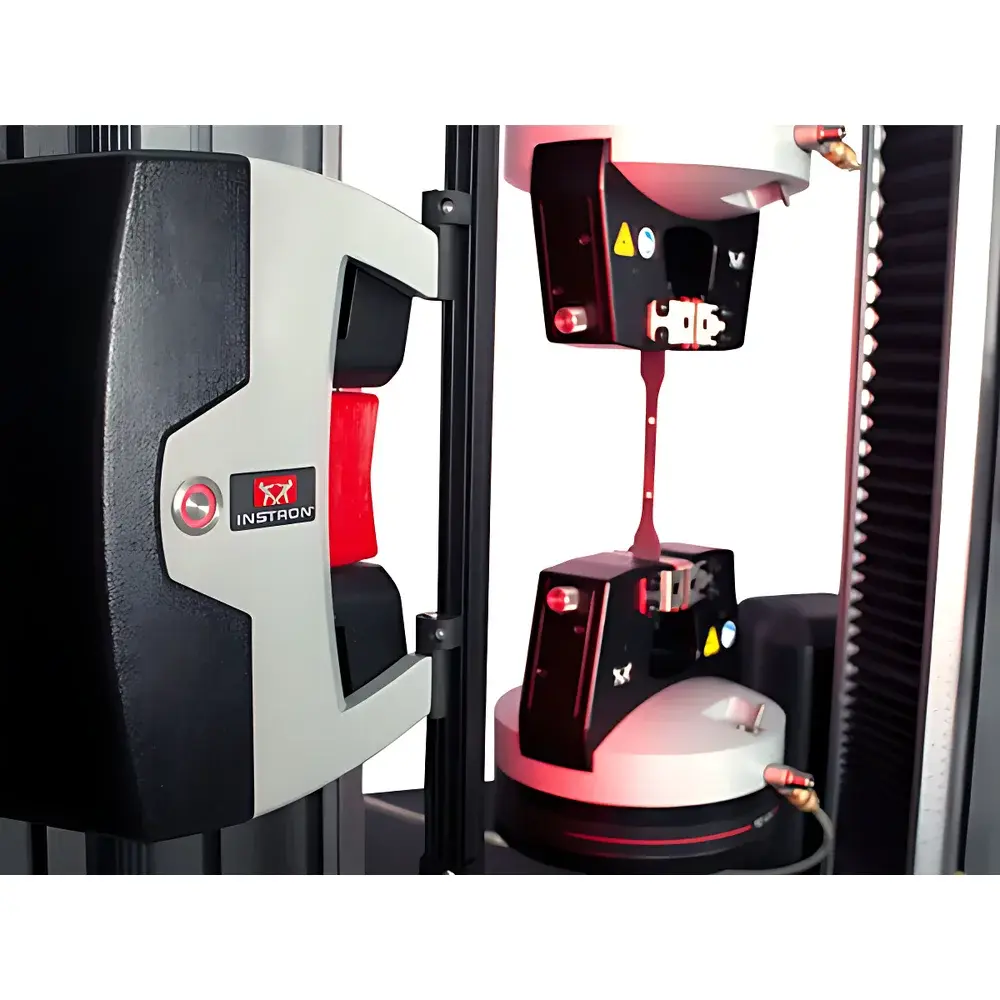
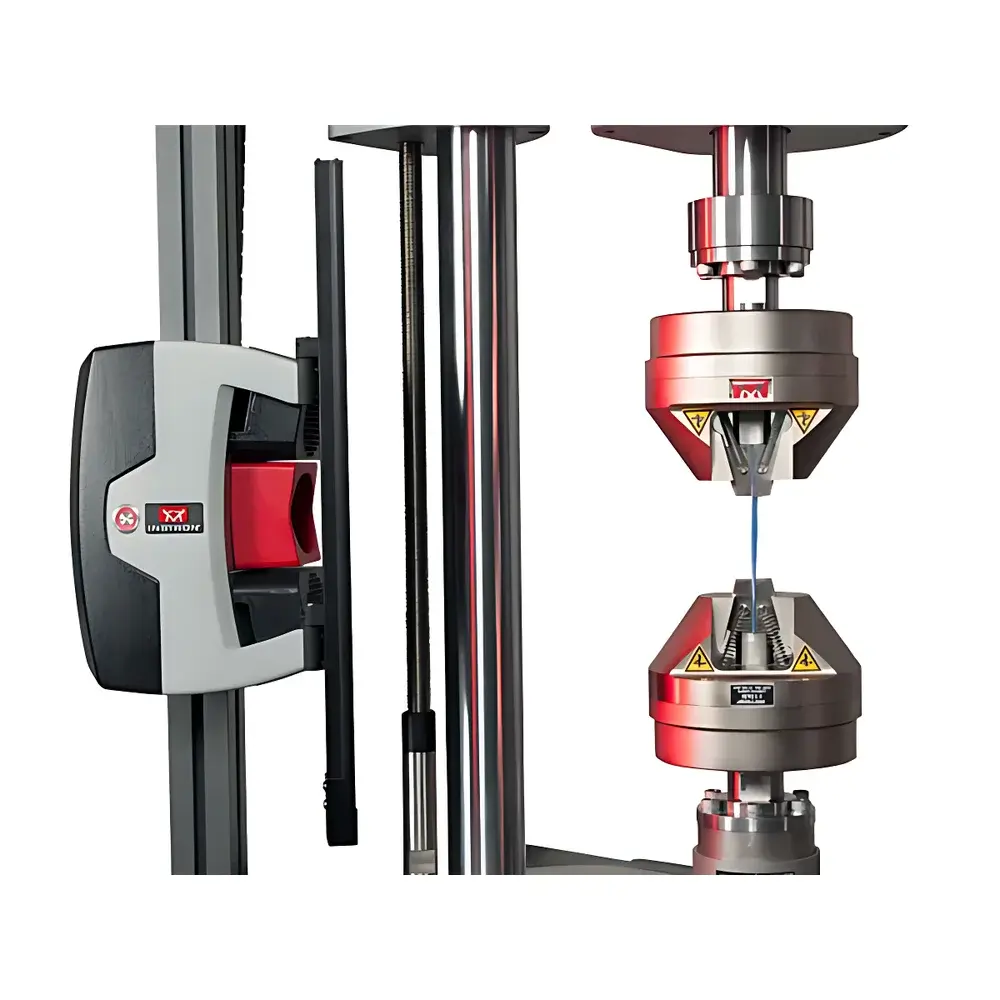
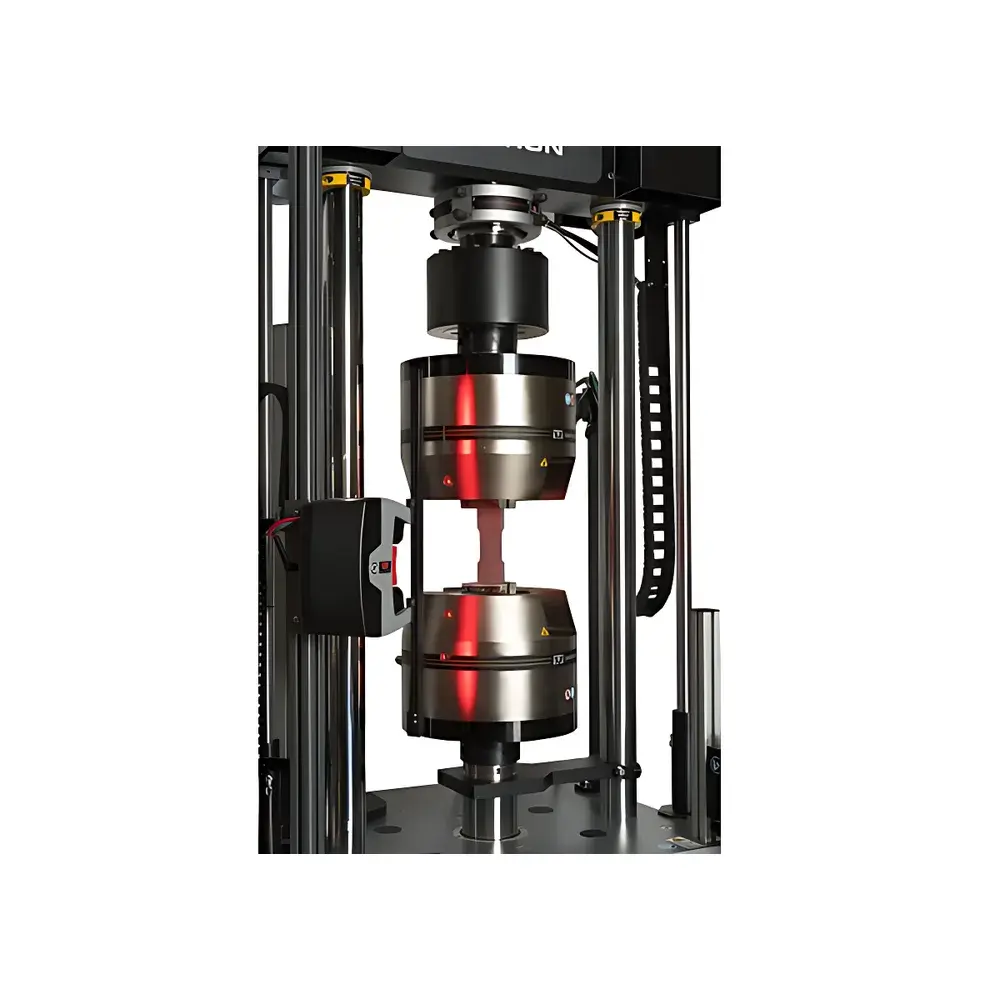
The Instron AVE2 Advanced Video Extensometer is a second-generation, non-contact optical strain measurement system engineered for high-fidelity, real-time axial deformation tracking during uniaxial mechanical testing. Based on high-speed digital imaging and sub-pixel edge-detection algorithms, the AVE2 operates on the principle of contrast-based feature tracking—capturing and analyzing changes in specimen geometry without physical contact or surface preparation. Unlike traditional clip-on or laser-based extensometers, the AVE2 eliminates mechanical compliance, thermal drift, and operator-induced loading errors. Its 490 Hz frame rate enables reliable capture of transient strain events—including yield onset, necking propagation, and post-yield softening—in polymers, metals, composites, elastomers, thin films, textiles, paper, biomedical specimens, and structural components. Designed for integration into both modern and legacy test systems, the AVE2 delivers metrologically traceable strain data compliant with ISO 527-2, ASTM D638, ASTM D3039, and other internationally recognized tensile and flexural standards.
Key Features
- Non-contact optical measurement: Eliminates mechanical interference, specimen damage, and calibration dependency associated with contacting devices.
- 490 Hz real-time sampling: Captures rapid deformation dynamics with temporal resolution sufficient for dynamic modulus estimation and strain-rate-sensitive material characterization.
- Universal analog output: Delivers calibrated strain signals via standard ±10 V analog interface—compatible with any testing system equipped with analog input channels, regardless of manufacturer or age.
- Environmental versatility: Fully operational in ambient laboratories, environmental chambers (–70 °C to +300 °C), and liquid immersion baths (including water, oil, and saline solutions).
- Multi-gauge-length adaptability: Supports user-defined gauge lengths from 10 mm to 250 mm without hardware modification—enabled by software-defined region-of-interest (ROI) selection.
- Integrated lighting control: Patented adaptive illumination compensation reduces sensitivity to ambient light fluctuations and thermal radiation from nearby equipment.
- DIC-ready imaging: Records synchronized, timestamped video sequences (AVI or multi-frame TIFF) for post-test Digital Image Correlation analysis using third-party software (e.g., VIC-2D, GOM Correlate, or LaVision DaVis).
Sample Compatibility & Compliance
The AVE2 accommodates a broad spectrum of specimen geometries and surface characteristics—including low-contrast polymers, specular metals, translucent films, fibrous textiles, and hydrated biological tissues—without requiring speckle patterning or surface treatment in most cases. When enhanced contrast is required, optional marker strategies (solid lines, dashed lines, discrete dots, or physical reference targets) can be applied per application need. The system meets the repeatability and accuracy requirements specified in ISO 527-2 (plastics), ASTM D638 (tensile properties of plastics), and ASTM D3039 (tensile properties of polymer matrix composites). Its measurement uncertainty profile has been validated under GLP-aligned conditions and supports audit-ready documentation for regulated environments subject to FDA 21 CFR Part 11 or ISO/IEC 17025 requirements.
Software & Data Management
Native integration with Instron’s BlueHill® 3 software provides seamless configuration, real-time visualization, and automatic synchronization with load/displacement channels. Strain data is embedded directly into test reports with full metadata (camera settings, ROI coordinates, lighting mode, calibration timestamp). For advanced users, raw image sequences are exported with embedded timecode and machine-sync pulses, enabling traceable DIC workflows. All calibration parameters—including lens distortion correction, pixel-to-mm mapping, and thermal drift compensation coefficients—are stored in encrypted, version-controlled configuration files. Audit trails record operator actions, parameter changes, and calibration events—supporting compliance with ISO 17025 Clause 7.7 and FDA 21 CFR Part 11 electronic record integrity requirements.
Applications
- Tensile, compression, and flexural testing of thermoplastics, thermosets, elastomers, and biopolymers across temperature extremes.
- Mechanical characterization of fiber-reinforced composites under quasi-static and high-strain-rate loading.
- Strain mapping of miniature components (e.g., medical device stents, microelectronics substrates) where contact extensometry is impractical.
- Long-term creep and stress-relaxation studies in controlled humidity or corrosive media environments.
- Validation of finite element models using full-field strain data derived from DIC post-processing.
- Teaching and research applications requiring intuitive, repeatable strain measurement without specimen modification.
FAQ
Can the AVE2 be used with non-Instron test frames?
Yes—the AVE2 outputs standardized ±10 V analog signals and requires only a compatible analog input channel; it operates independently of controller firmware or proprietary communication protocols.
Does the AVE2 require speckle patterning on specimens?
Not universally—many materials (e.g., textured plastics, anodized aluminum, woven fabrics) provide sufficient natural contrast. Speckle application is optional and recommended only for highly reflective or optically homogeneous surfaces.
Is calibration traceable to national standards?
Yes—Instron provides NIST-traceable calibration certificates upon request, including uncertainty budgets per ISO/IEC 17025 guidelines.
Can I export raw images for third-party DIC analysis?
Yes—synchronized, uncompressed TIFF stacks or AVI files with embedded timing metadata are supported for direct import into VIC-2D, GOM Correlate, or open-source tools like PyDIC.
What is the minimum recommended working distance?
The standard 12 mm focal length lens supports working distances from 250 mm to 1000 mm, adjustable via manual focus ring and calibrated depth-of-field markers.
Related Products



