
Instron DIC Replay 2D Digital Image Correlation Software
| Brand | Instron |
|---|---|
| Origin | USA |
| Manufacturer | Instron Corporation |
| Product Type | Imported |
| Model | DIC Replay |
| Pricing | Upon Request |
Overview
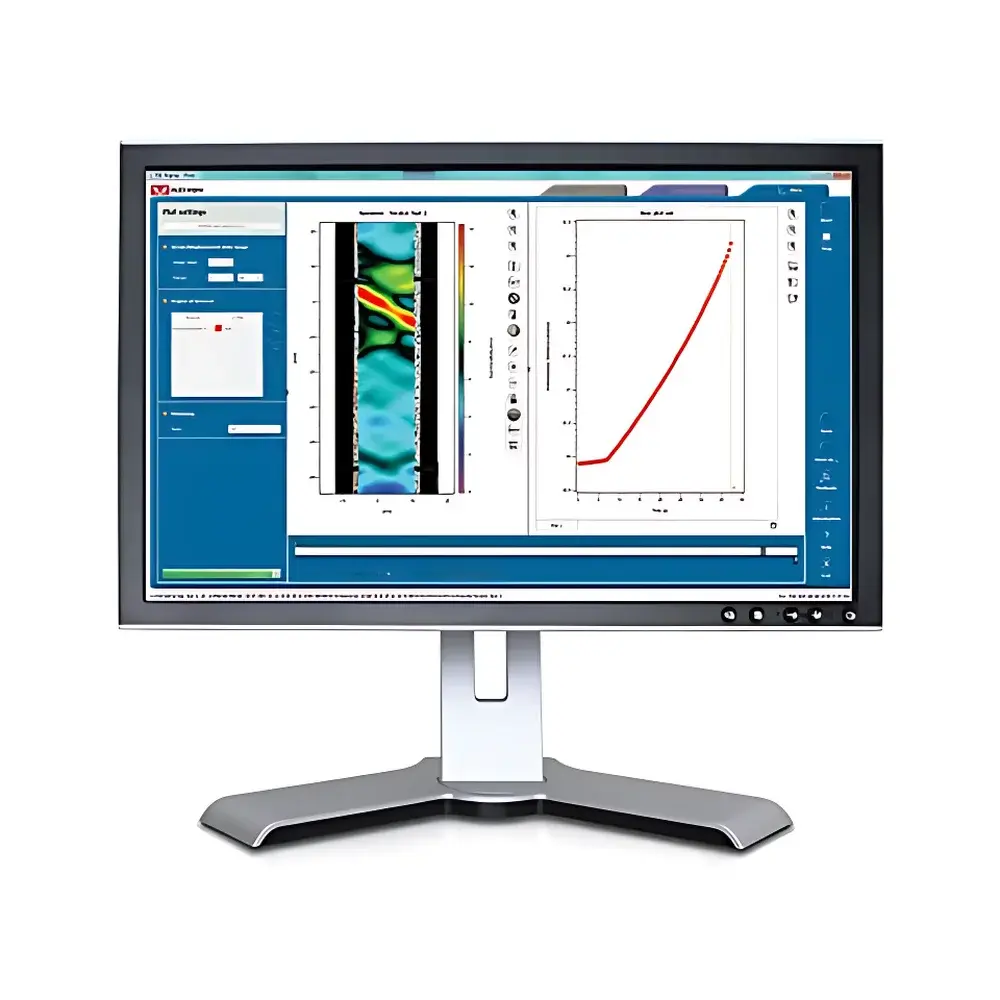
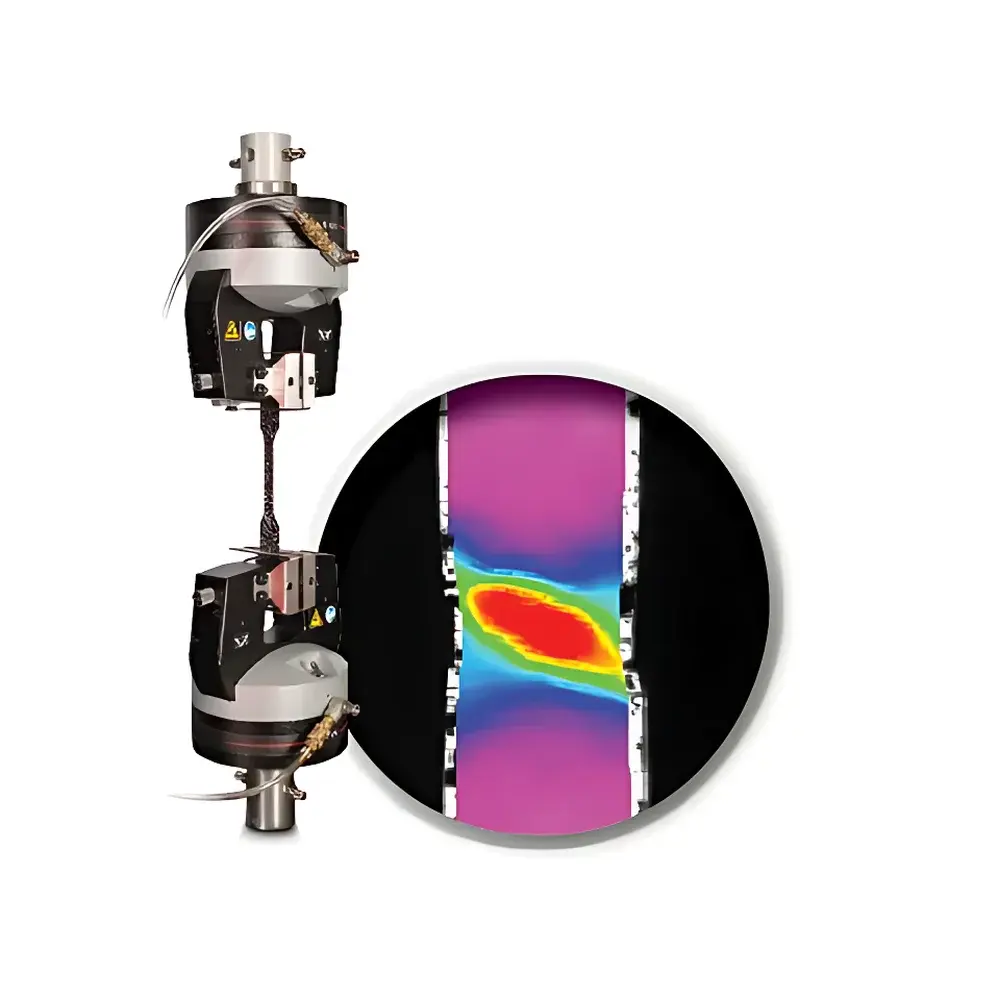
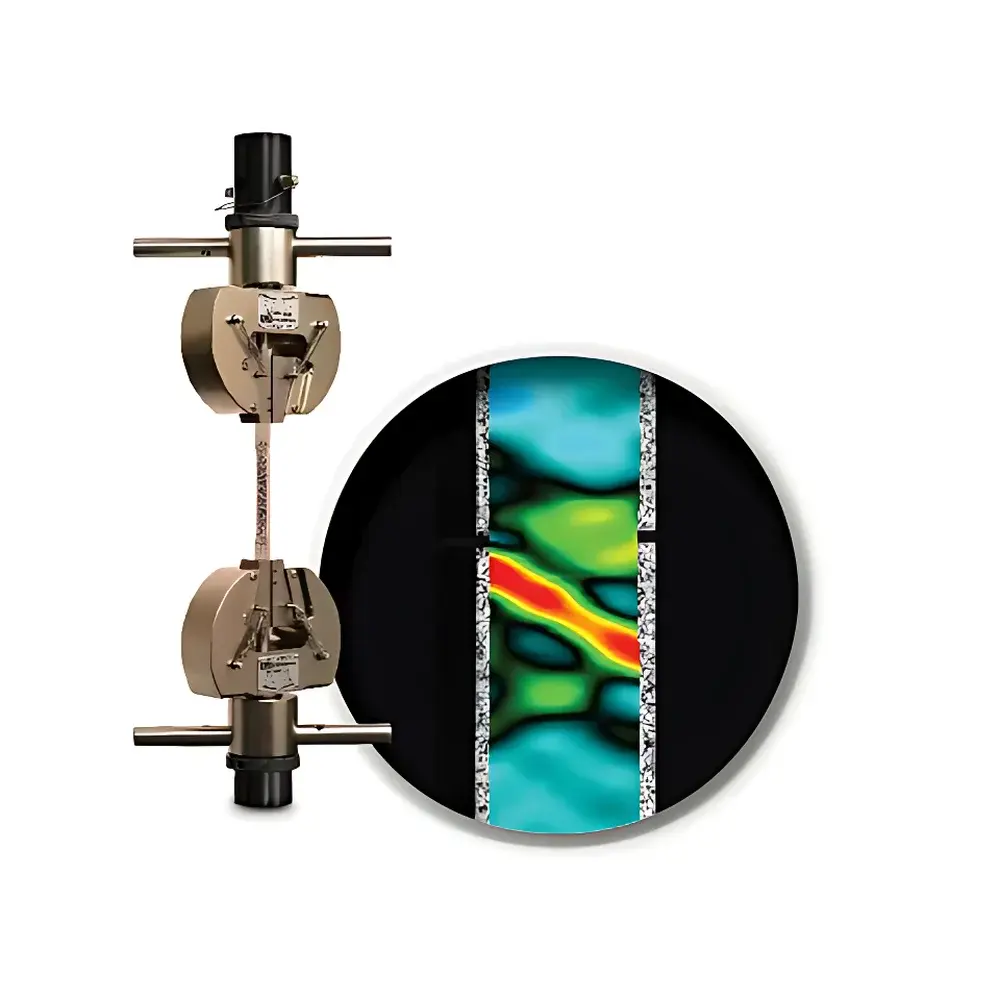
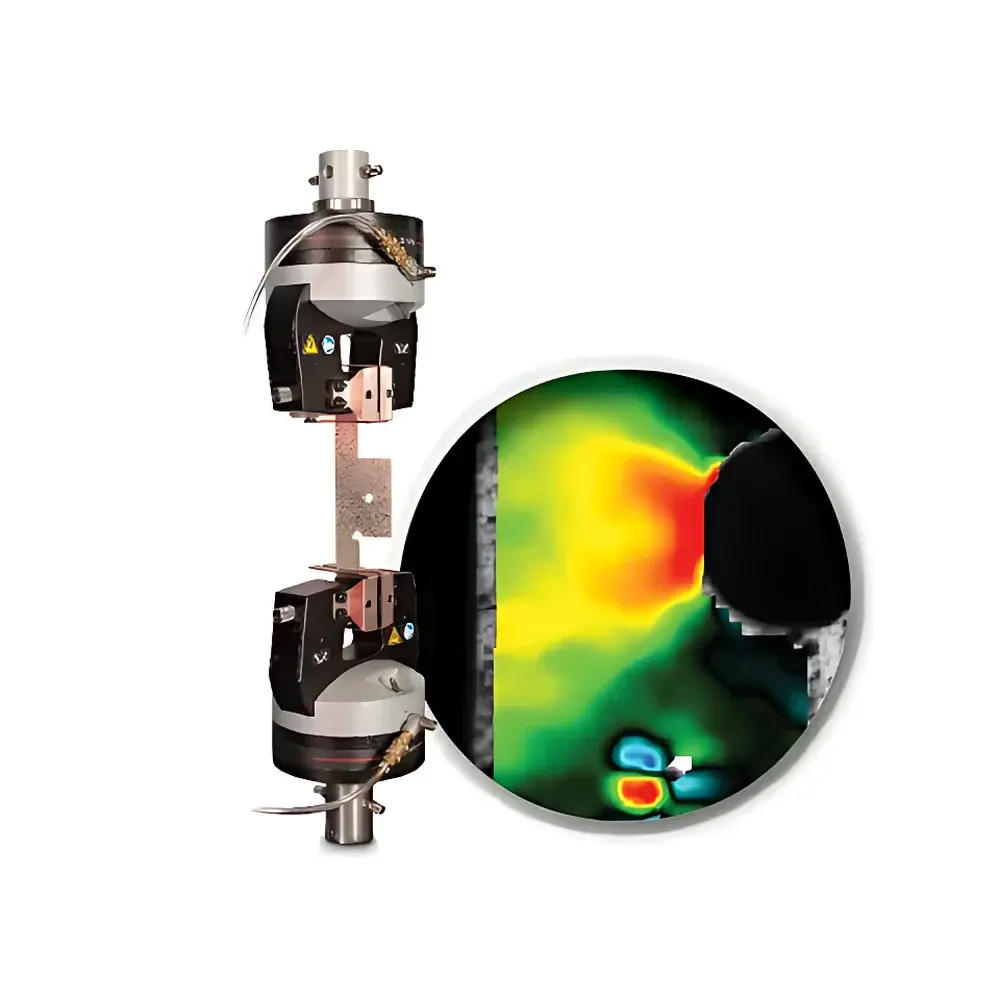
Instron® DIC Replay is a standalone, post-processing 2D Digital Image Correlation (DIC) software designed specifically for materials testing laboratories. It implements the optical, non-contact measurement principle of DIC—tracking surface texture displacement between successive digital images to compute full-field two-dimensional displacement and strain maps with sub-pixel resolution. Unlike real-time DIC systems requiring complex synchronization infrastructure, DIC Replay operates offline on pre-recorded image sequences captured by Instron’s Advanced Video Extensometer (AVE) or compatible high-speed cameras. The software reconstructs deformation history across the entire specimen surface—including axial strain (εyy), transverse strain (εxx), shear strain (γxy), principal strains (ε1, ε2), and corresponding displacement components (u, v)—enabling quantitative validation of localized deformation behavior beyond conventional extensometer gauge lengths. Its architecture is engineered for precision, repeatability, and traceability in mechanical testing environments governed by ASTM E8/E8M, ASTM D3039, ISO 10113, and ISO 10275.
Key Features
- Intuitive, tab-based UI: Mirrors the familiar interface paradigm of Bluehill® 3 software—organized into three logical workspaces: Sort (for managing image sequences and calibration files), Analyze (for defining regions of interest and applying virtual sensors), and Plot (for generating comparative strain/displacement curves).
- Full-field visualization controls: Adjustable colormaps, auto- or user-defined scaling, grid overlays for spatial reference, toggleable original image background, and real-time contour rendering with interpolation smoothing.
- Virtual sensor toolkit: Drag-and-drop placement of virtual extensometers (two-point average strain) and virtual strain gauges (user-defined rectangular or circular ROI); supports resizing, repositioning, and temporal tracking across the entire test sequence.
- No hardware synchronization required: Native integration with Bluehill 3 enables direct overlay of DIC-derived strain data onto synchronized load, displacement, and time traces—without external DAQ interfaces or physical cabling.
- Portable licensing: USB hardware dongle enables offline operation on any Windows PC; no network dependency or server installation—ideal for remote analysis, report generation, or cross-lab collaboration.
- Reproducible workflows: Save and reload complete processing configurations—including ROI definitions, colormap settings, virtual sensor placements, and plot templates—for consistent application across multiple specimens or test series.
Sample Compatibility & Compliance
DIC Replay processes calibrated image sets acquired from Instron AVE systems (e.g., AVE2, AVE3) and supports standard TIFF, BMP, and JPEG formats with 8- or 16-bit depth. It accommodates specimens with natural or applied speckle patterns meeting ISO/IEC 17025-compliant surface preparation guidelines. Strain map resolution is dependent on camera pixel density, lens magnification, and subset size—but typical practical accuracy achieves ±0.005 mm/mm (50 µε) under optimal imaging conditions per ASTM E1338. All processed results include embedded metadata (timestamp, camera parameters, calibration ID) to support GLP/GMP audit trails. Exported data conforms to CSV and Excel-compatible formats for third-party statistical analysis or FEA model correlation.
Software & Data Management
The software employs a project-centric file structure (.dicr) encapsulating raw images, calibration data, processing history, and plot configurations in a single archive. All user actions—including ROI creation, virtual sensor placement, and colormap adjustments—are logged in an internal activity journal accessible via the “History” panel. While DIC Replay does not implement FDA 21 CFR Part 11 electronic signature functionality natively, its deterministic algorithms, version-stamped outputs, and exportable audit logs align with laboratory quality system requirements for traceable post-test analysis. Data exports support both numeric tables (strain vs. time, displacement vs. load) and publication-ready PNG/SVG graphics with customizable DPI, font scaling, and legend positioning.
Applications
- Validation of local strain concentration in tensile, compression, and flexural tests—particularly for heterogeneous materials (composites, foams, biomaterials).
- Verification of specimen alignment and grip-induced bending prior to failure analysis.
- Quantitative assessment of necking onset, crack initiation zones, and plastic strain localization in sheet metal forming simulations.
- Correlation of experimental DIC fields with finite element model predictions (e.g., Abaqus, ANSYS) using nodal displacement/strain mapping tools.
- Educational use in mechanics of materials labs to visualize strain heterogeneity inaccessible to contact-based methods.
- Non-destructive evaluation of adhesive bond integrity and interfacial delamination progression.
FAQ
Does DIC Replay require real-time camera acquisition hardware?
No—it is a post-processing tool that works exclusively with pre-recorded image sequences saved by Instron AVE systems or other calibrated imaging setups.
Can DIC Replay import images from non-Instron cameras?
Yes, provided the user supplies a valid calibration file (including focal length, pixel size, and distortion coefficients) and adheres to supported image formats and bit-depth specifications.
Is batch processing supported for multiple specimens?
While fully automated batch execution is not built-in, saved processing templates can be manually applied to new datasets with identical geometry and imaging conditions—reducing setup time significantly.
What level of strain accuracy can be expected?
Under controlled lighting, stable thermal conditions, and appropriate speckle pattern density (per ISO/IEC 17025 guidance), typical strain uncertainty is ≤±0.005 mm/mm for static or quasi-static tests at 1× magnification.
Does DIC Replay support 3D DIC or stereo imaging?
No—DIC Replay is strictly a 2D monocular DIC solution. For stereoscopic 3D-DIC, users must integrate Instron’s DIC 3D software suite or third-party stereo-DIC platforms.
Related Products



