
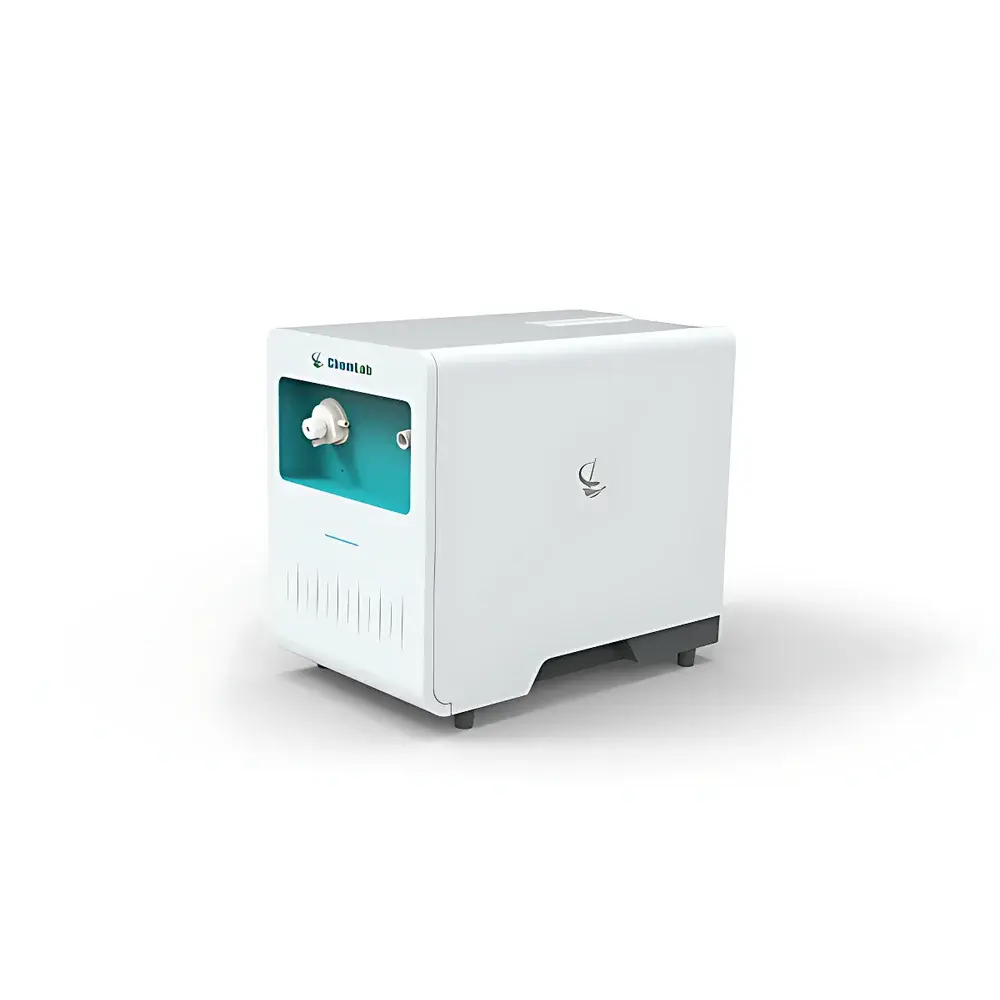
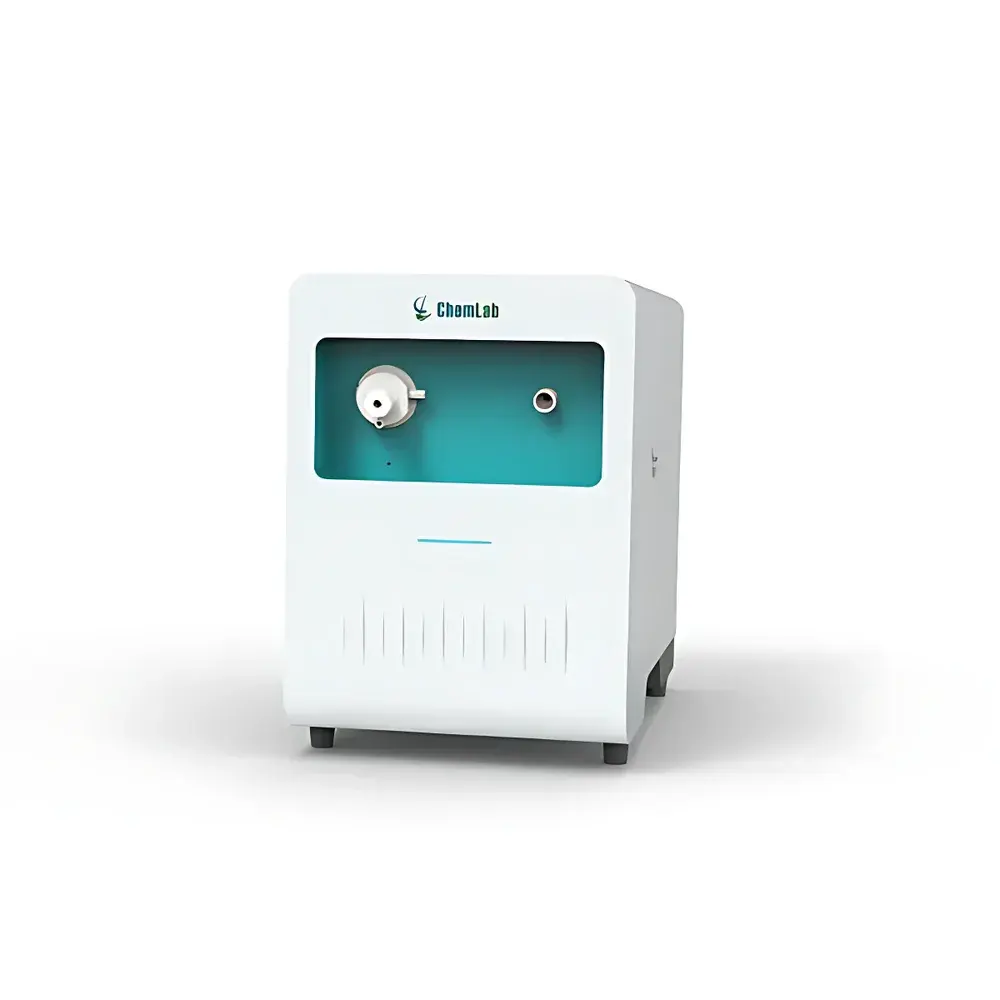
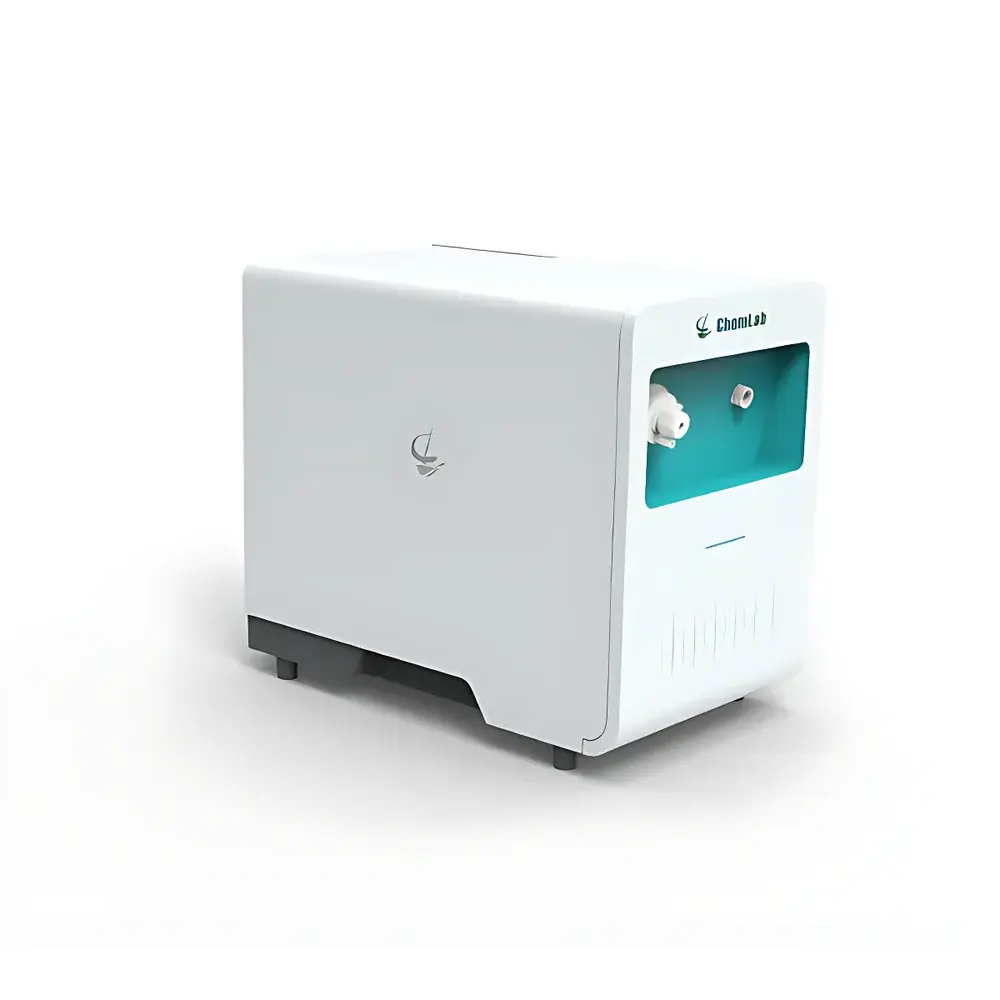
DragonMaster Membrane-Based Wet Desolvation System for ICP-MS
| Brand | Chemlab |
|---|---|
| Origin | Shanghai, China |
| Manufacturer | Chemlab (OEM/ODM) |
| Model | DragonMaster (Membrane-Based Wet Desolvation) |
| Type | ICP-MS Desolvation Accessory |
| Compliance | Designed for ISO/IEC 17025-compliant labs, compatible with GLP/GMP workflows requiring audit-trail-capable operation |
Overview
The DragonMaster Membrane-Based Wet Desolvation System is an engineered solution for inductively coupled plasma mass spectrometry (ICP-MS) laboratories seeking enhanced sensitivity, reduced polyatomic interferences, and improved long-term analytical stability. Unlike conventional desolvation methods relying solely on thermally driven condensation or inert gas dilution, the DragonMaster employs a dual-stage mechanism: selective solvent removal via hydrophobic nanomembrane permeation combined with precisely controlled cryogenic condensation. This architecture enables near-quantitative transfer of analyte-containing aerosol while rejecting >99.8% of solvent vapor—primarily water—thereby minimizing oxide/hydroxide formation (e.g., 40Ar16O+, 40Ar1H+) and stabilizing plasma thermal loading. The system is designed as a drop-in accessory for mainstream ICP-MS platforms, requiring no hardware modification to the interface region and maintaining full compatibility with standard sample introduction components including nebulizers, spray chambers, and torch assemblies.
Key Features
- Patented Drawer-Style Replaceable Desolvation Module: The core membrane assembly is housed in a fully sealed, front-accessible drawer mounted at the rear panel—eliminating the need to open the main chassis or disconnect pneumatic/electrical lines during routine membrane replacement. Installation and alignment are tool-free and repeatable within ±0.1 mm positional tolerance.
- Integrated Electrostatic Shielding: Critical aerosol transport pathways incorporate embedded stainless-steel mesh shielding grounded to the instrument chassis, suppressing electrostatic charge accumulation on aerosol particles and tubing surfaces. This reduces signal drift and improves reproducibility—validated at RSD ≤1.4% over 8-hour continuous operation under standardized tuning conditions (e.g., 1 ng/L Rh, 10% HNO3 matrix).
- Ultra-Trace Calibration Performance: Demonstrated linear response (R² ≥0.9998) across 0–1.25 ppt for key isotopes including 7Li, 24Mg, 59Co, and 238U in ultrapure water matrices. Achieves detection limits consistently below 0.08 ppt (3σ) when paired with high-sensitivity ICP-MS configurations featuring collision/reaction cell technology.
- Intelligent Cleaning Protocol Suite: Two programmable cleaning modes—“Quick Rinse” (30 sec, low-flow ethanol/water flush) and “Full System Purge” (5 min, sequential solvent gradient + heated purge)—are triggered manually or scheduled automatically. Each cycle logs timestamp, duration, and fluid consumption to support 21 CFR Part 11-compliant audit trails when integrated with validated LIMS environments.
Sample Compatibility & Compliance
The DragonMaster accommodates aqueous acidic matrices (HNO3, HCl, HF up to 2% v/v), organic solvents (methanol, acetonitrile ≤10% v/v), and complex environmental digests (EPA Method 6020B, ISO 17294-2). All wetted materials—including membrane support housings, PTFE-lined transport lines, and O-rings—are certified per USP Class VI and ASTM F519 for chemical resistance and extractables control. System firmware supports configurable event logging and user-level access controls, enabling alignment with ISO/IEC 17025:2017 Clause 7.7 (result reporting) and FDA 21 CFR Part 11 Subpart B (electronic records and signatures) when deployed in regulated QC/QA environments.
Software & Data Management
Control is executed via Chemlab’s DesolvControl™ v3.2 software, running on Windows 10/11 x64 systems with TLS 1.2+ encryption. The interface provides real-time monitoring of membrane temperature (±0.2°C), condenser dew point (-35°C to -10°C range), carrier gas flow (0.8–1.5 L/min, calibrated mass flow controller), and pressure differentials across the membrane stack. All operational parameters are exportable in CSV/ASCII format; raw log files include ISO 8601 timestamps and SHA-256 checksums for integrity verification. Remote diagnostics and firmware updates are supported over secure SSH tunneling—no cloud dependency or external telemetry.
Applications
- Environmental trace metal analysis in seawater, groundwater, and drinking water per EPA 1638, ISO 17294-2, and DIN 38406-21
- High-purity chemical certification (e.g., semiconductor-grade acids, battery electrolytes) per SEMI C12 and IEC 62955
- Geochemical isotope ratio measurements requiring minimal oxide formation (e.g., 87Sr/86Sr, 143Nd/144Nd)
- Biological matrix analysis (urine, serum) following microwave-assisted digestion and dilute-and-shoot protocols
- Reference material certification (NIST SRM, ERM series) where sub-ppt uncertainty budgets demand maximal signal-to-background ratios
FAQ
What types of nebulizers and spray chambers are compatible with the DragonMaster?
Standard concentric glass and PFA nebulizers (e.g., Meinhard A3, CETAC U5000) and cyclonic or Scott-type spray chambers operate without modification. Quartz torches are recommended for optimal thermal stability.
Does the system require liquid nitrogen or external chillers?
No. The DragonMaster integrates a closed-loop thermoelectric cooling system capable of sustaining −30°C condenser surfaces continuously without cryogens or external refrigeration units.
How often must the nanomembrane be replaced under routine use?
Under typical environmental analysis workflows (≤20 samples/day, 1% HNO3 matrix), membrane service life exceeds 6 months. Replacement frequency increases with HF-containing or high-TDS matrices—software alerts trigger at 90% estimated functional capacity.
Is validation documentation available for regulatory submissions?
Yes. Chemlab provides IQ/OQ documentation templates, a Factory Acceptance Test (FAT) report, and a traceable calibration certificate for all critical sensors (temperature, pressure, flow), aligned with ISO/IEC 17025 Clause 6.4 requirements.



