
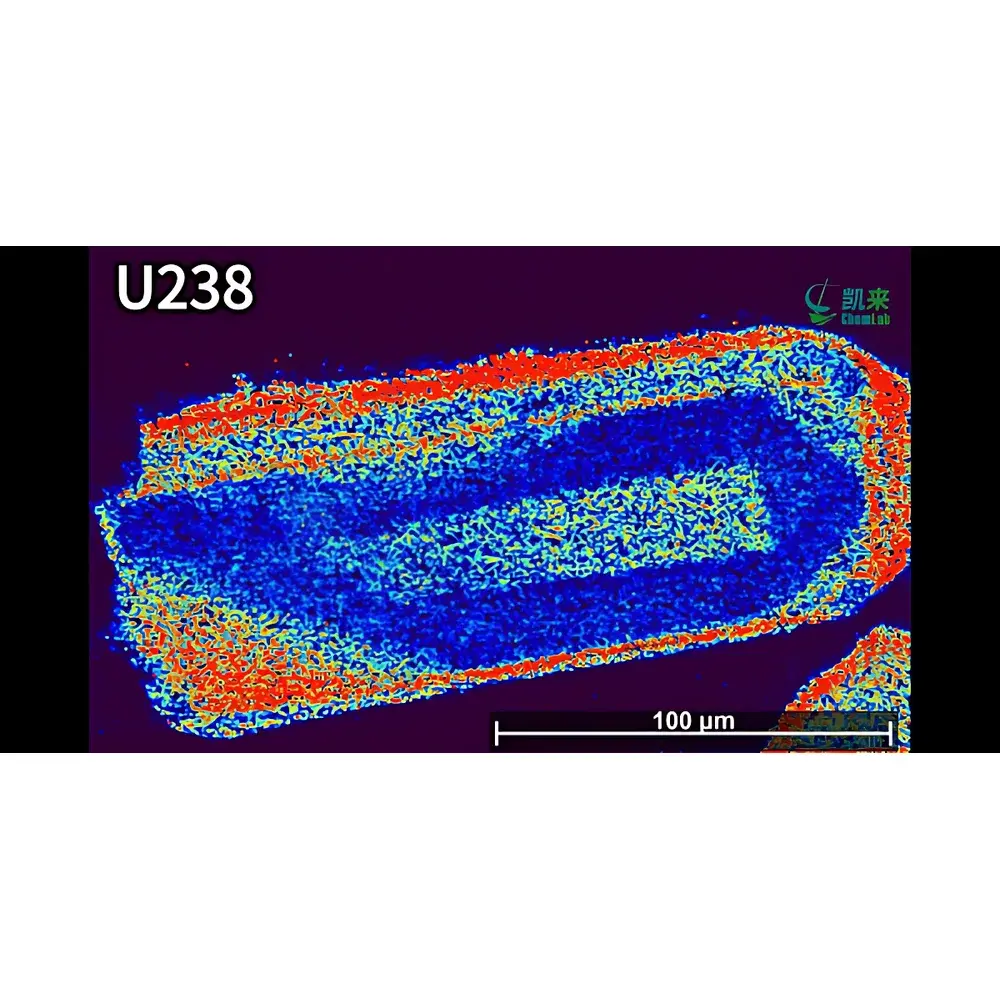
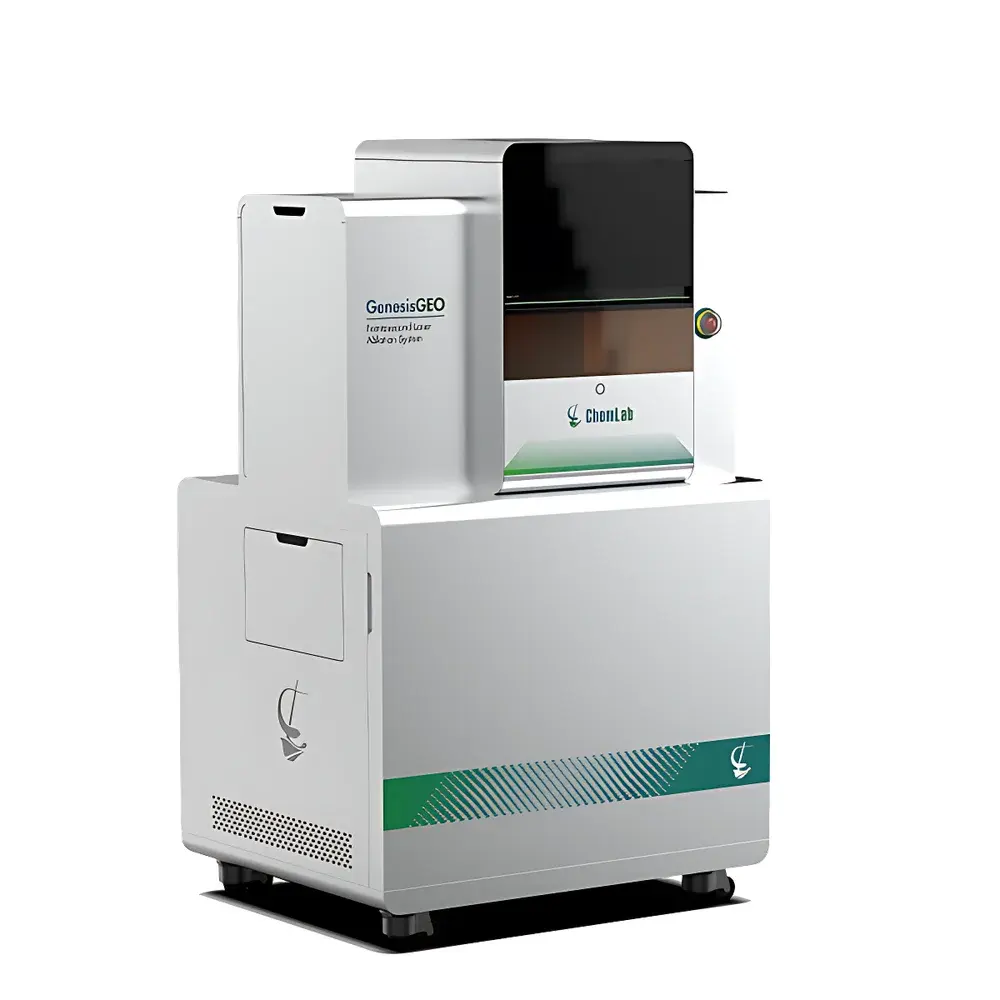
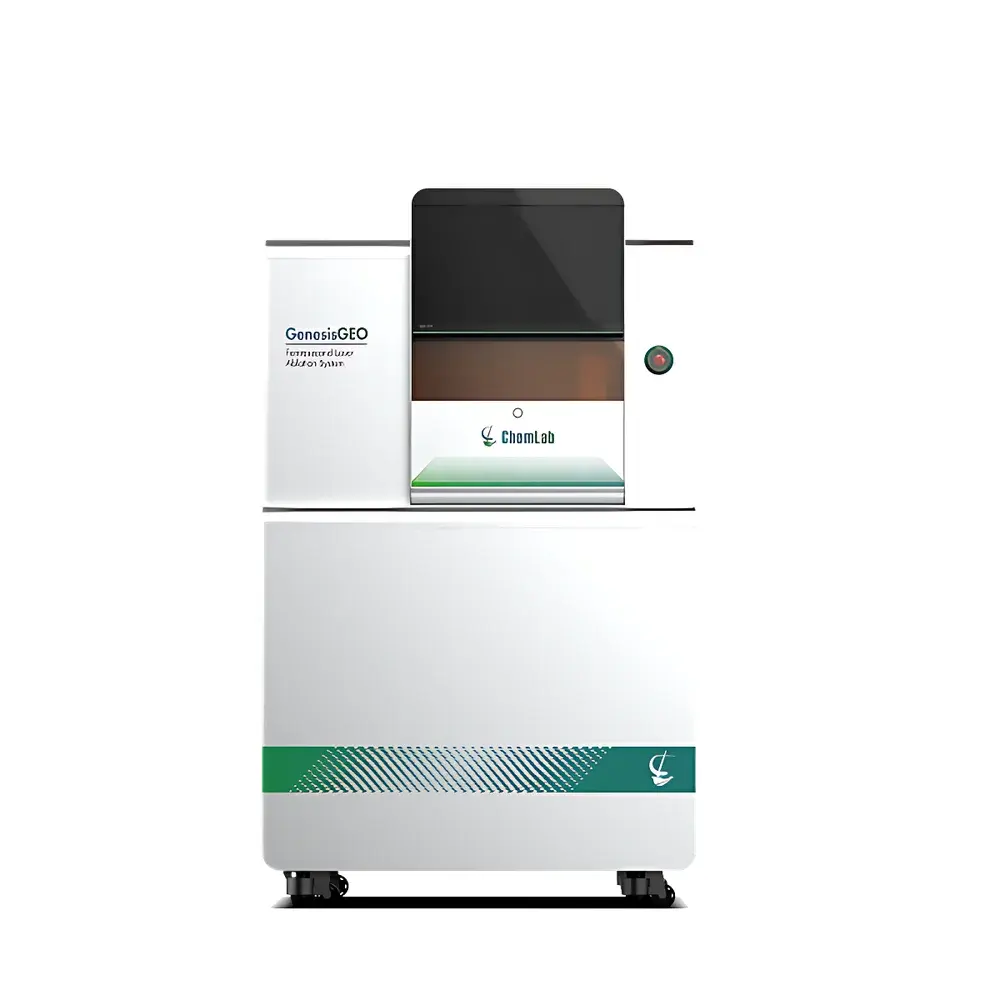
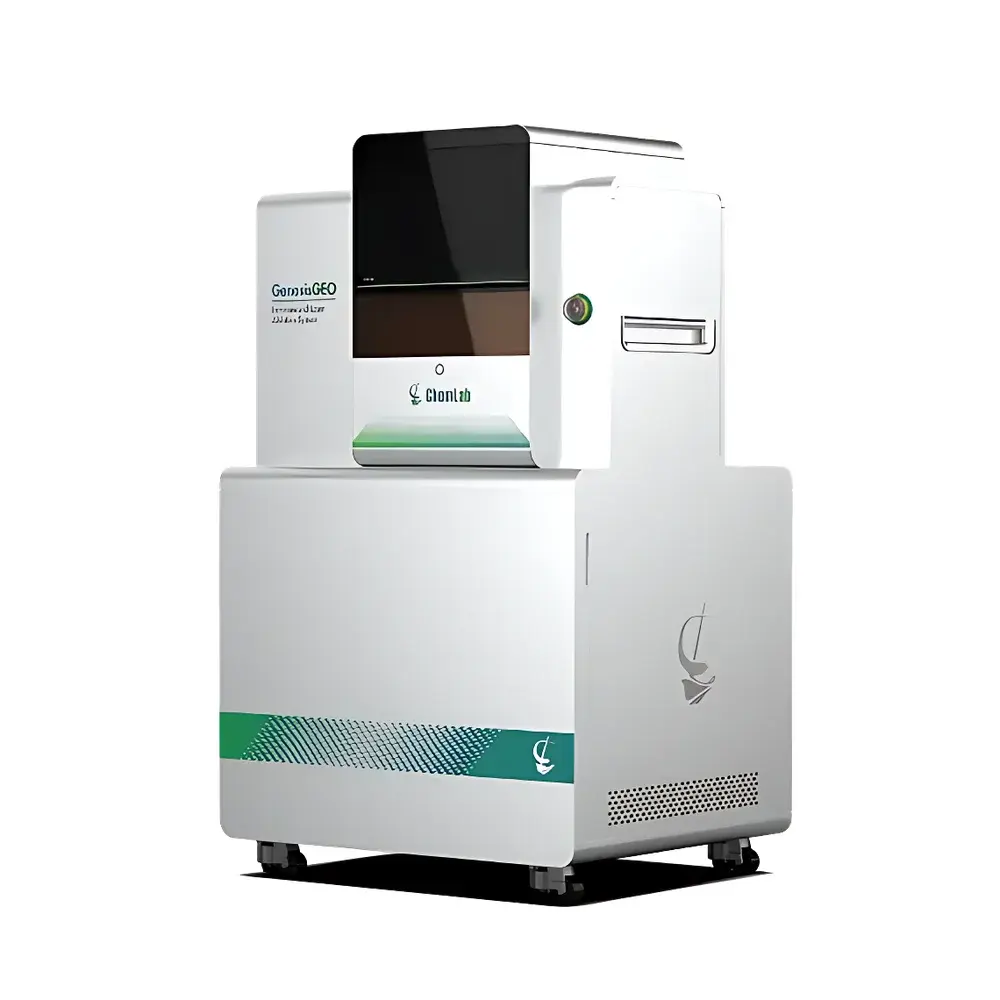
Chemlab GenesisGEO Matrix Femtosecond Laser Ablation System
| Brand | Chemlab |
|---|---|
| Origin | Shanghai, China |
| Manufacturer Type | Original Equipment Manufacturer (OEM) |
| Country of Origin | China |
| Model | GenesisGEO |
| Price Range | USD 420,000 – 700,000 |
Overview
The Chemlab GenesisGEO Matrix Femtosecond Laser Ablation System is a high-precision, research-grade laser ablation sampling platform engineered for integration with inductively coupled plasma mass spectrometry (ICP-MS) and multi-collector ICP-MS (MC-ICP-MS). It employs ultrafast femtosecond pulsed lasers (pulse duration < 100 fs) to achieve non-thermal, Coulomb-explosion-driven ablation—fundamentally distinct from nanosecond-laser-induced thermal ablation. This physical mechanism minimizes elemental and isotopic fractionation, suppresses matrix effects, and generates fine, homogeneous aerosol particles (< 200 nm modal diameter) with high transport efficiency into the plasma. As a result, the GenesisGEO delivers exceptional signal stability, improved sensitivity, and sub-micron spatial resolution—enabling quantitative microanalysis, high-accuracy isotope ratio measurements, and high-fidelity elemental imaging across geoscience, cosmochemistry, and materials science applications.
Key Features
- Matrix ablation mode with flat-bottom crater profile—optimized for quantitative analysis and high-precision isotope ratio determination
- Surface energy density ≥ 50 J/cm² at sample position—ensuring robust ablation performance across diverse matrices including silicates, carbonates, sulfides, and glasses
- Adjustable spot size: 1–500 µm continuous tuning; supports both circular and rectangular beam profiles for method flexibility and multi-scale mapping
- Minimal maintenance architecture: solid-state laser source, no ArF excimer gas or N₂ purge required; designed for >5–10 years of stable operation with negligible consumables
- Modular expandability: optional Raman spectroscopy integration, LIBS (Laser-Induced Breakdown Spectroscopy) coupling, and cryo-ablation accessories for fluid inclusion and solution-phase analysis
- Z-axis dynamic focus compensation—maintains optimal focal depth during topography-varying ablation, critical for heterogeneous geological samples
Sample Compatibility & Compliance
The GenesisGEO accommodates a broad spectrum of solid and frozen samples: polished mineral mounts, fused glass beads, pressed powder pellets, natural rock thin sections, synthetic standards, fluid inclusions (via cryogenic ablation), and vitrified aqueous solutions. Its ablation protocol complies with established geochemical reference material protocols (e.g., NIST SRM 610/612, USGS GSD-series, MPI-DING glasses) and supports traceable calibration workflows aligned with ISO/IEC 17025 requirements. For regulated environments, the system’s software architecture supports audit trails, user access control, and electronic signature capabilities compliant with FDA 21 CFR Part 11 when deployed with validated LIMS-integrated data acquisition modules.
Software & Data Management
Control and acquisition are managed via Chemlab’s LA-Studio v3.x software suite—a Windows-based application supporting real-time beam diagnostics, automated stage navigation, pixel-by-pixel dwell time optimization, and synchronized ICP-MS trigger logic. Raw ablation data (intensity vs. time) are exported in vendor-neutral ASCII formats compatible with common reduction pipelines (e.g., Iolite, Glitter, VizualAge). The software includes built-in tools for crater depth profiling, multi-point normalization, and offline drift correction. All acquisition parameters—including laser fluence, repetition rate, scan velocity, and spot positioning—are logged with timestamped metadata, ensuring full traceability for GLP/GMP-aligned laboratories.
Applications
- High-spatial-resolution elemental imaging: Down to 500 nm lateral resolution (e.g., pyrite Fe-S distribution, quartz trace-element zoning)
- U–Pb, Rb–Sr, Re–Os, and other radiogenic isotope systems: In situ dating of zircon, monazite, apatite, carbonates, micas, and molybdenite with external precision < 0.5% (2σ) on 206Pb/238U ratios
- Non-traditional stable isotope analysis: Microscale C, O, S, and triple-oxygen isotope (Δ17O) measurements in carbonates, sulfides, and organic residues
- Fluid inclusion analysis: Cryo-ablation of sub-10 µm inclusions with minimized volatile loss and enhanced signal reproducibility
- Homogeneous bulk quantification: Large-spot (≥100 µm) ablation of borosilicate glass standards and quartz reference materials for major/minor element calibration
- Solution-phase direct analysis: Via custom cryo-mounting fixtures enabling frozen droplet ablation without nebulization
FAQ
What laser technology does the GenesisGEO employ?
It utilizes a diode-pumped, solid-state femtosecond oscillator-amplifier system operating at 257 nm (4th harmonic of 1028 nm Yb-based laser), delivering pulse energies up to 1 mJ at 1–200 kHz repetition rates.
Is the system compatible with multi-collector ICP-MS platforms?
Yes—fully synchronized TTL triggering and analog signal output enable seamless integration with Thermo Scientific Neptune Plus, Nu Instruments Apex HR, and Isoprobe-T instruments.
Can the GenesisGEO perform depth-profiling on layered materials?
Yes—programmable Z-axis stepping combined with real-time crater depth monitoring allows sequential layer-resolved ablation with sub-micron depth resolution.
Does it support ASTM or ISO standard methods?
While no single ISO standard governs fs-LA specifically, the GenesisGEO supports method development aligned with ASTM D7574 (for elemental analysis of solids by LA-ICP-MS) and ISO 17294-2 (water analysis), adapted for solid sampling via validated SOPs.
What maintenance intervals are recommended?
No routine optical alignment or gas replacement is required; annual verification of laser energy stability, stage positional accuracy, and ablation yield using certified reference materials is advised.







