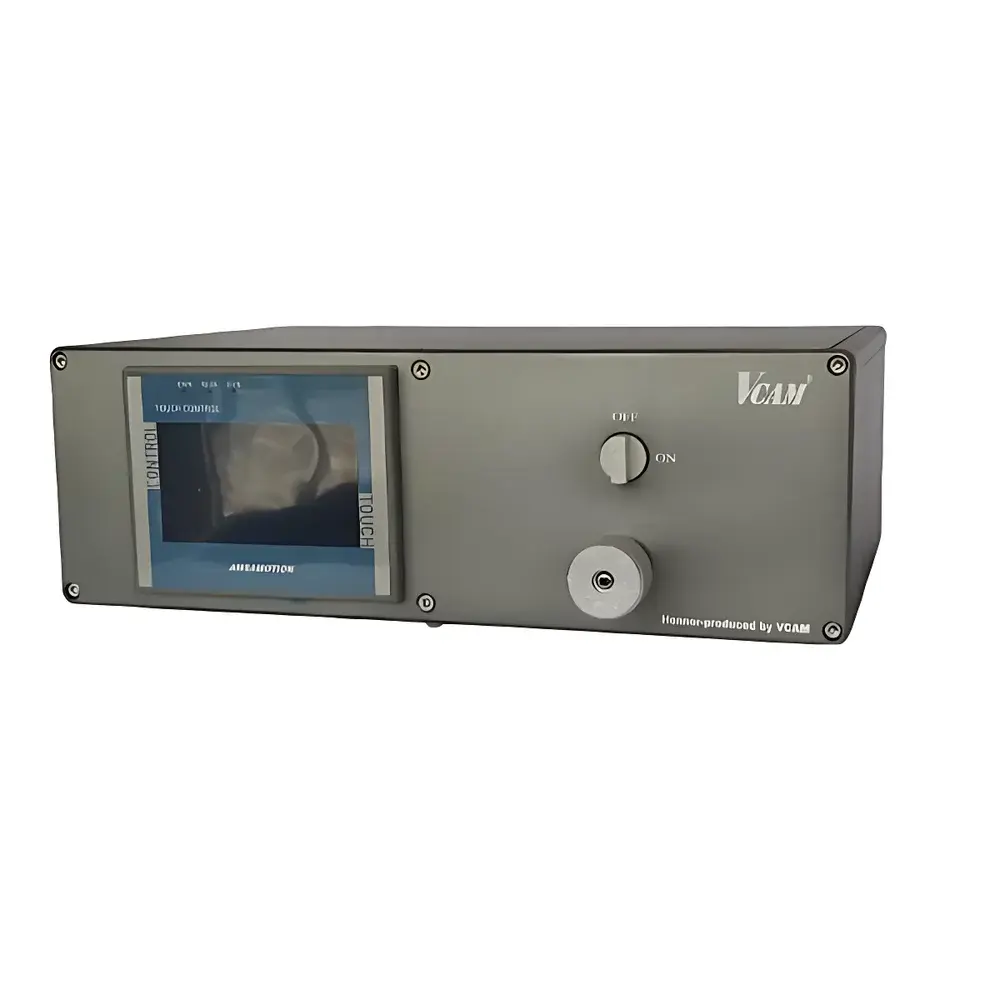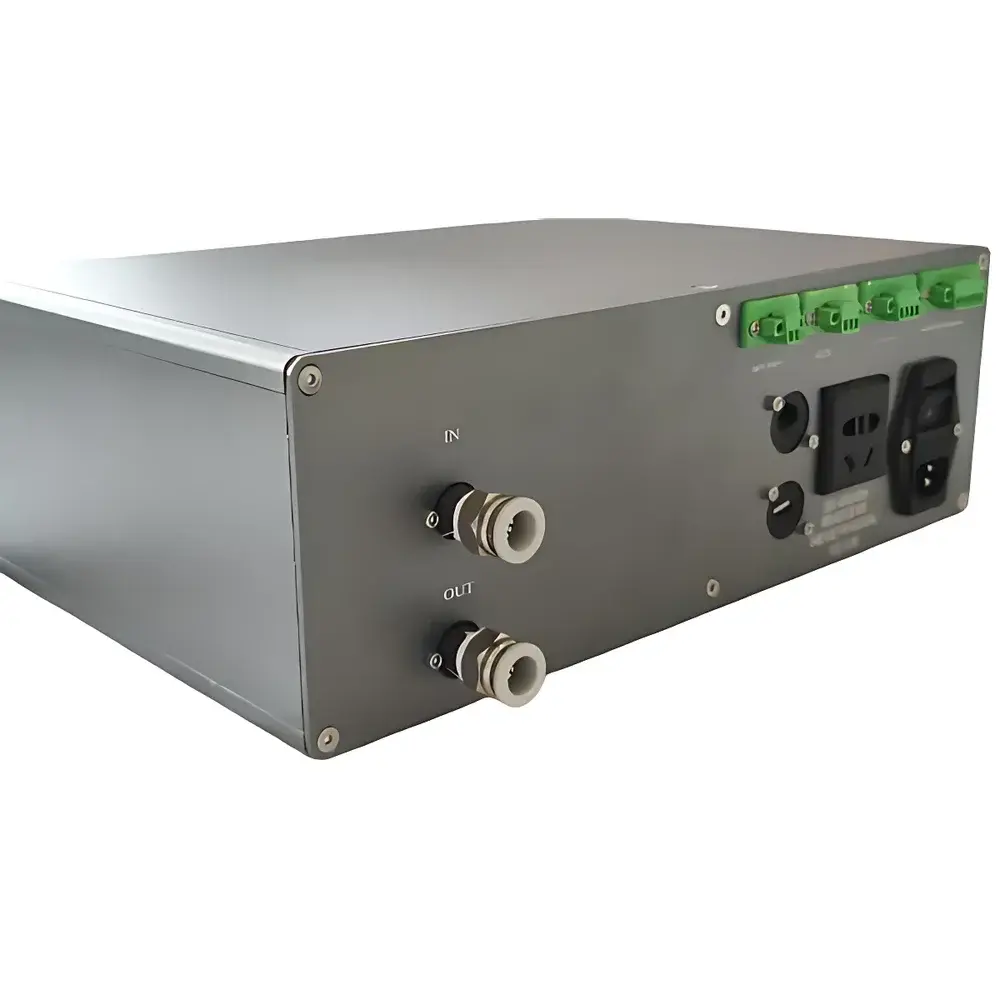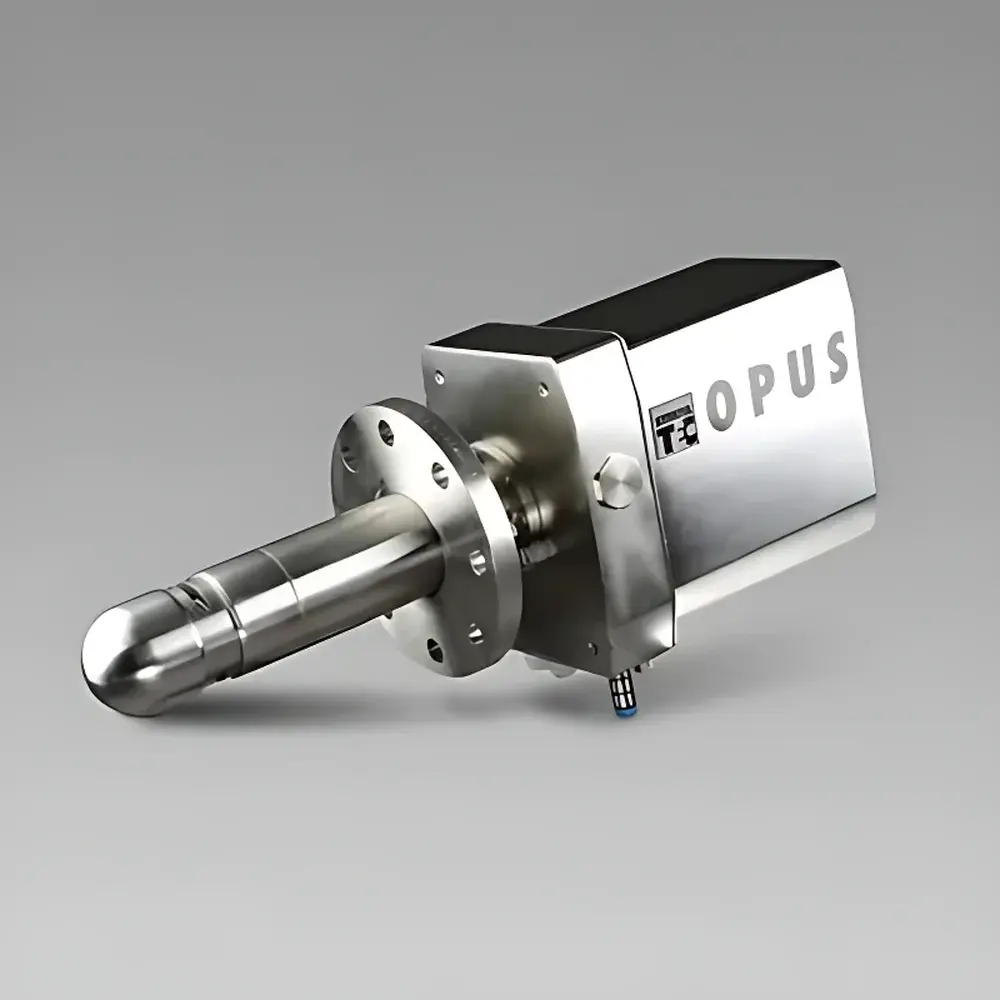
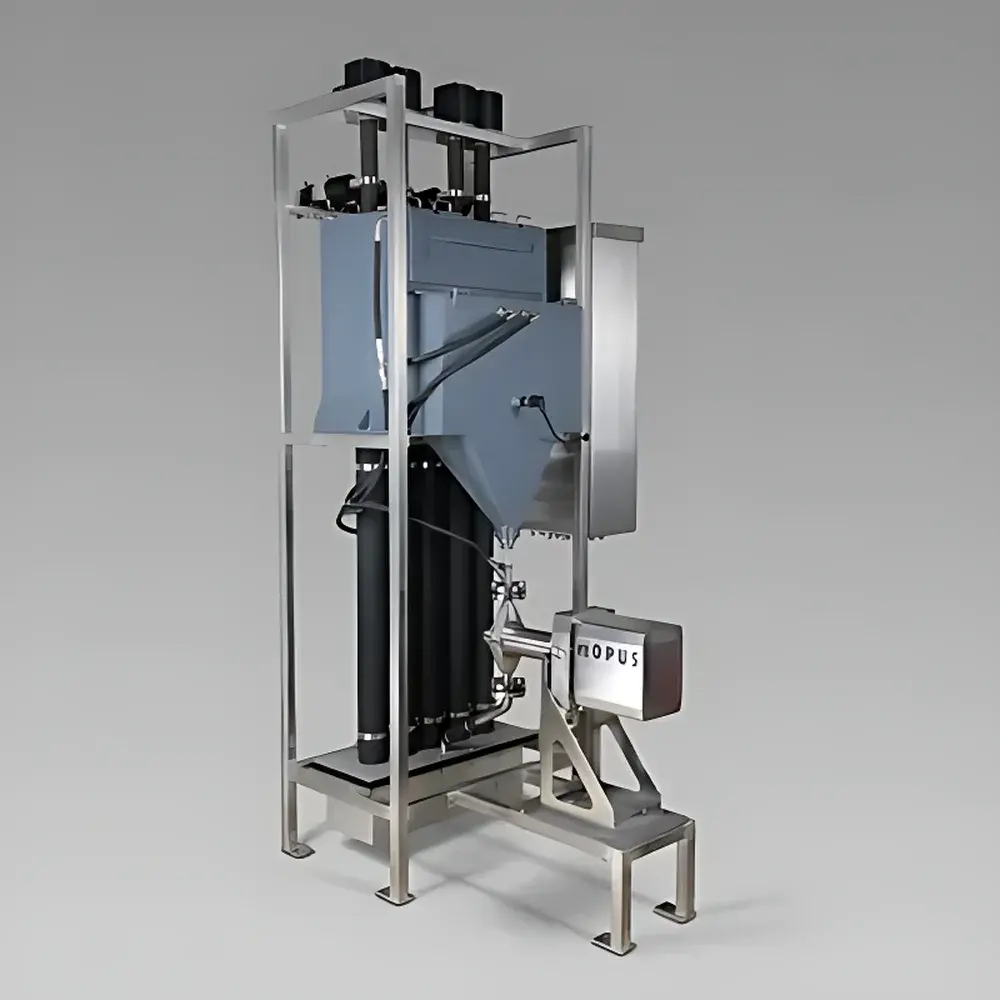
SYMPATEC OPUS Online Wet-Process Particle Size Analyzer
| Brand | SYMPATEC |
|---|---|
| Origin | Germany |
| Manufacturer | SYMPATEC GmbH |
| Model | OPUS |
| Measurement Principle | Static Light Scattering (Laser Diffraction) in Flow Cell |
| Particle Size Range | 0.1–3000 µm |
| Process Temperature | −20 to +120 °C |
| Operating Pressure | 0–40 bar |
| pH Range | 0–14 |
| Enclosure Rating | IP65 / ATEX II 2G Ex p II T5 |
| Wetted Materials | Stainless Steel 1.4571, Hastelloy C-276 |
| Sample Concentration | Up to 70% v/v (undiluted) |
| Simultaneous Output | Particle Size Distribution + Solid Concentration |
| Bubble Correction | Integrated optical compensation algorithm |
| Installation Options | In-line, side-stream with bypass loop, or flow-through cell with sanitary or industrial flange interfaces |
Overview
The SYMPATEC OPUS Online Wet-Process Particle Size Analyzer is an industrial-grade, real-time laser diffraction system engineered for continuous, in-situ particle size distribution (PSD) and solid concentration monitoring in demanding liquid-phase process environments. Based on static light scattering principles, the OPUS operates without sample dilution—enabling direct measurement of suspensions, emulsions, slurries, and highly concentrated dispersions up to 70% v/v solids. Its robust optical design incorporates a high-stability He-Ne laser source, precision-aligned flow cell optics, and real-time Mie theory-based inversion algorithms compliant with ISO 13320:2020. Unlike laboratory-based instruments requiring offline sampling and preparation, the OPUS delivers statistically representative, time-resolved PSD data at second-level temporal resolution—critical for closed-loop process control, endpoint detection, and quality-by-design (QbD) implementation in continuous manufacturing.
Key Features
- True undiluted measurement: No sample conditioning, filtration, or dilution required—preserves native particle state and avoids artifacts from dispersion destabilization.
- Simultaneous dual-parameter output: Real-time reporting of both volumetric particle size distribution (D10, D50, D90, span) and total solid volume concentration (% v/v), derived from integrated optical density calibration.
- Patented bubble correction: On-the-fly optical compensation for entrained gas microbubbles using multi-angle scattering signature analysis—eliminates false fines bias without mechanical degassing.
- Chemically and mechanically resilient construction: Wetted parts fabricated from corrosion-resistant stainless steel 1.4571 (Alloy 31) and Hastelloy C-276, validated for prolonged exposure to pH 0–14, oxidizing acids, caustic alkalis, and abrasive mineral slurries.
- Process-hardened enclosure: Rated IP65 for dust/water ingress protection and certified ATEX II 2G Ex p II T5 for use in Zone 1 hazardous areas—suitable for mining, chemical, and pharmaceutical production zones.
- Flexible integration architecture: Supports multiple mounting configurations—including direct in-line insertion, side-stream bypass with controlled flow rate, or clamp-mounted flow cell with DIN/ISO or ASME B16.5 flange interfaces.
Sample Compatibility & Compliance
The OPUS is validated for stable operation across heterogeneous, non-Newtonian, and polydisperse wet media typical of mineral processing (e.g., iron ore, copper concentrate, bauxite slurry), pharmaceutical wet granulation, polymer emulsion synthesis, and battery cathode slurry production. It meets functional safety requirements per IEC 61508 SIL2 for integration into SIS (Safety Instrumented Systems). Data integrity complies with FDA 21 CFR Part 11 when deployed with SYMPATEC’s optional audit-trail-enabled software package, supporting GLP/GMP traceability through electronic signatures, user access controls, and immutable raw data archiving. Measurement repeatability (RSD < 2% for D50 under steady-state conditions) and inter-instrument comparability are verified per ISO 13320 Annex B protocols.
Software & Data Management
OPUS systems operate with SYMPATEC’s proprietary WINDOX 7 process analytics platform, which provides OPC UA and Modbus TCP connectivity for seamless integration into DCS, MES, and SCADA environments. The software supports configurable alarm thresholds (e.g., D90 drift > ±5 µm), trend visualization over user-defined time windows (1 min to 30 days), and automated report generation compliant with ASTM E2921 and ISO 22412. Raw scattering pattern data (1024-channel intensity vectors) and processed PSDs are stored in HDF5 format with embedded metadata (timestamp, temperature, pressure, flow rate), enabling retrospective multivariate analysis (e.g., PLS regression against downstream filter performance or centrifuge efficiency).
Applications
- Mineral processing: Real-time optimization of grinding circuit classification, hydrocyclone overflow control, and flotation feed consistency—reducing energy consumption and improving recovery rates.
- Pharmaceutical manufacturing: Monitoring wet granulation endpoint, suspension stability in oral liquid formulations, and nanoparticle dispersion homogeneity during milling.
- Advanced materials: Closed-loop control of cathode/anode slurry particle packing density in lithium-ion battery electrode coating lines.
- Chemical synthesis: Tracking emulsion droplet coalescence kinetics during surfactant screening or polymer latex nucleation in continuous reactors.
- Environmental engineering: Quantifying floc size evolution in wastewater flocculation basins for adaptive coagulant dosing.
FAQ
Can the OPUS measure particles in opaque or highly absorbing suspensions?
Yes—the system uses near-infrared-compatible optical path design and advanced Mie modeling with complex refractive index inputs; performance has been validated for iron oxide, carbon black, and titanium dioxide slurries.
Is calibration required between batches or shifts?
No routine recalibration is needed; the instrument employs self-referencing optical alignment and factory-certified reference standards traceable to NIST SRM 1963. Annual verification is recommended per ISO/IEC 17025.
How is maintenance minimized in continuous operation?
The flow cell features zero-moving-parts optics and erosion-resistant sapphire windows; cleaning-in-place (CIP) compatibility allows automated solvent flush cycles without disassembly.
Does the system support regulatory submission data packages?
Yes—when configured with WINDOX 7 GxP mode, it generates ALCOA+ compliant records including electronic audit trails, raw scattering patterns, and version-controlled analysis methods.
What is the minimum detectable concentration for submicron particles?
At 0.1 µm, reliable detection requires ≥0.5% v/v solids under standard flow conditions; sensitivity improves with higher concentration or extended integration time (configurable up to 5 seconds per scan).
Related Products