
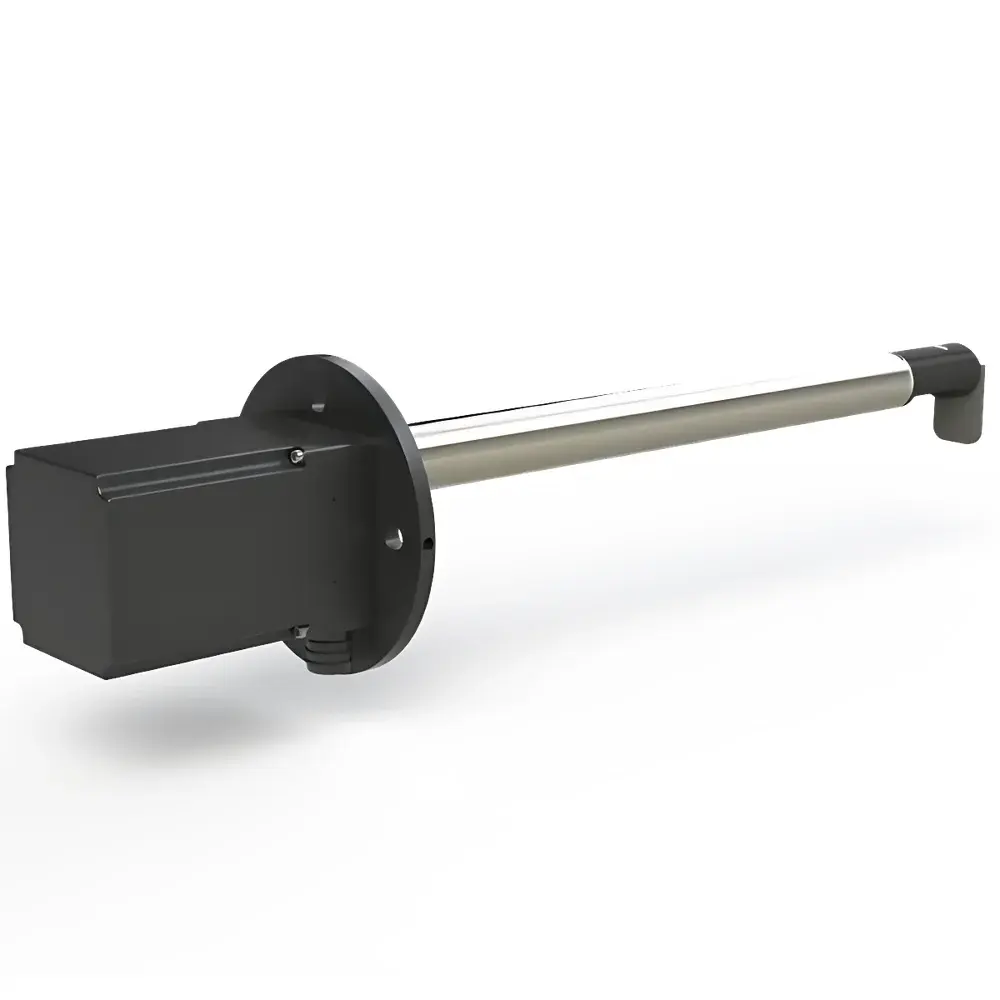
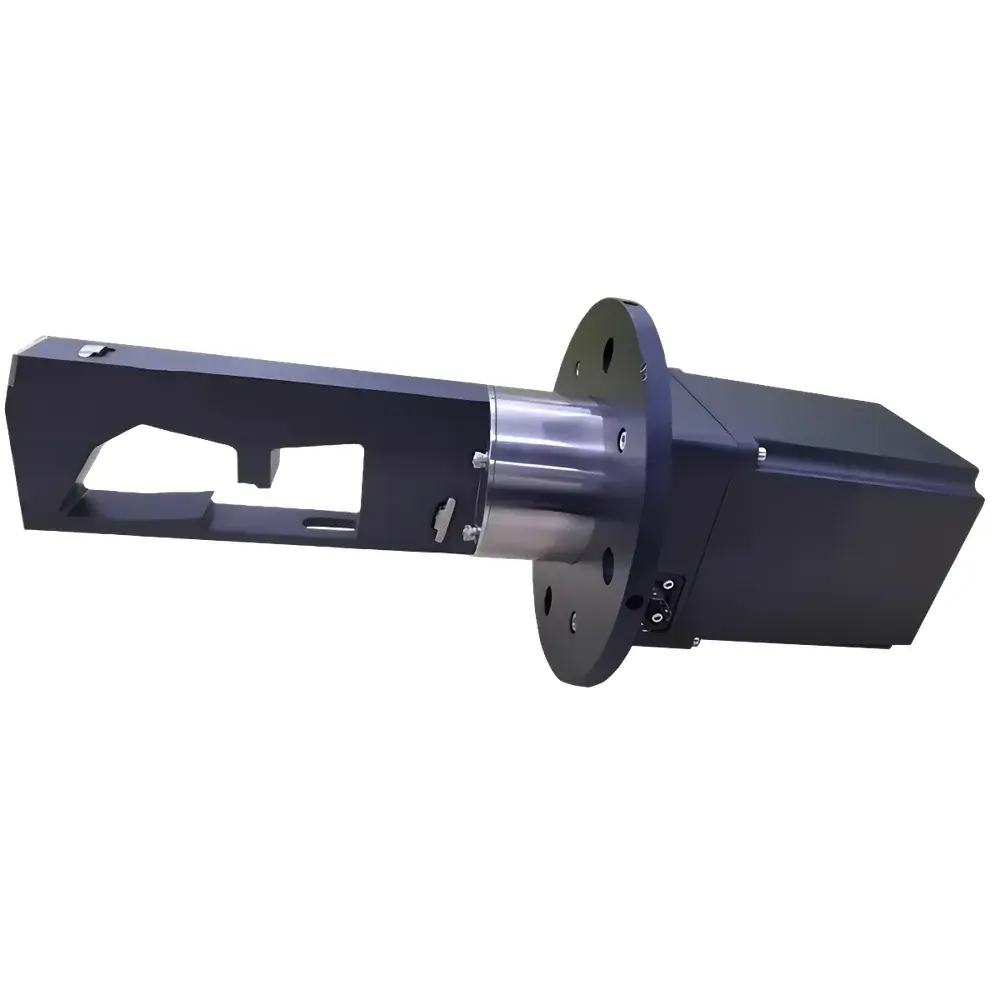
AnronX LSS2014 In-Situ Ultra-Low Emission Dust Concentration Monitor
| Brand | AnronX |
|---|---|
| Origin | Jiangsu, China |
| Model | LSS2014 |
| Measurement Principle | Laser Backscatter (90°–180° detection geometry) |
| Measurand | Particulate Matter (PM) in Flue Gas |
| Range | 0–20 mg/m³ (Ultra-Low Mode), Dual-Range Operation Supported |
| LOD | 0.05 mg/m³ |
| Installation Type | In-Situ, Non-Extractive |
| Gas Condition Requirement | Dry, Non-Condensing Flue Gas |
| Compliance Context | Designed for continuous emission monitoring systems (CEMS) per Chinese HJ 76-2017 and compatible with international flue gas monitoring frameworks (e.g., EN 15267, ISO 12141, US EPA Method 9 and Performance Specification PS-11) |
Overview
The AnronX LSS2014 In-Situ Ultra-Low Emission Dust Concentration Monitor is an engineered solution for real-time, non-intrusive measurement of particulate matter (PM) mass concentration in industrial flue gas streams. It operates on the physical principle of laser backscatter photometry—where a collimated near-infrared (NIR) laser beam (typically 780–850 nm) is directed across the flue duct, and light scattered by suspended particles within the measurement volume is collected at angles between 90° and 180° relative to the incident beam. The intensity of the backscattered signal exhibits a monotonic, empirically calibrated relationship with PM mass concentration under stable optical path conditions. Unlike extractive or beta-attenuation methods, the LSS2014 eliminates sampling line losses, condensation artifacts, and filter clogging risks by performing direct in-situ interrogation of the process stream. It is specifically optimized for post-SCR, post-FF/ESP, and post-WFGD flue gas environments where dry, low-humidity (< dew point), and thermally stable conditions prevail—ensuring high reproducibility and minimal drift during ultra-low emission compliance monitoring (≤5 mg/m³).
Key Features
- In-situ dual-beam optical architecture with integrated reference channel for real-time laser power compensation and long-term signal stability
- Ultra-low detection range: 0–20 mg/m³ full scale, with limit of detection (LOD) of 0.05 mg/m³ (3σ background noise criterion)
- Dual-range operational mode: automatic switching between high-sensitivity (0–20 mg/m³) and extended (0–100 mg/m³) ranges without manual recalibration
- Advanced analog front-end incorporating transimpedance amplifier (TIA) with <10 fA input-referred noise and active interference suppression circuitry
- Correlation-based noise cancellation algorithm that discriminates particle-scattered photons from ambient thermal, electrical, and optical interference
- IP66-rated, air-purged optical probe housing with heated window (optional) and passive thermal management for operation in ambient temperatures from −20 °C to +60 °C
- Modular design enabling field replacement of laser diode, photodetector, and signal processing board without system downtime
Sample Compatibility & Compliance
The LSS2014 is validated for use in dry, non-condensing flue gas with particulate size distributions typical of coal-fired, biomass, and waste-to-energy combustion processes (aerodynamic diameter dae ≈ 0.1–10 µm). It requires flue gas temperature >20 °C above dew point to prevent water droplet formation that would distort scattering cross-sections. The instrument meets the functional requirements of China’s HJ 76-2017 Technical Specification for Continuous Emission Monitoring Systems (CEMS) for Fixed Pollution Sources and supports data reporting formats aligned with HJ 212-2017 communication protocols. While not certified to EN 14181 or US EPA PS-11 out-of-the-box, its optical design, calibration traceability (NIST-traceable PM standards), and audit trail capabilities make it suitable for integration into GLP/GMP-aligned CEMS architectures when deployed with documented site-specific validation (e.g., correlation testing against reference gravimetric samplers per ISO 12141).
Software & Data Management
The embedded firmware provides configurable analog outputs (4–20 mA, 0–10 V), Modbus RTU/TCP, and optional OPC UA interface for seamless integration into DCS or SCADA platforms. Local data logging (≥30 days at 1-min intervals) includes raw scatter voltage, temperature-compensated concentration, diagnostic flags (laser health, window contamination index, signal-to-noise ratio), and timestamped calibration events. All configuration changes, zero/span adjustments, and firmware updates are recorded in an immutable audit log compliant with basic ALCOA+ principles (Attributable, Legible, Contemporaneous, Original, Accurate). Remote diagnostics via secure SSH or TLS-enabled web interface support predictive maintenance alerts (e.g., gradual TIA gain drift, window soiling rate estimation).
Applications
- Continuous compliance monitoring of ultra-low particulate emissions from coal-fired power plants equipped with advanced fabric filters or electrostatic precipitators
- Performance verification of wet flue gas desulfurization (WFGD) outlet ducts where residual mist droplets must be distinguished from solid PM using temporal signal filtering
- Real-time optimization of baghouse pulse-jet cleaning cycles based on differential pressure and LSS2014-derived dust loading trends
- Stack testing support for regulatory audits requiring simultaneous in-situ and reference method (e.g., ISO 9096) data acquisition
- Process R&D in cement kilns and municipal solid waste incinerators targeting sub-10 mg/m³ emission targets
FAQ
Is the LSS2014 suitable for wet or saturated flue gas applications?
No. The instrument requires dry, non-condensing conditions. Water droplets induce Mie scattering artifacts that invalidate the PM concentration calibration. For saturated streams, hot-wet extractive systems or dilution probes are recommended.
Does the LSS2014 require periodic factory recalibration?
Field zero and span checks using certified aerosol generators (e.g., polydisperse NaCl or Arizona Road Dust) are required per HJ 76-2017 (typically every 7–15 days). Full optical recalibration is recommended annually or after major component replacement.
Can the LSS2014 distinguish between fly ash, limestone carryover, and unburnt carbon?
No. It reports total PM mass concentration independent of composition. Particle density and refractive index assumptions are fixed during factory calibration; compositional variability introduces systematic bias within ±15% depending on source profile.
What is the minimum flue duct diameter supported?
The standard probe configuration supports duct diameters ≥0.8 m. For smaller ducts (<0.6 m), a focused beam variant with adjustable focal length and reduced optical path length is available upon request.
How is window fouling compensated during long-term operation?
The system continuously monitors forward-scatter baseline drift and applies a dynamic correction factor derived from the ratio of reference channel signal to main channel signal. Visual inspection and manual cleaning are still required per maintenance schedule.
Related Products







