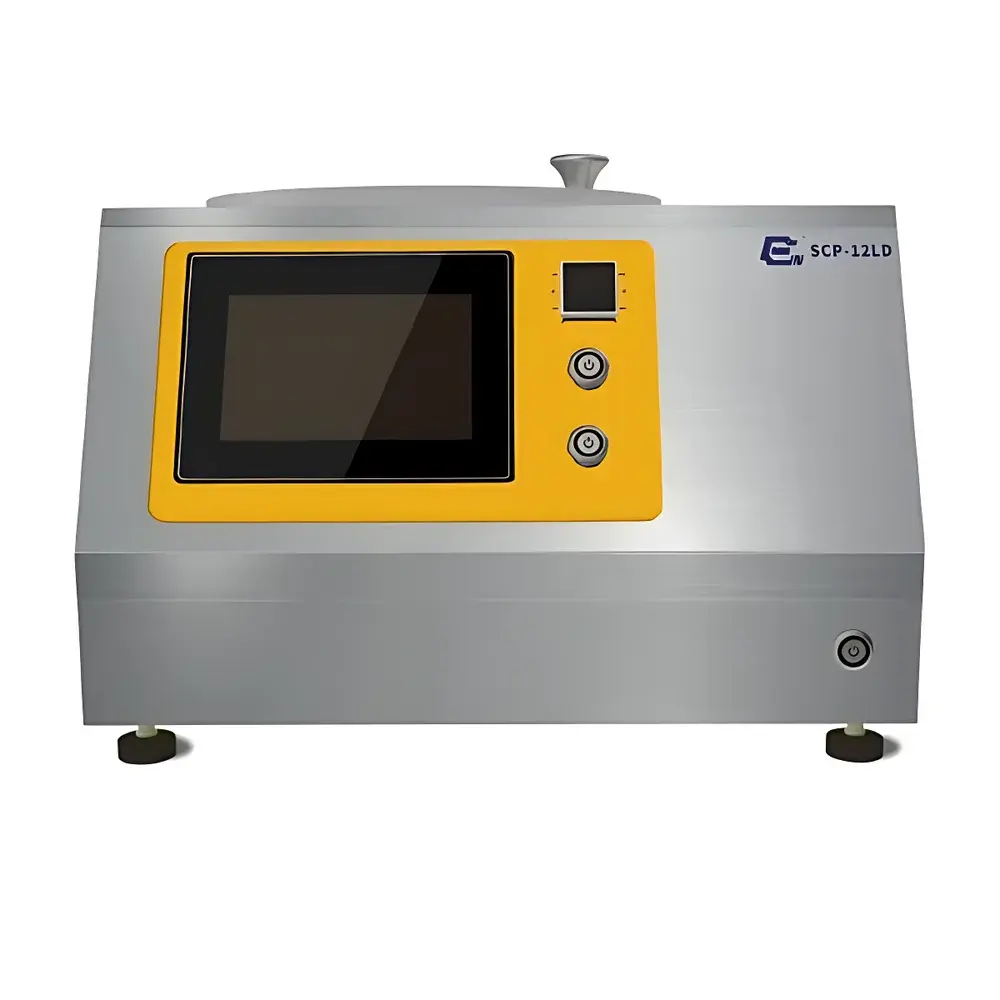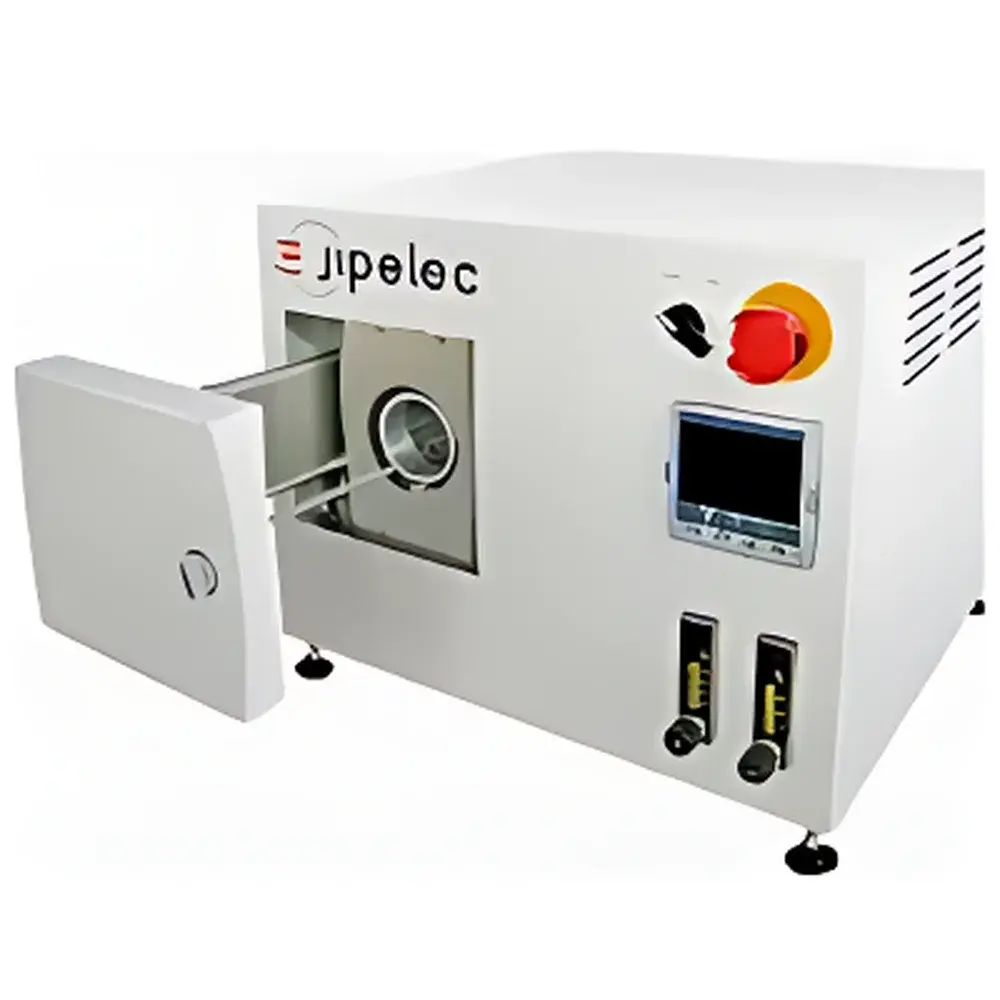
Annealsys JetLight / AS-Micro / AS-One RTP / AS-Master / Zenith Rapid Thermal Annealing Furnaces
| Brand | Annealsys |
|---|---|
| Origin | France |
| Product Type | Rapid Thermal Processing (RTP) Furnace |
| Temperature Range | Up to 2000°C (Zenith series) |
| Heating Rate | >250°C/s (AS-Micro) |
| Vacuum Capability | Down to 10⁻⁶ Torr (AS-Master) |
| Sample Diameter Support | 2 mm to 200 mm |
| Chamber Type | Cold-wall stainless steel or quartz tube |
| Heating Source | Halogen lamp array or tungsten filament |
| Temperature Measurement | Dual-sensor (pyrometer + thermocouple) |
| Control System | Digital PID with auto-tuning |
| Compliance | Designed for GLP/GMP-aligned lab environments, compatible with ASTM F1531 (RTP process validation), ISO 14644-1 Class 5 cleanroom integration |
Overview
The Annealsys Rapid Thermal Annealing (RTA) Furnace series represents a family of high-precision, vacuum-capable thermal processing systems engineered for semiconductor research, nanomaterial synthesis, and advanced materials development. Based on rapid radiative heating principles—primarily using high-intensity halogen or tungsten filament lamps—the systems deliver controlled, transient thermal profiles with millisecond-level response and exceptional spatial uniformity. Unlike conventional furnace annealing, Annealsys RTP platforms operate via short-duration, high-ramp-rate thermal cycles (typically 1–120 seconds at peak temperature), minimizing dopant diffusion while maximizing activation efficiency in ion-implanted layers or contact metallization. The cold-wall chamber architecture—standard across AS-One, AS-Master, and Zenith models—ensures low thermal mass, rapid cooldown (<100°C/s), minimal memory effect, and ultra-low background contamination—critical for reproducible SiC, GaN, and 2D material processing. All systems are designed for integration into Class 5 cleanrooms and support inert, reducing, oxidizing, or reactive gas atmospheres (e.g., N₂, Ar, H₂, NH₃, O₂) under precise partial pressure control.
Key Features
- Multi-tier platform architecture: From benchtop JetLight (2″) and AS-Micro (3″) for exploratory R&D, to production-ready AS-Master (up to 200 mm wafers) and ultra-high-temperature Zenith (2000°C, 1 h hold), enabling seamless technology transfer from lab to pilot line.
- Cold-wall stainless-steel reaction chambers with water-cooled jackets—standard on AS-One, AS-Master, and Zenith—provide superior thermal isolation, repeatable thermal gradients, and sub-1°C temperature stability (±1°C at 2000°C, Zenith series).
- Dual independent temperature measurement: Integrated fast-response thermocouples (Type C or W-Re) plus calibrated optical pyrometers (300–3000 nm spectral range) enable cross-validated, emissivity-compensated thermal profiling—essential for low-emissivity substrates (e.g., SiC, sapphire, metal foils).
- Advanced digital PID controllers with auto-tuning algorithms ensure robust thermal regulation across full operational ranges—from ambient to 2000°C—with programmable ramp/soak/cool profiles and real-time deviation logging.
- Modular gas delivery: Mass flow controllers (MFCs), gas mixing manifolds, and optional load-lock interfaces support complex multi-step RTCVD, RTN, RTO, and annealing sequences compliant with USP and ISO 14644-1 environmental monitoring requirements.
Sample Compatibility & Compliance
Annealsys RTP systems accommodate substrates ranging from micro-patterned chips (≥2 mm × 2 mm) to full 200 mm wafers—including compound semiconductors (GaAs, InP, SiC), insulating oxides (Al₂O₃, SiO₂), 2D materials (graphene, h-BN), and flexible polymer films. Customizable sample holders—including SiC-coated graphite, quartz trays, and electrostatic chucks—enable processing of low-absorptivity or fragile samples without warpage or slip dislocation. All systems comply with CE machinery directives and electromagnetic compatibility (EMC) standards. For regulated environments, the AS-Master and Zenith platforms support 21 CFR Part 11–compliant audit trails, electronic signatures, and role-based user access when paired with optional validated software modules. Process documentation aligns with ASTM F1531 (Standard Guide for Evaluating Rapid Thermal Processing Equipment) and supports IQ/OQ/PQ protocol execution per GMP Annex 15.
Software & Data Management
The proprietary Annealsys Control Suite provides deterministic real-time process orchestration via Windows-based GUI with dual-screen visualization: one for thermal profile editing (ramp rate, soak time, gas sequencing), another for live sensor telemetry (pyrometer signal, thermocouple voltage, chamber pressure, MFC setpoints). Raw data—including time-stamped temperature, pressure, and gas flow logs—is exported in CSV or HDF5 format for traceability and statistical process control (SPC). Optional features include remote monitoring via secure TLS-enabled API, integration with MES/SCADA systems via OPC UA, and automated calibration report generation per ISO/IEC 17025 guidelines. Audit trail functionality records all parameter changes, user logins, and system events with immutable timestamps—meeting GLP documentation integrity requirements.
Applications
These RTP furnaces serve mission-critical roles across multiple domains: In semiconductor fabrication, they enable spike annealing for ultra-shallow junction formation, silicide phase transformation (NiSi, CoSi₂), ohmic contact activation on III-V devices, and rapid thermal oxidation/nitridation of high-k gate stacks. In photovoltaics, they facilitate Se-rich CIGS absorber layer crystallization and passivation layer densification. For MEMS, they perform stress-relief annealing of piezoelectric thin films (AlN, ZnO) and hermetic wafer bonding activation. In 2D materials research, RTCVD protocols support scalable graphene/h-BN monolayer growth on Cu/Ni foils, while low-thermal-budget anneals preserve organic-inorganic hybrid perovskite phase integrity. Additional use cases include dopant diffusion studies in wide-bandgap semiconductors, polymer chain relaxation kinetics, and solid-state phase transition mapping in battery electrode materials.
FAQ
What is the maximum allowable vacuum level for AS-Master systems?
AS-Master configurations achieve base pressures down to 10⁻⁶ Torr when equipped with turbomolecular pumping stations—enabling oxygen-sensitive processes such as SiC surface reconstruction or MoS₂ growth.
Can Zenith systems operate in oxidizing atmospheres?
No. Zenith’s tungsten heating elements and high-temperature insulation are incompatible with O₂ above trace ppm levels. Operation requires inert or reducing gas environments only.
Is manual loading supported across all models?
Yes—JetLight, AS-Micro, AS-One, and Zenith offer front-access horizontal doors with quartz trays for manual handling. AS-Master supports both manual loading and cassette-to-cassette automation via integrated robotic interfaces.
How is temperature uniformity verified during qualification?
Uniformity is assessed per ASTM F1531 using a calibrated multi-point thermocouple wafer mapper or IR camera mapping under representative process conditions (e.g., 1100°C, 30 s soak). Typical radial uniformity is ±1.5% across 150 mm wafers.
Are service contracts and preventive maintenance plans available?
Yes—global field service support includes annual calibration, lamp replacement kits, chamber cleaning protocols, and remote diagnostics with SLA-backed response times. On-site technician training is offered for operator certification.