
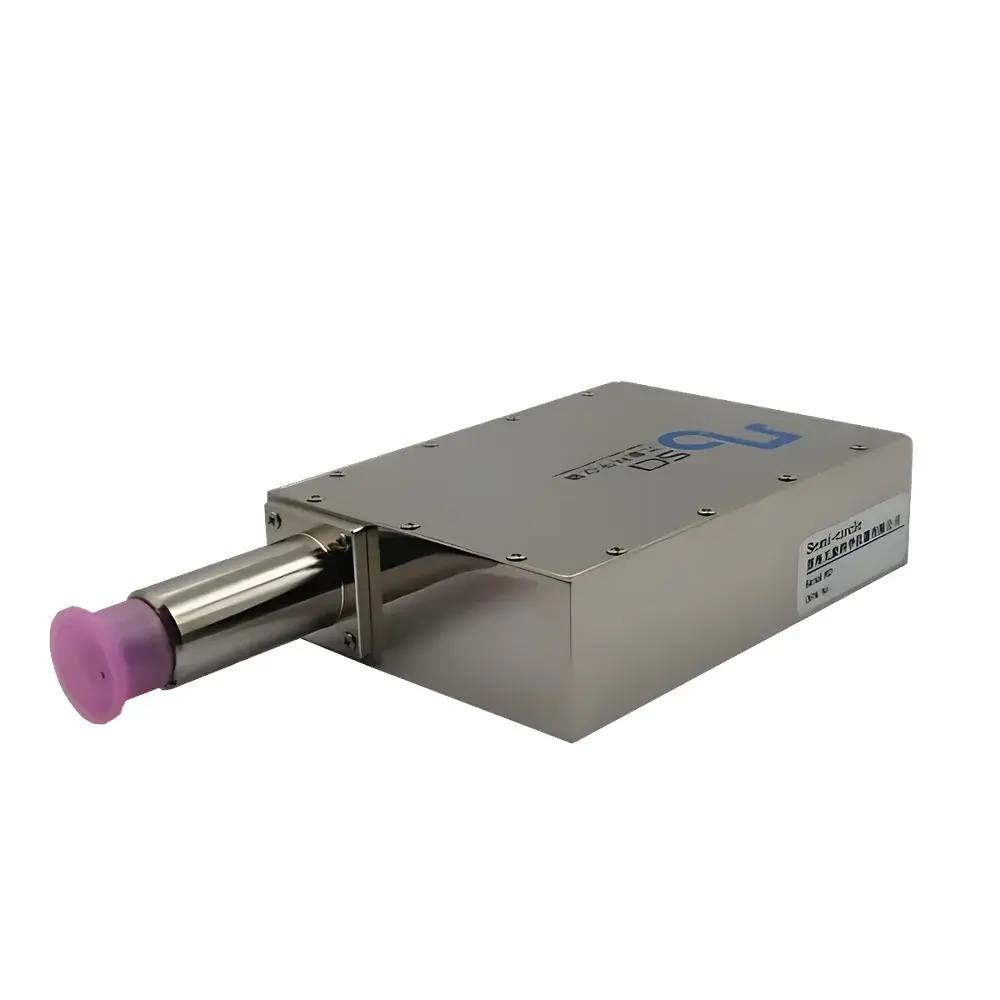
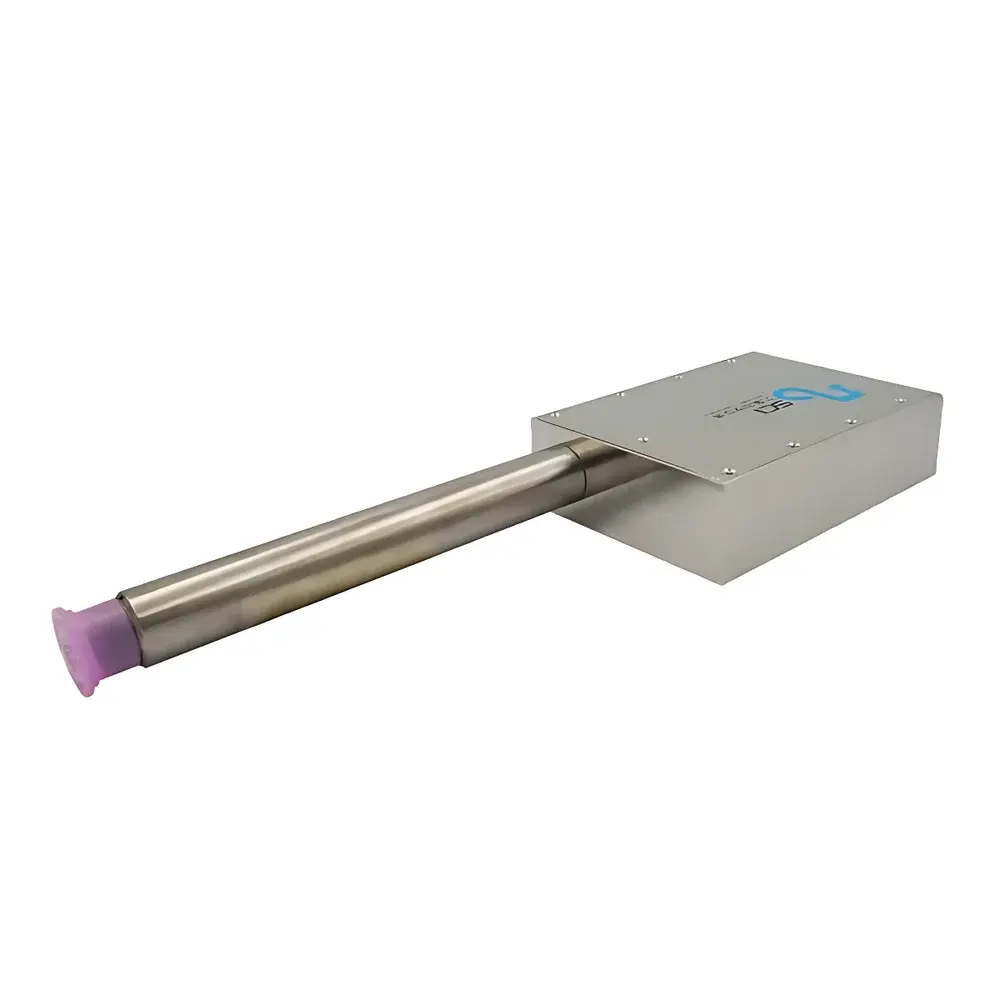
Semicircle-Instrument DPAE-VSDD-Pro Digital Silicon Drift Detector (SDD) for XRF Spectrometry
| Brand | Semicircle-Instrument |
|---|---|
| Origin | Jiangsu, China |
| Manufacturer Type | OEM/ODM Producer |
| Model | DPAE-VSDD-Pro |
| Detection Area | 20 mm² / 30 mm² / 50 mm² (selectable) |
| Thickness | 450 µm |
| Energy Resolution | 125–140 eV FWHM @ 5.9 keV (⁵⁵Fe) |
| Peak Time | 1 µs (max cooling) |
| Count Rate Capability | up to 2,000 kcps |
| Peak-to-Background Ratio | 15,000:1 |
| Window Options | 1 µm graphene or 8 µm beryllium |
| Ultimate Vacuum | 10⁻⁷ Torr |
| Operating Temperature Range | 0–50 °C |
| Storage Conditions | –10–30 °C, 10–90% RH (non-condensing) |
| Power Supply | 4.5–9 VDC |
| Gain Stability | <20 ppm/°C |
| Interface Options | USB 2.0, RS-232, Ethernet |
| Cooling | Peltier-based, cryogen-free |
| Warranty | 12 months |
| Expected Service Life | 5–10 years under standard lab use |
Overview
The Semicircle-Instrument DPAE-VSDD-Pro is a high-performance digital silicon drift detector (SDD) engineered for precision energy-dispersive X-ray fluorescence (ED-XRF) spectrometry. Based on the fundamental principle of charge carrier collection in a low-capacitance, high-electric-field drift geometry, the DPAE-VSDD-Pro delivers exceptional spectral resolution and throughput without requiring liquid nitrogen cryogenic cooling. Its integrated thermoelectric (Peltier) cooling system achieves stable operation at –35 °C, enabling sub-130 eV full-width-at-half-maximum (FWHM) resolution at the Mn Kα line (5.9 keV), critical for resolving adjacent elemental peaks in complex matrices such as alloys, geological samples, and RoHS-compliant electronics. The detector’s architecture supports real-time pulse processing with ≤1 µs peaking time—optimized for high-flux excitation sources—including microfocus X-ray tubes and synchrotron beamlines—making it suitable for both benchtop and in-line process monitoring configurations.
Key Features
- Digital multi-channel analyzer (MCA) embedded directly in the detector head, eliminating analog signal degradation and enabling precise dead-time correction and pile-up rejection.
- Selectably configurable active area: 20 mm², 30 mm², or 50 mm²—each paired with a uniform 450 µm silicon thickness for optimal absorption efficiency across the 0.1–20 keV range.
- Ultra-low-noise charge-sensitive preamplifier with active reset and gain stability better than 20 ppm/°C, ensuring long-term calibration integrity during extended acquisitions.
- Graphene (1 µm) or beryllium (8 µm) entrance window options—enabling high transmission for light elements (Na, Mg, Al, Si) while maintaining mechanical robustness and vacuum integrity.
- Multi-layer internal collimator design minimizes partial charge collection events at detector edges, suppressing escape peaks and improving peak-to-background (P/B) ratio to ≥15,000:1.
- Cryogen-free operation certified for continuous duty cycles; ultimate vacuum compatibility down to 10⁻⁷ Torr, supporting integration into ultra-high-vacuum (UHV) XRF chambers and electron microprobe systems.
Sample Compatibility & Compliance
The DPAE-VSDD-Pro is designed for direct integration into ED-XRF platforms compliant with ISO 21043 (X-ray spectrometry — General requirements), ASTM E1361 (Standard Guide for Quantitative Analysis by EDXRF), and IEC 62321-5 (RoHS/WEEE screening). Its spectral fidelity supports regulatory-grade quantification of restricted substances (Pb, Cd, Hg, Cr⁶⁺, Br, Cl) in polymers, printed circuit boards, and coated metals per EU Directive 2011/65/EU. The detector meets electromagnetic compatibility (EMC) Class B requirements per EN 61326-1 and operates reliably in environments conforming to IEC 60068-2 environmental stress testing standards. Optional vacuum flange mounting (CF-35 or ISO-KF40) enables seamless integration into GLP/GMP-validated analytical workflows where traceability and vacuum integrity are auditable requirements.
Software & Data Management
The DPAE-VSDD-Pro communicates via standardized protocols over USB 2.0 (high-speed bulk transfer), RS-232 (legacy control), and Gigabit Ethernet (for remote configuration and streaming acquisition). It supports vendor-neutral data output in IEEE 1273-compliant binary MCA format (.mca) and ASCII spectrum export (.csv), facilitating interoperability with third-party spectral deconvolution tools (e.g., PyMCA, AXIL, QXAS). Firmware updates and real-time parameter adjustment—including shaping time, threshold, and gain offset—are accessible through a documented RESTful API. For regulated environments, optional audit-trail logging and user-access controls align with FDA 21 CFR Part 11 requirements when deployed within validated instrument control software stacks.
Applications
- High-throughput elemental mapping in scanning electron microscopy (SEM-EDS) and micro-XRF microprobes.
- In-line quality control of metal plating thickness and composition in automotive and aerospace manufacturing.
- Non-destructive analysis of cultural heritage artifacts, including pigment identification and corrosion layer characterization.
- Research-grade quantification in geochemical laboratories for trace element profiling in silicate melts and fluid inclusions.
- OEM integration into handheld, portable, and benchtop XRF analyzers requiring compact footprint, low power draw (<3 W), and zero cryogen dependency.
FAQ
What vacuum level is required for optimal performance?
The DPAE-VSDD-Pro achieves its specified resolution and count-rate capability only under high vacuum conditions ≤10⁻⁶ Torr; operation at 10⁻⁷ Torr is recommended for maximum stability and longevity.
Can the detector be operated in air or helium atmosphere?
No—graphene and Be windows are not rated for atmospheric exposure. A sealed vacuum or inert-gas-purged housing is mandatory for light-element detection below 1 keV.
Is firmware upgrade supported in the field?
Yes—firmware updates are delivered via signed binary packages through the Ethernet interface and require no hardware modification.
Does the detector support coincidence rejection for multi-detector arrays?
Yes—the digital trigger output (LVDS) provides synchronized event timing with ≤2 ns jitter, enabling time-of-flight correlation in multi-SDD configurations.
What is the typical calibration drift over a 24-hour acquisition?
With ambient temperature fluctuations ≤±1 °C, energy calibration drift remains within ±0.5 eV over 24 h, verified using ⁵⁵Fe and ¹⁰⁹Cd reference sources.






