
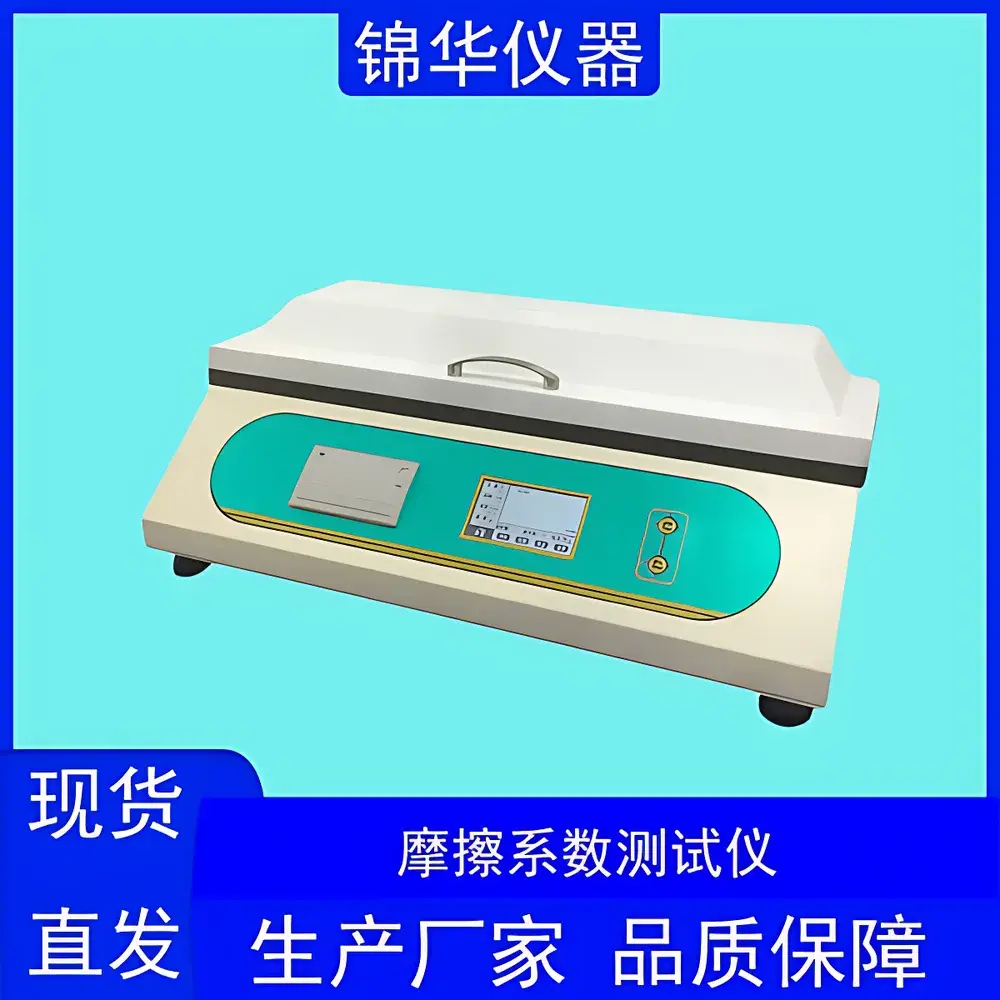
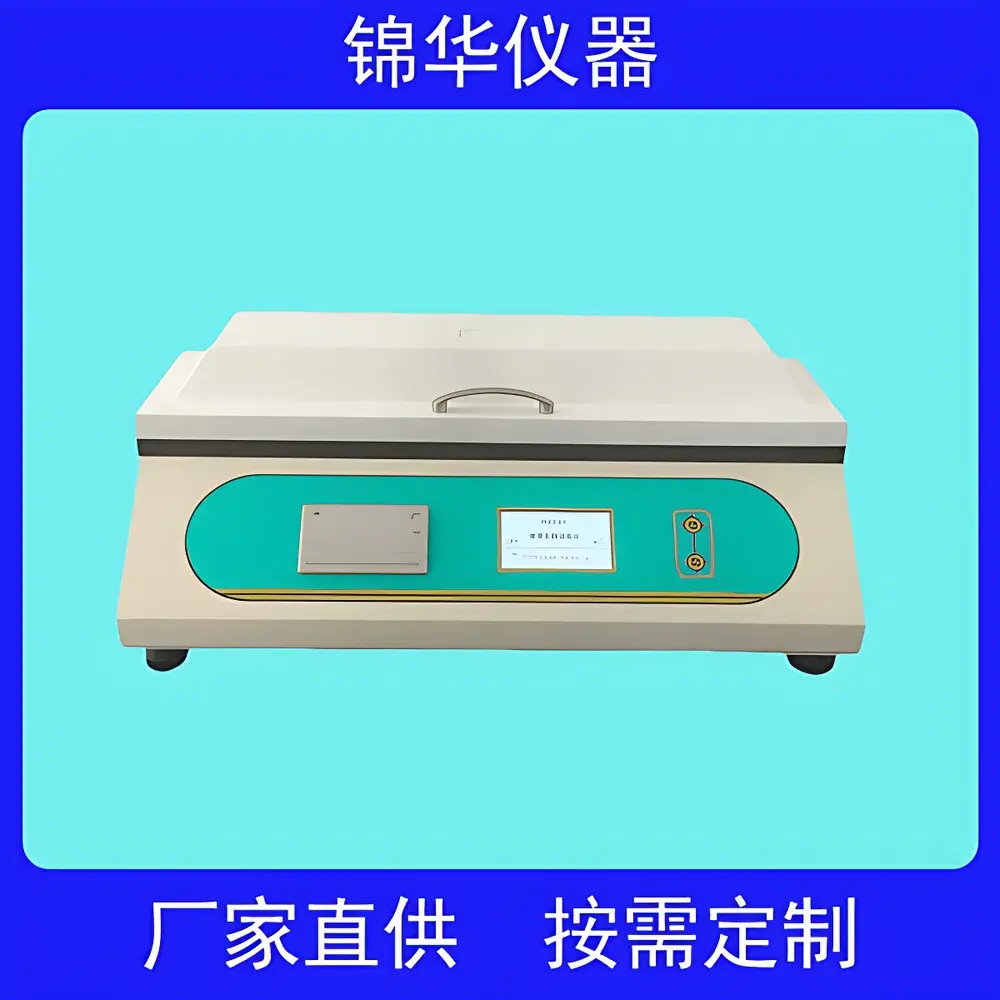
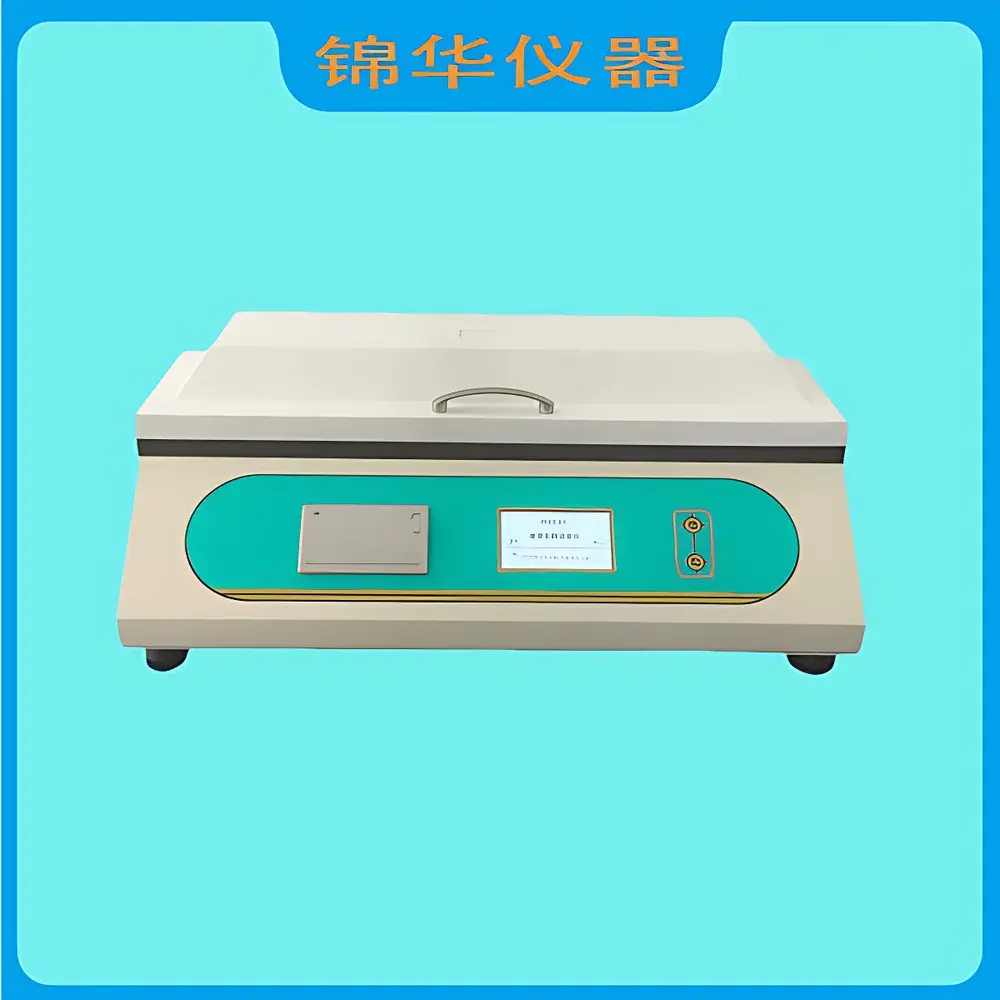
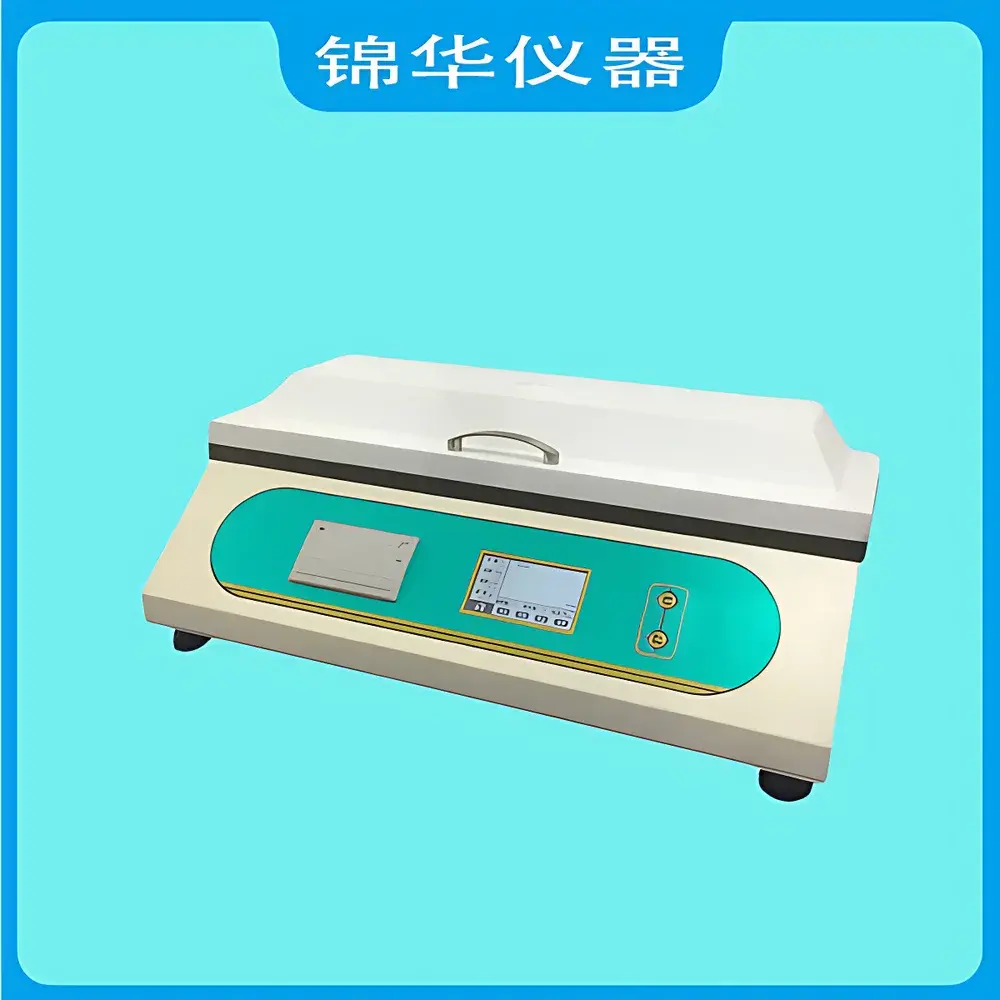

Jinhuatester MXD-02 Coefficient of Friction Tester for Films, Sheets, and Packaging Materials
| Brand | Jinhuatester |
|---|---|
| Origin | Shandong, China |
| Manufacturer Type | Direct Manufacturer |
| Model | MXD-02 |
| Measuring Range | 5 N (standard), optional 10 N / 30 N |
| Accuracy | ±0.2% FS |
| Test Stroke | 330 mm |
| Slider Masses | 200 g, 500 g (standard) |
| Test Speed | 0–1000 mm/min (adjustable) |
| Specimen Height Capacity | 0–30 mm |
| Power Supply | AC 220 V, 50 Hz |
| Power Consumption | 100 W |
| Dimensions (L×W×H) | 640 × 300 × 230 mm |
| Net Weight | 22 kg |
| Compliance | GB 10006–1998, ISO 8295–1995, ASTM D1894–01, TAPPI T816 |
Overview
The Jinhuatester MXD-02 Coefficient of Friction Tester is an electromechanical instrument engineered for the precise and repeatable measurement of static (μs) and kinetic (μk) coefficients of friction between two solid planar surfaces under controlled normal load and relative motion. Based on the classical horizontal pull method—where one specimen is fixed to a horizontal test bed and the other attached to a calibrated slider—the device quantifies the force required to initiate and sustain sliding motion. The resulting friction coefficient is calculated as the ratio of measured frictional force to the normal force (i.e., the gravitational weight of the slider). This principle aligns with fundamental tribological standards and ensures traceability to SI-based mechanical units. Designed specifically for quality assurance in packaging, paper, and flexible material manufacturing, the MXD-02 delivers high reproducibility across heterogeneous substrates including polymer films, coated papers, metallic foils, medical tubing, and fibrous nonwovens.
Key Features
- Integrated dual-mode operation: supports both manual keypad and capacitive touchscreen control for intuitive workflow initiation and parameter adjustment.
- High-stability load cell (±0.2% full-scale accuracy) with temperature-compensated signal conditioning for low-drift force measurement over extended test cycles.
- Modular slider system: includes standard 200 g and 500 g masses; compatible with custom-weight sliders (e.g., 100 g, 1000 g) for application-specific normal load calibration.
- Adjustable linear drive: precision stepper motor enables continuous speed control from 0 to 1000 mm/min, facilitating compliance with variable-rate test protocols (e.g., ASTM D1894 ramped-speed mode).
- Dual protection architecture: mechanical limit switches and real-time current monitoring prevent overtravel and motor stall during abnormal operation.
- Embedded thermal management: low-power design (<100 W) minimizes heat accumulation, preserving dimensional stability of structural components and sensor integrity.
- Integrated thermal printer: outputs real-time test reports—including μs, μk, peak force, average kinetic force, and timestamp—with optional header customization for lab documentation.
- Sealed acrylic safety cover: prevents particulate ingress and accidental contact with moving parts while maintaining optical visibility during testing.
Sample Compatibility & Compliance
The MXD-02 accommodates a broad spectrum of planar and semi-rigid specimens up to 30 mm in thickness and 330 mm in travel length. Validated applications span ISO-defined categories: plastic films (LDPE, PET, BOPP), paperboard (SBS, CCNB), metallized laminates (Alu/PET/PE), medical-grade silicone and PVC tubing, textile substrates (spunbond polypropylene, woven cotton), and functional composites (paper–plastic hybrids, barrier-coated foils). It fully implements test procedures specified in GB 10006–1998 (Chinese national standard for plastic film friction), ISO 8295–1995 (rubber and plastics—determination of coefficient of friction), ASTM D1894–01 (standard test method for static and kinetic coefficients of friction of plastic film and sheeting), and TAPPI T816 (coefficient of friction of paper and paperboard). Instrument firmware supports user-defined test modes—including dwell-time-controlled static initiation, multi-cycle hysteresis mapping, and variable-normal-load sweeps—enabling method development beyond standardized protocols.
Software & Data Management
The MXD-02 communicates via RS-232 serial interface (standard) to host computers running dedicated Windows-based data acquisition software. This application provides full audit trail functionality compliant with GLP and GMP documentation requirements: each test record stores operator ID, environmental conditions (optional external sensor input), calibration history, raw force vs. time curves, and metadata tags. Data export formats include CSV, PDF, and XML, supporting integration into LIMS environments and statistical process control (SPC) platforms. All stored results—including historical datasets indexed by date, material batch, and test method—are searchable, filterable, and exportable without proprietary codec dependencies. Firmware updates are delivered via USB flash drive with cryptographic signature verification to ensure system integrity.
Applications
Primary use cases include QC release testing of packaging film slip performance (e.g., vertical form-fill-seal line compatibility), evaluation of paperboard stackability and feeder reliability in high-speed printing presses, assessment of medical device surface lubricity (e.g., catheter–skin interface friction for biocompatibility screening), and R&D-level characterization of anti-blocking additive efficacy in extruded polymers. Secondary applications extend to tribological benchmarking of flooring materials (wood composites, vinyl tiles), grain–metal interface friction for silo design validation, and hair–hair or hair–comb friction profiling in cosmetic science. The instrument’s modular mass system and programmable velocity profile also support emerging research in soft robotics (elastomer–substrate adhesion) and wearable electronics (flex circuit–skin interfacial mechanics).
FAQ
What standards does the MXD-02 natively support?
It executes GB 10006–1998, ISO 8295–1995, ASTM D1894–01, and TAPPI T816 test methods out-of-the-box, with embedded calculation logic for μs and μk per respective clauses.
Can the MXD-02 measure friction between curved or irregular surfaces?
No—it is designed exclusively for flat-on-flat contact geometry. Curved specimens must be mounted on planar carriers to maintain uniform pressure distribution.
Is calibration traceable to national metrology institutes?
Yes. Load cell calibration certificates are provided with NIST-traceable reference weights; annual recalibration services include uncertainty budget reporting per ISO/IEC 17025.
Does the instrument meet FDA 21 CFR Part 11 requirements?
The standalone unit does not include electronic signature or audit trail features; however, when paired with validated PC software and controlled access protocols, it supports Part 11-compliant data handling workflows.
What maintenance is required for long-term accuracy?
Biannual verification of slider mass tolerance (±0.1 g), periodic cleaning of linear guide rails with isopropyl alcohol, and annual load cell recalibration are recommended per manufacturer guidelines.
Related Products






