
Hongweiliangzi YMJ-P Image-Based Leaf Area Analyzer
| Brand | Hongweiliangzi |
|---|---|
| Origin | Shandong, China |
| Model | YMJ-P |
| Width Range | 0–210 mm |
| Length Range | 0–290 mm |
| Max. Leaf Area | 600 cm² |
| Area Resolution | 0.001 cm² |
| Length/Width Resolution | 0.01 cm |
| Accuracy | ±1% (leaf area >30 cm²), ±2% (≤30 cm²) |
| Camera | 16 MP, auto-focus, integrated high-brightness LED illumination |
| Software | Windows 7 or later (Windows 10 recommended), USB 2.0 interface |
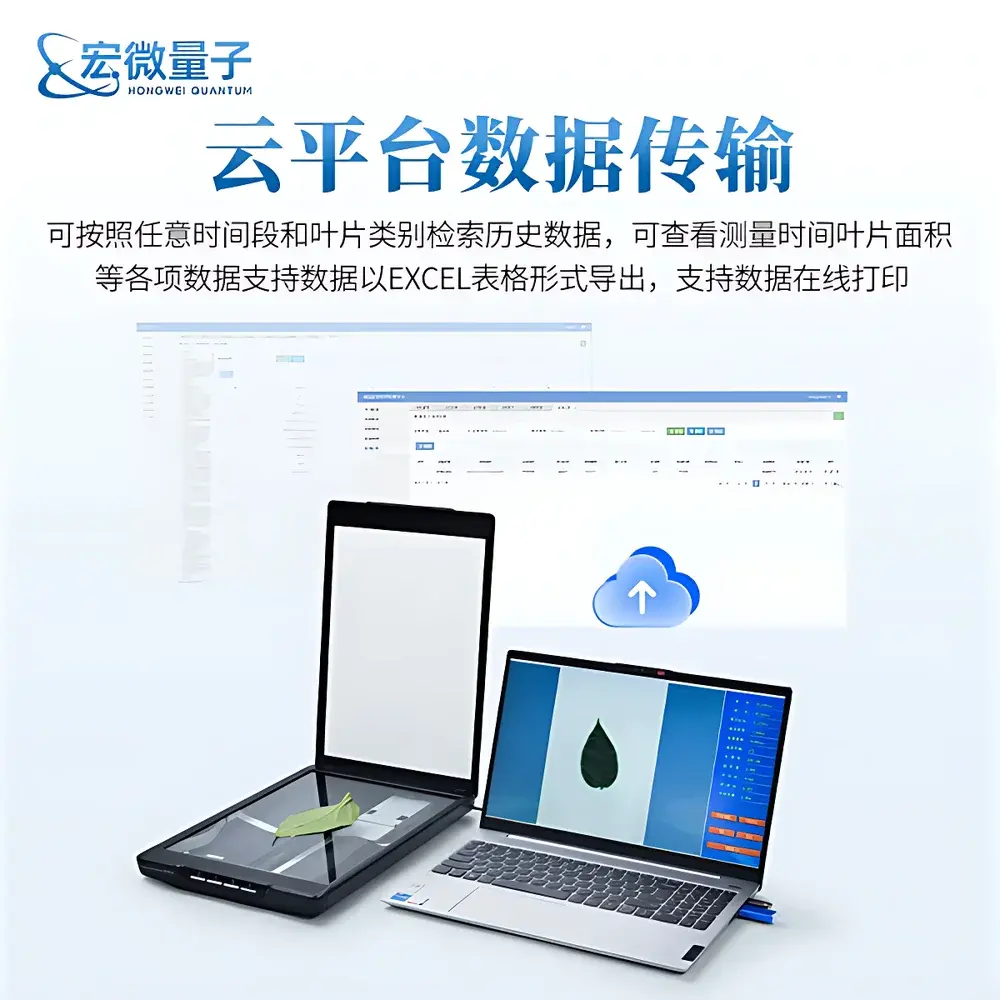
| Data Export | Excel-compatible CSV, time-series charts, cloud-based historical retrieval |
Overview
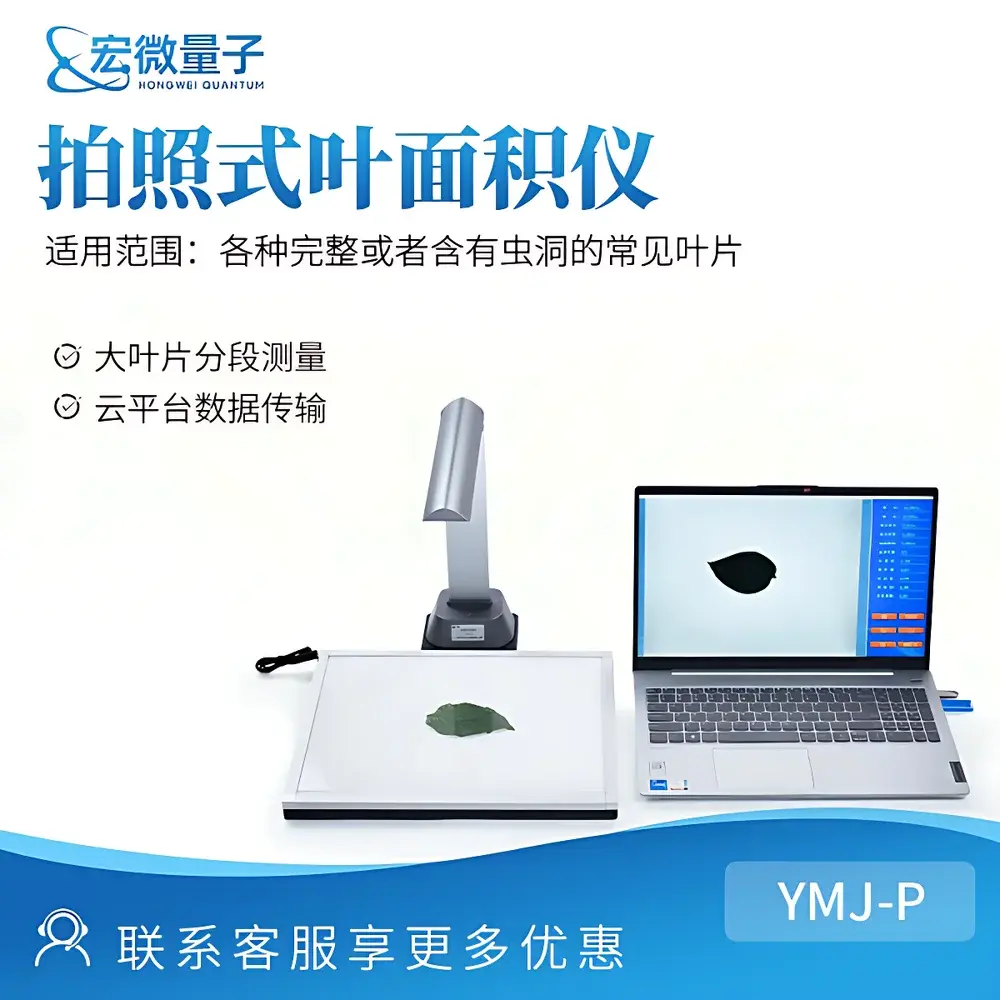
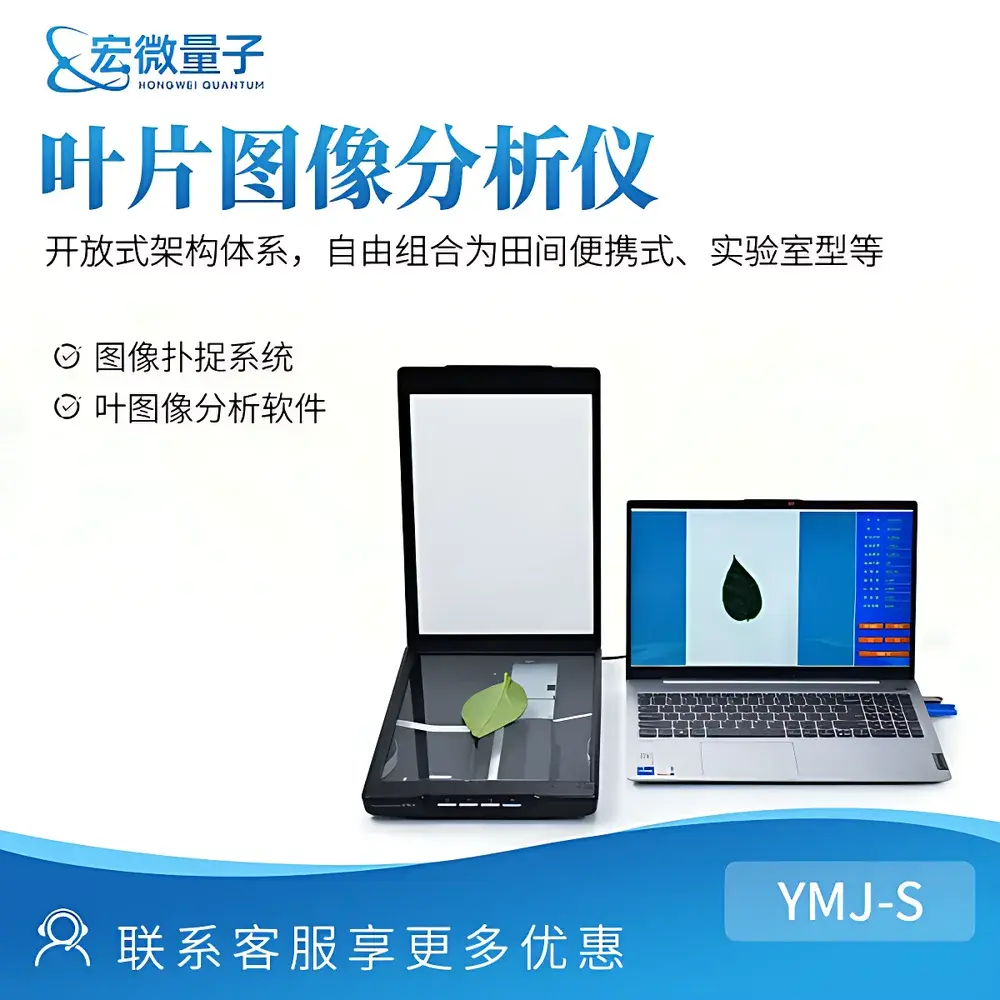
The Hongweiliangzi YMJ-P Image-Based Leaf Area Analyzer is a dedicated desktop instrument engineered for non-destructive, high-throughput morphometric analysis of plant leaves. It operates on the principle of digital image acquisition and pixel-based geometric reconstruction: a calibrated 16-megapixel camera captures high-contrast top-down images of placed leaves under uniform LED illumination; proprietary image-processing algorithms then perform edge detection, contour segmentation, and real-world unit conversion to compute biologically relevant metrics—including projected area, perimeter, maximum length and width, circularity, convexity ratio, sphericity, shape factor, and pest-damage quantification (e.g., number and total area of insect holes). Unlike contact-based planimeters or destructive gravimetric methods, the YMJ-P eliminates physical deformation, operator-dependent tracing, and sample loss—enabling repeatable, observer-independent measurements across diverse leaf morphologies, including irregular, lobed, or perforated specimens.
Key Features
- Non-contact, rapid measurement: Full parameter extraction in under 100 ms per image, with no leaf handling beyond placement on the imaging stage.
- High-resolution geometric quantification: Area resolution of 0.001 cm² and linear resolution of 0.01 cm support detection of subtle morphological changes in physiological or stress-response studies.
- Comprehensive morphometric output: Delivers 10 standardized parameters—including convexity ratio (area of convex hull / leaf area), sphericity (surface-area-equivalent sphere diameter / actual perimeter), and shape factor (4π × area / perimeter²)—aligned with widely adopted botanical indices.
- Robust handling of damaged tissue: Capable of detecting and quantifying insect holes ≥0.1 cm², with automatic hole counting and cumulative damage area calculation.
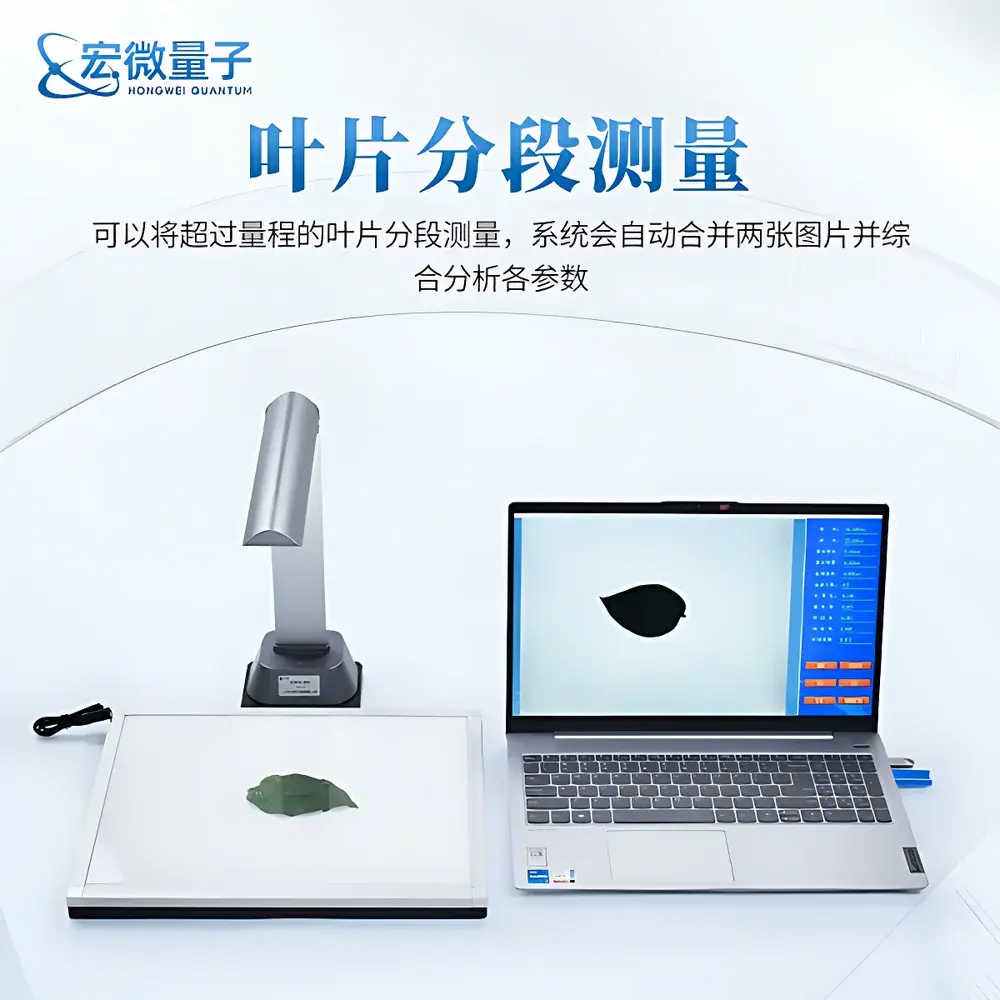
- Extended-range capability: Supports segmented imaging of leaves exceeding 290 mm in length or 210 mm in width; software automatically stitches and recalculates composite metrics without user intervention.
- Thermal and environmental resilience: Validated operational range from −30 °C to +80 °C ambient temperature and 0–100% relative humidity ensures reliability in greenhouse, field-lab, or controlled-environment chamber deployments.
Sample Compatibility & Compliance
The YMJ-P accommodates fresh, dried, pressed, or laminated leaves across angiosperm and gymnosperm species—including monocots (e.g., maize, rice), dicots (e.g., Arabidopsis, tomato, soybean), and broadleaf forage crops. Its optical design minimizes shadow artifacts and accommodates moderate surface curvature. While not certified to ISO/IEC 17025 for accredited testing, the system supports Good Laboratory Practice (GLP) workflows through timestamped audit logs, version-controlled software, and traceable calibration metadata. Measurement accuracy (±1–2%) meets typical requirements for phenotypic screening, agronomic trials, and ecophysiological monitoring as referenced in ASTM D7299 (Standard Guide for Digital Image Analysis of Plant Morphology) and FAO Crop Water Productivity Guidelines.
Software & Data Management
The bundled Windows-native application (compatible with Windows 7 SP1 through Windows 11) provides an intuitive GUI for image capture, batch processing, and parameter visualization. All raw images and computed metrics are stored locally with embedded EXIF-style metadata (timestamp, operator ID, calibration ID). Cloud synchronization enables secure, role-based access to centralized datasets; users can filter by date range, treatment group, or species tag, generate time-series line plots for longitudinal tracking, and export fully annotated tables in .csv or Excel (.xlsx) format. Audit trails record every data modification event—including manual corrections—and comply with basic FDA 21 CFR Part 11 expectations for electronic records when deployed with institutional IT governance controls.
Applications
- Phenotyping pipelines: High-volume screening of leaf area index (LAI)-related traits in mutant libraries or breeding populations.
- Abiotic stress assessment: Quantifying reductions in expansion rate, asymmetry, or damage accumulation under drought, salinity, or heavy metal exposure.
- Pest and disease monitoring: Objective scoring of herbivory severity and temporal progression of foliar lesions.
- Ecological field studies: Rapid digitization of herbarium vouchers or in situ leaf collections with minimal equipment footprint.
- Teaching laboratories: Visual demonstration of allometric scaling, fractal dimension estimation, and shape-based taxonomic discrimination.
FAQ
What operating systems does the YMJ-P software support?
Windows 7 SP1 or newer (64-bit); Windows 10 is strongly recommended for optimal USB 2.0 driver stability and cloud API compatibility.
Can the system measure leaves larger than 290 mm in length?
Yes—via two-image segmentation mode: the software aligns overlapping regions using fiducial markers, merges coordinate spaces, and computes unified morphometrics without interpolation artifacts.
Is calibration required before each use?
A one-time spatial calibration (using supplied reference grid) establishes pixel-to-mm mapping; subsequent measurements retain accuracy for ≥12 months under stable thermal conditions (<±2% drift per year).
How is insect hole area calculated?
Holes are identified as enclosed background regions within the leaf contour mask; only contiguous pixels ≥100 (equivalent to 0.1 cm² at nominal resolution) are counted and summed.
Does the system support automated batch processing?
Yes—the software includes scriptable batch mode for unattended acquisition and analysis of multi-sample trays, with configurable naming conventions and folder-based project organization.






