
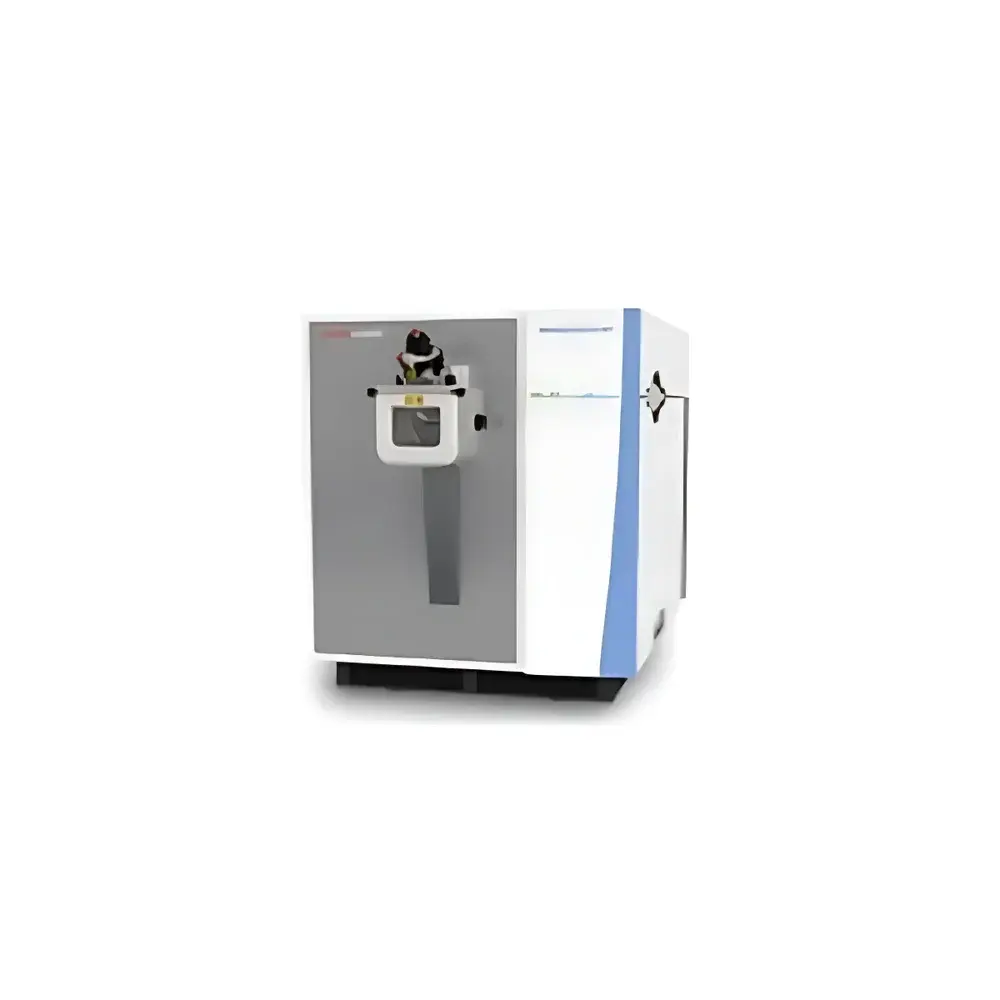
Thermo Fisher Orbitrap Exploris 240 Mass Spectrometer
| Brand | Thermo Fisher |
|---|---|
| Origin | Shanghai, China |
| Manufacturer Type | Authorized Distributor |
| Product Origin | Domestic (China) |
| Model | Orbitrap Exploris 240 |
| Pricing | Available Upon Request |
Overview
The Thermo Fisher Orbitrap Exploris 240 is a next-generation benchtop quadrupole-Orbitrap mass spectrometer engineered for high-resolution, high-mass-accuracy analysis across diverse life science and pharmaceutical applications. It employs a high-field Orbitrap mass analyzer operating at up to 240,000 resolution (at m/z 200), leveraging an optimized central electrode geometry and ultra-high vacuum environment to deliver exceptional mass accuracy (< 3 ppm RMS over 5 days with EASY IC internal calibration) and reproducibility. Its core architecture integrates a conjugated hyperbolic quadrupole with advanced RF-driven ion optics, enabling narrow isolation windows (down to 0.4 Th) and high ion transmission efficiency—critical for quantitative precision in complex biological matrices. Designed as a direct evolution of the Q Exactive platform, the Exploris 240 maintains full backward compatibility with existing Thermo Scientific ion sources—including the FAIMS Pro interface—and supports seamless integration into LC-MS workflows for proteomics, metabolomics, and biopharmaceutical characterization.
Key Features
- High-field Orbitrap analyzer delivering up to 240,000 resolution at m/z 200 and scan speeds up to 22 Hz for rapid, high-fidelity MS and MS/MS acquisition
- Integrated EASY IC (Electrospray Ionization Internal Calibration) system: single-point calibration sustains sub-3 ppm mass accuracy for ≥120 hours without recalibration
- Flexible acquisition modes including TopN, TopSpeed DDA, Data-Independent Acquisition (DIA), and MSX for comprehensive coverage and targeted sensitivity
- Native compatibility with Thermo Scientific FAIMS Pro interface for gas-phase ion mobility separation—enhancing peptide selectivity, reducing co-isolation interference, and improving S/N for low-abundance analytes
- AcquireX intelligent data acquisition workflow automates decision-tree-based MS/MS triggering, optimizing coverage for small molecules and lipids while minimizing redundant fragmentation
- Compact benchtop footprint (65 × 80 × 60 cm) with robust mechanical design and automated diagnostics for >95% instrument uptime in regulated environments
Sample Compatibility & Compliance
The Orbitrap Exploris 240 interfaces natively with standard HPLC/UHPLC systems and supports reversed-phase, HILIC, and ion-pairing chromatography for peptides, metabolites, glycans, and intact proteins. It accommodates flow rates from 50 nL/min to 1 mL/min via electrospray, nanoESI, and heated ESI sources. For biopharmaceutical analysis, optional BioPharma software enables native MS up to m/z 8000, supporting intact mAb, ADC, and multisubunit complex characterization under non-denaturing conditions. The system complies with GLP/GMP-aligned data integrity requirements: audit trails, electronic signatures, and 21 CFR Part 11–ready operation are supported through Thermo Scientific Chromeleon CDS and Compound Discoverer software. Method validation workflows align with ICH Q2(R2), USP <1225>, and ISO/IEC 17025 documentation standards.
Software & Data Management
Data acquisition is managed via Thermo Scientific Tune and Xcalibur 4.5 software, offering intuitive method setup, real-time QC monitoring, and automated calibration verification. AcquireX dynamically adjusts acquisition parameters based on precursor intensity and retention time—reducing missing values in untargeted metabolomics. Compound Discoverer 3.3 provides end-to-end processing for small molecule ID (including in silico fragmentation, spectral library matching, and pathway mapping), while Proteome Discoverer 2.5 supports label-free, TMT, and DIA quantification with FDR-controlled peptide inference. All raw data files (.raw) are stored in vendor-neutral mzML format upon export, ensuring long-term archival compliance and third-party tool interoperability (e.g., Skyline, MaxQuant, OpenMS). Audit trail logs record every parameter change, user action, and instrument event with timestamp and operator ID.
Applications
- Quantitative Proteomics: Delivers deep coverage in label-free DDA/DIA and multiplexed TMTpro (16-plex) workflows; FAIMS Pro coupling mitigates ratio compression in TMT experiments by suppressing interfering precursors during isolation
- Metabolomics & Lipidomics: AcquireX-driven intelligent MS/MS enhances structural confidence for unknowns; mild trapping mode minimizes in-source fragmentation artifacts critical for labile metabolites
- Biopharmaceutical Characterization: Supports top-down, middle-down, peptide mapping, and native MS of mAbs, ADCs, and fusion proteins—enabling charge state deconvolution, PTM localization, and higher-order structure assessment
- Environmental & Food Safety Screening: High-resolution accurate-mass (HRAM) detection enables retrospective analysis of suspect and non-target compounds in complex extracts without re-injection
- Clinical Research: Validated for biomarker verification workflows per CLIA and ISO 15189 frameworks, with traceable calibration and QC sample tracking
FAQ
What is the maximum resolution achievable on the Orbitrap Exploris 240?
The system achieves up to 240,000 resolution (FWHM) at m/z 200 under standard acquisition conditions.
Does the instrument support real-time internal calibration during acquisition?
Yes—EASY IC enables continuous mass accuracy correction using a dual-spray reference channel, maintaining ≤3 ppm error over multi-day runs.
Can the Exploris 240 perform native MS of intact antibodies?
With the optional BioPharma software package and appropriate source tuning, it supports native MS up to m/z 8000 for intact mAb analysis.
Is FAIMS Pro interface required for DIA workflows?
No—it is optional but strongly recommended for complex proteomes to improve precursor specificity and reduce chimeric spectra in DIA.
How does AcquireX improve small molecule identification reliability?
By intelligently triggering MS/MS only on ions exceeding intensity thresholds and eluting within defined RT windows, it reduces false positives and improves annotation confidence in untargeted studies.





