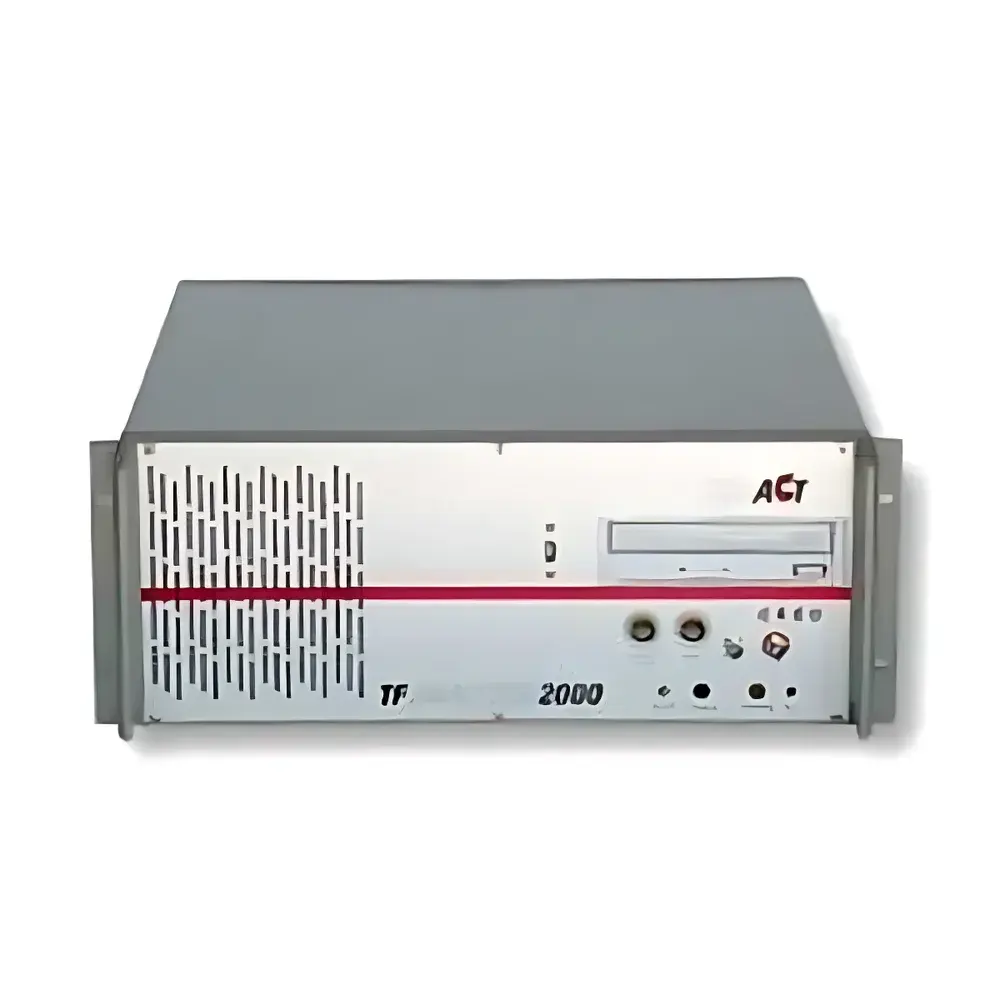
aixACCT TF Analyzer 3000E High-Speed Modular Ferroelectric Test System
| Brand | aixACCT |
|---|---|
| Origin | Germany |
| Model | TF Analyzer 3000E |
| Voltage Range | ±25 V (extendable to ±10 kV) |
| Hysteresis Frequency | up to 1 MHz (High-Speed FE Module) |
| Minimum Pulse Width | 50 ns |
| Minimum Rise Time | 10 ns |
| Maximum Fatigue Frequency | 16 MHz |
| Current Amplification Range | 1 pA to 1 A |
| Max Load Capacitance | 1 nF |
| Peak Output Current | ±1 A |
| Software Platform | aixPlorer v5.x (Windows 7/10 compatible) |
| Compliance | ASTM D991, IEC 62047-18, ISO/IEC 17025-ready architecture |
| Modularity | FE, MR, RX, DR modules |
Overview
The aixACCT TF Analyzer 3000E is a high-speed, modular ferroelectric test system engineered for precision characterization of ferroelectric, piezoelectric, and pyroelectric materials across research laboratories and semiconductor process development environments. Based on the fundamental principles of charge displacement measurement under controlled electric field excitation, the system quantifies polarization hysteresis, domain switching kinetics, fatigue degradation, retention stability, and intrinsic leakage mechanisms in thin films, bulk ceramics, multilayer capacitors, and MEMS-integrated functional oxides. Its architecture integrates calibrated voltage sourcing, sub-nanosecond timing resolution, low-noise current sensing, and real-time digital signal processing — enabling direct correlation between electrical stimulus and material response at microsecond-to-millisecond timescales. Designed specifically for advanced semiconductor R&D, the TF Analyzer 3000E supports rigorous evaluation of ferroelectric gate stacks (e.g., HfO₂-based), memory capacitor reliability, and emerging negative-capacitance transistor architectures under dynamic bias conditions.
Key Features
- High-speed ferroelectric testing with hysteresis acquisition up to 1 MHz (enhanced FE module) and pulse generation down to 50 ns width and 10 ns rise time
- Multi-module expandability: FE (ferroelectric), MR (magnetoresistive/ferromagnetic), RX (relaxation current), and DR (dielectric self-discharge) modules operate independently or in synchronized configuration
- Ultra-low-current measurement capability from 1 pA to 1 A, supported by programmable gain amplifiers and active guarding for minimized noise floor
- Integrated 256-channel automated test sequencer for high-throughput screening of wafer-level test structures and combinatorial libraries
- Optional high-voltage extension (±10 kV) with matched impedance matching and arc suppression for breakdown and imprint analysis of high-k dielectrics
- Native compatibility with external metrology tools including laser interferometers (for strain mapping), AFM/SPM systems (for local polarization switching), and temperature-controlled stages (−180 °C to +600 °C)
- Real-time DLCC (Dynamic Leakage Current Compensation) and in-situ offset compensation algorithms to isolate true polarization current from parasitic conduction pathways
Sample Compatibility & Compliance
The TF Analyzer 3000E accommodates diverse sample geometries: sputtered or ALD-deposited thin films (5 nm–5 µm), screen-printed thick films, bulk single crystals or polycrystalline ceramics (up to Ø50 mm), and packaged MEMS devices with probe-compatible electrode pads. It meets the electrical safety and measurement traceability requirements defined in IEC 62047-18 (Microelectromechanical systems — Part 18: Test methods for ferroelectric thin films) and aligns with ASTM D991 (Standard Test Method for Dielectric Properties of Solid Electrical Insulating Materials at Power Frequencies). Its hardware architecture and software audit trail support GLP/GMP-compliant workflows, including full 21 CFR Part 11 electronic signature readiness via optional validation packages. All modules undergo factory calibration against NIST-traceable standards, with documented uncertainty budgets provided per ISO/IEC 17025 guidelines.
Software & Data Management
Controlled by the aixPlorer v5.x software suite, the system delivers deterministic test sequencing, parameter-driven script execution (Python API available), and hierarchical data structuring compliant with FAIR principles (Findable, Accessible, Interoperable, Reusable). Raw waveforms, processed hysteresis loops, fatigue progression datasets, and C(V) spectra are stored in HDF5 format with embedded metadata (sample ID, ambient conditions, operator, timestamp, instrument configuration). Built-in statistical analysis tools enable automatic extraction of coercive field (Ec), remnant polarization (Pr), saturation polarization (Ps), and loss tangent (tan δ). Export options include CSV, MATLAB .mat, and industry-standard IGOR Pro formats. For enterprise integration, RESTful API endpoints allow bidirectional communication with LIMS and MES platforms.
Applications
- Characterization of Hf₀.₅Zr₀.₅O₂ (HZO) and doped variants for FeRAM and NC-FET applications
- Reliability assessment of ferroelectric capacitors under accelerated voltage cycling (fatigue) and DC bias stress (retention)
- Quantitative separation of relaxation current (dP/dt) and leakage current (Ileak) using RX module step-response protocols
- Self-discharge behavior modeling of DRAM-compatible high-k dielectrics via DR module’s ultra-low-current hold-and-monitor sequences
- Correlative electromechanical mapping when coupled with AFM-based piezoresponse force microscopy (PFM)
- Thermally assisted switching studies across −180 °C to +600 °C using integrated cryo- and high-temperature stages
- Industrial process control of ferroelectric thin-film deposition uniformity through multi-site automated testing
FAQ
What distinguishes the TF Analyzer 3000E from the 2000E model?
The 3000E introduces significantly higher bandwidth: hysteresis acquisition up to 1 MHz (vs. 5 kHz on standard 2000E FE module), 50 ns pulse resolution (vs. 2 µs), and 16 MHz fatigue cycling (vs. 50 kHz). It also supports impedance spectroscopy (via optional add-on) and features enhanced noise rejection for sub-picoampere measurements.
Can the system perform simultaneous ferroelectric and magnetoresistive measurements?
Yes — the MR module operates concurrently with FE or RX modules via synchronized trigger distribution and shared timing reference, enabling cross-coupled multiferroic property mapping.
Is thermal control integrated or external?
Thermal control is modular: users select from a range of certified accessories — including thin-film probe-stage cryostats (−180 °C), bulk-sample furnaces (+600 °C), and Peltier-based rapid thermal cyclers — all interfaced via IEEE-488 or Ethernet for closed-loop temperature programming.
How is data integrity ensured during long-duration fatigue tests?
All acquired data streams are written continuously to redundant SSD storage with cyclic redundancy checking (CRC-32). The system logs hardware health metrics (temperature, supply voltage, amplifier status) alongside each measurement, and supports automated retest upon detected anomaly.
Does the software support custom waveform synthesis?
Yes — the aixPlorer waveform editor allows user-defined arbitrary voltage profiles (including multi-step PUND, trapezoidal, and stochastic sequences) with nanosecond-level timing resolution and hardware-triggered synchronization across all modules.