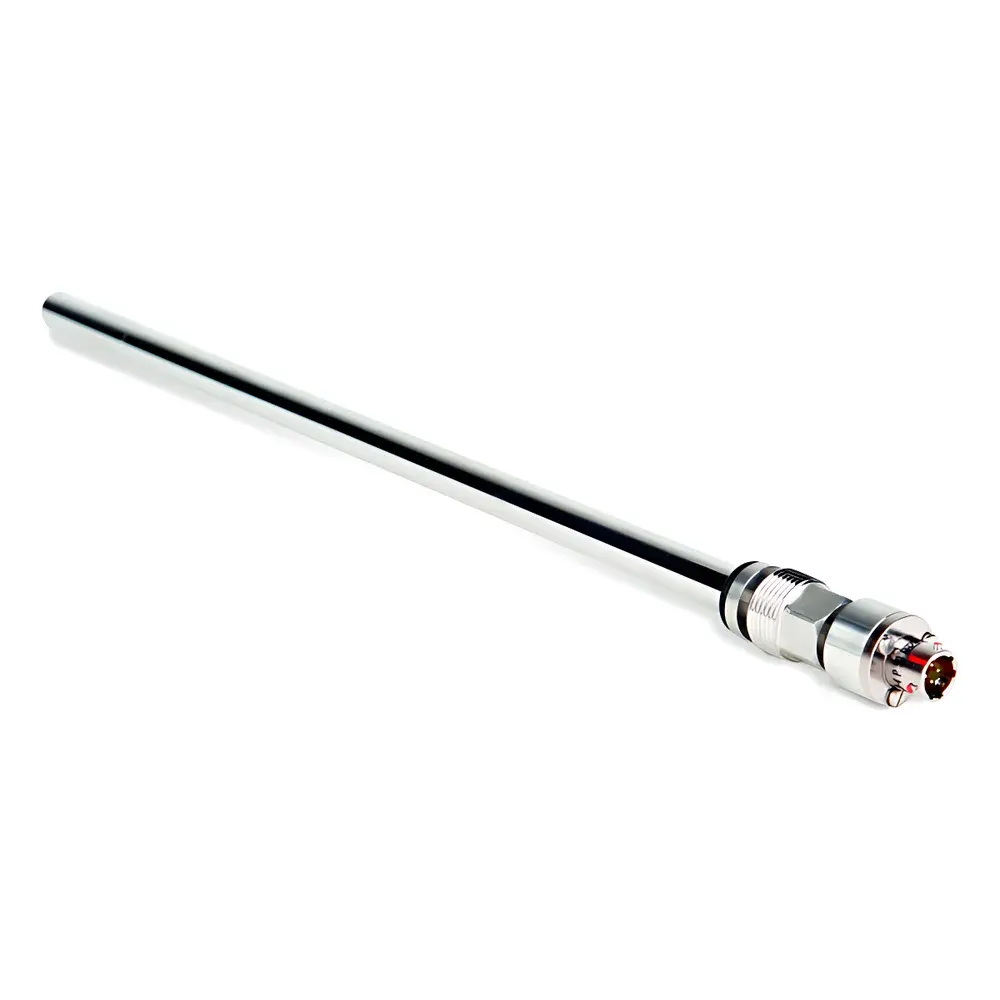
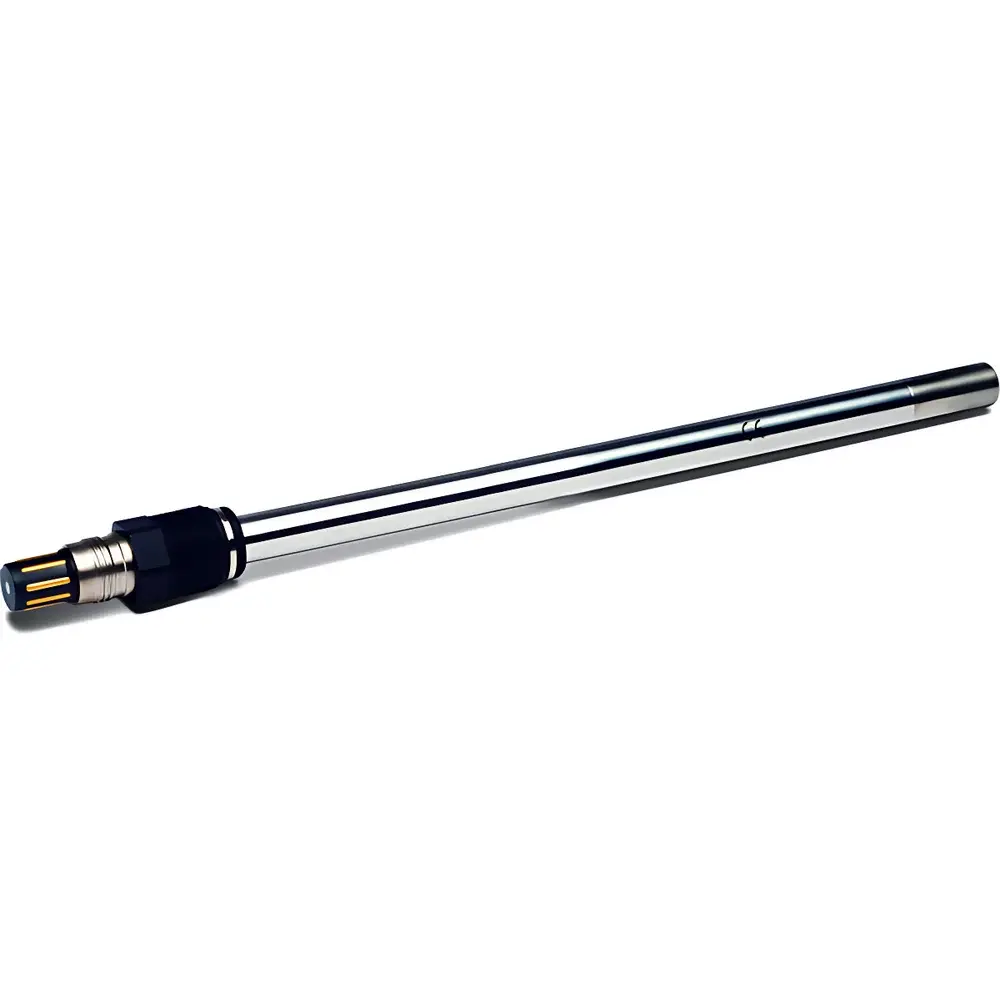
Thermo Scientific TruDO Sterilizable Optical Dissolved Oxygen Sensor
| Brand | Thermo Scientific |
|---|---|
| Origin | USA |
| Manufacturer Type | Original Equipment Manufacturer (OEM) |
| Origin Category | Imported |
| Model | TruDO |
| Price Range | USD 7,000 – 14,000 |
Overview
The Thermo Scientific TruDO Sterilizable Optical Dissolved Oxygen Sensor is an advanced, maintenance-optimized optical oxygen sensing platform engineered for continuous, in-situ monitoring of dissolved oxygen (DO) concentration in biopharmaceutical, fermentation, and sterile process applications. Unlike traditional electrochemical Clark-type sensors, the TruDO employs luminescence quenching technology—where molecular oxygen modulates the intensity and lifetime of a ruthenium-based fluorophore immobilized within a gas-permeable optical membrane. This solid-state, electrolyte-free measurement principle eliminates drift associated with electrolyte depletion, cathode polarization, or membrane clogging, delivering stable, long-term signal integrity under dynamic process conditions. Designed for direct integration into stainless-steel bioreactors, single-use bags, and inline flow cells, the TruDO sensor supports full-cycle autoclaving at 121 °C for 30 minutes (SIP-compatible), enabling true process sterility assurance without sensor removal or post-sterilization recalibration.
Key Features
- Optical luminescence-based DO measurement with no electrolyte, no cathode, and no polarizing voltage—eliminating electrochemical maintenance requirements
- Reusable sensor body with field-replaceable optical cap assembly (membrane + fluorophore), reducing total cost of ownership versus disposable probes
- Autoclavable design rated for repeated SIP cycles up to 121 °C / 30 min, compliant with ASME BPE 2022 and ISO 13485 manufacturing environments
- Fast response time (t90 < 15 s in aqueous media) with minimal sensitivity to foam, surfactants, or flow velocity fluctuations
- Integrated temperature compensation via built-in Pt1000 RTD, supporting accurate DO reporting across 0–50 °C operating range
- 316L stainless steel wetted parts and IP68-rated housing for compatibility with CIP/SIP validation protocols and aggressive cleaning chemistries
Sample Compatibility & Compliance
The TruDO sensor is validated for use in mammalian cell culture, microbial fermentation, vaccine production, and upstream purification processes where regulatory-grade data integrity is required. It meets critical compliance criteria for GMP environments, including traceable calibration records, configurable audit trails, and support for FDA 21 CFR Part 11-compliant electronic signatures when paired with Thermo Scientific Orion Star™ or DeltaV™-integrated control systems. The optical cap’s silicone-based gas-permeable matrix demonstrates consistent O2 permeability across pH 4–9 and conductivity ranges up to 20 mS/cm, ensuring reliability in complex media containing proteins, lipids, or antifoam agents. All materials comply with USP Class VI biological safety testing and EU Regulation (EC) No. 1935/2004 for food-contact applications.
Software & Data Management
TruDO integrates seamlessly with industry-standard DCS, SCADA, and MES platforms via 4–20 mA analog output, Modbus RTU/TCP, or HART 7 communication protocols. Firmware-upgradable electronics support configurable linearization curves (e.g., % air saturation, mg/L, ppm, or µmol/kg) and user-defined alarm thresholds with hysteresis. When deployed with Thermo Scientific’s Process Analytics Suite, the sensor enables automated calibration verification using zero-oxygen and span-gas challenges, generating IQ/OQ documentation packages aligned with ASTM E2500-13 and Annex 11 (EU GMP) requirements. Data logging includes timestamped raw luminescence decay profiles, enabling retrospective root-cause analysis of transient DO excursions.
Applications
- Real-time DO monitoring during fed-batch and perfusion bioreactor runs (CHO, HEK293, E. coli)
- In-line quality control of purified water (PW) and water-for-injection (WFI) distribution loops
- Oxygen mass transfer coefficient (kLa) determination in scale-down models and ATFD studies
- Process validation support for sterilization cycles in stainless-steel and single-use systems
- Environmental monitoring of anaerobic digester headspace and aerobic wastewater treatment basins
FAQ
Can the TruDO sensor be calibrated in situ without removing it from the vessel?
Yes—zero-point calibration can be performed using nitrogen sparging or sodium sulfite solution; span calibration is supported via air-saturated buffer or certified gas mixtures, both executable online.
What is the expected lifetime of the optical cap under repeated SIP cycles?
Typical cap service life exceeds 12 autoclave cycles at 121 °C; performance stability is verified by periodic factory-traceable reference checks using NIST-traceable DO standards.
Does the TruDO require periodic electrolyte refills or membrane replacement like electrochemical probes?
No—there is no liquid electrolyte, no consumable cathode, and no routine membrane replacement; only the optical cap is replaced as a single pre-assembled unit every 6–12 months depending on process severity.
Is the sensor compatible with single-use bioreactors and tubing-based flow paths?
Yes—compact 12-mm diameter threaded body and optional sanitary clamp fittings (e.g., Tri-Clamp® 1.5″) enable direct mounting on bag ports or inline housings with minimal dead volume.
How does the TruDO handle interference from hydrogen peroxide or chlorine residuals during CIP?
The fluorophore matrix is chemically inert to oxidants at typical CIP concentrations (< 1% H2O2, < 200 ppm NaOCl); extended exposure beyond validated limits may accelerate cap aging and is monitored via diagnostic luminescence decay diagnostics.