
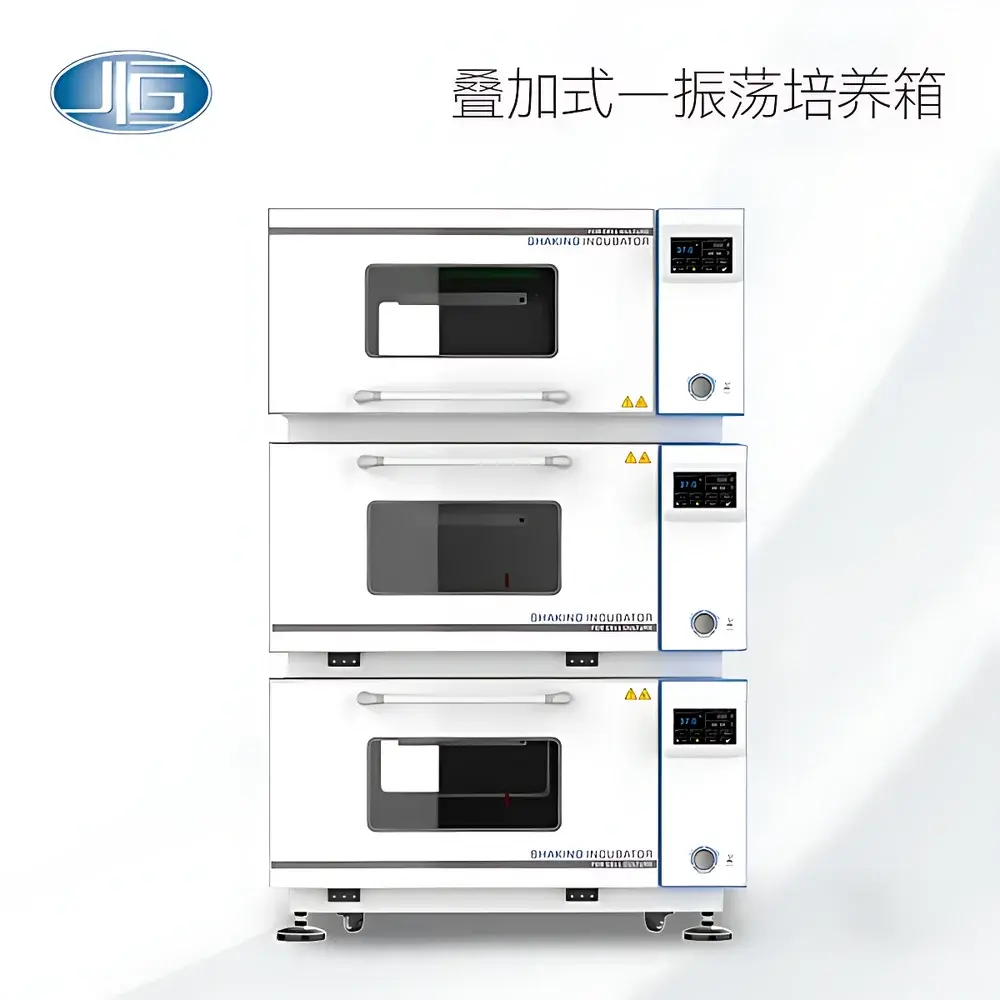
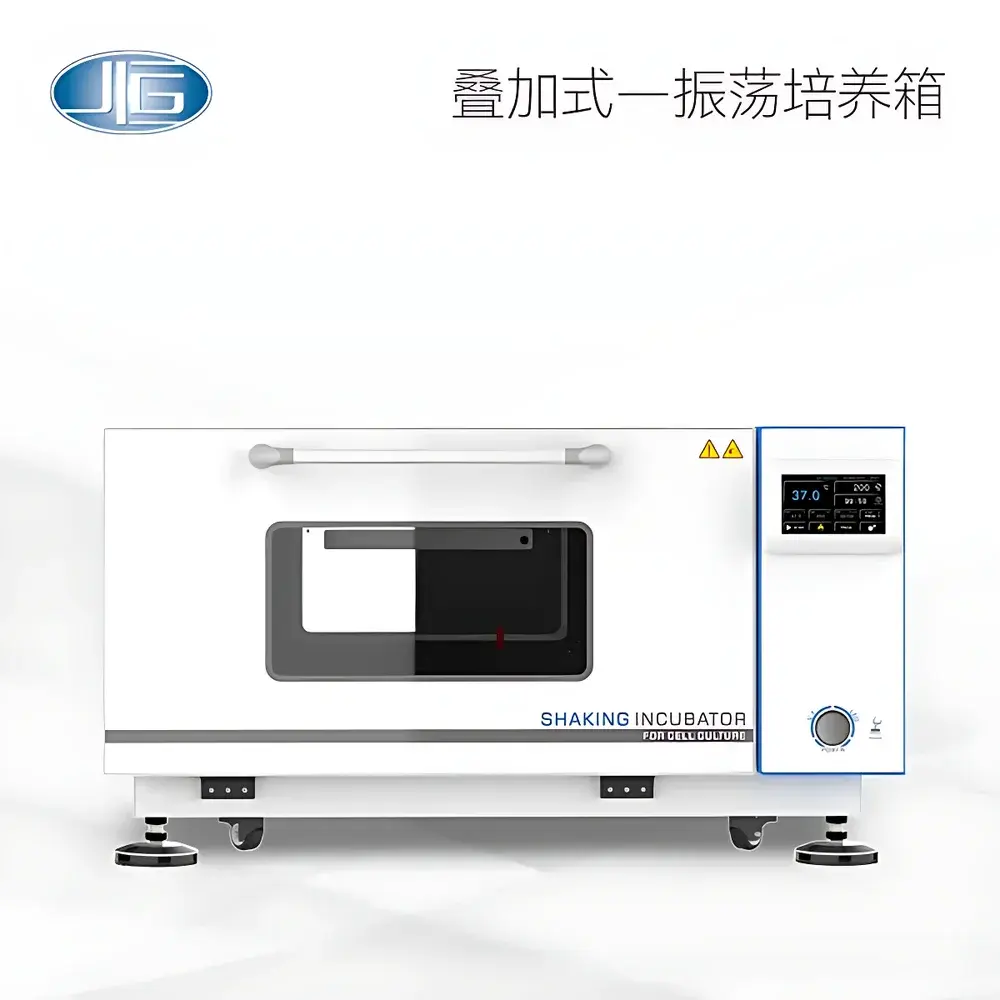
YSI HZQ121-123C Stackable Orbital Shaking Incubator
| Brand | YSI (Yi-Heng) |
|---|---|
| Origin | Jiangsu, China |
| Manufacturer Type | OEM/ODM Producer |
| Instrument Type | CO₂-Compatible Stackable Shaking Incubator |
| Speed Range | 40–300 rpm |
| Speed Accuracy | ±1 rpm |
| Temperature Range | RT+5°C to 65°C |
| Temperature Uniformity | ±0.3°C |
| Chamber Volume | Configurable per module (standard single-module volume: 121 L) |
| External Dimensions | 650 × 700 × 1,850 mm (W × D × H, triple-stack configuration) |
| Drive Mechanism | Triple-Eccentric-Balance Orbital Drive |
| Motor Type | Brushless DC Motor with High-Torque Start-up |
| Control Interface | 7-inch Full-Color TFT Touchscreen |
| Data Export | Standard USB-A port (U-disk logging), optional RS-485 serial interface |
| Compliance | Designed to support GLP/GMP-aligned workflows |
Overview
The YSI HZQ121-123C Stackable Orbital Shaking Incubator is an integrated environmental control platform engineered for precision microbial growth, cell suspension culture, and biochemical reaction kinetics under controlled temperature and orbital agitation. Unlike conventional standalone shakers or static incubators, this system implements a modular stack architecture—allowing up to three identical units to be vertically aligned—thereby optimizing floor space without compromising chamber volume or operational independence. Its core thermal regulation relies on PID-controlled resistive heating combined with a high-efficiency refrigeration circuit (R134a-free, eco-friendly refrigerant), enabling stable setpoint maintenance across the full operating range (RT+5°C to 65°C). The orbital motion is generated via a triple-eccentric-balance drive mechanism, ensuring uniform acceleration distribution across the entire platform surface—even at maximum load (up to 25 kg) and speed (300 rpm)—minimizing sample shear variance and improving reproducibility in suspension-based assays.
Key Features
- Modular stackable design: Three independent incubator modules can be stacked vertically (total height ≤1,850 mm), each with full functional autonomy—including separate temperature, speed, and timer settings.
- Triple-eccentric-balance orbital drive: Eliminates mechanical resonance and platform wobble; delivers consistent 25 mm orbit diameter with <±0.5 mm positional deviation across full speed range (40–300 rpm).
- Brushless DC motor with high-torque start-up: Enables reliable initiation of heavy loads (e.g., full-volume flasks with viscous media); rated for continuous operation >7,200 hours MTBF with zero scheduled maintenance.
- Intelligent ambient temperature compensation: Dedicated external thermistor continuously monitors room temperature and dynamically adjusts heating duty cycle to prevent thermal overshoot during rapid setpoint transitions.
- Full-color 7-inch TFT touchscreen interface: Displays real-time temperature, speed, elapsed time, and alarm status simultaneously; supports multi-language UI (English, German, French, Spanish) and intuitive menu navigation.
- Enhanced safety architecture: Independent overtemperature cutoff (hardware-latched relay), door-interlocked shutdown (fan/heating/shaking disabled upon opening), and programmable ramp-to-setpoint profiles to reduce condensation risk.
Sample Compatibility & Compliance
The HZQ121-123C accommodates standard microbiological and cell culture vessels—including Erlenmeyer flasks (50–5,000 mL), test tubes, deep-well plates, and custom bioreactor cartridges—on its 304 stainless-steel chamber interior and antimicrobial-coated aluminum platform. The chamber’s seamless weld construction and removable tray facilitate full-surface cleaning and optional aqueous sanitation (IPX1-rated ingress protection for low-pressure rinse). While not certified as a Class II biosafety cabinet, the unit meets IEC 61010-1:2010 safety standards for laboratory electrical equipment and complies with EMC directive 2014/30/EU. Its control firmware architecture supports audit-trail-ready operation when paired with optional RS-485 connectivity and third-party SCADA integration—enabling alignment with FDA 21 CFR Part 11 data integrity expectations where electronic records are archived externally.
Software & Data Management
Data acquisition is handled locally via embedded non-volatile memory (16 MB), supporting timestamped logging of temperature, speed, and runtime at user-defined intervals (1 s to 60 min resolution). All logs export directly to FAT32-formatted USB flash drives in CSV format—compatible with Excel, MATLAB, and LabArchives ingestion pipelines. Optional RS-485 Modbus RTU implementation permits bidirectional communication with central lab management systems (LIMS) for remote parameter setting, alarm forwarding, and historical trend retrieval. When configured with the optional embedded thermal printer, hard-copy session reports—including start/stop timestamps, max/min deviations, and operator ID—can be generated on demand. Role-based access control (administrator/operator/visitor) is enforced via encrypted password authentication and configurable permission matrices—supporting institutional SOP enforcement and personnel accountability.
Applications
This incubator serves critical roles in academic research laboratories, pharmaceutical QC environments, and industrial bioprocess development facilities. Typical use cases include aerobic bacterial culture (e.g., E. coli expression optimization), yeast fermentation kinetics, suspension-adapted mammalian cell expansion (CHO, HEK293), enzyme activity profiling under agitation-stress conditions, and accelerated stability testing of liquid formulations. Its CO₂-compatible configuration allows integration with external gas mixing manifolds for pH-controlled mammalian cultures—though CO₂ sensing and feedback regulation require add-on modules. The system’s thermal stability and speed repeatability make it suitable for ASTM D2576-compliant viscosity screening of culture broths and USP environmental monitoring media preparation.
FAQ
Is the HZQ121-123C validated for GMP environments?
It is designed to support GMP-aligned workflows through hardware-level redundancy (dual temperature sensors, independent overtemp cutoff), but formal qualification (IQ/OQ/PQ) must be performed by the end user per their internal validation protocol.
Can multiple stacked units share a single controller?
No—each module operates autonomously with its own microcontroller, display, and I/O. Synchronization of parameters requires manual entry or external SCADA coordination via RS-485.
What is the maximum flask size supported on the platform?
The standard platform accommodates one 5-L flask or up to twelve 250-mL flasks simultaneously, with balanced weight distribution required for speeds above 200 rpm.
Does the unit support humidity control?
Humidity monitoring and active humidification are available only as factory-installed options (model suffix “-H”), requiring dedicated steam generator and RH sensor integration.
Is firmware update capability included?
Yes—USB-based field updates are supported using YSI-provided .bin files; version history and checksum verification are displayed pre-installation.




