
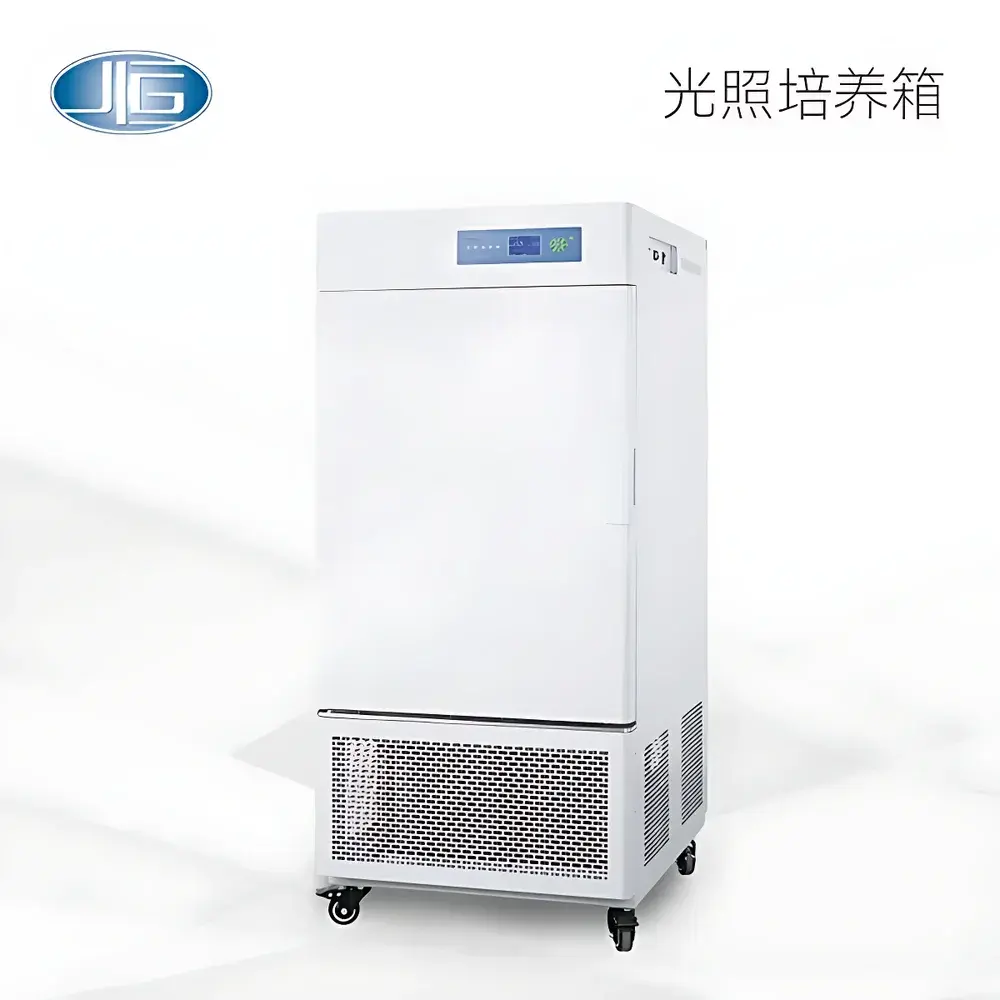
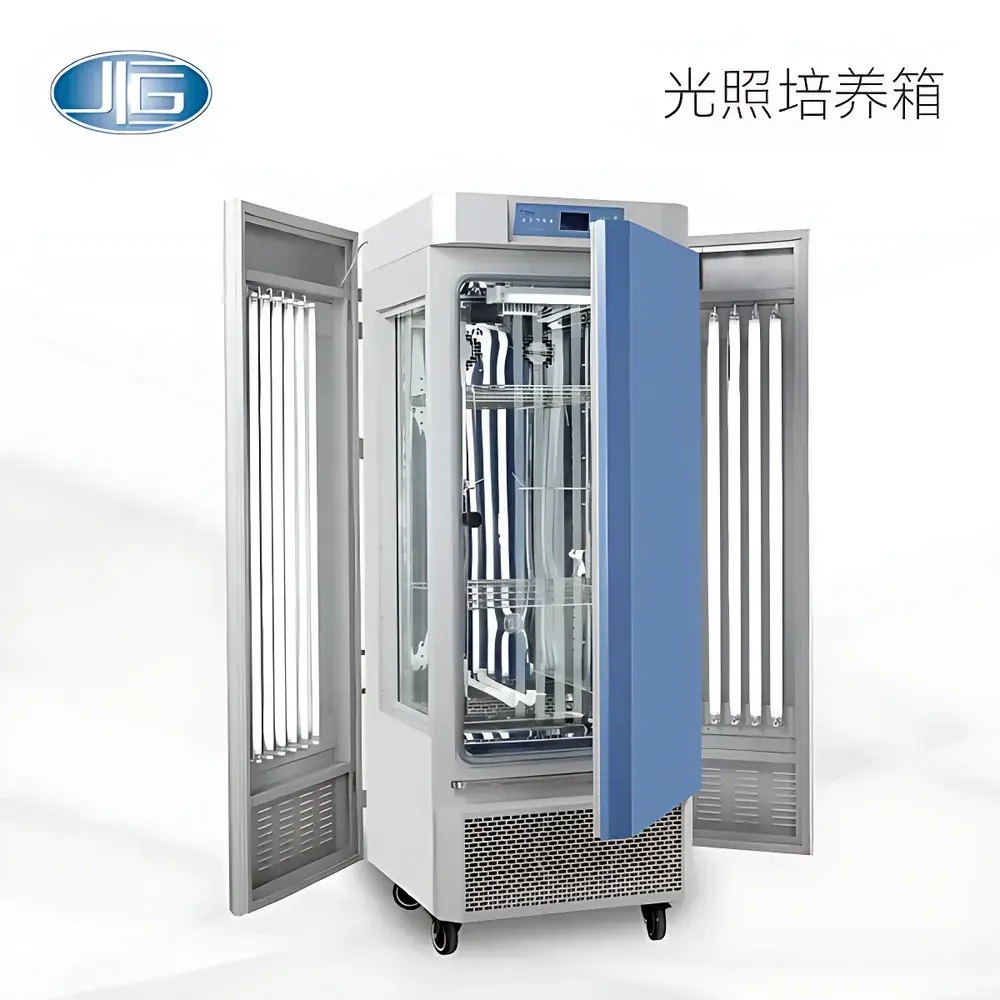
YiHeng MGC Series Intelligent Programmable Plant Growth Chamber with High-Intensity LED Illumination
| Brand | YiHeng |
|---|---|
| Origin | Shanghai, China |
| Manufacturer Type | Direct Manufacturer |
| Product Origin | Domestic (China) |
| Model | MGC Series |
| Price Range | USD 2,500 – 11,200 (FOB Shanghai) |
| Illumination Configuration | Triple-Side Uniform LED Lighting |
| Light Source | High-Efficiency White & Blue-Enhanced LED Arrays |
| Temperature Control Range | 4–50°C (dark mode) |
| Temperature Uniformity | ±1°C (at setpoint, measured at 5 reference points per shelf) |
| Illuminance Range | 0–30,000 lux, 6-step digital adjustment (0%, 20%, 40%, 60%, 80%, 100%) |
| Internal Chamber Volume | 965 × 580 × 1430 mm (W×D×H) |
| External Dimensions | 1475 × 890 × 1780 mm (W×D×H) |
| Programmable Cycles | Up to 30 user-defined programs, each supporting time segments from 1 to 99 hours |
| Safety System | Independent dual-limit temperature alarm (hardware + software redundancy) |
| Communication Interface | RS485 port (optional USB-to-RS485 adapter for PC connectivity) |
| Optional Accessories | CO₂ inlet port + NDIR CO₂ sensor module (0–2000 ppm, ±30 ppm accuracy), humidity control upgrade (not standard) |
Overview
The YiHeng MGC Series Intelligent Programmable Plant Growth Chamber is an engineered environmental simulation system designed for controlled-conditions plant physiology, photobiology, seed germination, tissue culture, and small-animal acclimation studies. It operates on a dual-regulation principle: precise thermoelectric and compressor-based temperature control coupled with spectrally optimized, uniform LED illumination. Unlike conventional incubators, the MGC series integrates programmable diurnal cycles—enabling independent scheduling of temperature, light intensity, and duration across multiple phases per day—to replicate natural or experimental photoperiodic regimes. Its triple-side LED illumination architecture ensures ≥90% spatial uniformity across the working volume (per ASTM E2912-13 test protocol), minimizing edge effects in quantitative growth assays. The chamber meets structural and operational requirements for GLP-compliant environmental monitoring when configured with optional data logging and audit-trail-capable software.
Key Features
- Microprocessor-based dual-loop PID temperature control with real-time compensation for illumination-induced thermal load—maintaining stability within ±1°C even during full-intensity 30,000-lux operation.
- Triple-face LED lighting system using calibrated white LEDs (5000K CCT) with supplemental 450 nm blue peak output, delivering photobiologically relevant photon flux (PPFD up to ~800 µmol/m²/s at shelf level, typical).
- High-grade mirror-finish stainless-steel interior (AISI 304), seamless corner transitions, and removable perforated stainless steel shelves—designed for autoclave-compatible cleaning and ISO 14644-1 Class 7 cleanroom compatibility.
- Dual-redundant safety architecture: independent mechanical high-limit thermostat plus software-enforced upper bound; automatic power cutoff upon deviation >±3°C from setpoint.
- 30-segment programmable controller supporting multi-day cyclic profiles—e.g., “16h light / 8h dark” with ramped temperature transitions between phases.
- Energy-optimized refrigeration: hermetic rotary compressor (Embraco or equivalent), R600a refrigerant (GWP = 10), achieving <1.8 kWh/day average consumption at 25°C/10,000 lux steady state.
Sample Compatibility & Compliance
The MGC chamber accommodates standard plant growth vessels (e.g., Magenta boxes, square petri dishes, hydroponic trays), tissue culture flasks (T-25 to T-175), insect rearing cages (up to 20 cm height), and small vertebrate enclosures (mice/rats ≤250 g). Internal dimensions support vertical stacking of up to four 500 mL Erlenmeyer flasks per shelf. All materials in contact with samples comply with USP Class VI biocompatibility standards. The system conforms to IEC 61000-6-3 (EMC emissions) and IEC 61010-1 (safety for laboratory equipment). Optional CO₂ integration supports ASTM D5116-17 for carbon assimilation rate studies and aligns with USDA-APHIS greenhouse biosecurity guidelines when sealed configuration is selected.
Software & Data Management
RS485 interface enables integration with third-party SCADA platforms (e.g., LabVIEW, Ignition) or YiHeng’s optional PC-based monitoring suite (YiControl v3.2). The software provides real-time graphing of temperature, illuminance, and runtime status; configurable alarms (email/SMS via gateway); and CSV export of timestamped datasets compliant with FDA 21 CFR Part 11 requirements—including electronic signatures, audit trails, and user-access-level permissions (admin/operator/viewer). Data logging interval is adjustable from 10 seconds to 60 minutes; onboard memory retains ≥30 days of 1-minute resolution data during network interruption.
Applications
- Photomorphogenesis studies under defined spectral and temporal light regimes (e.g., phytochrome A/B activation kinetics)
- Seed dormancy release and germination rate quantification across climate scenarios (IPCC RCP 4.5/8.5 analogs)
- In vitro micropropagation of horticultural species requiring strict photoperiod control (e.g., Arabidopsis thaliana, Solanum lycopersicum)
- Pre-acclimatization of tissue-cultured plantlets prior to ex vitro transfer
- Standardized rearing of Drosophila melanogaster and Tribolium castaneum under regulated thermal–photoperiod stress
- Phytochemical induction experiments (e.g., anthocyanin accumulation under high-blue irradiance)
FAQ
Is the LED light spectrum customizable beyond the standard white+blue configuration?
No—the base MGC model uses fixed-spectrum LEDs optimized for broad-spectrum photosynthetic efficiency. Custom narrowband (e.g., 660 nm red, 730 nm far-red) arrays are available as OEM-engineered variants (lead time: 12 weeks; MOQ: 5 units).
Does the chamber support humidity control?
Humidity regulation is not included in the standard configuration. A retrofit humidification/dehumidification module (0–95% RH, ±3% accuracy) is available as a factory-installed option—requires additional internal ducting and condensate management.
Can the CO₂ sensor be calibrated in-house?
Yes—the NDIR sensor includes two-point calibration capability (zero gas: N₂; span gas: certified 1000 ppm CO₂ in air) via front-panel menu; calibration logs are stored and exportable.
What is the mean time between failures (MTBF) for the compressor system?
Based on accelerated life testing per ISO 13381-1, MTBF exceeds 35,000 hours under continuous 25°C/10,000-lux operation with 8-hour daily maintenance windows.
Is validation documentation (IQ/OQ/PQ protocols) provided?
YiHeng supplies standardized IQ/OQ templates aligned with ISO/IEC 17025 and EU GMP Annex 15. PQ execution requires site-specific sensor mapping and is performed by authorized service engineers (fee-based).



