
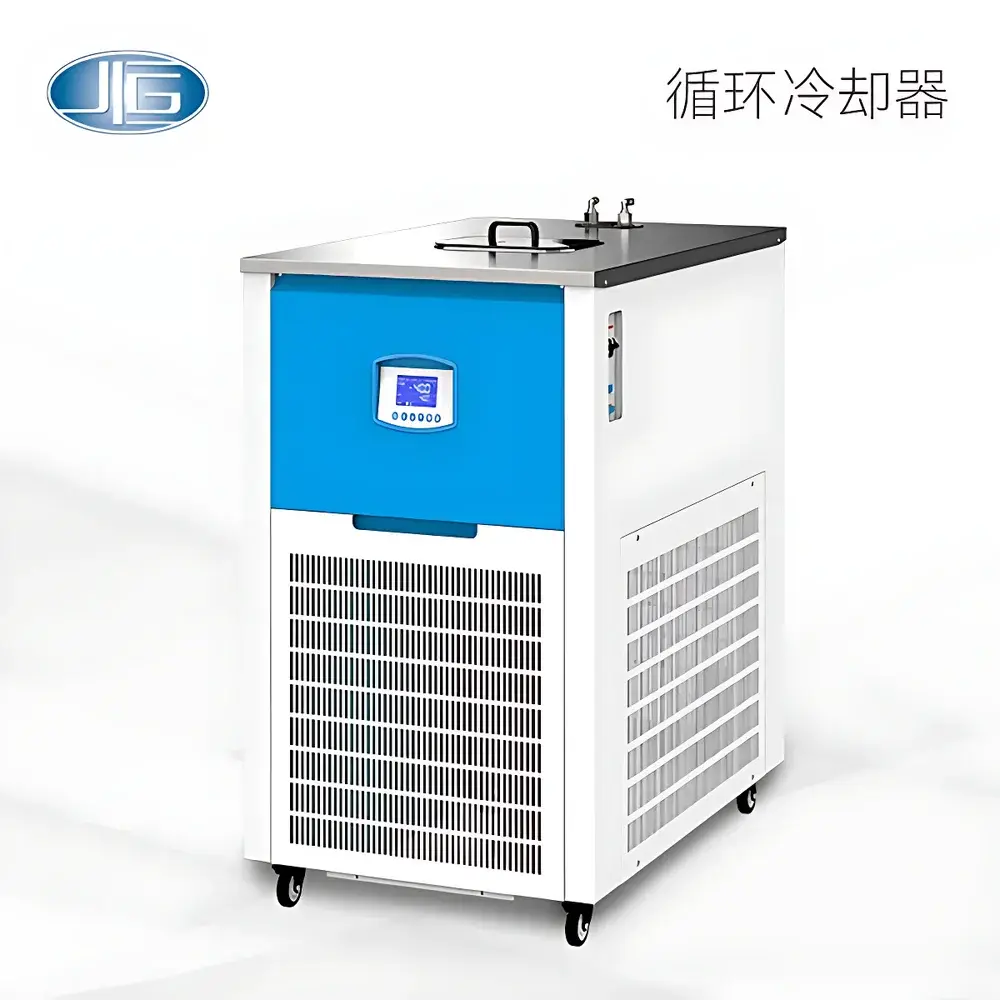
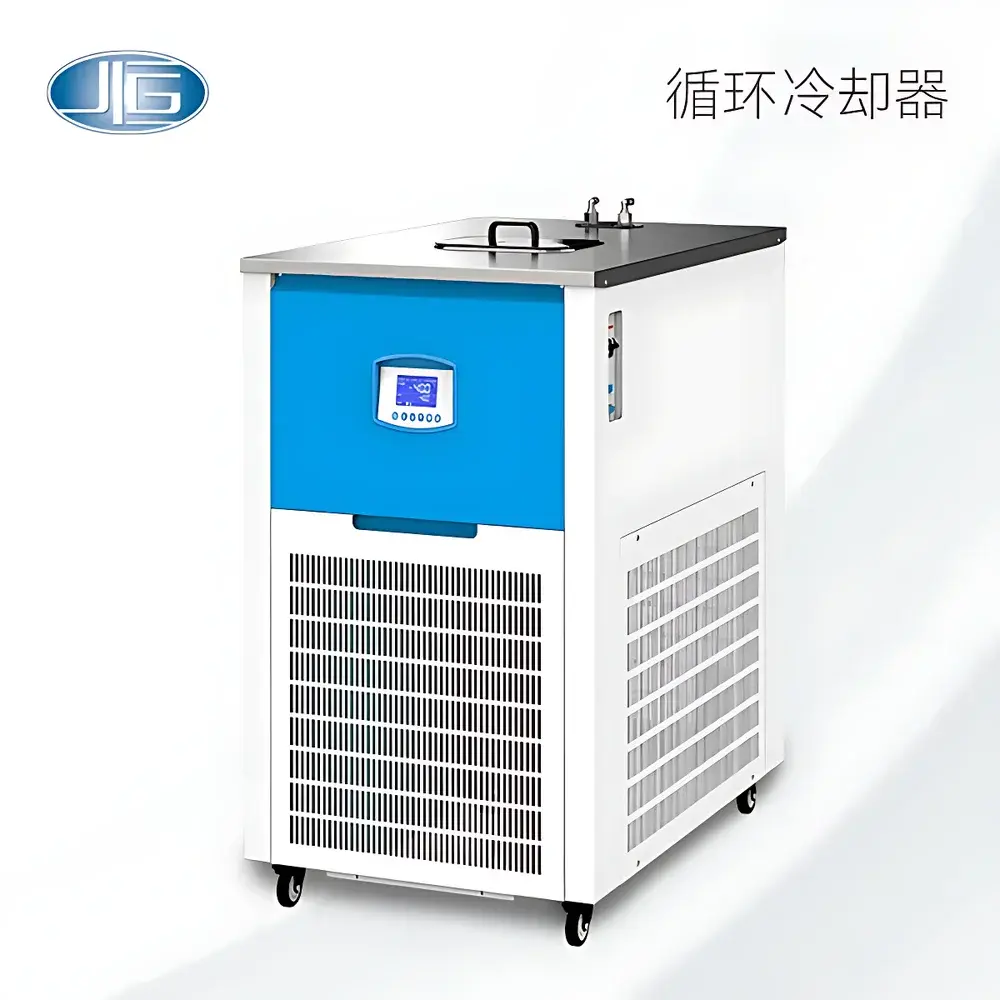
Yiheng BWR Series Circulating Chillers
| Brand | Yiheng |
|---|---|
| Origin | Jiangsu, China |
| Manufacturer Type | Direct Manufacturer |
| Country of Origin | China |
| Model | BWR |
| Pricing | Available Upon Request |
| Display | LCD Controller with Multi-Parameter On-Screen Readout |
| Control Interface | Menu-Driven Navigation |
| Temperature Protection | Compressor Overheat & Overload Protection, Bath Temperature High/Low Alarm, Refrigeration System High-Pressure Alert |
| Bath Design | Open-Type Reservoir (Suitable for Pre-Freezing & Low-Temperature Applications) |
| Compatibility | Compatible with Glassware |
| Accessibility | Hinged Lid for Real-Time Visual Monitoring of Coolant Level and State |
| Heat Exchanger Material | 304 Stainless Steel Tubing (Wear-Resistant, Vibration-Resistant, Easy to Clean) |
| Maintenance Access | Magnetic Front Panel for Tool-Free Condenser Cleaning |
| Footprint | Compact Benchtop Form Factor |
| Multi-Unit Cooling | Capable of Simultaneously Serving Multiple Rotary Evaporators |
| Optional Communication | RS-485 Interface for PC-Based Data Logging and Remote Monitoring |
Overview
The Yiheng BWR Series Circulating Chillers are engineered for precision temperature control in laboratory-scale physical property testing applications. These units operate on a closed-loop refrigeration cycle utilizing R404A or R134a refrigerant (model-dependent), delivering stable, adjustable cooling capacity across a typical operating range of –20 °C to +40 °C (dependent on ambient conditions and load). The chiller maintains thermal equilibrium via forced circulation of heat-transfer fluid—typically water, water–glycol mixtures, or compatible organic solvents—through external equipment such as rotary evaporators, spectrophotometer jackets, or material testing fixtures. Designed specifically for integration into analytical and QC workflows, the BWR series emphasizes operational reliability, chemical compatibility, and compliance-ready functionality in environments where reproducible thermal management is critical to measurement integrity.
Key Features
- LCD controller with simultaneous display of bath temperature, setpoint, real-time compressor status, and system pressure indicators—enabling immediate verification of operational parameters without menu navigation.
- Comprehensive safety architecture including dual-stage compressor thermal protection, overcurrent cutoff, high-pressure cut-off switch, and intelligent bath temperature deviation alarms with audible alert and screen flashing indication.
- Open-bath reservoir design supports flexible experimental configurations: serves as a pre-freezing bath for cryogenic sample preparation, low-temperature reaction vessel, or constant-temperature immersion medium for calorimetry or viscosity measurements.
- Chemically resistant wetted components—including 304 stainless steel heat exchanger tubing and EPDM seals—ensure long-term stability when circulating acidic media (e.g., dilute HCl, HNO₃) or common organic solvents (e.g., acetone, ethanol, THF) within defined concentration and temperature limits.
- Tool-free maintenance access: magnetic front panel allows rapid removal for condenser coil inspection and dust removal without disassembly tools or service downtime.
- Benchtop footprint optimized for space-constrained laboratories—typical dimensions accommodate placement beneath fume hoods or adjacent to multi-instrument racks without obstructing workflow pathways.
- Multi-load capability: integrated pump delivers sufficient flow rate and head pressure to maintain target temperature across up to three concurrently operated rotary evaporators (depending on total heat load and ambient conditions).
Sample Compatibility & Compliance
The BWR chiller is validated for use with standard laboratory glassware (e.g., round-bottom flasks, condensers, jacketed reactors) and compatible with ASTM D1557 (standard test method for freezing point of organic liquids) and ISO 2936 (laboratory equipment — specifications for refrigerated circulators). Its open-bath configuration permits direct immersion of sensor probes and sample holders, supporting GLP-compliant temperature mapping studies. While not certified to IEC 61010-1 for hazardous area use, the unit conforms to general electrical safety requirements for Class I, Division 2 laboratory environments. No internal fluid contact with non-stainless-steel metals ensures minimal risk of catalytic degradation during extended solvent circulation.
Software & Data Management
An optional RS-485 serial interface enables integration with third-party data acquisition systems or custom LabVIEW/Python-based monitoring platforms. When connected, the chiller transmits timestamped bath temperature, setpoint, compressor duty cycle, and alarm status at user-configurable intervals (1–60 seconds). Data export supports CSV format for post-experiment trend analysis, audit trail generation, and alignment with 21 CFR Part 11–aligned electronic record systems—provided the host software implements required electronic signature and audit log functions. Firmware supports firmware update via serial command protocol, ensuring long-term adaptability to evolving lab informatics infrastructure.
Applications
- Rotary evaporation: Maintaining consistent condenser jacket temperatures to maximize solvent recovery efficiency and prevent bumping during low-boiling-point compound isolation.
- Rheological testing: Stabilizing sample temperature during rotational or oscillatory rheometry (e.g., Brookfield, TA Instruments) to eliminate thermal drift in viscosity or viscoelastic modulus measurements.
- Spectroscopic instrumentation: Providing thermal regulation for CCD detectors, laser diodes, or FTIR interferometers requiring sub-ambient stabilization to reduce dark current noise.
- Material testing: Supporting controlled cooling cycles in tensile testers, dynamic mechanical analyzers (DMA), or differential scanning calorimeters (DSC) during thermal transition characterization.
- QC/QA validation: Enabling repeatable thermal conditioning of reference standards prior to physical property evaluation per USP , ISO/IEC 17025, or internal SOPs.
FAQ
What is the maximum allowable working temperature of the bath fluid?
The BWR series is rated for continuous operation with aqueous solutions up to +40 °C and low-temperature operation down to –20 °C. For glycol–water mixtures, maximum recommended concentration is 30% v/v to preserve pump seal longevity and heat transfer efficiency.
Can the chiller be used with chlorinated solvents such as chloroform or dichloromethane?
Chlorinated hydrocarbons are not recommended due to potential degradation of EPDM seals and long-term corrosion risk to 304 stainless steel under sustained exposure. Consult Yiheng’s chemical compatibility chart before use.
Is remote start/stop functionality supported via RS-485?
Yes—RS-485 communication supports full bidirectional control, including setpoint adjustment, pump enable/disable, and alarm reset commands using Modbus RTU protocol.
How often should the condenser coil be cleaned?
Under typical clean-room laboratory conditions, quarterly visual inspection and cleaning are sufficient. In high-dust environments, monthly maintenance is advised.
Does the unit include a built-in calibration certificate?
No factory calibration certificate is supplied by default. Traceable NIST-traceable calibration services are available upon request and require separate quotation.



