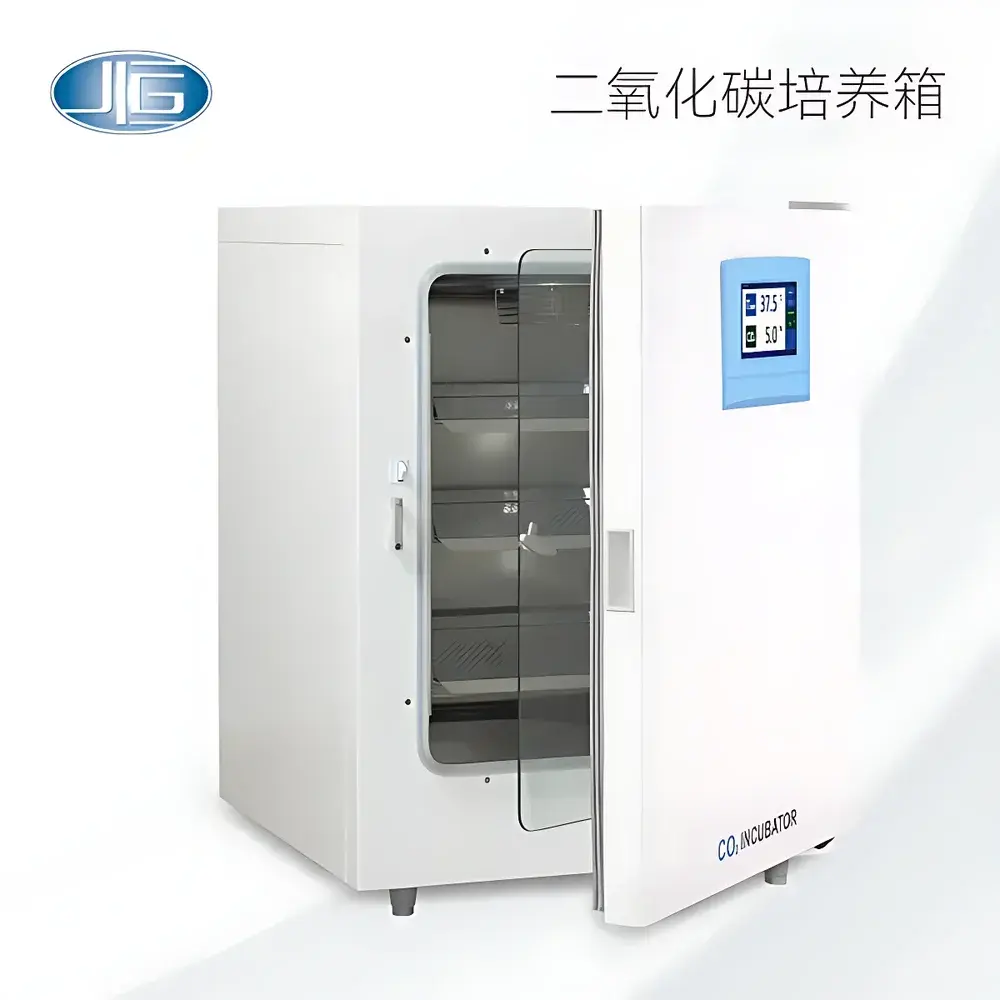
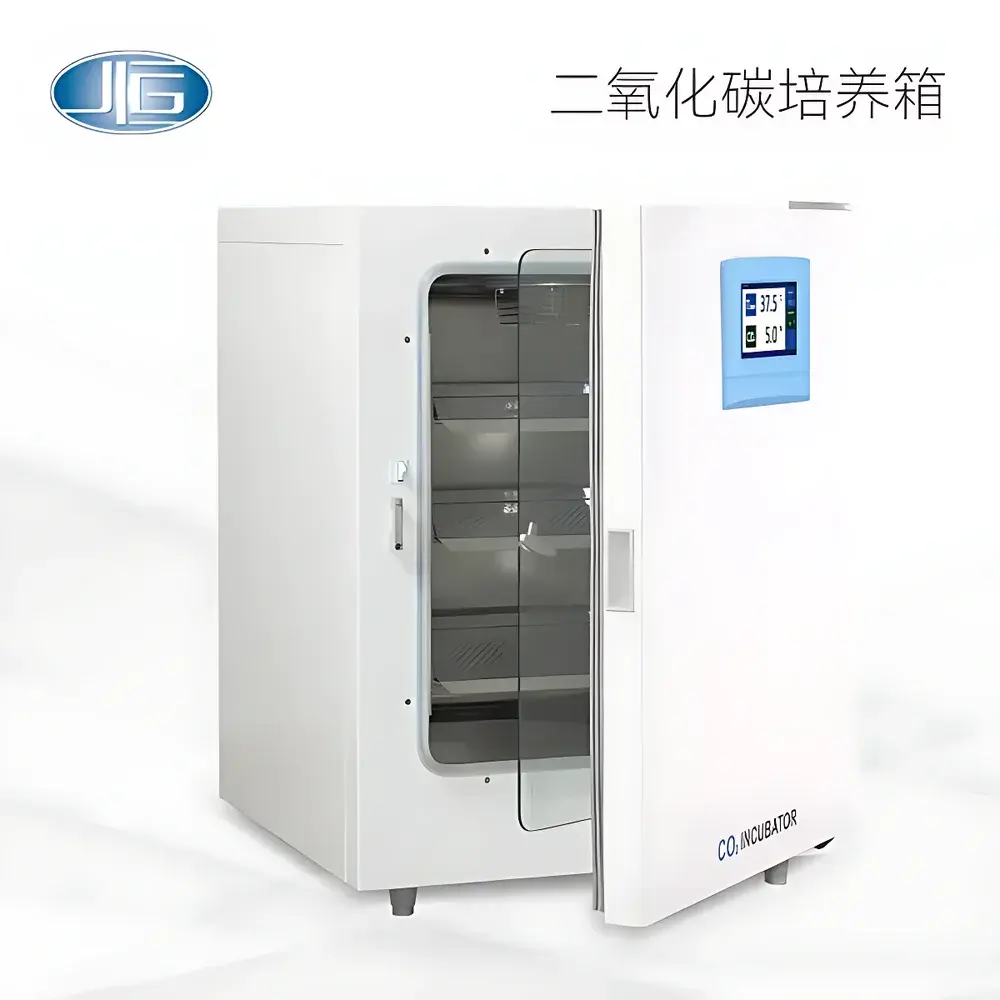
Yiheng BPN-RHP Touchscreen Carbon Dioxide Incubator
| Brand | Yiheng |
|---|---|
| Origin | Shanghai, China |
| Manufacturer Type | Direct Manufacturer |
| Regional Classification | Domestic (China) |
| Model | BPN-RHP |
| Instrument Type | Air-jacketed CO₂ Incubator |
| CO₂ Detection | Infrared (IR) Sensor |
| Temperature Control Range & Accuracy | +5 to 50 °C, ±0.1 °C (typical at setpoint) |
| Temperature Uniformity | ±0.3 °C (at 37 °C) |
| CO₂ Concentration Control Range & Accuracy | 0–20%, ±0.1% (full scale) |
| Chamber Dimensions (W×D×H) | 600 × 630 × 670 mm |
| External Dimensions (W×D×H) | 790 × 840 × 940 mm |
| Standard Sterilization System | 90 °C High-humidity Thermal Sterilization (RHP) |
Overview
The Yiheng BPN-RHP Touchscreen Carbon Dioxide Incubator is an air-jacketed, microprocessor-controlled environmental chamber engineered for high-fidelity mammalian cell culture under tightly regulated physiological conditions. It maintains precise control of temperature, CO₂ concentration, and relative humidity—critical parameters for reproducible in vitro cell growth, hybridoma production, stem cell expansion, and primary tissue culture. The system employs a dual-wall air-jacket design with independent heating circuits for rapid thermal recovery and superior spatial uniformity. Its core sensing architecture integrates a calibrated Pt100 temperature probe, a high-stability infrared (IR) CO₂ sensor, and a dedicated ambient temperature monitor—enabling real-time feedforward compensation against environmental fluctuations. Unlike thermal conductivity (TC) sensors, the IR-based CO₂ detection is immune to cross-sensitivity from humidity or temperature transients, ensuring long-term measurement integrity even during frequent door openings.
Key Features
- Intuitive 7-inch capacitive touchscreen interface with bilingual (English/Chinese) language support and full graphical data visualization—including synchronized real-time curves for temperature, CO₂, and door status.
- Integrated 72-hour event log with timestamped records of temperature deviations, CO₂ excursions, door openings, alarm triggers, and sterilization cycles—fully exportable via USB or RS-485.
- 90 °C high-humidity thermal sterilization (RHP) cycle validated for complete microbial decontamination of all internal surfaces, including sensors, fan assemblies, shelves, and brackets—no disassembly required.
- Dual-stage door heating system prevents condensation on the inner glass panel, eliminating optical obstruction and reducing contamination risk from water droplet-mediated microbial transfer.
- Independent overtemperature safety circuit with audible/visual alarm and automatic heater cutoff—compliant with IEC 61010-1 requirements for laboratory equipment safety.
- Microbial-grade CO₂ inlet filter (≥0.3 µm, 99.99% efficiency) and internal HEPA recirculation filter (ISO Class 5 compliant) ensure continuous sterile gas environment.
- Configurable user access levels (Administrator, Operator, Guest) with password protection, individual login tracking, and full audit trail per 21 CFR Part 11 principles.
Sample Compatibility & Compliance
The BPN-RHP accommodates standard SBS-format multiwell plates (6–384-well), T-flasks (T25 to T225), Petri dishes, roller bottles, and custom bioreactor vessels up to 670 mm height. Its chamber geometry and airflow management support homogeneous conditions across heterogeneous sample loads without stratification. The incubator meets ISO 13485 manufacturing quality standards and is designed to support GLP and GMP workflows requiring traceable environmental control. Optional O₂ control (via zirconia sensor, 0.1–90% range) enables tri-gas configuration for hypoxic, normoxic, and hyperoxic studies—fully compatible with USP and ASTM E2912 guidance for controlled atmosphere cell culture systems.
Software & Data Management
The embedded controller supports local data storage (≥10,000 events), USB export of CSV-formatted logs, and optional RS-485 Modbus RTU communication for integration into centralized lab monitoring platforms (e.g., LabVantage, Thermo Fisher SampleManager). Remote supervision—including setpoint adjustment, alarm acknowledgment, and sterilization initiation—is achievable via serial-connected PC software. All operational changes are time-stamped and attributed to authenticated users, satisfying ALCOA+ data integrity criteria. Optional SMS alert module provides out-of-band notification for critical alarms (e.g., power failure, CO₂ depletion, temperature excursion), enabling rapid intervention without physical presence.
Applications
- Mammalian cell line maintenance (HEK293, CHO, HeLa, iPSCs) requiring stable 5% CO₂ and 37 °C.
- Embryology and assisted reproductive technology (ART) labs adhering to ESHRE guidelines for pH stability via CO₂ buffering.
- Stem cell differentiation protocols sensitive to oxygen tension—enabled by optional O₂ control.
- Quality control testing of biologics, vaccines, and monoclonal antibodies under pharmacopeial conditions (USP , EP 2.6.27).
- Academic and industrial research requiring audit-ready environmental documentation for regulatory submissions (FDA, EMA).
FAQ
What CO₂ sensor technology does the BPN-RHP use, and why is it preferred over thermal conductivity sensors?
It uses a factory-calibrated infrared (IR) sensor with NIST-traceable certification. IR detection eliminates drift caused by humidity or temperature shifts—common limitations of thermal conductivity probes—and ensures ±0.1% accuracy across the full 0–20% range.
How long does the 90 °C RHP sterilization cycle take, and what components are treated?
The full cycle requires 18 hours and treats the entire interior—including stainless-steel chamber walls, Pt100 and IR sensors, circulation fan, shelves, brackets, and humidity pan—without manual disassembly.
Is the incubator suitable for GMP environments requiring electronic record retention?
Yes. With optional user account management, operation logging, and RS-485 connectivity, it supports 21 CFR Part 11-compliant data capture when integrated with validated third-party LIMS or ELN systems.
Can external environmental temperature fluctuations affect chamber stability?
No. A dedicated ambient temperature sensor feeds forward corrections to the air-jacket heating algorithm, preventing thermal overshoot and maintaining ±0.3 °C uniformity even in uncontrolled lab spaces.
What safety redundancies prevent catastrophic temperature excursions?
Three independent thermal safeguards operate in parallel: primary PID-controlled air-jacket heating, secondary overtemperature cut-off circuit (hardware-limited), and real-time door-open duration monitoring with automatic recovery compensation.