
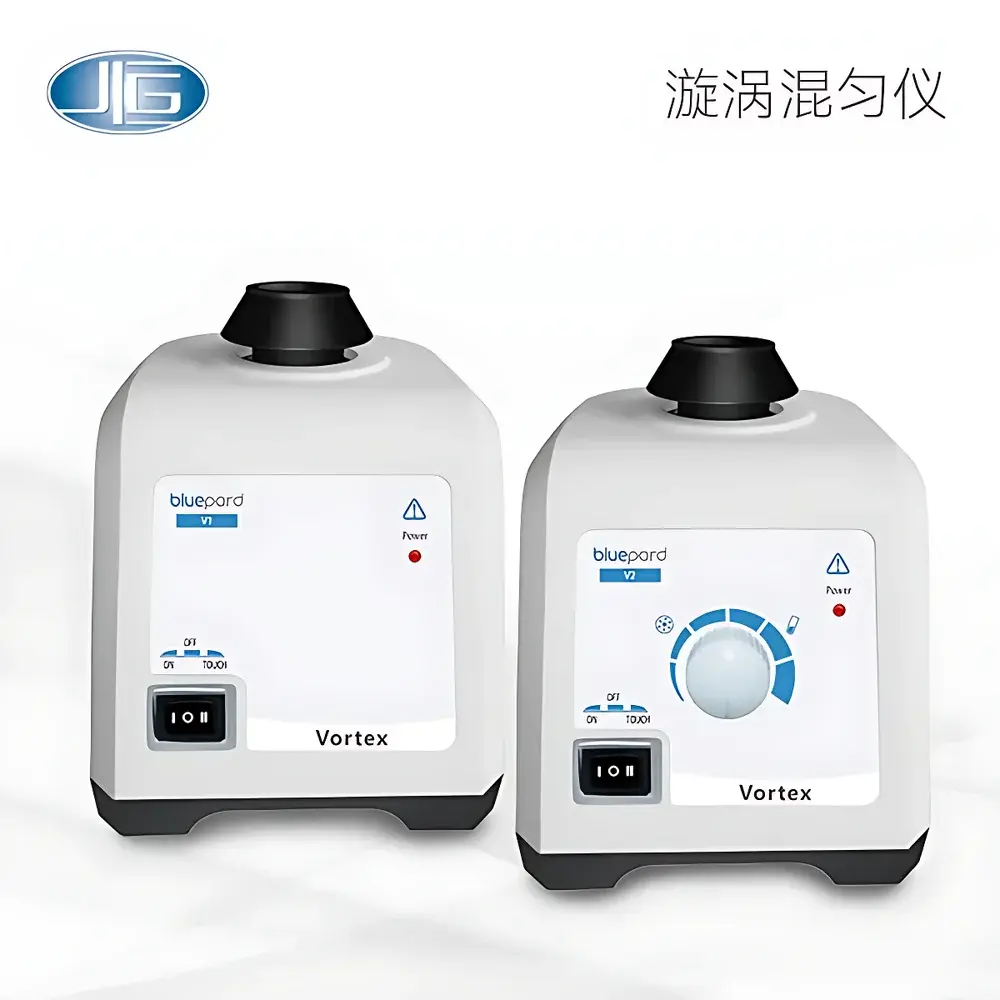
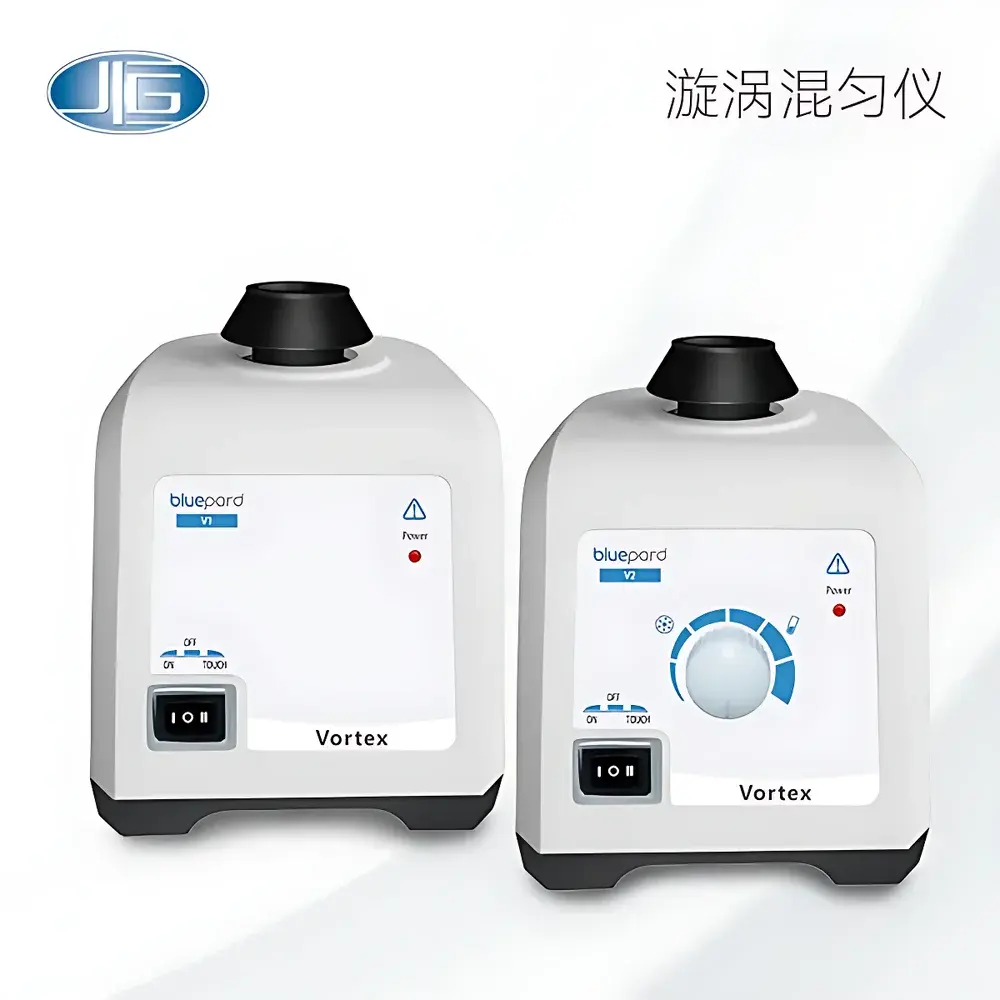
YIHENG V1/V2 Vortex Mixer
| Brand | YIHENG |
|---|---|
| Origin | Shanghai, China |
| Manufacturer Type | Direct Manufacturer |
| Regional Classification | Domestic (China) |
| Model | V1 / V2 |
| Instrument Category | Vortex Mixer (Liquid/Liquid, Liquid/Solid, Solid/Solid Mixing Device) |
| Timer Modes | Touch-Start (Pulse) / Continuous Operation |
| Oscillation Speed Range | 0–2800 rpm |
| Oscillation Amplitude | 4 mm |
| Platform Quantity | 1 |
| Housing Material | Reinforced Engineering Plastic (Paint-Free) |
| Platform Surface Material | TPU (Chemical-Resistant, Abrasion-Resistant, Non-Porous) |
| Base Design | Eccentric Ball Joint Mounting System |
| Footing | Silicone Anti-Slip Pads |
| Power Consumption | Low |
| Acoustic Noise Level | Low |
| Dimensions | Compact Benchtop Form Factor |
| Compliance | Designed for GLP-compliant laboratory environments |
Overview
The YIHENG V1/V2 Vortex Mixer is a benchtop laboratory device engineered for rapid, reproducible homogenization of small-volume samples across life science, clinical diagnostics, and pharmaceutical research settings. It operates on the principle of orbital eccentric motion—driven by an offset rotating drive shaft—to induce high-frequency vortex formation in tubes, vials, and microplates. This mechanical agitation mechanism ensures efficient dispersion of immiscible liquids (e.g., aqueous/organic phases), suspension of particulates (e.g., cells, beads, precipitates), and uniform blending of dry powders with solvents or buffers. Unlike magnetic stirrers or overhead shakers, the vortex mixer delivers localized, high-shear mixing without requiring internal components (e.g., stir bars) or external coupling mechanisms, minimizing contamination risk and simplifying cleaning protocols. Its compact footprint and low power draw make it suitable for use in biosafety cabinets, cold rooms, and multi-instrument workstations where spatial and thermal constraints apply.
Key Features
- V1 Fixed-Speed & V2 Variable-Speed Operation: The V1 model provides consistent 2800 rpm output for standardized protocols; the V2 variant offers continuously adjustable speed control (0–2800 rpm) via rotary dial, enabling optimization for viscous solutions, fragile cell suspensions, or temperature-sensitive reagents.
- Eccentric Ball-Joint Drive System: A precision-machined ball-and-socket coupling connects the motor shaft to the platform, ensuring stable transmission of oscillatory force while accommodating minor misalignment during tube insertion—reducing mechanical wear and enhancing long-term repeatability.
- TPU-Coated Mixing Platform: The entire working surface is overmolded with medical-grade thermoplastic polyurethane (TPU), offering superior resistance to ethanol, acetone, sodium hypochlorite, and 1N HCl compared to traditional foam or rubber pads. This eliminates degradation, shedding, or absorption-related cross-contamination.
- Silicone Anti-Slip Base: Four integrated silicone feet provide static friction coefficients >0.8 on stainless steel, laminated phenolic, and epoxy resin benchtops—preventing lateral displacement even at maximum rotational frequency.
- Paint-Free Reinforced Housing: Constructed from glass-fiber-reinforced polypropylene (GF-PP), the chassis resists impact, chemical splash, and UV-induced embrittlement. No surface coatings are applied, eliminating flaking hazards in cleanroom or ISO Class 5 environments.
- Dual-Mode Activation: Supports both momentary pulse activation (for brief, controlled mixing) and uninterrupted continuous operation—programmable via tactile switch with LED status indication. No software or external controller required.
Sample Compatibility & Compliance
The V1/V2 accommodates standard 0.2–50 mL tube formats—including PCR strips, conical centrifuge tubes, microcentrifuge tubes (1.5/2.0 mL), and deep-well plates—without adapter accessories. Its 4 mm orbital displacement generates sufficient shear to resuspend lyophilized proteins, homogenize tissue lysates, and emulsify lipid nanoparticles, while remaining compatible with delicate applications such as plasmid miniprep elution or antibody conjugation buffers. The device meets mechanical safety requirements per IEC 61010-1:2010 (Laboratory Equipment Safety) and is routinely validated in laboratories adhering to Good Laboratory Practice (GLP) and ISO/IEC 17025:2017 standards. While not intrinsically compliant with FDA 21 CFR Part 11, its analog control architecture supports audit-ready usage logs when integrated into instrument tracking systems.
Software & Data Management
This is a standalone electromechanical instrument with no embedded firmware, network interface, or digital data output. All operational parameters are manually set and visually confirmed—eliminating cybersecurity vulnerabilities, firmware update dependencies, or calibration drift associated with microprocessor-based controllers. For regulated environments, users may document operating conditions (speed, duration, tube type) in electronic lab notebooks (ELNs) or paper-based batch records aligned with SOP-023 (Mixing Parameter Logging). The absence of software does not compromise traceability; rather, it reinforces procedural consistency through operator-controlled execution and direct observation.
Applications
- Reconstitution of lyophilized reagents and standards in QC/QA testing
- Homogenization of bacterial cell pellets prior to lysis buffer addition
- Emulsification of oil-in-water formulations for drug delivery studies
- Rapid mixing of master mixes in PCR and qPCR workflow preparation
- Suspension of magnetic beads during nucleic acid extraction protocols
- Blending of powdered excipients with liquid carriers in early-stage formulation development
- Dispersing nanomaterials (e.g., graphene oxide, quantum dots) in aqueous media for TEM sample preparation
FAQ
What tube sizes are compatible with the V1/V2 platform?
Standard configurations support 0.2 mL PCR tubes up to 50 mL conical tubes; flat-bottom microplates require optional universal plate clamp (sold separately).
Is the device suitable for use inside a CO₂ incubator?
No—its operating temperature range is limited to 5–40 °C ambient; internal electronics are not rated for humidified, elevated-CO₂ environments.
Can the mixer be used with solvent-filled tubes containing volatile organics?
Yes, provided tubes are capped securely and placed upright; the TPU surface resists common organic solvents, but prolonged exposure to chlorinated hydrocarbons (e.g., chloroform) is not recommended.
Does the V2 model retain speed setting after power cycling?
No—the V2 uses analog potentiometer control with no memory function; speed must be manually reset before each use.
How often should maintenance be performed?
No scheduled maintenance is required; wipe the TPU surface with 70% ethanol after each use and inspect silicone feet quarterly for compression set or cracking.
Related Products





